Navigating Chinese New Year
Share Article in Social Media
Navigating the Chinese New Year is essential to consider when shipping during this time of year. Chinese New Year is a 15-day celebration marking the beginning of the year on the lunisolar Chinese calendar. In 2026, the holiday begins on February 17 and finishes with the Lantern Festival on March 3. While it is a time for celebration, the Chinese New Year can significantly disrupt international shipping. Understanding its impact on supply chains is crucial in preventing delays and backlogs. This article explains how the holiday affects shipping and how shippers can prevent disruptions during this period.
How is International Shipping Impacted By the Chinese New Year?
Exporting over $3.5 trillion in 2025, China is the world’s largest shipping company by volume. During the Chinese New Year, carriers, ports, and logistic hubs close or operate at limited capacity. This occurs weeks before and after the holiday, disrupting international shipping and supply chains. In particular, the shutdowns can lead to labor shortages, reduced capacity, and congestion. Port congestion may increase at US ports as shippers import higher-than-usual volumes ahead of the holiday. Customers expecting products may experience delays, especially in mid-to-late February. Another effect is that shippers may experience higher shipping costs due to delays and limited capacity. Truckers who pick up cargo from ports may also see higher costs.
How Can You Navigate the Chinese New Year?
Due to the Chinese New Year holiday, shippers must prepare in advance to prevent disruptions. It is ideal to import months in advance to ensure the cargo reaches the shipper before the holiday rush. Communicating with suppliers and freight forwarders is also beneficial in booking transportation space in advance or finding alternative routes. Importing from countries other than China can help mitigate price increases caused by delays and limited capacity. Switching to air transport is beneficial for smaller shipments that must be delivered within a timeframe. Another consideration is ensuring the paperwork is correct to avoid delays, such as having your goods held at customs.
Although importing goods into the US during this period may seem daunting, it should not disrupt cargo movement. Shippers should, however, take the proper steps to prevent disruptions and delays. When bringing in cargo from China or any other country, it is advisable to consult a customs broker. Customs brokers are licensed corporations, partnerships, and private individuals who arrange customs clearance on behalf of importers. In the US, they ensure shipments comply with CBP (Customs and Border Protection) regulations. Brokers do this by providing documentation, calculating duties, filing entries, and more. Reach our brokers at info@a1wwl.com or 305-912-0631 to learn about our services for getting your goods through customs.



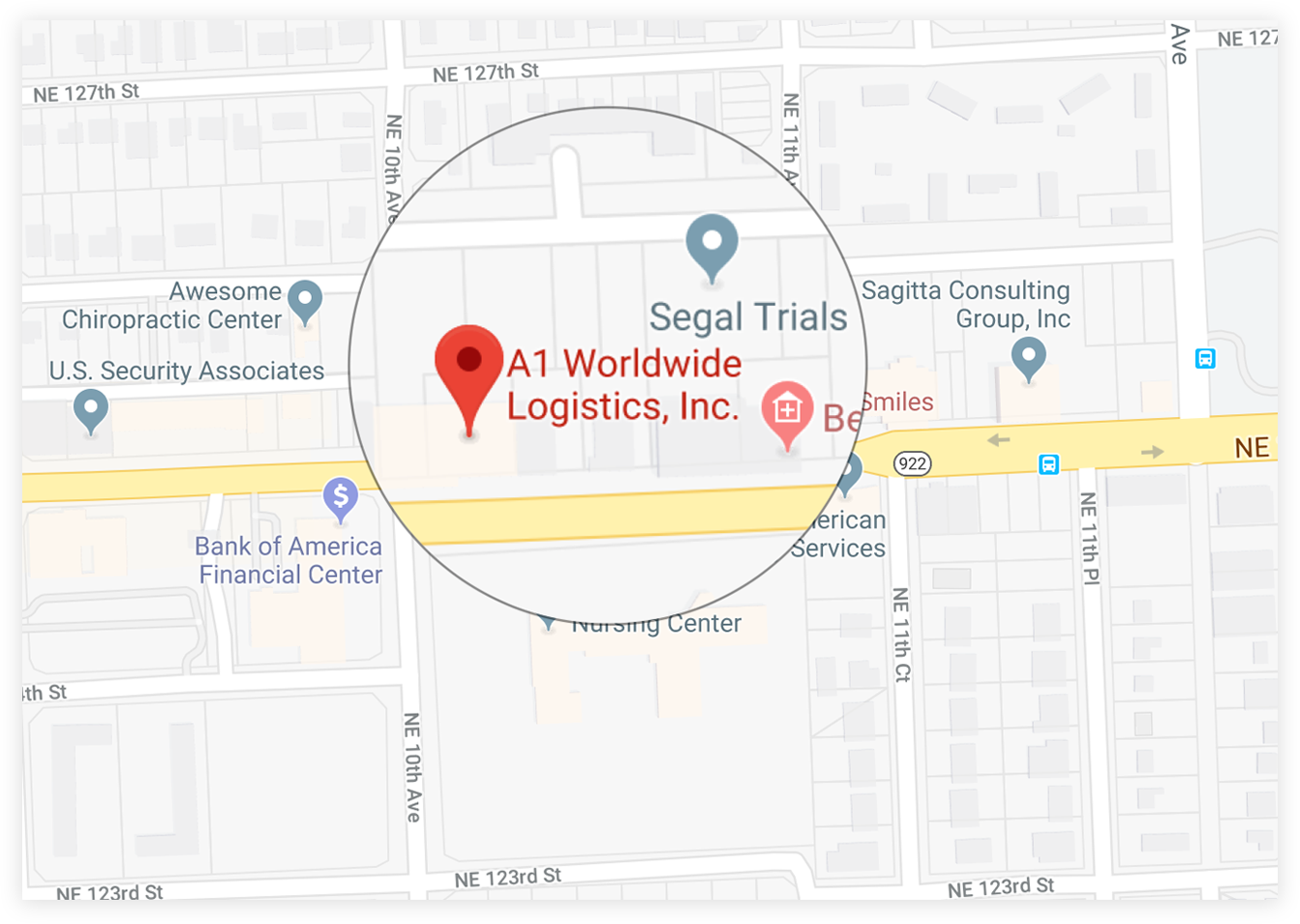
 1035 NE 125th St Suite #320, North Miami, FL 33161.
 a1worldwidelogistics.com
 (305) 821-8995
 Hours: 8AM - 5PM