What Is a Continuous Customs Bond? A continuous customs bond is a bond used by importers to cover multiple U.S. Customs transactions rather than arranging a separate bond for each applicable shipment. If you regularly import commercial goods into the United States, a...
Buying goods from an overseas supplier is only one part of importing them into the United States. Before the shipment leaves, you need to know whether the product can enter the country, who will act as the importer, what duties or additional tariffs may apply, what...
When deciding whether to ship internationally or domestically, consider why you should use warehousing services. Warehousing is a logistics solution that involves storing goods in a specialized facility. From there, the warehouse can provide many value-added services...
Choosing a customs broker is an important decision for any business or individual importing goods into the United States. Your broker can help prepare your customs entry, classify your goods, calculate duties, manage documentation, and communicate with U.S. Customs...
Building a sustainable supply chain
Share This Article
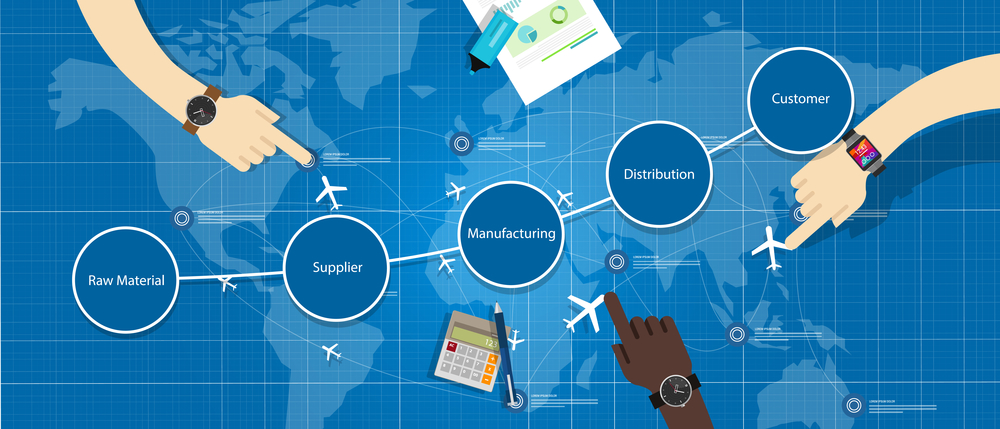
At A1 Worldwide Logistics we know that the best-laid plans of mice and men often go awry. The supply chain system you have in place doesn’t exist in a vacuum — it will regularly face challenges, from minor errors and customer whims to unforeseen disasters. Whether it can withstand these tests will depend less on your ability to predict every eventuality and more on how flexible and adept you are at meeting and making the most of unfavorable or unique circumstances.
Granted, developing a sustainable supply chain is about more than handling threats — it requires recognizing and seizing the opportunity to improve your operational efficiency, build closer partnerships with the right third-parties and deliver a superior customer experience that fosters loyalty. Doing so begins with laying the groundwork for adaptability. Below are a few of the first steps you can take toward this endeavor.
Get a Bird’s-Eye View
Problems will inevitably arise. How prepared are you to effectively redirect flow, mitigate any losses, and meet your goals as efficiently as possible with minimal delay? To this end, it’s vital to implement a system that provides access to the full picture.
For instance, if an incident occurs in transit, are you easily able to determine the status of your product? Does your current system provide a clear overview of all available resources and third parties who offer viable alternatives?
At any given moment, you should be able to leverage these connections in real-time to achieve the best possible outcome. Much like air traffic controllers, the most effective strategy is one that allows you to navigate and coordinate all the moving parts of your system to ensure they flow smoothly and effectively.
Sweat the Small Stuff
Pennies add up to dollars. Many businesses are too willing just to cut their losses or don’t realize the degree of revenue loss when they don’t mind the details. More than merely syncing operations to streamline them, ask yourself if your methods are as gainful and constructive as they can be.
If It Ain’t Broke… Fix It Anyway
Just because a process is “working” does not mean it’s working well or as effectively as it could. The market is competitive, and consumers are ever eager to flock to greener pastures that offer quicker and cheaper alternatives.Always analyze and reassess your approach to stay competitive. Order fulfillment is inherently complex, and a one-size-fits-all model won’t cut it. It would be best if you always were working on ways to tailor your strategy around each customer to boost satisfaction. Moreover, to be able to refine the details and customize flows adequately, you’ll need the right tools to analyze everything from carrier performance to margins and revenues. Sustainable models do more than fix problems: They recognize that a less-than-ideal system is problematic.
Creating a sustainable supply chain is challenging. A lasting model is one that recognizes and appreciates the complexity of order fulfillment and reverse logistics. You want an approach that is flexible enough to plan and execute operations both on a macro and micro level, as well as have the means to lend a critical eye to each facet of the process.
Fortunately, there is no shortage of tools and innovative software to help make this happen. Now that businesses can digitize their operations, they can approach network oversight with greater visibility, refined execution, and access to data that exposes pain points and indicates room for growth. The question going forward is: Are you doing all you can to make your operation sustainable? Questions? Contact A1 World Logistics at 305-821-8995 or send us an email at info@a1wwl.com
What Is a Continuous Customs Bond? A continuous customs bond is a bond used by importers to cover multiple U.S. Customs transactions rather than arranging a separate bond for each applicable shipment. If you regularly import commercial goods into the United States, a...
Buying goods from an overseas supplier is only one part of importing them into the United States. Before the shipment leaves, you need to know whether the product can enter the country, who will act as the importer, what duties or additional tariffs may apply, what...
Looking for a smarter way to manage your cargo? Warehousing services can provide more than just a place to store your goods—they offer numerous value-added services before your cargo reaches its final destination.
Commercial international shipping can involve freight transportation, carrier bookings, complex documentation, customs requirements, and much more. 🚢✈️ Understanding these steps can help you avoid delays, unexpected costs, and compliance issues.
Choosing a freight forwarder should involve more than simply comparing rates. The right company can help coordinate bookings, manage documents, arrange international transport, assist with clearance, and move your cargo toward its final destination.