As is the case with all businesses, productivity connected to the positivity, the workforce feels good about the company they work for. Several locations that someone would want their employees to be working efficiently to make sure that everyone there is doing their job correctly and as safely as possible; a warehouse would be one of these critical locations. With the valuable supplies stored there, many of which could easily be seen as cumbersome and potentially dangerous if attention is not given correctly to these goods. Now to make sure you are running a tight ship regarding your warehouse crew, allow us to provide you with some tips that you may not consider when leading your team.
Keep to Your Policies
Rules, guidelines, policies, etc. being in place are significant to have in place. These rules will allow for your team to know the expectations of them, and what will be the repercussions if these policies don’t become followed. It is vital that the rules you set up are fair, that you avoid nepotism, and that you stick to your guns; if your team notices that you are not following through when a guideline doesn’t become correctly followed or if individual members not treated equally can create dissension in the ranks, and lead to hostel employees.
Continue Process Improvement
Though sticking to specific guidelines is essential on a daily level, you may find that change is needed to improve the efficiency of the warehouse. Continually evaluate the existing processes and procedures and the timely implementation of necessary changes. Make sure that any differences that take place are explained and understood by your team.
Ask for Help
If you find yourself in need of help, ask for it. This does not show weakness or an inability of being a good leader; it shows that you are human and need assistance. With professional warehousing services that can help you with designing, executing and managing your warehouse and distribution.
Lead from the Front, Not from the Office
To truly understand what is going on in your warehouse, and what is going on with your team, there will be times you will need to be down on the floor getting your hands dirty. Walk the floor, talk to employees, and see how your employees are implementing your policies. This also shows the employees that you are willing to get down and work alongside them, which helps raise team morale.
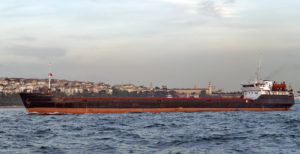
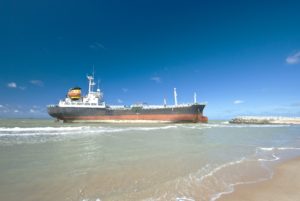
It was a Saturday like any other, standard water traffic in Istanbul’s Bosporus strait when tragedy struck in the form of a looming cargo ship. A large cargo ship seemed to lose control, and barrel into one of the waterside locations populating the coast of the strait. But there is more to this story than just a ship hitting a house, and there are questions to be asked about the situation as a whole.
Why did it happen?
On Saturday, April 7th, the date of the accident, it had been reported that the cargo ship suffered an accident that resulted in the rudder being disabled and led to its uncontrollable collision course with a building. This is an unusual occurrence, seeing as Malta’s have a long tradition as a maritime service provider, and therefore only makes sense that they would keep their ships and crews up to date. As more information on the incident reported, essential information on the event will become revealed. Hopefully, this is not the cusp of a tide of rudder issues with this company’s freight ships.
What did it strike?
There seems to be a great deal of focus on the location the cargo ship struck, and there is an excellent reason behind this, it is a part of history. The structure in question is the red seaside mansion of Hekimbasi Salih Efendi. This mansion once belonged to a doctor who served in the Ottoman palace and dates back to the 18th century. Everyone is hoping the damage suffered by the mansion will be able to be repaired and avoid being taken down altogether.
Why the Straight?
Now the straight, with all of these locations littering the outskirts of it may not seem like the ideal waterway in transporting a 738-foot cargo ship through; however, the Bosporus is the crucial waterway connecting the Black Sea and the Sea of Marmara and the Aegean Sea. This makes it the primary route to take when it comes to maritime travel in this location. There is no real way in getting around it.
Here is a video of the event occurring. Please note there is some strong language.
Throughout the year agreements, laws, and programs will enact incongruence that will alter the state of things in the world of shipping. One such program renewed for the following year is the Generalized System of Preferences, or GSP, which will be repeated and will go back into effect on April 22nd. Let us go over what it is, and what this means for the U.S. shipping companies that this will have the most significant impact.
What is the GSP?
Established by the Trade Act of 1974 the Generalized System of Preferences (GSP) is a U.S. trade program designed to promote economic growth in the developing world by providing preferential duty-free entry for up to 4,800 products from 129 designated beneficiary countries and territories.
What Does This Mean?
Economic Growth for the Developing World
The GSP will help developing companies by aiding in their diversity and growth of trade with the U.S. The program will reduce the costs these countries will have to pay on trade due to the duty-free entry of products.
Supports U.S. Jobs
By moving GSP imports from the docks to the U.S. consumers and manufacturers, it supports tens of thousands of jobs in the U.S. It is especially important to the small businesses, relying on the programs’ duty saving to help them stay competitive.
Promoting of Values
The GSP supports progress in these countries; it also promotes growth by beneficiary countries in affording worker rights to their people, enforcing intellectual property rights, and in helping the rule of law.
If Congress passes the new GSP bill, it will extend the GSP until December 31, 2020. The bill will also include a provision allowing Customs to apply GSP retroactivity to entries between December 31, 2017, and the date of the reauthorization. Currently, importers are allowed to flag entries as “GSP eligible” in anticipation of future reauthorization, despite these importers are paying MFN rates until reauthorizing GSP.
We are living in a time where technology is taking leaps, and bounds forward, propelling us into a future of pure wonder and amazement. We see these advancements with laser surgeries taking place in hospitals; with Elon Musk’s cosmic adventures, propelling satellites into space accompanied by his car; we can see this in the very device sitting in most people’s pockets, our cellphones. We have seen our amazing improvement regarding the shipping industry with the rise in automated trucks.
When Did They Start?
As long as we have had automobiles, people have been trying to make them autonomous, but it is not until recently that these goals have come to fruition. Uber introduced their first self-driving truck in 2016 after its acquisition of Otto, an autonomous trucking start-up founded by a former Google engineer. As of 2017 there have been automated trucks transporting good between Texas and California.
Bear in mind these are not unmanned trucks, as they still have accompanying truckers with them; but someday most, if not all transportation companies hope to have entirely independent vehicles at their disposal.
Where Are They Headed?
Well, it is quite apparent where companies want to see these trucks go, complete independence. Driverless vehicles would help reduce the cost of transportation in general, not having to pay for drivers. It will also help expedite the transport itself, trucks being able to drive through the night with no breaks needed.
This opens up other issues though, as for how will the truck be able to unload the goods? Or how will it know when it needs gas? Or how will it react to an accident or automotive issues? These occurrences are one of the defining reasons why even with the rise of automated trucks, there will still be a place of hands-on human partners. Uber says they will still utilize people to work with these trucks.
Judging from the current evolutionary rate of these vehicles, it is only a matter of time before the idea of entirely independent vehicles goes from science fiction to science fact.
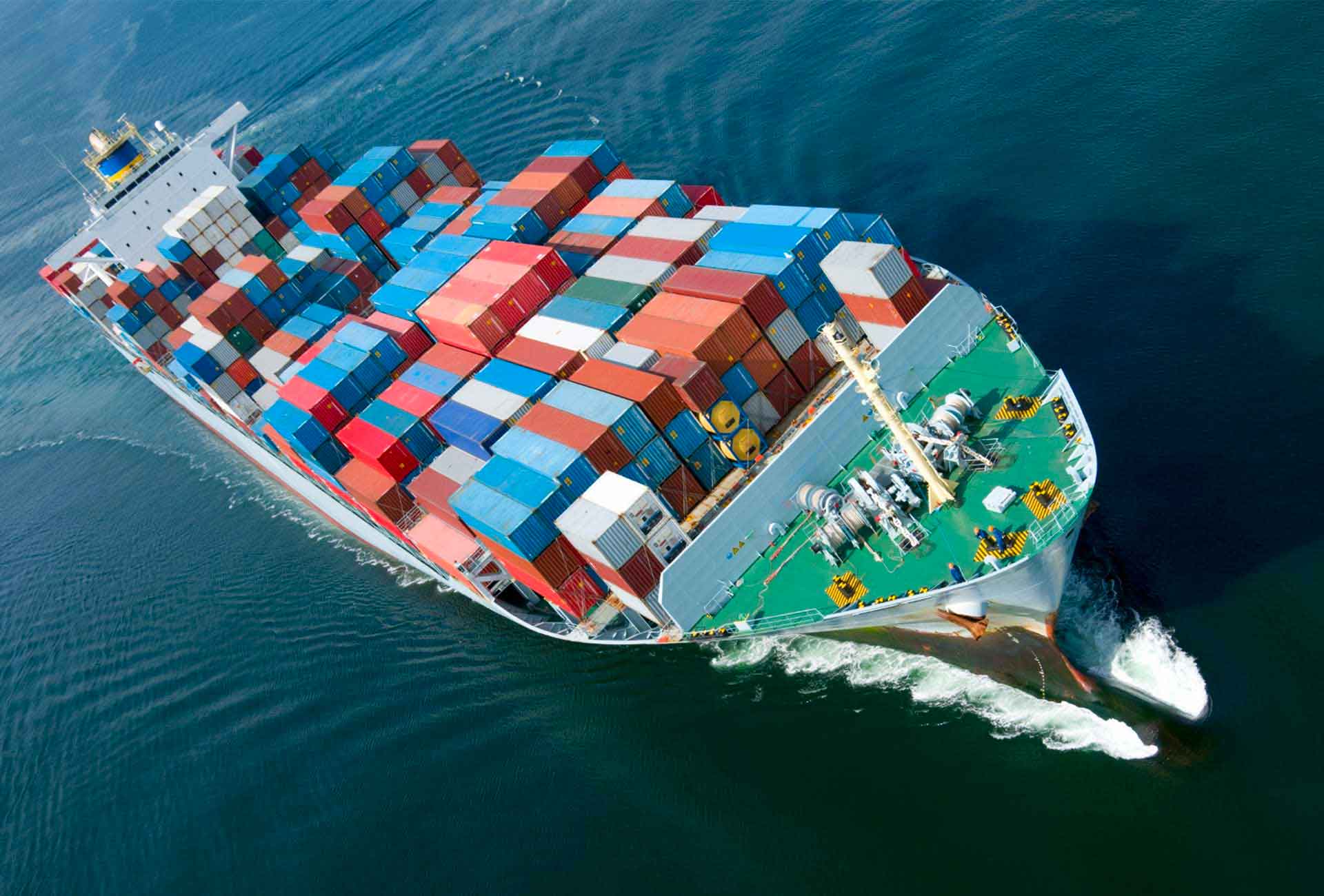
The idea of carbon reduction is an ever-present wish for most of the earth’s populace because with this happening means fewer pollutants in the air, a potential reduction in climate change, and less of a reliance on fossil fuels. One area where this advancement seems to be the most desired is with international maritime shipping.
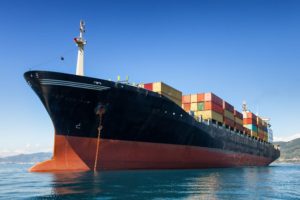
The International Maritime Organization (IMO) has been tasked with cutting greenhouse gas emissions by at least 50 % by the year 2050. This has led to the IMO to scramble to try and find new technologies that can decarbonize over fifty thousand freighters, containers, tankers, and ferries. Seeing as how the international shipping accounts for more than 2 % of the global carbon dioxide emissions, the IMO is looking into many possibilities to help meet the 2015 Paris Agreement quota to carbon emissions.
Low-Tech Solutions
Merely designing freight ships with a slenderer body can reduce fuel use by around 15% at slower speeds, and up to approximately 25% at higher speeds. Less fuel being used for the same trips the ships are already taking means they will be giving off fewer emissions than before.
There are some other simple retrofitting’s that can be performed to transport ships to accomplish this effect as well:
– By replacing one propeller with two rotating in opposite directions, the boat recovers slipstream energy and can make gains of up to 15%.
– Cleaning and painting the hull with a low-friction coating can deliver gains of up to 5%.
– Fitting the bow of a ship with a bulbous extension below the water line will reduce drag enough to cut emissions up to 7%.
– Air lubrication- A technique which pumps compressed air below the hull to create a carpet of bubbles that reduces drag and can cut emissions by a further 3%.
Removing Traditional Fuel
Though altering the shape and drag speed of the actual ship may assist in reducing emissions, it is getting away from the traditional petroleum fuel source where many corrections lie.
The push for utilizing Biofuels seems to be a significant talking point, and at the moment there are a couple of companies that are employing this. One innovation already underway is converting ships to run on LNG. There are already more than a hundred LNG-fueled ships globally. Some LNG ships claim a CO2 emissions reduction of up to 15%.
New Ships
Past these innovations there is another way that ships can reduce their carbon emissions is an overall change of the transport ships themselves. Redesigning ships to be outfitted with solar panels will drastically reduce their emissions at a higher percentage than any of the other boat altering options.
Another much cleaner fuel source is using hydrogen to run fuel cells. Stacking this with solar panels can give a carbon emission reduction by up to 70%.
There is a zero-carbon emission option being developed now as well, it would be powered by electricity, half coming directly from wind, solar and wave energy, and the other half from converting some of that energy into hydrogen to power fuel cells. A Scandinavian shipping line is currently working on this type of ship, looking for completion by 2025.



 To truly understand what is going on in your warehouse, and what is going on with your team, there will be times you will need to be down on the floor getting your hands dirty. Walk the floor, talk to employees, and see how your employees are implementing your policies. This also shows the employees that you are willing to get down and work alongside them, which helps raise team morale.



 Well, it is quite apparent where companies want to see these trucks go, complete independence. Driverless vehicles would help reduce the cost of transportation in general, not having to pay for drivers. It will also help expedite the transport itself, trucks being able to drive through the night with no breaks needed.
 The International Maritime Organization (IMO) has been tasked with cutting greenhouse gas emissions by at least 50 % by the year 2050. This has led to the IMO to scramble to try and find new technologies that can decarbonize over fifty thousand freighters, containers, tankers, and ferries. Seeing as how the international shipping accounts for more than 2 % of the global carbon dioxide emissions, the IMO is looking into many possibilities to help meet the 2015 Paris Agreement quota to carbon emissions.
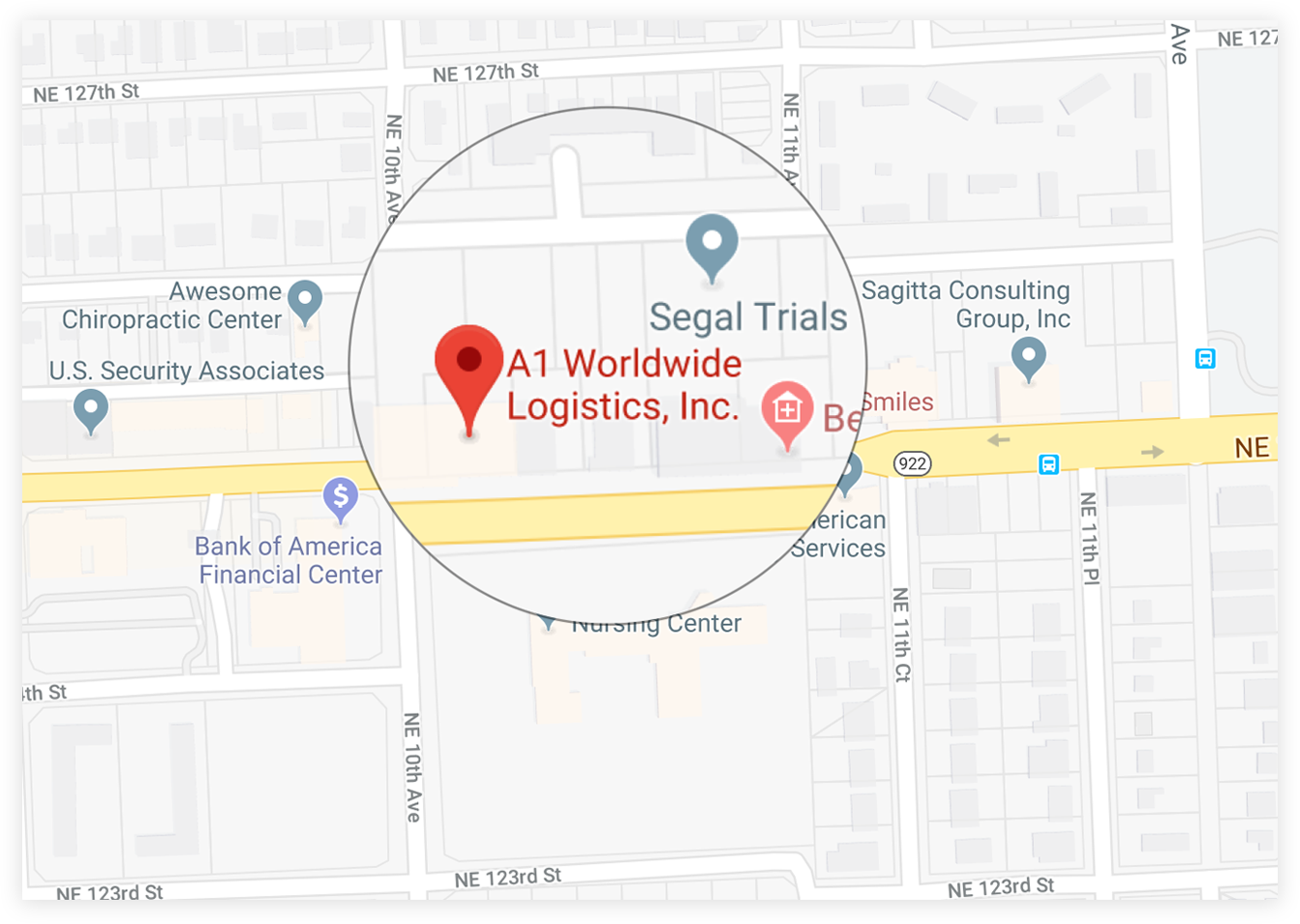
 1035 NE 125th St Suite #320, North Miami, FL 33161.
 a1worldwidelogistics.com
 (305) 821-8995
 Hours: 8AM - 5PM