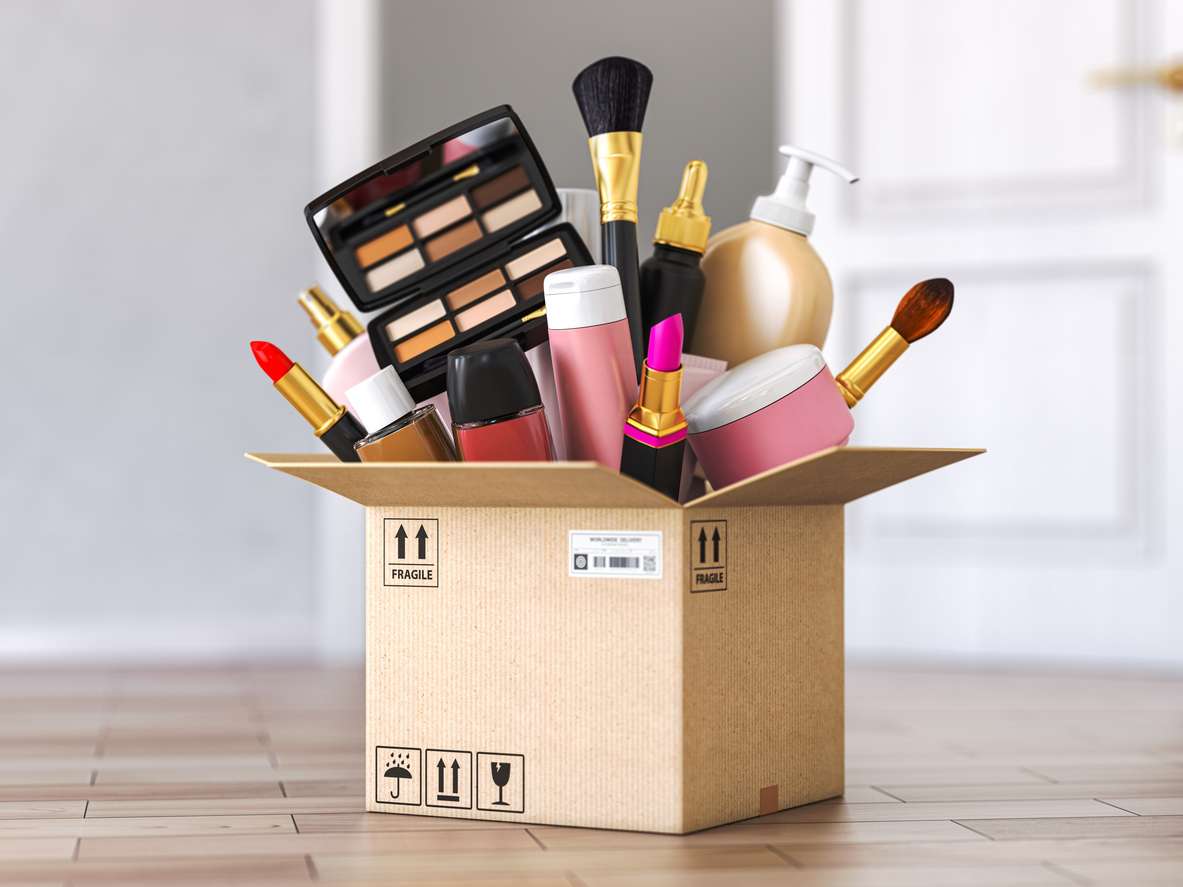
Businesses can import cosmetics into the USA for resale when the products meet U.S. requirements, and the shipment is properly declared to U.S. Customs and Border Protection (CBP) and the Food and Drug Administration (FDA). Imported cosmetics must meet the same FDA requirements as products made in the United States.
Before placing an order, establish how each product is regulated, whether its labeling is suitable for U.S. sale, and who is handling the required FDA registrations and product listings. Korean skincare needs the same review. A moisturizer, an acne treatment, and an SPF cream can have different requirements even when they come from the same brand.
A1 Worldwide Logistics provides U.S. customs brokerage for commercial importers. If you have cosmetics on order or already in transit, send us the product list, supplier invoice, and expected arrival details. We can review the customs work needed and provide a quote.
Is Your Product a Cosmetic, a Drug, or Both?
FDA classification depends on the product’s intended use. Claims on the label, website, and advertising can affect that decision. A supplier’s description of a product as “skincare” does not settle its U.S. status.
Examples of claims that affect U.S. product classification
| Product or claim |
What to review |
| Cleanser, moisturizer, or sheet mask |
Generally a cosmetic when intended for cleansing, moisturizing, or improving appearance. |
| Sunscreen, SPF moisturizer, or makeup with sun protection |
Regulated as a drug, or both a cosmetic and a drug. Drug requirements apply. |
| Acne or eczema treatment |
Treatment claims can establish drug use, even when the product is sold alongside cosmetics. |
| Serum claiming to regenerate cells or change melanin production |
Claims to affect the body’s structure or function can make the product a drug. |
FDA explains these categories in its guidance on cosmetics and drugs. “Cosmeceutical” is not a separate legal category.
Anti-aging wording also needs a close reading. A moisturizer described as making fine lines less noticeable through hydration can be a cosmetic. A claim that it increases collagen production can make the product a drug. FDA’s guidance on wrinkle treatments explains why the actual claim matters.
Importing Korean Skincare into the USA
Ask the Korean supplier for the exact version intended for the U.S. market. Request the complete ingredient list, photographs of every label panel, and the manufacturer’s legal name and address. Product descriptions from a wholesale catalog may leave out information needed for the review.
Confirm whether the supplier is the manufacturer, a brand owner, or a trading company. The business issuing the invoice may be different from the facility making the products. Your broker needs the correct parties identified when preparing the entry.
A product’s sale in Korea does not establish that it can be sold in the United States. The U.S. rules for cosmetics still apply, including requirements for safe products, permitted ingredients, and accurate labels. Review each item in the order before committing to the shipment.
Korean Sunscreen and SPF Products
Korean sunscreen needs a separate drug-compliance review. The finished product generally must meet the applicable over-the-counter drug monograph and other drug requirements, or have an approved drug application. Cosmetic registration alone does not establish that it is eligible for U.S. sale.
Have the exact formula, active ingredient concentrations, testing, and proposed U.S. label assessed against current FDA sunscreen requirements. An SPF rating or permission to sell the product in Korea does not answer those questions. Include SPF products separately in the information you send your broker.
FDA Registration and MoCRA Requirements
The Modernization of Cosmetics Regulation Act of 2022, known as MoCRA, introduced mandatory requirements for many cosmetic businesses. Facility registration, product listing, and the customs entry are separate tasks.
Facility Registration
Owners or operators of facilities that manufacture or process cosmetics for U.S. distribution generally must register those facilities with FDA, unless an exemption applies. Registration must be renewed every two years. A foreign facility subject to registration must identify a U.S. agent.
A business that only stores or distributes finished cosmetics is not automatically a manufacturing facility. Filling containers with a cosmetic can change the assessment. FDA’s registration and listing guidance explains the facility definition and exclusions.
Product Listing and the Responsible Person
The responsible person is the manufacturer, packer, or distributor whose name appears on the product label. That party generally must list each marketed cosmetic product with FDA, including its ingredients, and provide updates annually. If you are importing a private-label line with your company’s name on the label, establish whether your business holds this role.
For a newly marketed product subject to listing, the law generally allows 120 days after first marketing in interstate commerce to submit the listing. Confirm the relevant deadline for your product. Listing is not a premarket approval or permission to sell a noncompliant product.
The importer of record, the responsible person, and a foreign facility’s U.S. agent have different responsibilities. Appointing a customs broker does not automatically make the broker your responsible person or FDA U.S. agent.
Can a Small Business Be Exempt?
Some businesses qualify for an exemption from MoCRA registration and listing requirements. The statutory sales threshold uses average gross annual U.S. cosmetic sales over the previous three years below $1 million, adjusted for inflation. The value of one shipment does not determine eligibility.
The exemption does not apply to a responsible person or facility engaged in manufacturing or processing products that:
- Regularly contact the eye’s mucous membrane under customary use.
- Are injected.
- Are intended for internal use.
- Alter appearance for more than 24 hours when consumer removal is not part of customary use.
A small U.S. buyer does not establish that its overseas supplier qualifies. A registration or listing exemption also leaves other duties in place, including product safety and labeling. The responsible person must maintain records supporting adequate safety substantiation. It must also report serious adverse events to FDA within 15 business days after receiving the report.
What Does an “FDA Certificate” Prove?
FDA does not issue certificates verifying cosmetic facility registration, product listing, or exemption. A registration or listing number does not mean FDA has approved the product. The agency clarified this in September 2026.
If a supplier sends a certificate from a private company, establish what that document records. Request the relevant registration or listing information and the product records needed for your review.
Cosmetic Labeling for U.S. Sale
Have the proposed retail package reviewed before it is printed or shipped. FDA’s cosmetic labeling guide covers the required content, placement, and presentation. A retail-label review generally needs to address:
- The product identity and net quantity of contents.
- The manufacturer, packer, or distributor’s name and place of business, with wording such as “Distributed by” when appropriate.
- The ingredient declaration, using the required names and order.
- Directions and warnings required for the product’s safe use.
- The contact information required under MoCRA for reporting adverse events.
The MoCRA contact requirement can be met through a domestic address, domestic telephone number, or electronic contact information through which the responsible person can receive adverse-event reports. This is separate from the ordinary business-identification information on the label.
For U.S. distribution, required information generally must appear in English. If the label also carries Korean-language representations, required information must also appear in Korean under FDA’s bilingual-label rules. A short English sticker may leave other requirements unresolved.
CBP’s country-of-origin marking rules generally require the product or its container to identify the country of origin in English for the ultimate U.S. purchaser. Have the retail package and outer packaging reviewed; a statement on the shipping carton alone may not satisfy the requirement.
Ingredients, Color Additives, and Product Safety
Cosmetics and their ingredients generally do not require FDA premarket approval, with an exception for color additives. The finished product still must be safe, and ingredient prohibitions and restrictions apply. An ingredient’s popularity in Korean skincare does not establish compliance.
For makeup, tinted skincare, and other colored products, each color additive must be permitted for its intended use. Some colors require FDA batch certification. A color permitted in one product is not necessarily permitted for use around the eyes or on the lips.
Obtain the manufacturer’s safety information and arrange any technical review the formula needs before shipment. A customs broker prepares the import entry; product formulation and safety substantiation require the appropriate supporting expertise.
Documents Needed to Import Cosmetics
Your broker needs enough detail to identify the goods, classify them, and prepare the required customs and FDA information. Start with these documents and records:
- Commercial invoice: Buyer and seller details, a separate description for each product, quantities, values, currency, and country of origin.
- Packing list: Carton or pallet details, contents, and weights.
- Transport document: The air waybill or ocean bill of lading, plus the arrival notice when available.
- Product information: Complete ingredient lists, label photographs, intended uses, and relevant claims.
- Manufacturer and FDA information: The actual manufacturing facility’s identity, relevant registration or listing details, and the basis for any claimed exemption.
- Importer details: The legal entity importing the goods, its importer number if established, and the delivery destination.
The commercial invoice must be in English or accompanied by an accurate English translation. “Beauty products” is usually too broad for the broker’s review. Identify each item by its name, use, and retail size so it can be matched to the product information.
First-time importers may need to establish an importer record using CBP Form 5106. Your broker can confirm the entry type and customs bond needed, and will require authorization to act on your behalf. See our guide to customs clearance documents for the wider shipment paperwork.
Import Duties and Costs for Cosmetics from Korea
The duty treatment depends on the product’s U.S. tariff classification, customs value, origin, and the measures in effect when it enters. There is no single duty rate for every cosmetic or skincare product. A supplier’s suggested HS code needs to be checked against the U.S. Harmonized Tariff Schedule.
The U.S.–Korea Free Trade Agreement has product-specific origin rules. A Korean brand or a shipment departing Korea does not, by itself, establish eligibility. Ask the supplier for origin information and have the broker check any preferential treatment alongside current additional duties.
Request a quote that separates brokerage charges from estimated duties and government fees. Confirm whether a bond, freight, terminal handling, and final delivery are included. If an examination or storage becomes necessary, those costs can affect the shipment total.
FDA does not charge a fee to submit a cosmetic facility registration or product listing. A consultant or filing service may charge for its work, so establish what any quoted “FDA fee” covers.
Shipping and Customs Clearance
Send the paperwork while the order is being prepared. This gives the broker time to identify missing entry information and lets you address product or labeling questions with the supplier before the cargo moves.
For ocean cargo subject to Importer Security Filing (ISF), most required shipment details must be filed at least 24 hours before loading at the foreign port. Contact your broker before the goods are loaded. Air shipments do not use this ocean ISF filing.
During FDA entry review, the agency may request information, examine the labeling, or collect samples before deciding whether the products can enter U.S. commerce. Complete paperwork helps the review, but it does not guarantee immediate release.
FDA-regulated products must not be distributed into U.S. commerce while their admissibility is still being determined. Confirm the customs and FDA status before arranging sale or distribution. Permission to move cargo to a warehouse may come with conditions.
If Your Cosmetics Shipment Has Already Arrived
Send A1 the carrier’s arrival notice, transport document, invoice, and any CBP or FDA message. Include the entry number if another broker has started the filing. The actual notice will help establish whether the issue concerns missing documents, a product review, an examination, or another requirement.
Tell us where the goods are being held and whether storage charges are accruing. If another broker has already filed an entry, explain what work has been completed so the next steps can be agreed without duplicate filings.
Cosmetics Import FAQ
Do I Need an FDA License to Sell Imported Cosmetics?
FDA does not license cosmetics firms. MoCRA registration and listing requirements may still apply, along with product, labeling, and customs requirements. State or local business requirements should also be checked. Products regulated as drugs need a separate assessment.
Can I Import Samples Before Placing a Larger Order?
Tell your broker whether the samples are for evaluation, retail sale, or distribution to customers. The purpose can affect the requirements. Free samples still need an appropriate customs value under the invoice rules; “no commercial value” does not automatically make their value zero. A small order should not be assumed exempt from FDA review or customs charges.
Can A1 Handle Customs if My Supplier Has Booked the Shipping?
A1 can discuss customs clearance separately from freight. Ask the supplier which broker, if any, is handling the U.S. entry. Then provide the transport document and the status of any filings already made. Booking transport alone does not establish that customs clearance has been arranged.
Need a Customs Broker for Cosmetics or Korean Skincare?
A1 Worldwide Logistics helps commercial importers with customs entry preparation, tariff classification, documentation, and agency filing requirements. We can also discuss freight and delivery if you need help moving the shipment.
Send your product list, ingredient information, label photos, and supplier invoice. Tell us when the goods will ship, where they will arrive, and whether you expect repeat orders.
Call (305) 821-8995 or email info@a1wwl.com to discuss your import.
Request a Cosmetics Customs Clearance Quote
Regulatory note: Reviewed against FDA, U.S. customs regulations, USITC, and U.S. Department of Commerce sources on November 18, 2026. This is general import guidance, not legal advice. The exact formula, claims, and labeling determine which product requirements apply; state requirements may also affect sale.