Throughout the year agreements, laws, and programs will enact incongruence that will alter the state of things in the world of shipping. One such program renewed for the following year is the Generalized System of Preferences, or GSP, which will be repeated and will go back into effect on April 22nd. Let us go over what it is, and what this means for the U.S. shipping companies that this will have the most significant impact.
What is the GSP?
Established by the Trade Act of 1974 the Generalized System of Preferences (GSP) is a U.S. trade program designed to promote economic growth in the developing world by providing preferential duty-free entry for up to 4,800 products from 129 designated beneficiary countries and territories.
What Does This Mean?
Economic Growth for the Developing World
The GSP will help developing companies by aiding in their diversity and growth of trade with the U.S. The program will reduce the costs these countries will have to pay on trade due to the duty-free entry of products.
Supports U.S. Jobs
By moving GSP imports from the docks to the U.S. consumers and manufacturers, it supports tens of thousands of jobs in the U.S. It is especially important to the small businesses, relying on the programs’ duty saving to help them stay competitive.
Promoting of Values
The GSP supports progress in these countries; it also promotes growth by beneficiary countries in affording worker rights to their people, enforcing intellectual property rights, and in helping the rule of law.
If Congress passes the new GSP bill, it will extend the GSP until December 31, 2020. The bill will also include a provision allowing Customs to apply GSP retroactivity to entries between December 31, 2017, and the date of the reauthorization. Currently, importers are allowed to flag entries as “GSP eligible” in anticipation of future reauthorization, despite these importers are paying MFN rates until reauthorizing GSP.
We are living in a time where technology is taking leaps, and bounds forward, propelling us into a future of pure wonder and amazement. We see these advancements with laser surgeries taking place in hospitals; with Elon Musk’s cosmic adventures, propelling satellites into space accompanied by his car; we can see this in the very device sitting in most people’s pockets, our cellphones. We have seen our amazing improvement regarding the shipping industry with the rise in automated trucks.
When Did They Start?
As long as we have had automobiles, people have been trying to make them autonomous, but it is not until recently that these goals have come to fruition. Uber introduced their first self-driving truck in 2016 after its acquisition of Otto, an autonomous trucking start-up founded by a former Google engineer. As of 2017 there have been automated trucks transporting good between Texas and California.
Bear in mind these are not unmanned trucks, as they still have accompanying truckers with them; but someday most, if not all transportation companies hope to have entirely independent vehicles at their disposal.
Where Are They Headed?
Well, it is quite apparent where companies want to see these trucks go, complete independence. Driverless vehicles would help reduce the cost of transportation in general, not having to pay for drivers. It will also help expedite the transport itself, trucks being able to drive through the night with no breaks needed.
This opens up other issues though, as for how will the truck be able to unload the goods? Or how will it know when it needs gas? Or how will it react to an accident or automotive issues? These occurrences are one of the defining reasons why even with the rise of automated trucks, there will still be a place of hands-on human partners. Uber says they will still utilize people to work with these trucks.
Judging from the current evolutionary rate of these vehicles, it is only a matter of time before the idea of entirely independent vehicles goes from science fiction to science fact.
The idea of carbon reduction is an ever-present wish for most of the earth’s populace because with this happening means fewer pollutants in the air, a potential reduction in climate change, and less of a reliance on fossil fuels. One area where this advancement seems to be the most desired is with international maritime shipping.
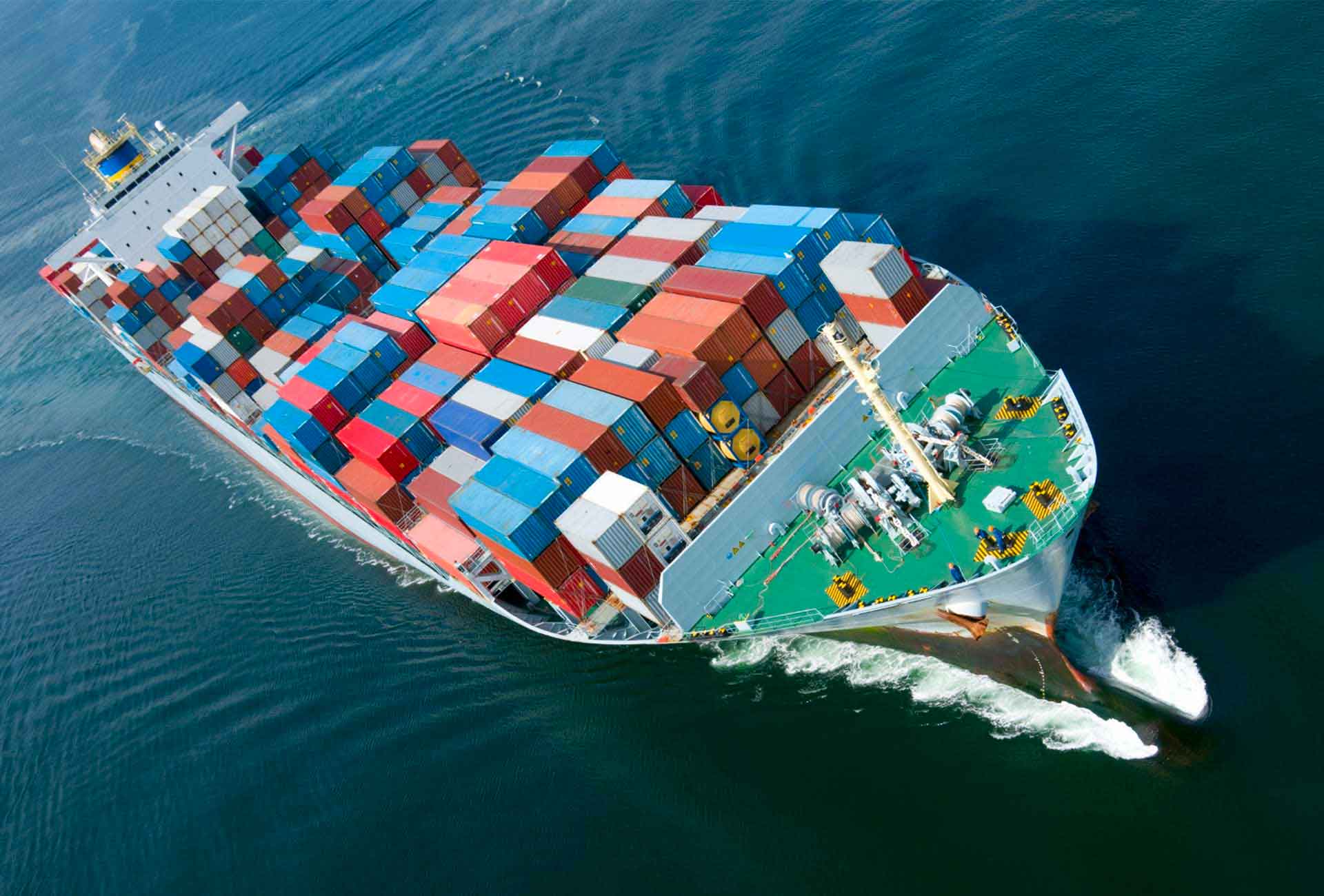
The International Maritime Organization (IMO) has been tasked with cutting greenhouse gas emissions by at least 50 % by the year 2050. This has led to the IMO to scramble to try and find new technologies that can decarbonize over fifty thousand freighters, containers, tankers, and ferries. Seeing as how the international shipping accounts for more than 2 % of the global carbon dioxide emissions, the IMO is looking into many possibilities to help meet the 2015 Paris Agreement quota to carbon emissions.
Low-Tech Solutions
Merely designing freight ships with a slenderer body can reduce fuel use by around 15% at slower speeds, and up to approximately 25% at higher speeds. Less fuel being used for the same trips the ships are already taking means they will be giving off fewer emissions than before.
There are some other simple retrofitting’s that can be performed to transport ships to accomplish this effect as well:
– By replacing one propeller with two rotating in opposite directions, the boat recovers slipstream energy and can make gains of up to 15%.
– Cleaning and painting the hull with a low-friction coating can deliver gains of up to 5%.
– Fitting the bow of a ship with a bulbous extension below the water line will reduce drag enough to cut emissions up to 7%.
– Air lubrication- A technique which pumps compressed air below the hull to create a carpet of bubbles that reduces drag and can cut emissions by a further 3%.
Removing Traditional Fuel
Though altering the shape and drag speed of the actual ship may assist in reducing emissions, it is getting away from the traditional petroleum fuel source where many corrections lie.
The push for utilizing Biofuels seems to be a significant talking point, and at the moment there are a couple of companies that are employing this. One innovation already underway is converting ships to run on LNG. There are already more than a hundred LNG-fueled ships globally. Some LNG ships claim a CO2 emissions reduction of up to 15%.
New Ships
Past these innovations there is another way that ships can reduce their carbon emissions is an overall change of the transport ships themselves. Redesigning ships to be outfitted with solar panels will drastically reduce their emissions at a higher percentage than any of the other boat altering options.
Another much cleaner fuel source is using hydrogen to run fuel cells. Stacking this with solar panels can give a carbon emission reduction by up to 70%.
There is a zero-carbon emission option being developed now as well, it would be powered by electricity, half coming directly from wind, solar and wave energy, and the other half from converting some of that energy into hydrogen to power fuel cells. A Scandinavian shipping line is currently working on this type of ship, looking for completion by 2025.
When it comes to the world of international shipping, it is essential that one has the absolute best when it comes to shipping your goods. You want to make sure you have the company you are utilizing has the very best when it comes to its credentials and what the extent of their services. Let us take a look at what you should be looking for in a reliable freight shipping company.
6 Things to Look For
Though we sometimes overlook these ideas of a good business, it is essential that the freight forwarder you are working through exhibits these qualities.
1. Expertise
This can be measured in several different ways. How long has the company been in business, and how long have their employees been in the industry? Being a company that has not only an extensive background in the field but has also developed upon how the industry runs things is vital in knowing if the company has the expertise needed to trust it with your goods.
2. Crisis Management
Unfortunately, as is the nature of the world, accidents happen all of the time. This can even be the case with large freight forwarders. A forwarder should notify you immediately of any issues with your shipment and work proactively to secure other arrangements to lessen any further delays to your delivery.
3. Customer Service
They need to be prompt and on time for your shipment. They also need to be responsive, flexible and treat you with respect. A forwarder that goes the extra mile for you is one that values your business, and will do whatever they can to make sure you are happy, and that your goods are safe.
4. Compliance
If they are willing not to follow rules and guidelines set up to try and cut costs, then think about what else they are willing to do for some extra money. That being said, a company that does not follow the rules can find itself in hot water, and by extension, put your property in jeopardy.
5. Reliability
Though it goes without saying, being reliable and trustworthy are the hallmark of a good company. You want to know that your goods are safe and are going to reach your required location safe and quickly.
6. Technology
The company should be utilizing up to date technology to ensure your product is not only monitored at all times, but that any hiccups that could occur are immediately found out and dealt with. This also extends to having employees knowledgable and comfortable with these technologies in order to better serve your needs.
With all the technological advances that have been developed well into the 21st century, further conversation needs to become held about our carbon footprint. With freight forwarding and international shipping sky-rocketing recently due to high demand, it’s important to be conscious of the world we’re going to leave behind.
The consistent emission of greenhouse gases has developed a tremendous dent into the global climate, human well-being, and marine environments. Maritime travel account for millions of tons of carbon dioxide production into the atmosphere. With biofuels combined with the current fuel intake on cargo ships, the environmental efficiency will increase tremendously.
Effects on Environment
The more we collect greenhouse gases within our environment, the more heat is trapped on Earth, which increases global warming on a constant basis. If the energy from the sun and the amount of gases remain the same, the temperature will level out. However, over millions of years, the gases have accumulated much more than intended and continue to cause the temperature to reach its highest in history.
Rising ocean temperatures and melting ice caps are all contributing to the rise in sea level which will in turn cause costal erosion, flooding, and property damage to name a few. Over the past century, sea levels rose one foot, and its predicted to rise another three feet in the coming century. Biofuels pose as a great alternative to the fossil fuels being used over many years to lessen the harmful gases become released into the atmosphere.
Biofuels
Although gasoline and diesel are biofuels, they are ultimately seen as fossil fuels because they become made of decomposed plants and animals that became buried in the ground for millions of years. Biofuels can be made chemically, fermentation, and breaking down starches and sugars in plants.
If cargo ships incorporated Ethanol into their gasoline, the emission of greenhouse gases would greatly reduce. Making fuel from plants allows them to suck up the carbon dioxide in the atmosphere to combat the amount that is released. Biofuels have the potential to diminish the use of fossil fuels anywhere from 10-30%.
Future Endeavors
The current biofuels are a step in the right direction, however, there may be even better solutions to contribute to a cleaner Earth. Research shows that the future of biofuels could be from grass and sapling. The only setback that needs to become resolved is if the cellulose in the cell walls of the plants can be broken down in biofuel. If that is the case, it will release less carbon dioxide than current biofuels.





 Well, it is quite apparent where companies want to see these trucks go, complete independence. Driverless vehicles would help reduce the cost of transportation in general, not having to pay for drivers. It will also help expedite the transport itself, trucks being able to drive through the night with no breaks needed.
 The International Maritime Organization (IMO) has been tasked with cutting greenhouse gas emissions by at least 50 % by the year 2050. This has led to the IMO to scramble to try and find new technologies that can decarbonize over fifty thousand freighters, containers, tankers, and ferries. Seeing as how the international shipping accounts for more than 2 % of the global carbon dioxide emissions, the IMO is looking into many possibilities to help meet the 2015 Paris Agreement quota to carbon emissions.



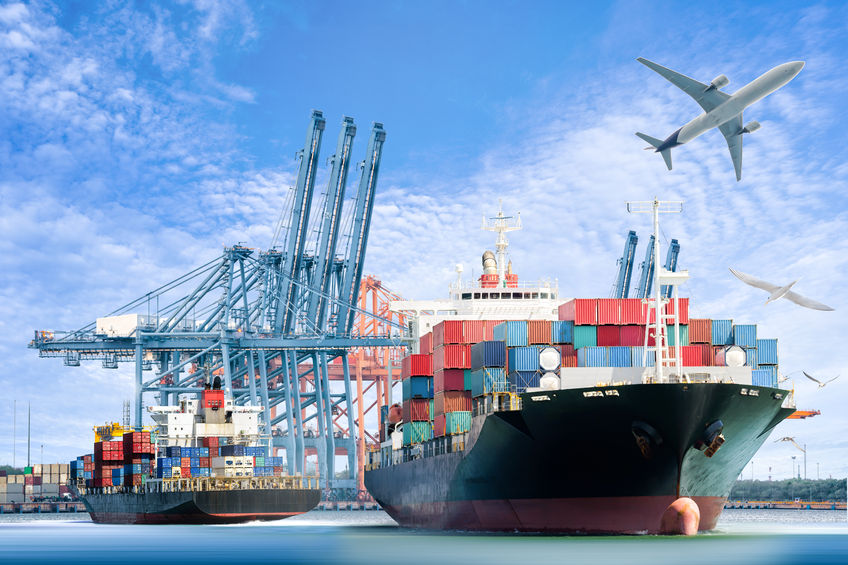
 The current biofuels are a step in the right direction, however, there may be even better solutions to contribute to a cleaner Earth. Research shows that the future of biofuels could be from grass and sapling. The only setback that needs to become resolved is if the cellulose in the cell walls of the plants can be broken down in biofuel. If that is the case, it will release less carbon dioxide than current biofuels.
 1035 NE 125th St Suite #320, North Miami, FL 33161.
 a1worldwidelogistics.com
 (305) 821-8995
 Hours: 8AM - 5PM