Yes. If you have cargo at port, you need to choose a freight forwarder to handle it. By working with a network of different shipment options, freight forwarders make it much easier for you to transport your cargo.
But how will you know which freight forwarder is right for you?
How to Choose a Freight Forwarder
Problem Solver
A Freight Forwarder should be a problem solver. If something goes awry your cargo being mishandled, it will be swiftly and expertly handled.
Trustworthy and Reliable
This is a transparent business. Anyone can go online and find out the information on international shipping prices and the process of transporting cargo. A freight forwarder knows this information and gives it to you straight and consistently.
Has a Network of Trusted Partners
With their reliability comes a network of trusted partners. You cannot get a network in this profession unless you know people and they vouch for your character. A network is a must-have because this is how you establish trade relationships down the line.
Gives Advice
A freight forwarder will give you advice. That doesn’t mean they will agree with you or give you compliments. It means they have seen everything in this market and they know what works and what doesn’t.
Saves you Money
Because of their advice, experience, and network, they will save you time and money. That is ultimately the goal. You will not be spending your time finding and developing all these relationships when you are going to be building your business. Let the freight forwarder handle it.
A1WWL
With A1WWL, we work to remove as many hurdles between you and your products. If you want a smooth import of your medical devices, please give us a call before beginning the transition, we could save you a lot of headaches and setbacks between you and accessing your device.
ZIM Has Just Issued the First Blockchain for Bills of Lading
ZIM, an Israeli Shipping Company, has successfully used a Block-chain software by Wave to add bills of lading for shipment. The containers went from China to Canada and Sparx Logistics. No issues arose at all from the use of the blockchain and no humans were needed to process any of the materials, only to verify correct usage.
So what are Block Chains? How do they affect International Trade? What does Cryptocurrency have to do with this?
What are Blockchains
A Chain is a connection between two entities (in this case computers.) The blocks are the bits of information that they transfer between each other. Together they form a blockchain. You can have a blockchain between your phone and your computer when you are transferring files between the two of them.
But there are mass expanses of blockchains that are the foundation of finances and cryptocurrencies on the market.
What is Cryptocurrency
With Blockchains, information is everything. The power of the blockchain can have precedence over everything. If you have 10 bits of the information set to pass through the blockchains network, they will acquire information as well and passed through a validated network.
Because of this, passing your information through a blockchain network generates security and value.
From this security and value comes a monetary value. The more people that invest in the blockchain, the more the blockchain can generate a currency that symbolizes the value of that blockchain.
In the case of Bitcoin, the oldest cryptocurrency that represents its blockchain, you are having a positive feedback loop of value for the blockchain. The blockchain is becoming more recognized because Bitcoin has a high value. Bitcoin has a high value because it is becoming more recognized.
Because of this, the value for Bitcoin is higher than any other currency in the world.
How do these two pertain to International Trade
Blockchains don’t have to represent a monetary value. They can instead simply form a unity of information between two computers autonomously.
What ZIM did was create a sustainable and reliable network that was able to handle the invoices, the bills of lading, and manage the manifests for the cargo as it went from China to Canada, all on its own without human input.
Not only is this an amazing development for international trade, but it also means that the blockchain used will go up in market value increasing it’s cryptocurrency worth if they decide to go that route.
A1WWL
A1WWL always pushed to be at the forefront of technology and innovation. If you have any questions about blockchain technology or how cryptocurrency will shape the future of our economic landscape, be sure to give us a call or send us an e-mail, we’d love to chat.
The tax bill has directed at helping companies and corporations based in America. Aimed at bringing companies and corporations back to America from overseas.
Who is positively affected by the Tax Bill
Citrus Growers
This bill is specifically aimed at people in Florida who are recovering from Irma as well as combatting the citrus greening disease.
Brewers and distillers
Brewers, Vineries, Distillers and all things alcohol are receiving a huge discount on tax breaks.
Engineers and Architects
These people receive a 20% tax deduction for their services.
Freelance Employees
People who are landscapers and uber drivers and the like receive a 20% tax deduction for their expenses every year.
How these Positives Damage Trade
All of these trades seem like they don’t directly pertain to international trade and are only a segment of the easily trackable changes established. However, one of the common numbers you’ll see on that list is 20%.
In America, the tax rate for corporations used to be 35% because they are often designed to grow large and fast, and it helps put back toward the community. However, other countries began offering lower rates so that corporations would claim their headquarters were in foreign countries where they are typically 25%.
Across the board, corporate tax rates are now 20%.
This affects international trade because places that have notoriously low tax rates used for production and manufacturing. Places like Apple will have their parts created in China and then assembled in America. But with these tax cuts, Apple could be convinced to make the entire endeavor in America.
This is a large disruption in the import/export business because this can highly disrupt the flow of business to and from China and other tech-centered countries that we are presently doing business with.
Is it better to bring in more corporate tax money at the expense of valuable trade routes?
Self Piloting Ships and the Long-Term Investment of the Future
Google and Rolls-Royce are Partnering for Self Piloting Ships
One of the most popular stories to come out in recent weeks has been that Rolls Royce and Google are partnering up for a line of personal, self-piloting ships for the future. This has come as a major turn because while Rolls Royce has created some ships in the past and Google has some experience with self-piloting cars; this is a mutual breach of territory for both parties involved.
Atop that, it has become an increasingly exciting endeavor for many people who want to own ships but simply don’t know how to operate them. Considering how many people buy ships and the usual investment they make, this could prove to be a huge market changer for Google and Rolls.
But one of the more interesting tidbits about this story is not the fact that Rolls Royce is making a ship, but that they are choosing Google to be their partner. One of the hotter options would have been to partner with Tesla, and additionally, there are countless self-piloting startups that are existing out there, so why would you choose Google?
Why is Google the Best Choice for Self Piloting Ships?
Not only does Google bring wealth, experience, and name recognition to the plate, but they also bring Blockchains. (Read more about our article on blockchains.)
We mentioned in the last article that block chains are packets of information sent between multiple computers to manually automate each step that goes along with automating a process.
Not only can blockchains bring a form of currency with it, but it also brings an extra level of validation. Many people who want to invest in automation are also wanting to invest in a blockchain to go with it. When it comes to automation and packet switching, Google is the best people in the game.
Can you create an autonomous ship without blockchains?
Self Piloting and autonomous processes need block chains because that’s simply how the bots that run the system work. There isn’t one bot in a boat steering and acting as captain. There is one coordinating thousands of little processes that are constantly reporting things such as time, speed, location, chop, water conditions, and so on and so forth.
Knowing that blockchains are the future of automation only proves that as more people are getting into automation, there will be in essence, fewer blockchain companies with larger networks within their system.
The Generalized System of Preferences Ends New Years Day
The GSP has been a provision of duty-free treatment to goods of designated countries since 1976. Designed to expire for reevaluation regularly, it is finally being left to expire in the new year.
Is this a good thing or a bad thing for trade? This was designed to make it easier for smaller countries to increase trade with our country, but does that mean it was an expense for those foreign goods to reach our shores?
Who will be affected?
Currently, there are 30+ countries that are relying on and depending on the GSP for specialty tax tariffs to make their trade more sustainably profitable.
Of those thirty countries, numerous GSP additions are relevant to specific trades.
There are too many industries being minutely affected by these changes to cover in one article. But if you want to know more, there is a detailed list and breakdown of this information here, make sure to choose the countries you know you are dealing with.
While the GSP is beneficial for many trade industries, it does seem that the current presidents own USTR are disregarding the GSP for the near future. You can read their official stance on the matter here.
But all is not lost. If you are worried that your trade routes will be affected by these changes, you can rest assured knowing that these lapses have occurred in the past before. In 2013 these changes lapsed for two years before being renewed in 2015.
After the renewal occurred, all the trade routes that were affected were also dealt a refund for the tariffs lost during that period.
In the short term, check to make sure and brace for a higher tax and import rate for your trade, however, do expect it to be repealed within the next few years as history often repeats itself.


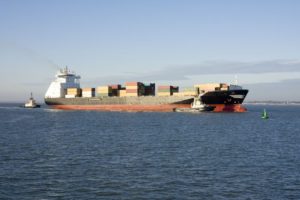 A Freight Forwarder should be a problem solver. If something goes awry your cargo being mishandled, it will be swiftly and expertly handled.
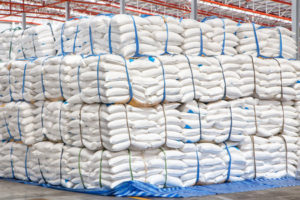 A freight forwarder will give you advice. That doesn’t mean they will agree with you or give you compliments. It means they have seen everything in this market and they know what works and what doesn’t.
 A Chain is a connection between two entities (in this case computers.) The blocks are the bits of information that they transfer between each other. Together they form a blockchain. You can have a blockchain between your phone and your computer when you are transferring files between the two of them.
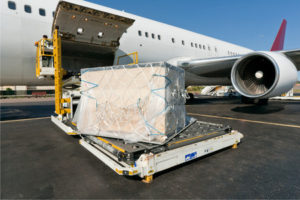 Blockchains don’t have to represent a monetary value. They can instead simply form a unity of information between two computers autonomously.
 This bill is specifically aimed at people in Florida who are recovering from Irma as well as combatting the citrus greening disease.
 Atop that, it has become an increasingly exciting endeavor for many people who want to own ships but simply don’t know how to operate them. Considering how many people buy ships and the usual investment they make, this could prove to be a huge market changer for Google and Rolls.
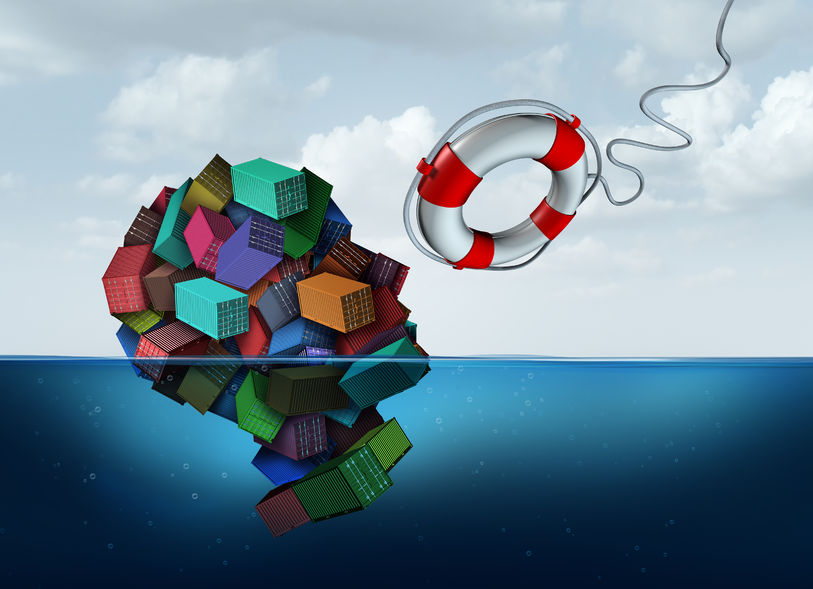
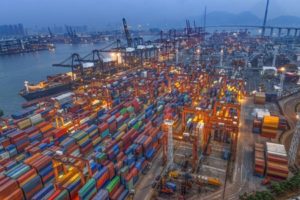 The GSP has been a provision of duty-free treatment to goods of designated countries since 1976. Designed to expire for reevaluation regularly, it is finally being left to expire in the new year.
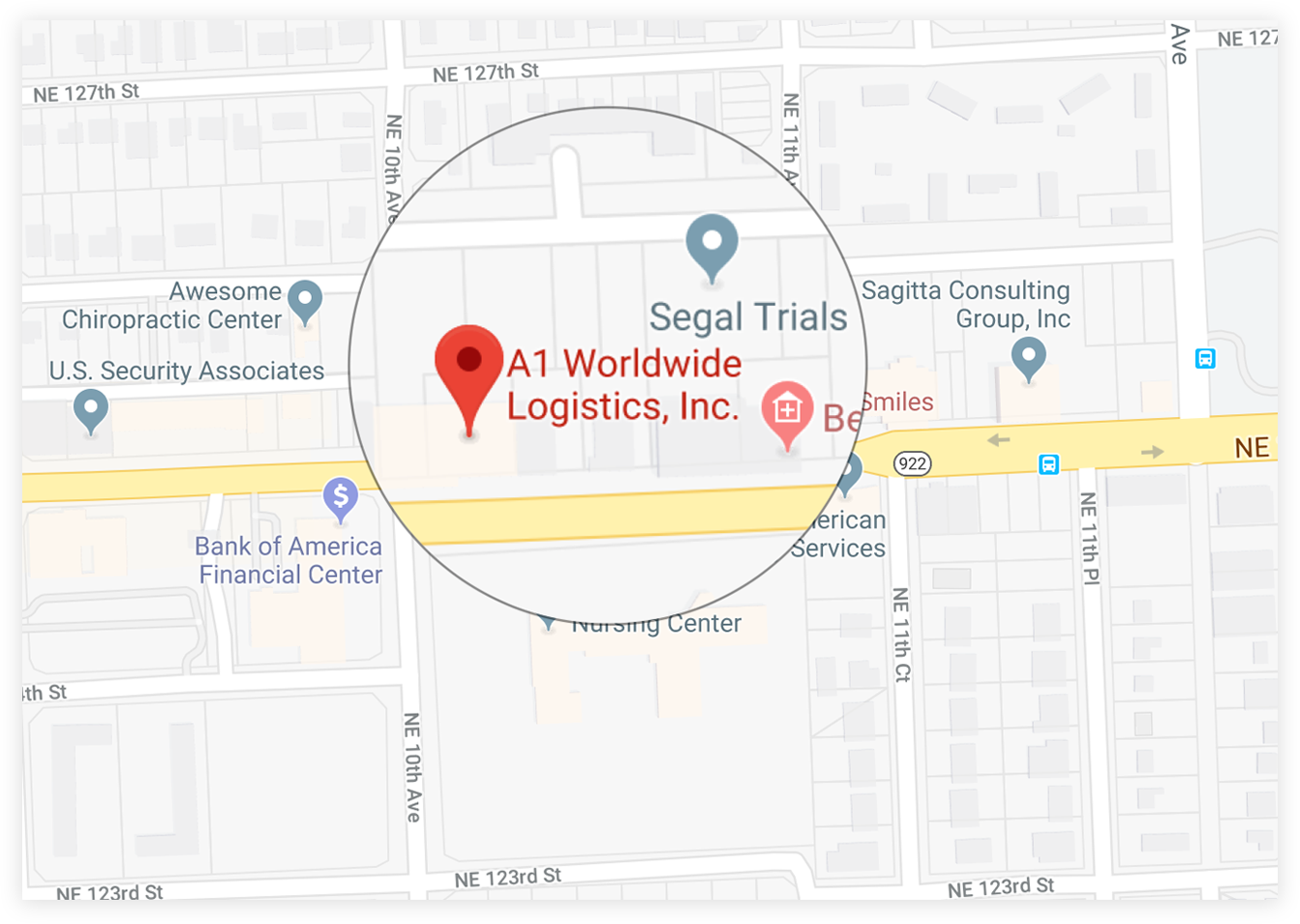
 1035 NE 125th St Suite #320, North Miami, FL 33161.
 a1worldwidelogistics.com
 (305) 821-8995
 Hours: 8AM - 5PM