
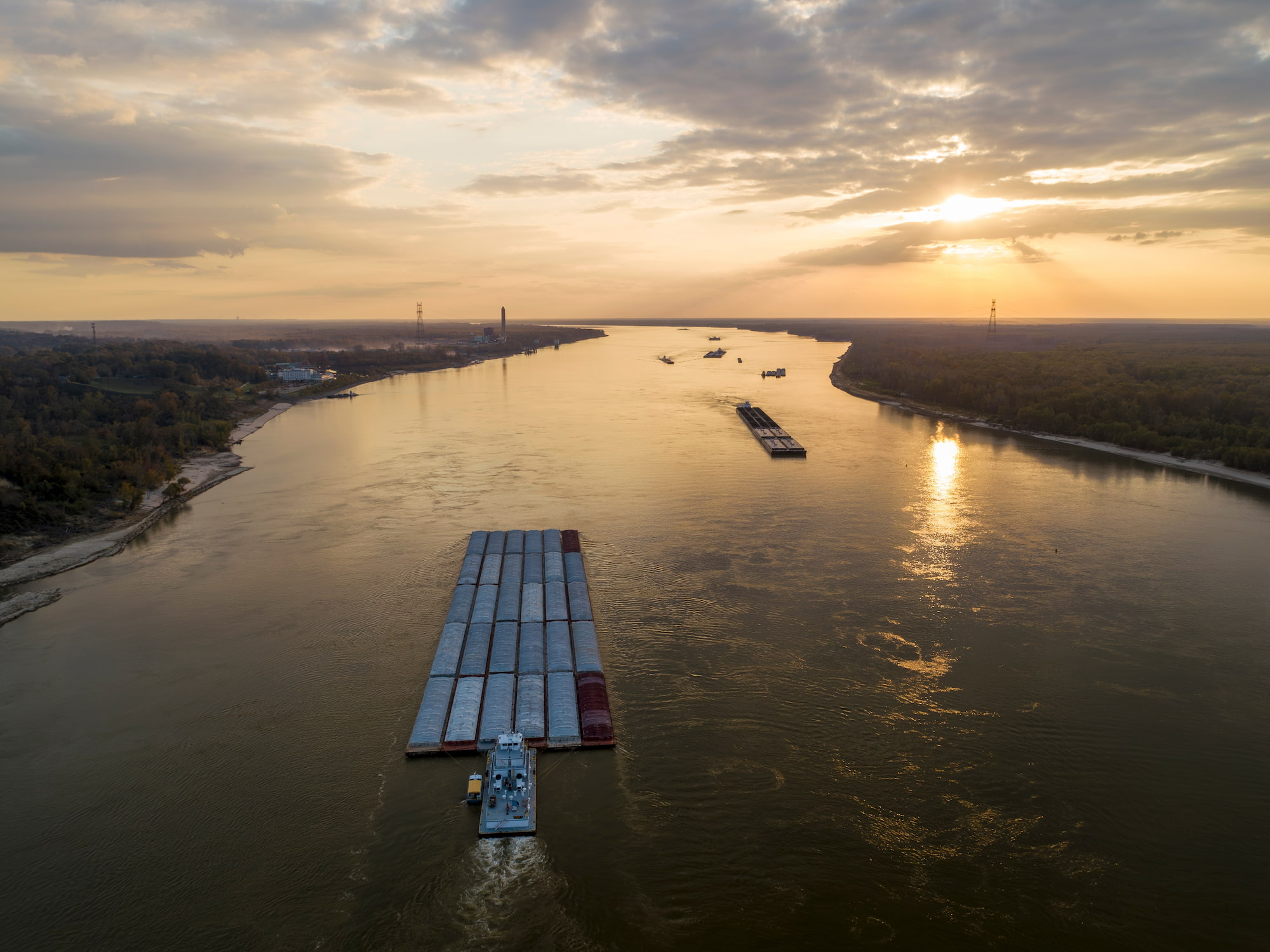
Shipping In The Mississippi River
Shipping in the Mississippi River is vital to the U.S. economy, bringing in over $405 billion annually. Flowing from Minnesota to the Gulf of Mexico, the Mississippi River is the 2nd largest river in the U.S. For over 200 years, shippers have used this waterway to move various cargo, including agricultural goods and petroleum products. While containerships can pass through up to a point, the primary transport method is by barges. Barges are inland waterway vessels that are flat-bottomed and do not have engines but move with the assistance of tugboats. The barges carry the containers across since most of the river is too shallow for containerships.
The Importance of Cargo Shipping In The Mississippi River
Since shipping began in the Mississippi River, it has been essential for domestic and international cargo movement. Today, nearly 175 tons of freight move through yearly, which is still growing. 92% of U.S. agricultural exports and 78% of feed grains and soy pass through the river. Other exports include oil, steel, wood, coffee, paper, chemicals etc. Due to the traffic, 41 ports and harbors are in the river and on connecting waterways. A few thousand barges transport the goods to the various ports. Despite its importance, the Mississippi River has had challenges adjusting to the growing traffic because of issues like a lack of infrastructure.
Low Water Levels Are Still A Concern
Another challenge the Mississippi River faces is record-low water levels. Over the last few years, a drought has decreased water levels in the river to a point of concern. Above-normal heat conditions have also added to the decline. An effect was that river barges could not float, meaning that limited cargo could move across. Despite the increase in dredging efforts in 2023, barges were still moving at two-thirds of the standard capacity. Since most U.S. grain shipments go through the waterway, exports may soon be at risk. Along with shipping, lower levels impact drinking water, which the river provides to nearly 20 million people.
New Container Terminal
Despite the current drought, companies plan to grow the Mississippi River’s capabilities. Plaquemines Port announced on January 12 that it completed a deal to build a new container terminal in Plaquemine, Louisiana. The location will be 50 miles from the river’s entrance and be able to serve 22,000 TEU Megamax-24 ships. Nearby, the Port of New Orleans has also started developing a new container terminal on the Mississippi River. This terminal will handle over 180,000 containers in the first year and approximately 1.2 million containers in the 25th year. Along with increasing the traffic going in and out of the river, the ports will expand opportunities for international shipping.
As international shipping continues to grow, the possibilities can be attractive to new shippers; however, beginning may not be as easy. Whether you are an individual or a company, having the assistance of a freight forwarder is ideal when starting. They coordinate the shipping process on behalf of the shipper and educate them throughout the journey. Contact A1 Worldwide Logistics at 305-821-8995 to begin moving your shipment domestically and internationally. Along with movement by sea, we provide other methods of conveyance like air and land to ship your goods.
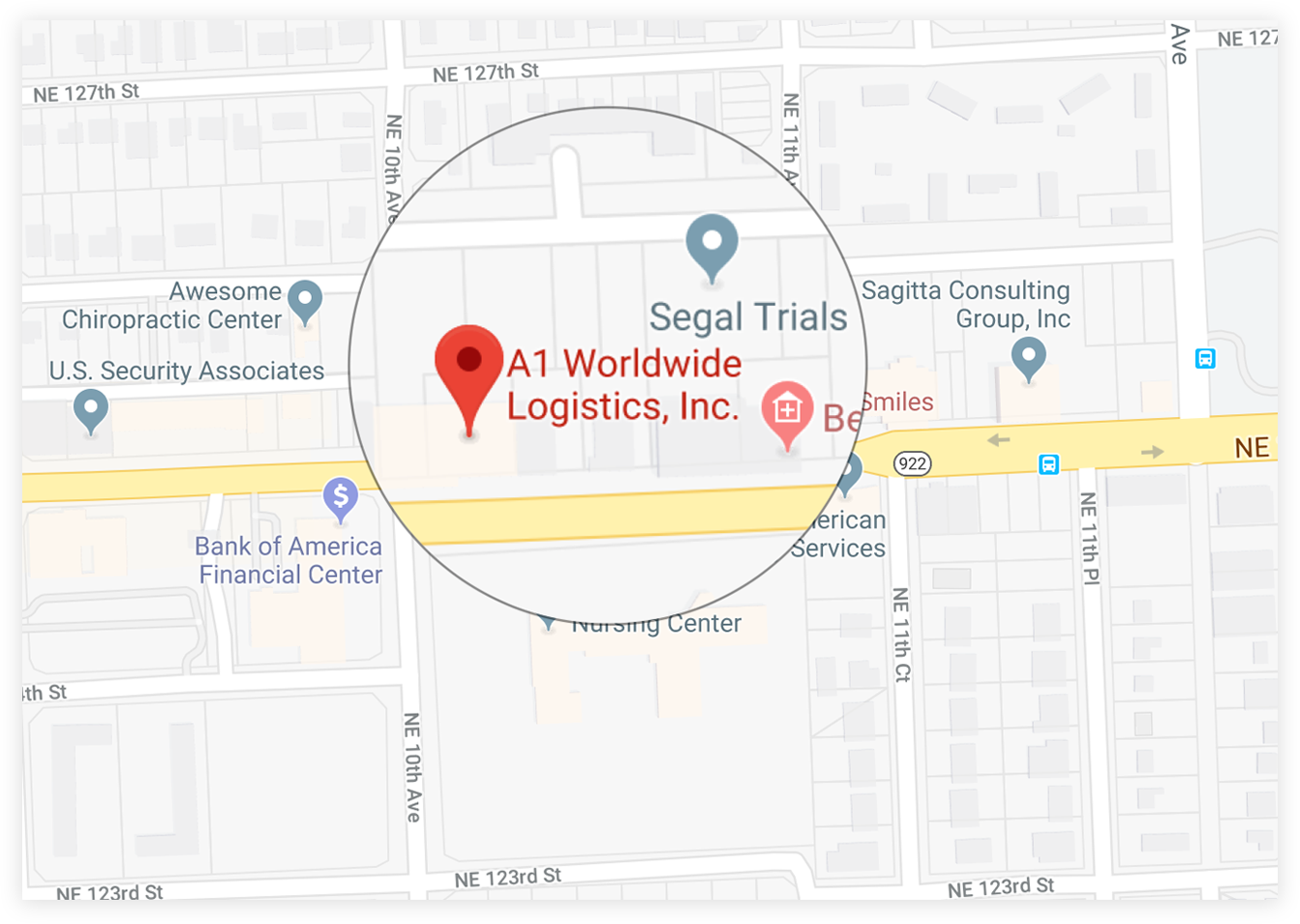
 1035 NE 125th St Suite #320, North Miami, FL 33161.
 a1worldwidelogistics.com
 (305) 821-8995
 Hours: 8AM - 5PM