If you are importing food into the US for resale, a customs broker can prepare the customs entry and submit the required food-import information. Before shipment, the broker needs to know exactly what the food is, where it was produced, and which business is importing...
You can appoint a new customs broker while imports are underway. Start by agreeing which shipments the new broker will handle and establishing what has already been filed with US Customs and Border Protection (CBP). The handover must account for work the previous...
The Court of International Trade (CIT) has recently announced a class action for IEEPA refunds. On October 8, the CIT said the class action will allow refunds to importers who imported cargo under the now-illegal International Emergency Economic Powers Act (IEEPA)...
Elegir el agente de aduanas adecuado es una decisión importante para cualquier empresa o persona que importe mercancías a Estados Unidos. Su agente de aduanas puede ayudarle a preparar su declaración de aduanas, clasificar sus productos, calcular los aranceles,...
Reducing Greenhouse Gases for International Shipping
Share This Article
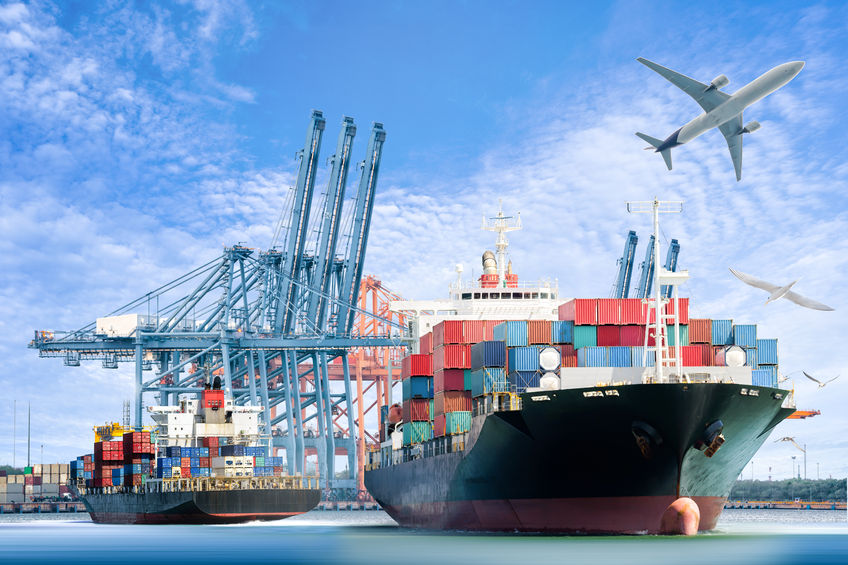
With all the technological advances that have been developed well into the 21st century, further conversation needs to become held about our carbon footprint. With freight forwarding and international shipping sky-rocketing recently due to high demand, it’s important to be conscious of the world we’re going to leave behind.
The consistent emission of greenhouse gases has developed a tremendous dent into the global climate, human well-being, and marine environments. Maritime travel account for millions of tons of carbon dioxide production into the atmosphere. With biofuels combined with the current fuel intake on cargo ships, the environmental efficiency will increase tremendously.
Effects on Environment
The more we collect greenhouse gases within our environment, the more heat is trapped on Earth, which increases global warming on a constant basis. If the energy from the sun and the amount of gases remain the same, the temperature will level out. However, over millions of years, the gases have accumulated much more than intended and continue to cause the temperature to reach its highest in history.
Rising ocean temperatures and melting ice caps are all contributing to the rise in sea level which will in turn cause costal erosion, flooding, and property damage to name a few. Over the past century, sea levels rose one foot, and its predicted to rise another three feet in the coming century. Biofuels pose as a great alternative to the fossil fuels being used over many years to lessen the harmful gases become released into the atmosphere.
Biofuels
Although gasoline and diesel are biofuels, they are ultimately seen as fossil fuels because they become made of decomposed plants and animals that became buried in the ground for millions of years. Biofuels can be made chemically, fermentation, and breaking down starches and sugars in plants.
If cargo ships incorporated Ethanol into their gasoline, the emission of greenhouse gases would greatly reduce. Making fuel from plants allows them to suck up the carbon dioxide in the atmosphere to combat the amount that is released. Biofuels have the potential to diminish the use of fossil fuels anywhere from 10-30%.
Future Endeavors
The current biofuels are a step in the right direction, however, there may be even better solutions to contribute to a cleaner Earth. Research shows that the future of biofuels could be from grass and sapling. The only setback that needs to become resolved is if the cellulose in the cell walls of the plants can be broken down in biofuel. If that is the case, it will release less carbon dioxide than current biofuels.
If you are importing food into the US for resale, a customs broker can prepare the customs entry and submit the required food-import information. Before shipment, the broker needs to know exactly what the food is, where it was produced, and which business is importing...
You can appoint a new customs broker while imports are underway. Start by agreeing which shipments the new broker will handle and establishing what has already been filed with US Customs and Border Protection (CBP). The handover must account for work the previous...
CBP Form 5106 is the Create/Update Importer Identity Form. It provides U.S. Customs and Border Protection with the identifying information needed to establish or update an importer’s customs record, including its name, identification number, address, and contact...
Descubra cómo elegir una empresa de transporte internacional de mercancías, comparar opciones aéreas y marítimas, preparar documentos y calcular costos logísticos.
DDP stands for Delivered Duty Paid. Under this shipping term, the seller arranges transportation to the agreed destination and handles export and import clearance, including the applicable import duties and taxes. The goods are delivered to the buyer ready for...




 The current biofuels are a step in the right direction, however, there may be even better solutions to contribute to a cleaner Earth. Research shows that the future of biofuels could be from grass and sapling. The only setback that needs to become resolved is if the cellulose in the cell walls of the plants can be broken down in biofuel. If that is the case, it will release less carbon dioxide than current biofuels.