A new report by the World Bank Group (Connecting to Compete) reviewed by A1 Worldwide logistics has proven that Advanced economies remain the global leaders in trade logistics and management.
Around the world, most advanced global countries have chased logistics-related transformations and investments to build their infrastructure, accelerate and facilitate transportation and trade, or grow or improve current services. Despite this positive progress, the sixth edition of Connecting to Compete paints a decidedly mixed picture. Advanced countries score, on average, 48% higher than lower-income nations when it comes to logistics performance and growth.
Caroline Freund, director of the macroeconomics, trade & investment global practice at the World Bank Group. Says this on the matter; “Logistics services are the backbone of international trade, Good logistics reduce trade costs, but supply chains are only as strong as their weakest link. For developing countries, getting logistics right means improving their infrastructure, customs, skills, and regulations.”
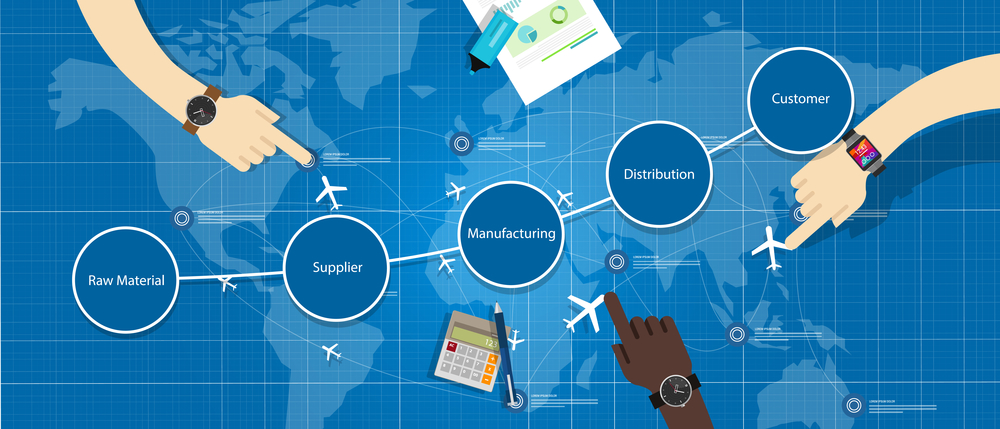
The World Bank Group’s “Connecting to Compete,” report contains the Logistics Performance Index (LPI), which is a bi-annual report that scores over 160 countries on how efficiently their respective supply chains connect local firms to domestic and international opportunities. The 2018 LPI points to emerging concerns like the resilience of supply chains, their growing environmental footprint, and the urgent need for qualified workers.
A1 Worldwide logistics knows that one of the most pressing concerns is a logistics labor shortage for both advanced and developing countries. Developing countries require large numbers of managerial-level workers, while developed nations face a dire shortage of blue-collar laborers, such as semi-truck drivers. High-income countries are 60% more likely than low-income nations to seek logistics options that are eco-friendly. Environment-friendly logistic options are essential because CO2 emissions from transportation are a substantial contributor to pollution. High-income countries are also more proactive than low-income nations when it comes to increasing their preparedness to potential cyber threats.
Out of all the country’s graded by the LPI, Germany has the highest aggregate score over the previous four LPI issues. Nations that are leading players in the supply chain have ranked highest in logistics performance. Countries that rank lowest tend to be those that are low-income, isolated, fragile or facing conflict political unrest. Among the more moderate to middle-income group countries, large economies such as India and Indonesia and developing economies such as Vietnam stand out as top performers.
“With international trade becoming more dispersed through global value chains, good logistics are more important than ever,” said Christina Wiederer, a World Bank Group economist and report co-author. “Small disruptions to a supply chain can spread rapidly to other countries and regions.
‘Connecting to Compete’ and its Logistics Performance Index help governments understand the link between logistics, trade, and growth, and what policies are necessary for success.”
The report and its Logistics Performance Index are tools created to help governments benchmark their progress on trade logistics across critical criteria, including the quality of trade-related infrastructure, the price of international shipments, logistics competence and quality, and the frequency with which shipments reach their destination on time.
Want to know more about logistics or other technological advances in the industry? Like us on Facebook and follow on twitter to keep up to date with all the latest.
A1 worldwide logistics knows that every business in the world, be it a traditional brick and mortar or an only online retail store, has to manage numerous tasks and events every day to ensure its effective and efficient growth. As you know, a company that is managed well is capable of filling the expectations of all its customers and clients and satisfying and delighting its customers. Among the of everyday tasks and functions that every retail outlet operating online has to worry about, customs clearance and hiring a customs broker are some of the most common. Logistics management deals with the transportation of goods and materials from warehouses to the to businesses where they are stored and or sold. Logistics is also tasked with transporting e-commerce products to the address of customers who order the products online anywhere in the world.
Logistics challenges
Logistics and it’s management is one of the most complex tasks a business can face today; However, at A1 Worldwide Logistics, we make it straightforward and easy. Transportation of items and goods from one place to another is highly challenging since they are subject to frequent climatic fluctuations, storage of products and maintaining their quality, deadlines and a lot more. Therefore, the logistics management services we provide for online businesses are vital for the success of every e-commerce business. The logistics services we offer are provided by our expert and experienced logistics operations partners all over the world. These service partners understand the unique challenges and obstacles that your business faces in the transportation of goods and products. We these challenges in mind, we have come up with practical and efficient solutions to tackle them.
The right network for you
Our vast network of logistics services providers all over the world is very experienced in the ever-changing world of business, retail, and e-commerce. These logistic partners have strong networks that are entirely dedicated to helping companies to reach every corner of the world to deliver your products on time and thus ensure the satisfaction of your customers. After all, every customer expects to obtain the products they ordered on time and as quickly as possible. The higher the satisfaction of a customer, the higher the chance of business success, growth and profit potential of your business.
What we do
A1 worldwide logistics offers professional & easy logistics services for e-commerce businesses of all sizes. We specialize in providing logistics and transportation services that are complemented by several other essential services that contribute to the growth and effectiveness of a business. For instance, our retail businesses logistics services also include customer integration with new and existing stores and warehouses, store management, warehouse fulfillment and last mile services, pick up and drop for clients, tracing and tracking of products, etc.
Thus, using effective and professional e-commerce logistics services like the ones provided by A1 Worldwide Logistics can help your business to grow and also improve your reputation in the competitive market. As the premier freight forwarder in Miami, we will help manage all of your logistics and custom clearance needs.
Questions
Questions about how we can help streamline your logistics management needs? Call us at (305) 821-8995 or send us an email at info@a1wwl.com
A1 Worldwide Logistics knows that the first step to achieving success in logistics management is planning, lots of planning. Now, planning takes many forms and involves many moving pieces. Acquiring goods and products, the selection and management of storage facilities, and delivery of products to their destination.
Apart from all the above, the other constraints you will be dealing with are – time, transportation, and of course the costs. An efficient supply chain manager and or customs broker should be able to create a flow chart for the whole operation. The purpose of such planning is to enable efficiency and reliability in the shortest possible time, while, the planning should also aim at maximizing the profits of your logistics operations.
Careful and detailed planning is always a wise plan, but a logistics manager should be able to prepare for the most unforeseen circumstances as well. A well-oiled logistics management company must be ready to deal with issues related to…
The products
Inaccessibility of the transportation or supply chain
Any internal issues in the organization
For this, a detailed contingency plan should be completed to avoid any possible logistics failure. Logistics planning process is unfinished without an emergency contingency plan.
Embrace new technology and automation
In the age of automation and breakneck innovation, technology plays a major role in increasing the efficiency of an organization. Automation and technology like the Blockchain have a vital role in the logistics management optimization.
For instance, business process software can be integrated that provides timely updates regarding the movement of goods. The operator and the client will get details regarding:
The products have been dispatched from the supplier
The arrival of the products at the warehouse, and lastly,
Delivery and acceptance of the products at the destination
This saves a substantial amount of time because a large amount of manual processes and interference is eradicated. Moreover, technologically enhanced tracking dramatically improves the overall logistics process management.
Likewise, the client account details and employee details can be managed using software specifically developed for these tasks. Therefore, logistics management firms should embrace this evolving technology for increasing productivity and efficiency
Value Relationships
Your team is an essential aspect of your organization they are responsible for your potential growth. Whether it’s the logistics driver or the warehouse manager or customs broker everyone should be perfect in his or her respective field of work or skill.
Because of this, you will need to invest in proper and in-depth training of your employees. Regular training workshops keep the employees engaged with the latest trends in the logistics management industry. This dramatically increases your logistics efficiency and potential satisfaction of your clients.
A Logistics manager with impeccable interpersonal skills is crucial for your organization. There will be times when the things don’t go according to the plan. In situations like this, instead of losing their nerve, you need a reliable person who can sort out the issues with the utmost efficiency and professionalism.
Furthermore, the manager should have reliable contacts in the industry. This can be beneficial in tapping additional business opportunities.
Measure and Improvise
Logistics network optimization is incomplete without integrating measurement, analysis, and feedbacks. When you deploy new strategies in the system, you need to measure the output. This is important as it intimates the success or failure of the plan.
Measurement tools and software should be integrated that easily determines and classifies the information as per the requirement. Your future planning is heavily dependent on the measured data. Analyze the metrics related to different operations. This includes:
Cycle time metrics
Cost metrics, and
Service metrics
Generous feedbacks help in improvising. The ideas and suggestions of the employees should be recorded periodically. This ensures that you generate a pool of ideas and at the same time, it reveals any flaws in the system.
Conclusion
If you wish to trump over your competitors, you should adopt the latest technology and innovative approach. Effective logistics management aims to improve the efficiency of the operations, ensuring customer satisfaction, and increase productivity.
These tips and strategies are necessary for process optimization. Every logistics firm that is struggling to boost their operations, they can incorporate these suggestions for logistics network optimization.
Questions?
Questions about how we can help streamline your logistics management needs? Call us at (305) 821-8995 or send us an email at info@a1wwl.com
As A1 Worldwide Logistics, the logistics industry, and the broader business world, look to 2019, it’s time to explore what the new year will bring to logistics and 3PL’s. As a serial innovator in this industry, we’ve outlined a few predictions and trends that we believe will affect the logistics industry will experience over the next year.
Payments Will Be More Secure, And International Transactions Will Be Easier Than Ever
In 2019, new payment technologies will continue to make inroads in the logistics industry on a widespread scale, leading to more security and transparency in transactions globally.
Cryptocurrencies like bitcoin and etherum will become extensively accepted, leading to safer payments with an eye toward maintaining privacy. Whether any significant financial institution introduces a cryptocurrency of their own remains to be seen, but the industry will be prepared. For the logistics industry, cryptocurrency will make it easier for cross-border, international payments to be carried out safely and securely.
Big Data, Blockchain Technology, and Automation Will Transform Logistics
Demand for IT services in the logistics industry appears to have increased in recent years as more companies have begun IT projects in their logistics/supply chain operations. That trend will most likely continue in 2019 as small and midsize importers and exporters even the playing field against larger counterparts by leveraging big data and blockchain technology.
The execution of big data technology will lead to safer supply chains globally. Small and growing importers and exporters stand to gain the most from new technology since they do not have the resources to create a secure supply chain but will be able to rely on freight companies that provide big data capabilities to customers. The supply chain will be more reliable, as importers and exporters will have the ability to communicate quickly with global suppliers and automate complicated tasks to minimize human error and eliminate redundancies.
Blockchain and related technology will increase transparency for importers and exporters in 2019. It will reduce the time and personnel to record communications within the supply chain. When shipping globally, there are many layers involved, so it will benefit shippers to minimize information interruption, reduce the paperwork required, and maintain access to original information without worrying about tampering and or fraud during and after shipment. Additionally, blockchain will eliminate intermediaries, as it enables direct communication between participants.
The Logistics Industry Will Continue To Shrink, Leaving Few Major Players
In 2017 and 2018, significant developments in logistics led to the consolidation of major shipping companies. The result is far fewer shipping carrier options for shippers.
In 2019, further consolidation of the Logistics industry may mean higher rates due to less competition. However, through mergers and acquisitions, shipping companies will offer top-tier customer service and increased capacity. In 2019, consolidation will continue to be a double-edged sword.
Politics and tariffs will continue to effect Logistics
Many businesses have already cited substantial headwinds from tariffs in their earnings results, with taxes affecting their bottom lines. For businesses that haven’t felt direct effects just yet, many are bracing for a worst-case scenario and looking at their supply chains and sourcing for ways to potentially mitigate the costs.
Earlier this year the Trump administration indicated potentially placing tariffs on an additional $269 billion worth of goods from China. Tariffs on $60 billion worth of products are already in effect. The most recent announcement adds $200 billion in value. If another $269 billion are added, the total amount of the Chinese goods taxed by the U.S. will reach $519 billion, which is more than the total amount of goods the U.S. imported from China in 2017.
In closing, it is likely that 2019 will be the most active and challenging year ever in global trade and logistics. As the Trade War between the US and China simmers, the new North American Trade Pact “USMCA” is finalized and America’s attention is directed toward other targets, the environment for logistics professionals will be intense and ever-changing. A1 Worldwide Logistics will be here to help your company navigate these changes and provide the services that keep your company moving forward.
Have questions about how your business is going to handle these tariffs? Give us a call at (305) 821-8995 or send us an email at info@a1wwl.com
At A1 Worldwide Logistics we know that the best-laid plans of mice and men often go awry. The supply chain system you have in place doesn’t exist in a vacuum — it will regularly face challenges, from minor errors and customer whims to unforeseen disasters. Whether it can withstand these tests will depend less on your ability to predict every eventuality and more on how flexible and adept you are at meeting and making the most of unfavorable or unique circumstances.
Granted, developing a sustainable supply chain is about more than handling threats — it requires recognizing and seizing the opportunity to improve your operational efficiency, build closer partnerships with the right third-parties and deliver a superior customer experience that fosters loyalty. Doing so begins with laying the groundwork for adaptability. Below are a few of the first steps you can take toward this endeavor.
Get a Bird’s-Eye View
Problems will inevitably arise. How prepared are you to effectively redirect flow, mitigate any losses, and meet your goals as efficiently as possible with minimal delay? To this end, it’s vital to implement a system that provides access to the full picture.
For instance, if an incident occurs in transit, are you easily able to determine the status of your product? Does your current system provide a clear overview of all available resources and third parties who offer viable alternatives?
At any given moment, you should be able to leverage these connections in real-time to achieve the best possible outcome. Much like air traffic controllers, the most effective strategy is one that allows you to navigate and coordinate all the moving parts of your system to ensure they flow smoothly and effectively.
Sweat the Small Stuff
Pennies add up to dollars. Many businesses are too willing just to cut their losses or don’t realize the degree of revenue loss when they don’t mind the details. More than merely syncing operations to streamline them, ask yourself if your methods are as gainful and constructive as they can be.
If It Ain’t Broke… Fix It Anyway
Just because a process is “working” does not mean it’s working well or as effectively as it could. The market is competitive, and consumers are ever eager to flock to greener pastures that offer quicker and cheaper alternatives.Always analyze and reassess your approach to stay competitive. Order fulfillment is inherently complex, and a one-size-fits-all model won’t cut it. It would be best if you always were working on ways to tailor your strategy around each customer to boost satisfaction. Moreover, to be able to refine the details and customize flows adequately, you’ll need the right tools to analyze everything from carrier performance to margins and revenues. Sustainable models do more than fix problems: They recognize that a less-than-ideal system is problematic.
Creating a sustainable supply chain is challenging. A lasting model is one that recognizes and appreciates the complexity of order fulfillment and reverse logistics. You want an approach that is flexible enough to plan and execute operations both on a macro and micro level, as well as have the means to lend a critical eye to each facet of the process.
Fortunately, there is no shortage of tools and innovative software to help make this happen. Now that businesses can digitize their operations, they can approach network oversight with greater visibility, refined execution, and access to data that exposes pain points and indicates room for growth. The question going forward is: Are you doing all you can to make your operation sustainable? Questions? Contact A1 World Logistics at 305-821-8995 or send us an email at info@a1wwl.com





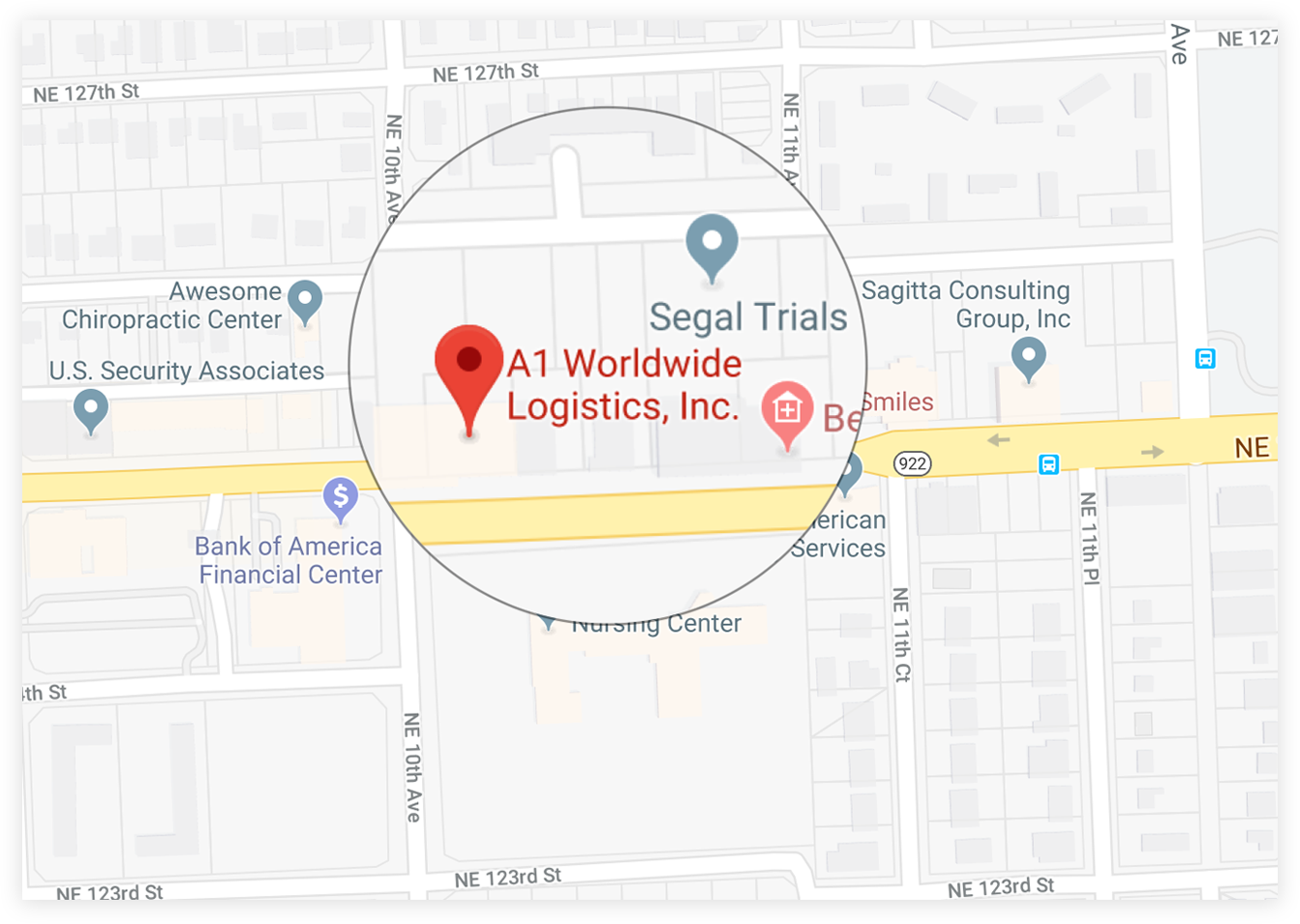
 1035 NE 125th St Suite #320, North Miami, FL 33161.
 a1worldwidelogistics.com
 (305) 821-8995
 Hours: 8AM - 5PM