by A1 WorldWide Logistics | Jan 8, 2025 | East Coast Protests, Economic trends, Shipping Logistics
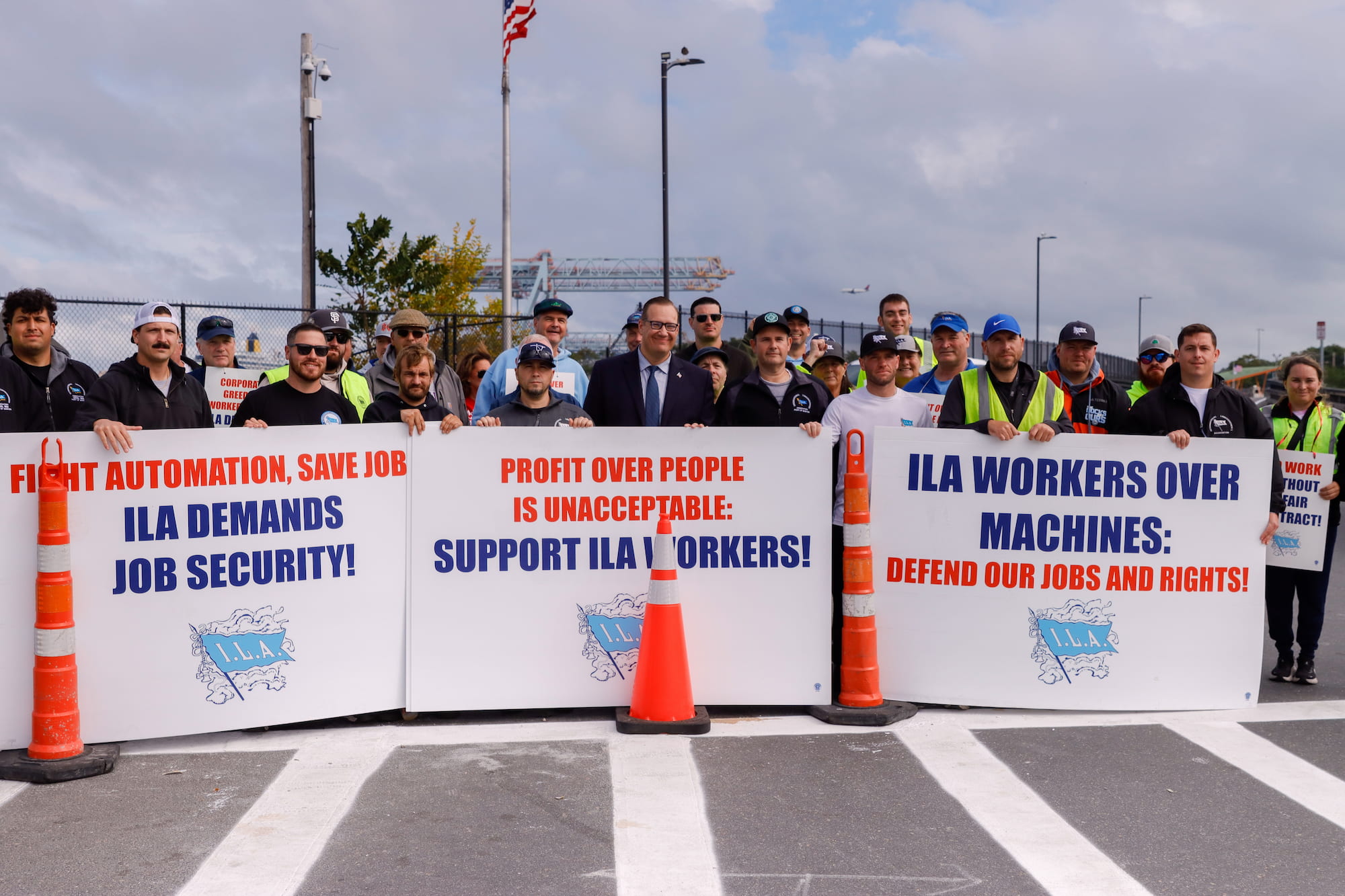
Port labor talks are resuming between employers and dockworkers, with the current contract extension expiring on January 15th. Negotiations between the ILA (International Longshoremen’s Association) and the USMX (United States Maritime Alliance) have stopped since October 2024. The pause was after a strike on October 1st that lasted after three days. A tentative agreement ended the protest by extending the existing contract to January 15th, 2025. The agreement promised an hourly pay increase of 10% in the first year and 62% over the six-year deal. Over the last year, ILA workers have been protesting for higher and against using automation at ports. Specifically, they are fighting for wage hikes like West Coast ILWU dockworkers received in 2022.
During and after the pandemic, international shipping rates surged to incredible amounts. Specific container rates rose from $2,500 to $12,000. From 2020 to 2023, the USMX reportedly made nearly $400 billion. ILA President Harold Daggett noted, “Since COVID, they’re making billions of dollars, but they don’t want to share it.” International shipping companies have already announced container surcharges in the scenario that a strike does occur. They advise customers to retrieve their containers and return empty ones before January 15th. If the parties fail to reach an agreement by the date, associations like the NRF (National Retail Federation) are pushing for another extension.
The Reason Why Port Labor Talks Are Resuming
The reason why negotiations are resuming is to avert a situation similar to October’s port strike. While the October strike only lasted three days, a potentially longer one can have numerous consequences. Analysts approximate that a prolonged strike can result in an economic loss of $0.5 to $5 billion daily. Numerous supply chains rely on the ports, and disruptions can lead to delays and monetary loss. Shippers have already rerouted their shipments to ports away from ports affected by possible protests. The results of the talks are noteworthy, with East and Gulf Coast ports handling significant volumes of U.S. imports.
Automation Is A Primary Concern In The Talks
Although the October 2024 talks ended the strike last year, they did not address the issue of port automation. Automation is a huge concern due to the belief that it threatens the job security of ILA dockworkers. Dennis Daggett, the union’s vice president, stated, “It’s about replacing workers under the guise of progress while maximizing corporate profits.” The ILA also doubts the effectiveness of implementing automated systems and that the cost will outweigh the productive gains. Conversely, the USMX argued that semi-automated cranes are essential for improving efficiency and making U.S. ports competitive globally. Ports in countries like China have increased the volume of cargo movement due to these technologies.
The USMX also believes that automation will create new jobs for handling and maintaining the strategies. President-elect Donald Trump has backed the ILA’s stance against automation, noting that it will hurt American workers. Despite the concern that a potential port strike may cause, it should not stop you from moving your shipment. You should, however, take preventive steps beforehand and be up-to-date with the current situation. Reach A1 Worldwide Logistics at info@a1wwl.com or 305-425-9513 for a quote to move your goods internationally. We find the best action to ensure cargo moves to the final destination.

by A1 WorldWide Logistics | Oct 4, 2024 | East Coast Protests, Shipping Logistics, Supply Chain
The ILA port strike ends after days of protests across East and Gulf Coast ports. Since October 1st, nearly 45,000 International Longshoremen’s Association (ILA) dockworkers walked out of ports and protested for better contracts. Their previous six-year contract with the United States Maritime Association (USMX) ended on September 30th with no resolution. Disagreements on wages and use of automation at ports have stalled talks for months. On the days leading up to the deadline, both parties made offers to prevent the strike, but to no success. When the ILA started walking out of their jobs, ports began shutting down. As a result, this significantly impacted the international shipping industry.
On October 3rd, the ILA and USMX reached a tentative agreement to extend the contract until January 15th, 2025. The agreement was a 61.5% pay raise and a $4 an-hour yearly wage increase for the next six years. Despite the ILA’s fight for a 77% wage increase, this is more than the USMX’s previous 50% offer. A final master contract will have to be negotiated by the parties before the extension date. In a statement released by the White House, Biden notes, “I want to applaud the International Longshoremen’s Association and the United States Maritime Alliance for coming together to reopen the East Coast and Gulf ports.”
What Can The Shipping Industry Expect As The ILA Port Strike Ends?
Despite an extension of the contract, the international and domestic shipping industry has already felt the impact of the strike. Once the strike occurred, containerships started piling up at ports without dockworkers there to unload them. As a result, this created congestion that may lead to supply chain delays soon. While the temporary agreement resumed operations, it could take weeks for ports and supply chains to return to normality. To mitigate against delays, shippers rerouted to West Coast ports weeks before the strike occurred. Once ports shut down, importers of perishables like agriculture began fearing food spoilages from delays leading to loss and shortages.
Consumers reacted to the potential shortages by panic buying goods from stores. As the protest ends, the overall monetary loss could be less than anticipated by the shipping industry and the economy. The amount is still significant to the U.S. economy, with analysts reporting that a strike can cause a loss of nearly $5 billion daily. Ports across the East and Gulf Coast have begun opening and resuming operations. North Carolina Ports resumed normal operations at 8 am ET, while Port Houston will reopen at 1 pm CT. The Department of Transportation will work with supply chain stakeholders to ensure an orderly operation for the ports.
Is It Safe To Ship Cargo?
With the protest ending for the time being, shippers may find it safer to move cargo internationally. It is essential to understand that it may take time to clear the complete impact of the strike. When starting, it can be beneficial to use the assistance of a 3PL (Third-Party Logistics) provider. 3PLs help you navigate the world of international shipping by providing services like freight forwarding and customs brokering. They also guide you through the entire process and give you an idea of what to expect. Reach A1 Worldwide Logistics at info@a1wwl.com or 305-425-9752 for assistance with shipping goods in and out of the U.S. We have freight forwarders and customs brokers that ensure the success of your shipment.

by A1 WorldWide Logistics | Oct 3, 2024 | East Coast Protests, Shipping Logistics, Supply Chain
Conflicts between the International Longshoremen’s Association and United States Maritime Alliance are resulting in the East Coast port protest continuing. On midnight, October 1st, ILA dockworkers across East and Gulf Coast ports left work on a strike. Negotiations with the USMX for a new contract have been unsuccessful, and the deadline has passed. The new contract they are fighting for includes fairer wages that reflect the cost of living and less port automation. A push for port automation has been an issue for the ILA since it threatens job security. As the strike continues, the impact on international and domestic shipping and various industries is rapidly growing.
What Is The Impact Of The East Coast Port Protest Continuing?
On Wednesday, 45 container ships were outside east and west coast ports, unable to unload due to port shutdowns. On Sunday, this number was three; however, the 45 vessels could double by the end of the week. The most significant impact of the protests is that global supply chains will feel the disruptions. Some of these goods affected by the strikes are produce products, with the ILA handling nearly 75% of banana imports and 90% of cherries. East and Gulf Coast ports also hold approximately 62% of machinery importers bring. As the backlog of ships continues to rise, delays will have other effects on supply chains, such as scarcity.
Consumers have recently begun buying goods from stores in fear of shortages in the near future. A shortage in everyday products could also cause inflation due to scarcity pushing prices higher. For importers and exporters, shipping costs can increase as shippers look for alternatives for moving their cargo. A popular alternative for moving cargo both domestically and internationally has been rerouting their shipments. This can lead to longer, more costly routes, and the cost goes directly to the customer. While choosing other conveyance has also been an alternative, it has its benefits and drawbacks. For example, switching to air can cut shipping time to a few days but may increase the overall cost.
How Long Could The Strike Continue?
The length of the protest depends on how long the ILA and USMX will take to find a resolution. A strike of one week can cost the U.S. economy over $2 billion, and a strike lasting over three weeks may take until 2025 to clear. Port employers reportedly offered the ILA a 50% wage increase over the next six years; however, they rejected it. The reason is that the union is seeking a contract with a higher yearly wage hike. Although no negotiations are currently in place, the USMX is willing to continue talks. Companies from various industries have been pleading for the Biden administration to intervene.
In response, Biden supported the dockworkers and scolded carrier companies for not paying them fairly. The administration notes that it will not invoke the Taft-Hartley Act to suspend the protests. Due to the severity of the protests, shippers must be up-to-date on the current situation. Importers and exporters should not stop transporting their shipments; however, they should take proper steps to mitigate disruptions. Contact A1 Worldwide Logistics at 305-425-9456 or info@a1wwl for updates and assistance moving your cargo. We educate you on the steps to take while constantly being with you throughout your shipment’s journey.

by A1 WorldWide Logistics | Oct 1, 2024 | East Coast Protests, Economic trends, Shipping Logistics
After months of failed negotiations, the ending of a contract has resulted in the ILA port strike beginning. International Longshoreman Association (ILA) dockworkers have begun protesting across East and Gulf Coast ports. Their six-year contract with the United States Maritime Alliance (USMX) ended on September 30th. The last time this happened with the ILA was in 1977, when workers walked off ports for seven weeks. With the size of the ILA, the strike will have numerous effects on global trade.
How Did This Port Strike Come To Be?
On May 13th, 2024, the ILA and USMX said they would negotiate a new contract in a few days. In particular, the ILA is fighting for a 32% hike in wage increase, similar to the ILWU in 2022. The ILA is also protesting for higher pensions and against using automation at ports. In a video the ILA released on September 4th, President Harold Daggett said, “Mark my words, we’ll shut them down.” In response to the video, the USMX gave an update on whether they were satisfied with their new contract offer. The USMX noted in that update that they would continue negotiations with the ILA if possible.
The Biden Administration noted that it would not intervene in the negotiations and use the Taft-Harley Act, causing a cool-off period. Various agricultural groups urged the white house, ILA, and USMX to continue talks. However, it was not successful. Currently, major ports across the East and Gulf Coast are shut down by the strike. At Port Houston, nearly 50 workers started picketing around midnight with signs saying, “No Work Without A Fair Contract.”
What Does The ILA Port Strike Beginning Mean For International Shipping?
The ILA is a union with thousands of workers across 36 East and Gulf Coast ports. They handle nearly half of the U.S.’s ocean shipments. Due to its size, the strike has significant implications for the international shipping industry. One of the pronounced impacts is that a strike could delay global shipments for imports and exports. Port shutdowns could cause a backlog of vessels not being unloaded, leading to congestion. Weeks before the strike, shippers rerouted cargo to West Coast ports like the Port of Long Beach. That may also lead to delays in the near future as the cargo volume rises.
Analysis reports that the strike can cost the U.S. economy nearly $5 billion daily. Another impact of a strike is that goods become scarce due to delays. The effect of scarcer imports can lead to price hikes for various products like foods and electronics. With the holiday season nearing, prices for limited goods could rise further. Extra costs will also come from added expenditures from international shipping and trucking companies.
Some industries affected by the walkout include retailing, manufacturing, construction, and farming. While a port protest can seem daunting, it should not stop you from transporting your cargo. However, Shippers should be prepared and understand what they can expect when shipping internationally. You can do this by constantly checking news and website sources and contacting logistics providers. To stay updated on the ILA strike and determine the appropriate steps, contact A1 Worldwide Logistics at info@a1wwl.com or 305-440-5156. We understand the importance of your cargo’s movement and find the best solutions for your supply chain.
by A1 WorldWide Logistics | Sep 30, 2024 | East Coast Protests, Economic trends, Shipping Logistics
A port strike is imminent at midnight September 30th with International Longshoremen Association (ILA) dockworkers. The ILA has been in talks with the United States Maritime Alliance (USMX) over a new contract. This contract includes higher wages and limits the use of automated technology at ports. These efforts have been unsuccessful and have stopped with the current six-year agreement, which will soon expire. A potential strike would shut ports along the East and Gulf Coasts, severely disrupting domestic and international trade. This could trigger a ripple effect across the U.S. economy, as many supply chains rely heavily on these ports. With the U.S. import industry valued in the trillions, a strike may significantly impact international shipping.
What Can This Mean For Shipping?
Along with shutting down East and Gulf Coast ports, a strike could cause delays in numerous supply chains. This is because East and Gulf Coast ports are responsible for nearly 43% of all U.S. imports. Delays can lead to monetary loss and look unfavorable for importers that have customers. In addition to delays, shipping costs are likely to surge. Port closures often lead to higher freight rates due to constrained capacity, demurrage, and detention fees. Some shippers have already begun rerouting to West Coast ports, though this solution risks overburdening those ports, creating new delays. Shippers are also exploring alternatives like land and air, though they could raise costs even further.
Industries such as retail and manufacturing have been calling for both parties to resolve, hoping to avoid a multibillion-dollar disruption. With the holiday season approaching, many companies have preemptively shifted goods or brought in products early to avoid shortages. Retailers fear that shelves may not be fully stocked for the holidays. Manufacturers risk production slowdowns if carriers don’t deliver critical materials. Other industries, like construction, automotive, and farming, will also feel the impact of a strike on their supply chains.
Since A Port Strike Is Imminent, How Can You Prepare?
Due to the impact of a strike, it is essential to take steps to prepare for what may occur. An option is to delay shipments until the strike ends. Freight leaving its origin after September 20th will likely be affected, so rerouting to West Coast ports could be the best solution for goods in route. However, it’s important to note that West Coast ports are already congested, meaning longer transit times may occur. Alternative conveyance methods, such as land or air transport, could help ensure timely delivery for high-priority shipments. Ports across the U.S. East and Gulf Coast have already been preparing for a potential strike in various ways. Some of the ways include extending gate hours for trucks before the strike occurs.
As the strike deadline nears, staying informed is vital, and you can do this by regularly checking news updates. Another effective strategy is working with a freight forwarder. Forwarders ensure the transport of your cargo efficiently and safely while minimizing costs. They also provide valuable guidance, helping you navigate disruptions and choose the best shipment plan. A1 Worldwide Logistics offers freight forwarding services and a range of solutions to handle the effects of a potential strike. Contact us at 305-425-9513 or info@a1wwl.com for assistance with your imports and exports.

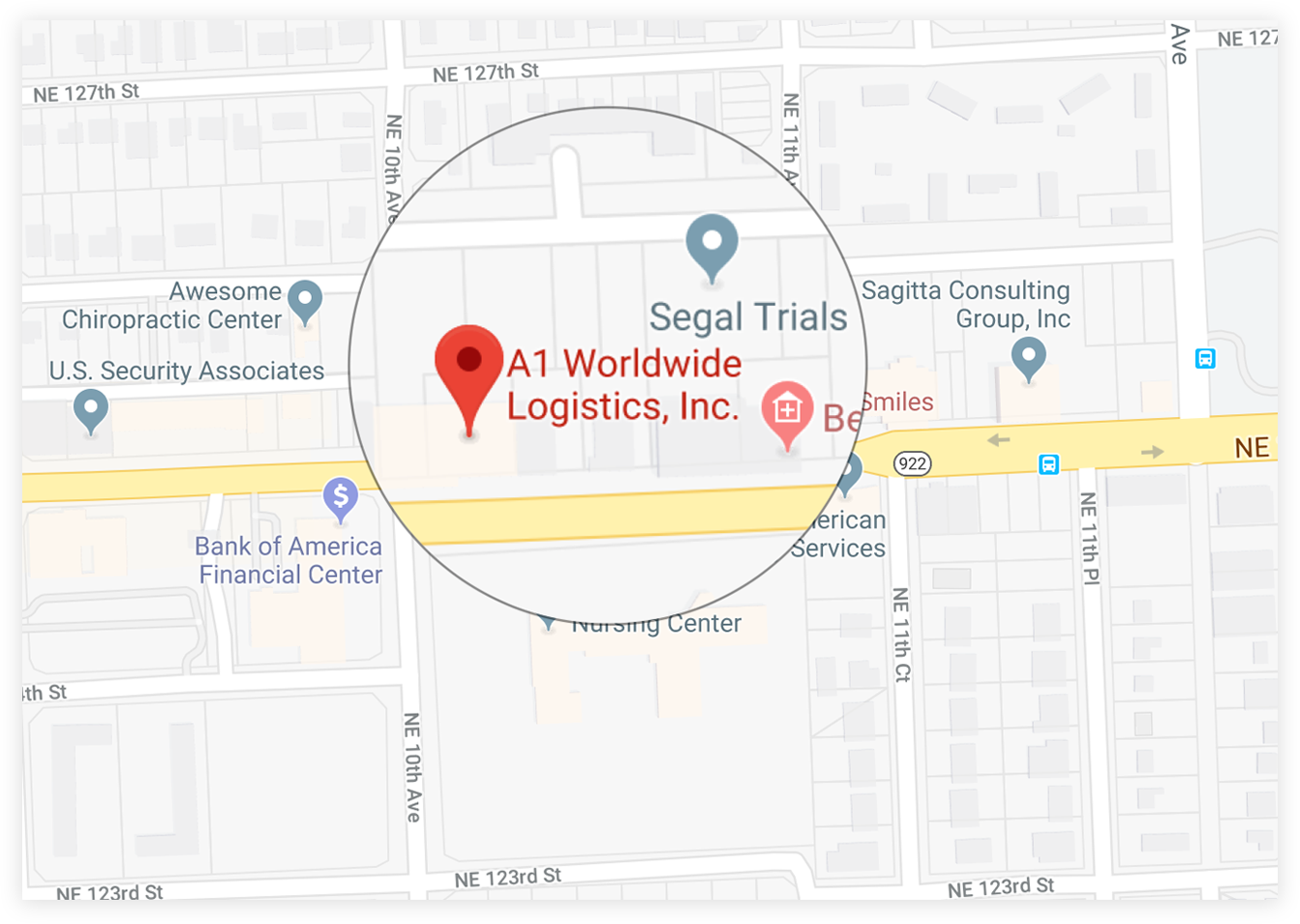
 1035 NE 125th St Suite #320, North Miami, FL 33161.
 a1worldwidelogistics.com
 (305) 821-8995
 Hours: 8AM - 5PM