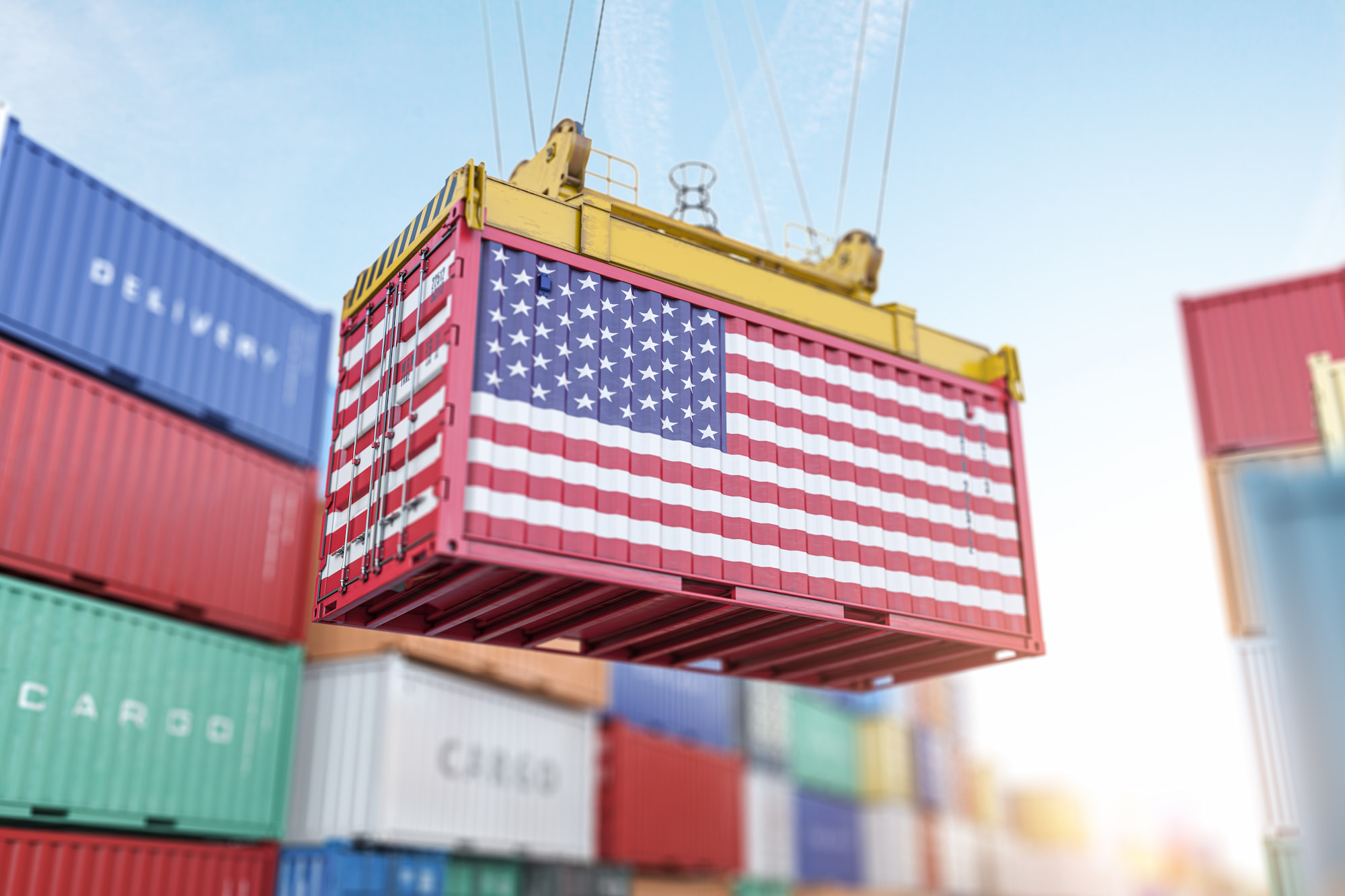
New Tariffs Facing Lawsuits

New Tariffs Facing Lawsuits

Tariffs remain an issue in the US, with President Trump’s new tariffs facing lawsuits. Following the expiration of Trump’s Section 122 tariffs, the Office of the US Trade Representative (USTR) imposed new tariffs under Section 301 of the Trade Act of 1974. Starting...

Trump Continuing To Impose Tariffs

Trump Continuing To Impose Tariffs

Tariffs on imports into the US remain a constant issue, with President Trump continuing to impose tariffs on various countries. On July 15, the Trump Administration announced a 25% tariff on numerous imports from Brazil. The levies will be effective on July 24...

Tariffs Impacting Steel Imports

Tariffs Impacting Steel Imports

International shipping could continue to feel the effect of tariffs impacting steel imports. Over the last year, the Trump Administration imposed levies on various goods shipped into the US.  Along with a 10% reciprocal tariff on all countries, Trump placed tariffs on...

US Proposing Tariffs on 60 Economies

US Proposing Tariffs on 60 Economies

The tariff war is continuing with the US proposing tariffs on 60 economies. On June 2, the United States Trade Representative (USTR) proposed tariffs of up to 12.5% on major US trading partners. Some countries that could be affected include China, Mexico, Canada,...

25 States Suing Trump’s Tariffs

Share This Article

Lawsuits against the Trump administration’s new levies are continuing, with 25 states suing Trump’s tariffs. On August 3, a 25-state coalition sued President Trump over recent tariffs imposed on over 60 countries. Similarly, two businesses also filed a lawsuit against Trump with the US Court of International Trade (CIT) over the same tariffs. On July 24, Trump’s levies under Section 301 of the Trade Act of 1974 began, ranging from 10% to 12.5%. Trump’s goal was to address the country’s failure to block goods made with forced labor. These levies were also imposed after the Section 122 levies expired, which Trump imposed last year.

Why Are the 25 States Suing Trump’s Tariffs?

The 25-state coalition filed a lawsuit in the CIT to challenge the legality of Trump’s Section 301 tariffs. In particular, the states are arguing that Trump is using Section 301 to reestablish broad levies following the Supreme Court’s rejection of the International Emergency Economic Powers Act (IEEPA). After the ruling that the IEEPA was illegal, Trump imposed temporary Section 122 levies before the recent Section 301 duties. Another argument was that the Section 301 investigation did not sufficiently justify tariffs on a broad range of countries. The coalition noted that, “The Tariff Action is arbitrary, capricious, and contrary to law”

What Could This Mean For International Shipping?

The impact that the lawsuits will have on shipping depends on the final ruling if the case goes to court. If the tariffs remain, the overall cost of importing to the US could increase significantly. This would be felt across various parts of the supply chain, including higher costs for the end receiver. Another result of tariffs remaining is that it could strain relationships with other trading partners, leading to retaliatory levies. If a ruling is made against the tariffs, the US government could be required to refund importers billions of dollars, similar to Trump’s IEEPA tariffs. Trump may continue to impose levies under different laws and sanctions.

As news regarding President Trump’s tariffs continues to develop, it is essential to stay current with any developments. Failure to do so can lead to supply chain delays that can lead to monetary loss. Along with reading news articles, this can be done by working with a freight forwarder like A1 Worldwide Logistics. Freight forwarders are third-party companies that act as the middlemen between the shipper and the carrier transporting the goods. Forwarders also inform the shipper of what to expect when starting. They do this by offering solutions like providing documentation, negotiating rates for cargo transport, and more. Speak to our forwarders at info@a1wwl.com or 305-425-9752 to begin transporting your goods anywhere internationally.

A1 Worldwide Logistics, Inc.

📍1035 NE 125th St #320, North Miami, FL 33161, USA

🌍 a1worldwidelogistics.com

📞 305-821-8995

🕒 Hours: 8AM – 5PM

Submit your request

Container in transit to port

What Is Demurrage? Container Charges, Detention, and Free Time

What Is Demurrage? Container Charges, Detention, and Free Time Demurrage is a charge that can apply when an import container remains at a marine terminal beyond its allowed free time. Detention generally applies when the carrier’s container has been collected but is...
Using a customs brokerage is essential for ensuring a successful customs clearance.

What Is a Continuous Customs Bond?

What Is a Continuous Customs Bond? A continuous customs bond is a bond used by importers to cover multiple U.S. Customs transactions rather than arranging a separate bond for each applicable shipment. If you regularly import commercial goods into the United States, a...
Importing goods into the united states

How to Import Goods Into the United States

Buying goods from an overseas supplier is only one part of importing them into the United States. Before the shipment leaves, you need to know whether the product can enter the country, who will act as the importer, what duties or additional tariffs may apply, what...
Understanding what are warehousing services can significantly improve your supply chain.

Why Use Warehousing Services?

Looking for a smarter way to manage your cargo? Warehousing services can provide more than just a place to store your goods—they offer numerous value-added services before your cargo reaches its final destination.

This is a guide on how to ship goods internationally.

How to Ship Goods Internationally: A Guide for Businesses

Commercial international shipping can involve freight transportation, carrier bookings, complex documentation, customs requirements, and much more. 🚢✈️ Understanding these steps can help you avoid delays, unexpected costs, and compliance issues.