The Court of International Trade (CIT) has recently announced a class action for IEEPA refunds. On October 8, the CIT said the class action will allow refunds to importers who imported cargo under the now-illegal International Emergency Economic Powers Act (IEEPA)...
Transportar mercancías a nivel internacional puede implicar procesos muy diferentes según el tipo de carga que se necesite movilizar. Enviar una caja al extranjero mediante una empresa de mensajería es un proceso. Trasladar pallets, maquinaria, un contenedor...
DDP stands for Delivered Duty Paid. Under this shipping term, the seller arranges transportation to the agreed destination and handles export and import clearance, including the applicable import duties and taxes. The goods are delivered to the buyer ready for...
CIF and FOB are shipping terms that define the buyer’s and seller’s responsibilities. Under CIF, the seller arranges and pays for ocean freight and cargo insurance to the named destination port. Under FOB, the buyer arranges and pays for the main ocean journey, and...
What has changed since the Panama Canal Expansion?
Share This Article
Why expand the Panama Canal?
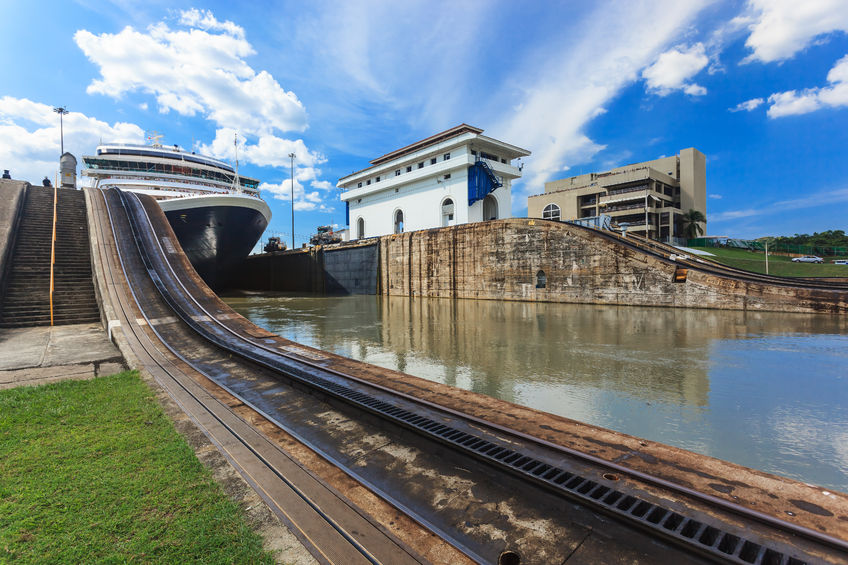
The Panama Canal has been vital for international trade since it’s creation in the early 1900’s. While it has been incredibly useful, it has since needed an upgrade. Between the increase in international trade and the development of larger ships, the Panama canal needs to keep up. This is why the Panama Canal expansion project began.
What changed during the Panama Canal Expansion?
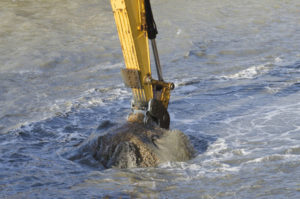
Dredging helps deepen the canal, allowing larger ships to pass through easily.
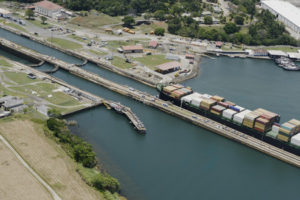
The Third Lane – Perhaps the biggest change in the Panama Canal has been the addition of a third lane. This lets more ships pass through the canal at any given time, drastically increasing traffic through the port.
The Third Set of Locks – The third lane means a third set of locks to balance the flow of water and prevent flooding or bottom scraping. This had to be completed after the third lane had been cleared and formed.
The Deepening – For the other lanes, dredging was done to make larger ships such as Neopanamax vessels clear through easier and with no risk of taking damage from the low levels.
One year Later, what has changed?
So far, the Panama Canal has had their third set of locks open now since June of last year, and so far 13,000 ships have passed through the third lane, including the largest cargo ship in the world. While this has increased overall traffic so far, can it be heralded as a success?
Time points to yes, but if you want to show what a true achievement this is you need to look at the competitors of the Panama Canal during the construction.
The Nicaraguan Canal – The Nicaraguan Canal was the first big opponent to the Nicaraguan Canal and was supposed to open up trade through the earthquake-prone country. But as investors fell through, so did the prospect of a South American competitor.
The Suez Canal – The Suez Canal was the other major canal that was also undergoing radical changes. While it was completed sooner, it also cost 3 billion more than the Panama Canal. These are both great advances for international trade.
A1WWL
A1WWL has been in the business of freight forwarding for many years, and when we read about how the Panama canal has grown, we get excited for the future of our profession. If you would like to learn more about the canal or freight forwarding, please give us a call today!
Descubra cómo elegir una empresa de transporte internacional de mercancías, comparar opciones aéreas y marítimas, preparar documentos y calcular costos logísticos.
DDP stands for Delivered Duty Paid. Under this shipping term, the seller arranges transportation to the agreed destination and handles export and import clearance, including the applicable import duties and taxes. The goods are delivered to the buyer ready for...
CIF and FOB are shipping terms that define the buyer’s and seller’s responsibilities. Under CIF, the seller arranges and pays for ocean freight and cargo insurance to the named destination port. Under FOB, the buyer arranges and pays for the main ocean journey, and...
Ocean freight, also called sea freight, is the transportation of goods by ship. Businesses use it to move commercial cargo between countries, from a few pallets in a shared container to full-container orders and oversized equipment. For a U.S. import, the shipment...
LCL shipping, short for less than container load, lets your business move ocean freight in a container shared with other shippers. You book space for your cargo instead of reserving a whole container. For a business importing a few pallets at a time, that can make...

 The Nicaraguan Canal – The Nicaraguan Canal was the first big opponent to the Nicaraguan Canal and was supposed to open up trade through the earthquake-prone country. But as investors fell through, so did the prospect of a South American competitor.