by Rob Simmons | Nov 25, 2025 | Shipping Logistics
What is Freight Container Devanning
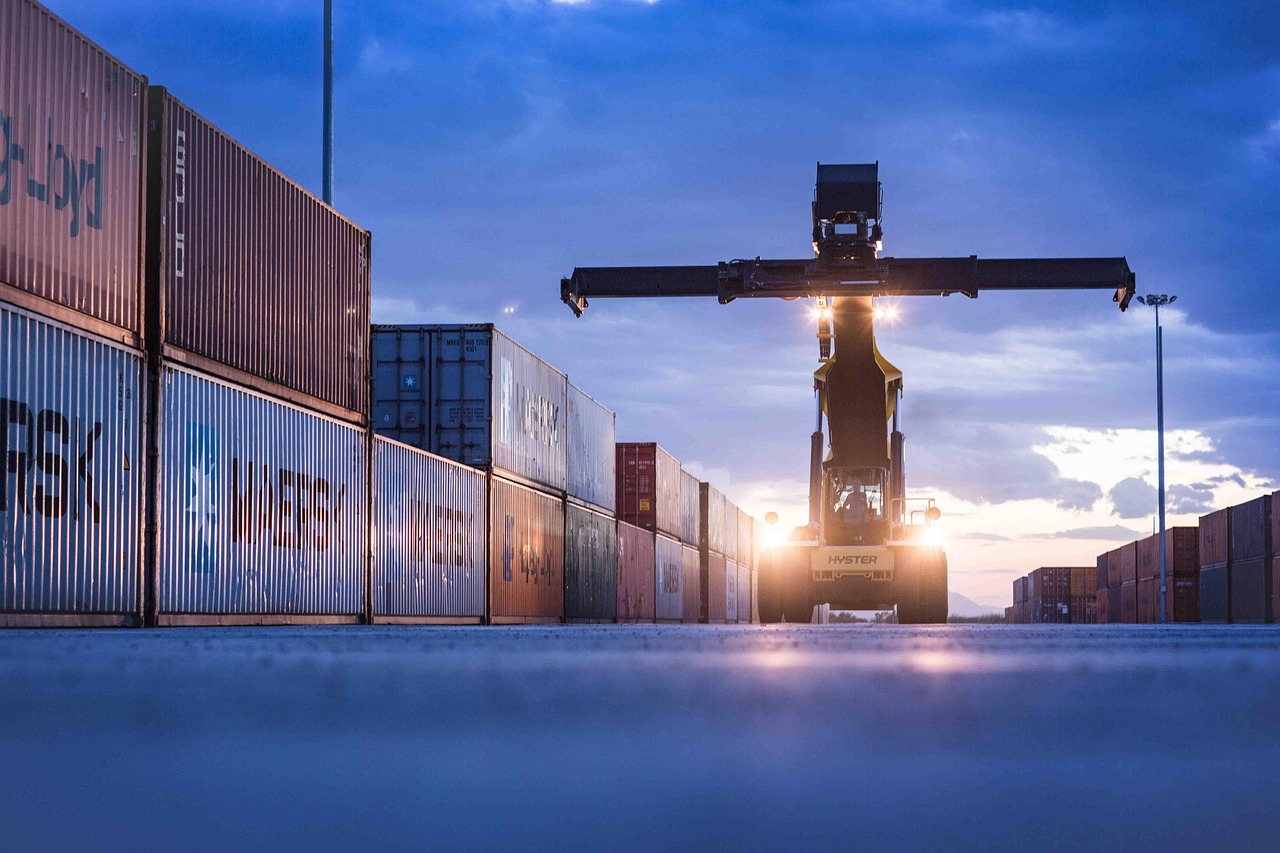
`For FCLs (full container loads), this is normally done at the company’s warehouse after the freight container is picked up from the port. For LCLs (less than container loads), they may go through deconsolidation in a type of warehouse called a CFS (container freight station). Deconsolidation is the action of separating LCL shipments in a shared container before moving them to the final destination. There are different tools used to unload containers such as forklifts, Conveyers, Pallets, etc.
What May Go Wrong
During the devanning process, several aspects can go wrong and delay the process. Once the freight reaches the warehouse, trained lumpers or handlers begin unpackaging the freight carefully. It is important that the unloading is done carefully not only for the condition of the goods but for the safety of the people handling the freight. If the goods are mishandled and damaged, it can be costly to the shippers and disrupt the entire supply chain. As for the handlers, injuries can happen if they are not careful. This is because they are using technology and manual handling to move large amounts of weight.
How Is the Cost Calculated
When calculating the cost for unloading freight, numerous components can come into the picture. The price for unloading a container can range from around $150 up for a 20ft container and around $190 up for a 40ft container. These prices are an estimate and may vary depending on different factors. The transportation costs that are included tend to be determined by the distance that the warehouse is from the pickup area. The further the warehouse, the higher the transportation costs may be.
The amount of freight that has to be unloaded may also impact the costs. For example, a 40ft container with 500 cases may cost less to unload than a 40ft container with 1000 cases. This is because the amount of equipment and labor force necessary can be higher. The wait time for the lumpers or the people doing the unloading may be included. Separate companies may have different fees associated with unloading, meaning that it is important to research to get an exact quote.
What Comes After
When the freight is unloaded from the container, it may either be placed in the warehouse for storage or distributed to the final destination. The shipper may store their freight in a warehouse for packing and picking or just as extra inventory. If the freight is stored in a bonded warehouse, it can stay for five years before taxes and duties need to be paid. When the goods are moved to the final destination, this is sometimes referred to as the final mile. This is when the freight is dispatched to the client themselves or a business to be sold. The goods must be safely secured during their journey.
A1 Worldwide Logistics
Devanning, like warehousing, shipping, and customs clearance all tend to be part of the bigger supply chain picture. All may be considered high levels of importance and if one part goes wrong it may affect the whole supply chain. A1 Worldwide Logistics is aware of this and provides different services to assist with your company’s supply chain. This way, you can focus on other parts of your business while comfortably knowing that your supply chain is handled. Call us at 305-821-8995 to find out more information.
by Rob Simmons | Oct 18, 2021 | Shipping Logistics, Supply Chain
Worldwide shipping costs continue to rise and companies are now looking at ways to optimize their supply chain logistics to protect against these costs.
Why are Shipping Costs Rising
Different reasons such as e-commerce demand, port congestion, and containers shortages are leading to a rise in freight costs. The coronavirus pandemic created a reliance on e-commerce which created a demand for freight to be shipped internationally. With an increase in global shipments, the capacity for different types of shipments became tight. Conveyances such as air shipping, ocean shipping, and even trucking experience an increase in volume. This led to carriers increasing their costs for space.
The shipping price for ocean containers rose drastically over this year. The global average to ship a 40ft container rose to over $8000 this year alone. This is more than 4 times the amount it was last year. There has also been a shortage in container production, adding to the increase in container costs. Companies and retailers that move goods globally are becoming more aware of the transportation costs and are adjusting the logistics of their supply chains to prepare. Here we will explain how companies are lowering their supply chain costs.
How are Companies Optimizing Their Supply Chains
Having Enough Inventory – With a large amount of congestion currently present in ports around the world, retailers are preparing their supply chains beforehand. The backlogs in seaports mean that freight ordered right now could take weeks longer to get to the customer compared to if the freight was ordered a few months ago. The inventory may have to be ordered in advance and be core products. These are products that are the most popular with the customers and tend to run out the inventory the quickest.
Bringing Fewer Products into the Market – Instead of introducing new products into the market, companies are having a greater focus on current core products. This can help increase revenue while lowering costs. The profit that may come from a new product may be less than the potential profit generated from an existing core popular product. Also, the supply chain expenses that go towards launching that product may be high.
Revising Contracts – Certain companies are negotiating with their shippers to change the terms of their contracts. This could mean changing the contract to ship only a certain volume of freight at a time to benefit the company. Negotiating contracts may be harder to do if the shipper is a larger company like FedEx.
Understanding your Various Costs – Since supply chains are usually different pieces working together there can be different costs involved. This can range from production costs to investment costs and even transportation costs. Companies are looking at their budgets and analyzing where their expenses are going in their supply chains. Unnecessary expenses can be cut and used for other means.
A1 Worldwide Logistics
Rising shipping costs may seem alarming to companies and individuals planning to move their freight globally. However, knowing what to expect is essential in protecting you or your companies supply chain when shipping. Hiring a good freight forwarder is a way to do so. A freight forwarder is an agent that coordinates the shipment of goods from point A to point Z. Forwarders help clients understand the shipping industry and moves the freight for them. If you are planning to move goods or need help with the logistics of any part of your company’s supply chain, contact us at a1wwl.com. Our trained forwarders are here to guide you through the entire shipping process until it reaches the final destination.
by Rob Simmons | Oct 14, 2021 | Freight Forwarding, Shipping Logistics
The current international freight shipping market is seeing a sizeable distribution of spot prices. When shipping containers, a spot price is a cost for moving freight shipments to a certain destination. Earlier this year there was a report that spot prices were high compared to last year, but they still are growing in the present moment. With spot rates growing for certain freight shippers, other shippers are finding a decrease in spot rates, and this can create an unbalanced spread.
The reason that the spread is so wide may be attributed to the current market. Situations such as port congestion and a scarcity of containers created a high demand in the market. The demand in trucking and warehousing has also risen compared to the capacity. Plus, with the holiday season quickly approaching, the demand may increase. This has led to a high push for shippers to get space on a freight vessel, rising the spot rates.
Why are Some of the larger Customers Getting the Leverage?
The trend in the spot rates may be more favorable for larger shippers than mom-and-pop shippers. The larger or more attractive shippers tend to pay fewer spot rates than smaller importers. This is because compared to a smaller shipper, larger freight shippers may offer more benefits for the carrier. Larger freight volumes from big shippers can be attractive to the carriers. Larger shippers may also provide the carrier with lengthy contracts and tend to have an already established relation to the carrier.
Xeneta, a shipping index and a benchmark for comparing ocean freight rates recently did an analysis of the market rates for the China-Los Angeles ports. They reported the short-term market rates had a high and low difference of around $1200 a few months ago. At the same time last year, the China-Los Angeles ports had a high and low difference of only $150. If this trend continues, there is a fear that smaller shippers may not be able to compete in the freight shipping market.
The Dependance on Location
One of the main contributors to the spot prices is where the freight leaves from and the final destination of the shipment. The trans-Pacific is the region in the Pacific Ocean where several countries cross over to do trade. Because of the vast number of countries doing trade in the trans-Pacific market, different countries may have their own market. This also can mean that they have their own spot prices.
For example, shipping from China may be cheaper than shipping from Japan. This is because China has some of the largest container ports in the world and may be able to move more freight in a certain time period. This high volume of freight that is able to be moved can lead to higher profits for carriers.
The destination of the freight being moved may also affect the spot price. The port of Los Angeles has experienced an immense amount of congestion in the past year. Even at the present moment, there are freight container vessels waiting to be unloaded. If a shopper plans on moving their freight through this port, short-term rates may be high due to waiting times. Now compare the situation to the Port of Hueneme a few miles away. With fewer congestion and traffic, the shipping rates per container may be less.
A1 Worldwide Logistics
Knowledge of the international freight shipping market is important when you plan on moving freight. Particularly in the current market, it is critical that you are getting a fair and understandable quote for your shipments. Contact us at 305-821-8995 or at info@a1wwl.com to get a quote on your shipment. Our freight forwarders look for the best quote prices for moving your shipments domestically and globally.

by Rob Simmons | Oct 7, 2021 | Air Freight, Supply Chain
A recent trend that many companies have been concentrating on is the effect of air freight carrier emissions on eco-friendly supply chains. The global shipping company, FedEx announced in 2011 that they planned on cutting carbon dioxide emissions by 30% compared to an amount in 2005. Because of the increasing demand for e-commerce in the last few years, emissions were reduced by 27% instead of 30%. The demand made it that FedEx was forced to keep their older carbon dioxide-emitting aircraft in service.
Shippers who aspire to make their supply chains more sustainable may be faced with a dilemma from shipping their goods by air. While aircraft are a convenient way to move freight globally, they tend to be the hardest to reduce in terms of carbon dioxide emissions. This is because they produce a large amount of energy and require large amounts of gasoline compared to other means of transport such as trucks. Also, it may be decades before large, freight caring air carriers could be converted into fully electric.
Air Carriers are Important in Supply Chains
The past few decades have seen a growing reliance on air carriers to transport goods globally. Recently, the coronavirus pandemic put an even greater spotlight on the necessity of moving freight by air. Many goods such as vaccines and other essential equipment were needed to be transported with urgency. Even before the pandemic, shipping by air was a convenient transportation method for supply chains because of how rapidly the freight was moved. There has been the question asked if shippers planning to make their supply chains more environmentally friendly will stop using aircraft as a means of transport. However, this may not be the case because of how significant air freight carriers are in too many supply chains.
The Future of Air Freight Carriers
Although the reliance on air carriers to move freight may not end anytime soon, the aircraft may evolve to be more eco-friendly. Although it may be a long time before large aircraft become completely electric, smaller electric aircraft are already being created. DHL Express recently revealed that they ordered 12 small-sized aircraft to deliver freight. They are planned to deliver in small-scale distances across the U.S. It could be possible that electric airplane batteries may evolve similarly to how quickly our phone batteries evolved. Airplane batteries may soon be developed to power larger air crafts.
Companies are also finding alternative methods to reduce the carbon footprint of their supply chains. One of the ways is by sourcing the goods with more proximity to the client. This may mean a closer country or even the same country. The result can be reducing the carbon dioxide emissions in a supply chain by a certain amount and on a large scale, that amount may be immense.
Another solution that shippers are moving towards is using more sustainable aviation fuels. Sustainable aviation fuels or SAF’s are more eco-friendly alternatives to fossil fuels such as fuel from waste products, cooking oil, and plant oils. This type of fuel can reduce carbon dioxide emissions by over 75%. The issue is that there may not be enough of this type of fuel available for use. Because of this, the price for carriers to use SAFs is expensive compared to regular fossil fuels.
A1 Worldwide Logistics
Plan on having goods shipped internationally and need help with the process for doing so, feel free to reach out to us at A1 Worldwide Logistics. We provide various services that are tailored to your supply chain goals. Not only do we assist with your supply chains, but we also provide transparency in every part of your supply chain. This way you can have confidence in knowing that your goods will reach their final destination efficiently. Contact us at 305-821-8995 to find out about the many services we offer for your supply chain needs.

by Rob Simmons | Sep 23, 2021 | Freight Forwarding, Transportation
Over the last year, freight demand has increased to an overwhelming amount, and it has had a direct impact on the trucking industry. The coronavirus pandemic led to a lockdown all across the U.S and people were told to remain home. This led to an increase in e-commerce because the easiest way to purchase goods turned to online. When goods are purchased online, they may be brought in from somewhere international. After the good reaches the country, trucks tend to be the main method to move the freight to the stores or warehouses. The need for trucking rose because of the reliance on e-commerce.
Retail Freight Shipping Likely to Persist
With schools and offices opening back up again, national customer spending is having increasing attention on retail goods. Goods such as office equipment and school supplies are becoming a more common type of freight being moved. Another retail freight that is increasingly being transported by trucks is clothes. During the pandemic, people stayed at home and went to work and school remotely. There wasn’t a great need for new clothing but with everything returning to more in-person, many could have plans on updating their wardrobe.
How the Demand Affects LTL Trucking
LTL (less than truckload) shipping is the moving of freight that is smaller than an FTL (full truckload) and doesn’t take up an entire trailer. Freight for this type of shipping tends to weigh less than 10,000 pounds and may only take a space of a truck. As the U.S. slowly comes back from the coronavirus pandemic, the pressure to move goods is being added to the already large demand. With FTL carriers experiencing an excess volume of freight from shippers nationwide, the overflow is going to the LTL sector. This affected the LTL carrier sector around the U.S in both a positive and negative way.
The benefit of having such a large requirement to move freight for the LTL sector is the chance to make a profit for the carriers. Companies such as FedEx Freight have seen an increase in volume over the past few months and an increase in revenue. Despite this benefit, capacity is still strained in the LTL sector. Because of this, certain LTL customers are being forced to make difficult choices for their customer base. A tight capacity means that the LTL carrier may turn down certain customers for more profitable core customers.
Lack of Available Truck Drivers
While the demand to have freight moved nationwide has been increasing, there has been a growing shortage of truck drivers to meet that demand. The shortage has been persistent for years, but the coronavirus pandemic helped increased the scarcity. There are various reasons why there is a shortage of drivers including veterans retiring faster than new drivers are entering the workforce. Out of those new drivers, there may only be a small amount that are licensed Class 8 drivers. Many younger people are also finding other alternatives for work like going into the warehousing industry. It has even gotten to the point that trucking companies are bringing in foreign workers.
A1 Worldwide Logistics
There are many different parts of a supply chain that freight has to go through before reaching its final destination. Trucking, which may be overlooked in international shipping can be as important as the rest of the supply chain. When your shipments reach airports or seaports, trucking is what tends to get your shipments to their final destination. Contact us at 305-821-8995 or info@a1wwl.com if you are looking for a quote to move freight or want to find out about our trucking services.


 1035 NE 125th St Suite #320, North Miami, FL 33161.
 a1worldwidelogistics.com
 (305) 821-8995
 Hours: 8AM - 5PM