Everything You Need to Know About Supply Chain Management
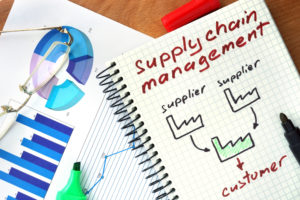
Supply chain management (SCM) is like an umbrella of activities that include sourcing, procurement, conversion, and logistics management. It encompasses the coordination and collaboration with suppliers, liaisons, distributors, and customers. Supply Chain Management is a broader term referring to the connection from the suppliers to the end consumer.
The objective of supply chain management is to gain a competitive advantage and is a modern concept with multiple organizations involved. Ultimately, supply chain management is a fresher version of logistics management. SCM is the operational framework of a cycle from a supplier, manufacturer, wholesaler, and retailer and back again.
What is Logistics Management and How Does It Work?
Logistics management is the part of supply chain management that plans, implements, and controls the efficient-effective forward and reverse flow of storage of goods, services, and information between the points of origin and consumption to meet customer requirements. The primary purpose of logistics is to meet the customers’ requirements flawlessly.
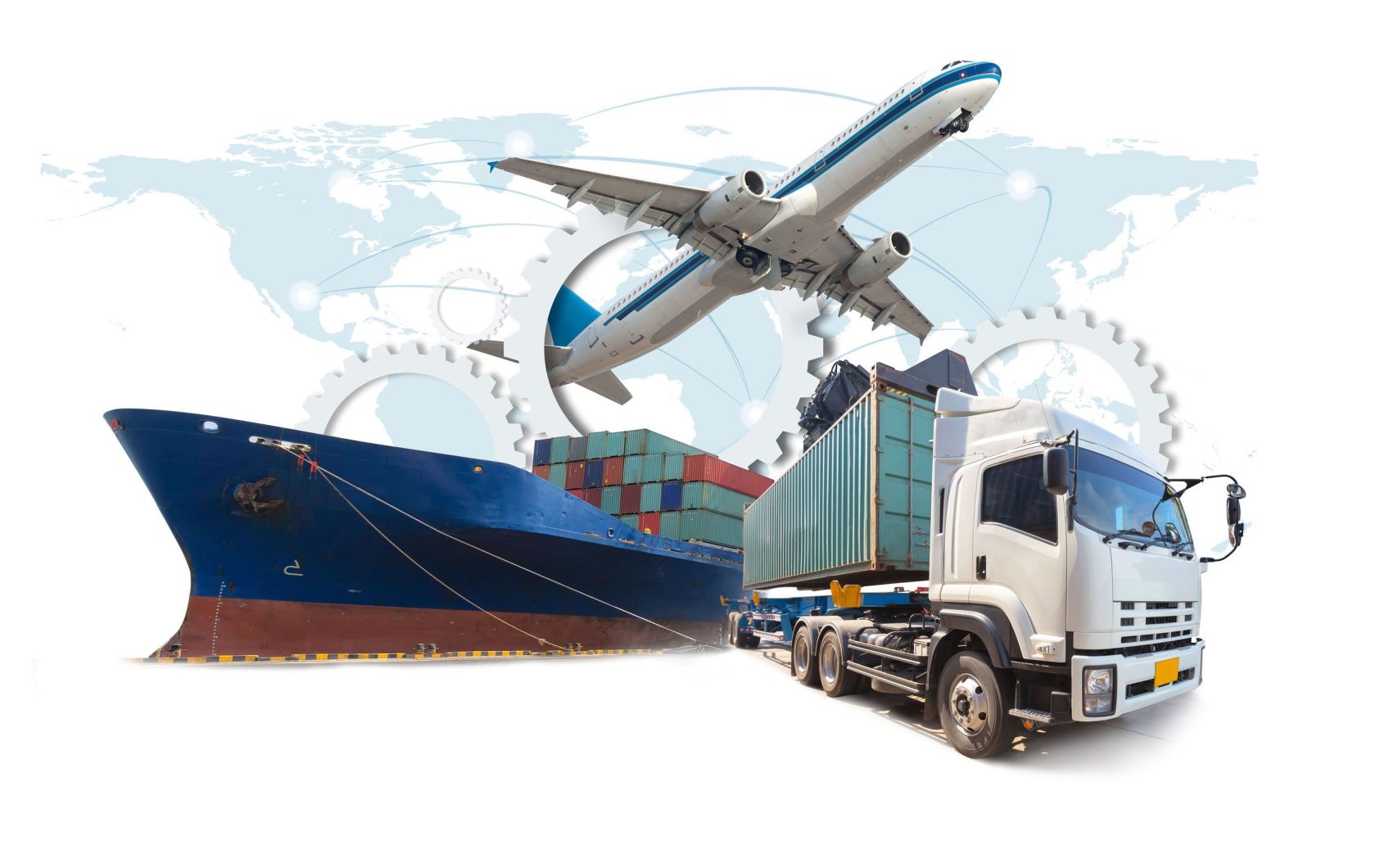
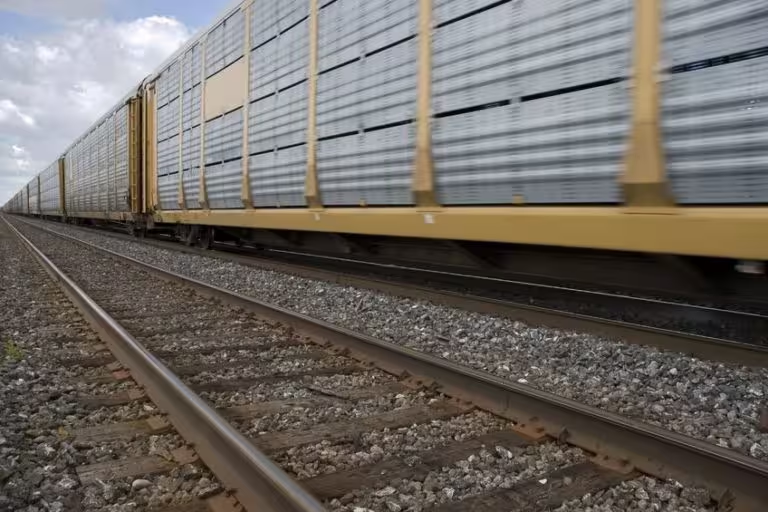
The first step after manufacturing the goods is transporting those goods to the next location. How will they get from point A to point B? Well, the job of a logistics company is to manage a combination of transportation that is the most effective at creating a high value for customers to reach those two points as smoothly as possible. The modes of transportation of materials play a critical role in the movement of supplies throughout the supply chain. The most common methods of transporting goods are through airplanes, trucks, trains, and ships.
The purpose for a warehouse is for when any goods that have been manufactured but do not have a set destination need a place to be housed until they’re ordered. When the products are stored in a warehouse, the logistics company steps in to manage pick and pack, container loading and unloading, and cargo manipulation. Logistics keeps your warehouse working efficiently so you can get back to the core of your business.
A1 Worldwide Logistics
We always provide personalized services for our clients and create a seamless experience through constant communication. Logistics within supply chain management is ever evolving to meet the needs of the customer. Logistics help the supply chain accelerate order fulfillment to meet the expectations of overnight and 2-day shipping etc. A1 Worldwide Logistics has years of experience in the industry and continues to push the boundaries of the capabilities of a logistics business.
What exactly is cloud computing? It’s a distribution of computing resources on-demand throughout the internet on a pay-for-use basis. Cloud-based technology has moved its way through the world of supply chain management. Cloud computing provides an advantage to be responsive and predict possible disruptions within the supply chain. The three types of cloud service include Software as a Service (SaaS), Platform as a Service (PaaS), and Infrastructure as a Service (IaaS).
Why Incorporate Cloud Computing?
Shippers need visibility over their movement of international trade, regulatory rules, and compliance requirements. The cloud offers businesses a way to enable the flow of data throughout the entire company resulting in more convenient and smooth communication between several departments. Cloud-based technology should be carefully examined and researched before implemented into the unique business to ensure that its abilities will benefit the company overall.
There are three basic levels of the cloud; the first level entails an incorporated transactional system with dashboards, immediate visibility, and alarms that go off when an issue transpires. The second level analyzes data to find the cause or the problem and provides simulations of what could happen and mostly see the right solution to each situation. The third level assists users to make administrative decisions, improve Key Performance Indicators (KPI), and get management insights.
Who’s Already Utilizing Cloud Technology?
Companies that are the most cloud-friendly are sales and operating planning, spare parts management, store shelf optimization, and transportation management systems. Pharmaceutical Corporations like Pfizer have already shifted into cloud computing because the 500 plus suppliers that are associated with the company needed to implement a durable framework to exchange information.
A1 Worldwide Logistics
The basics have to be understood and supported by management to keep the cloud technology cultivating. Innovation can only happen as quickly as the customer understands the purpose. With A1 Worldwide Logistics, incorporating cutting-edge technology is a large part of how we’re going to surpass our competition in the industry. Cloud-based technology is gaining more and more popularity in many business sectors and is continually useful within the world of logistics.
Are you sending a (1) package to someone anywhere in the world? You will use a courier. Do you have a cargo shipment that needs to be shipped? You need a Freight Forwarder.
While this is a rudimentary explanation of the differences between the two, it does provide a quick answer to one of the most common questions we receive. For the most part, freight forwarders are better for businesses to ship to each other while couriers are better for people to send to each other.
While the black and white answer comes down to size, there is a gray area that is worth exploring in depth, so if you are a business owner wondering whether it’s easier to choose a freight forwarder vs courier, this is the blog for you.
What does a courier Do?
Carriers are short for mail carriers. This means that they are an intricate network of people sending packages to other people. Examples of Mail Carriers are going to be FedEx, UPS, USPS and DHL.
What does a Freight Forwarder Do?
While they will work with companies like those listed above, they are also more inclined to work with private companies that specialize in large-scale shipping services.
The Freight Forwarder can personally own intermodal shipping services, but most of the time they simply act as a broker between the client and the different air, land, and sea carriers to find the optimal price and speed for moving getting your products to their destination.
A1
Working with a Freight Forwarding Company is simply about communicating your wants and needs with the people who can provide the service necessary. If you want to ship something small, then you will want ship that package with a courier.
But if you have cargo or a large scale shipment you will want to use a freight forwarder who will use their connections and their knowledge of the business to find the best route, speed, and price to service your specific needs.
A new report by the World Bank Group (Connecting to Compete) reviewed by A1 Worldwide logistics has proven that Advanced economies remain the global leaders in trade logistics and management.
Around the world, most advanced global countries have chased logistics-related transformations and investments to build their infrastructure, accelerate and facilitate transportation and trade, or grow or improve current services. Despite this positive progress, the sixth edition of Connecting to Compete paints a decidedly mixed picture. Advanced countries score, on average, 48% higher than lower-income nations when it comes to logistics performance and growth.
Caroline Freund, director of the macroeconomics, trade & investment global practice at the World Bank Group. Says this on the matter; “Logistics services are the backbone of international trade, Good logistics reduce trade costs, but supply chains are only as strong as their weakest link. For developing countries, getting logistics right means improving their infrastructure, customs, skills, and regulations.”
The World Bank Group’s “Connecting to Compete,” report contains the Logistics Performance Index (LPI), which is a bi-annual report that scores over 160 countries on how efficiently their respective supply chains connect local firms to domestic and international opportunities. The 2018 LPI points to emerging concerns like the resilience of supply chains, their growing environmental footprint, and the urgent need for qualified workers.
A1 Worldwide logistics knows that one of the most pressing concerns is a logistics labor shortage for both advanced and developing countries. Developing countries require large numbers of managerial-level workers, while developed nations face a dire shortage of blue-collar laborers, such as semi-truck drivers. High-income countries are 60% more likely than low-income nations to seek logistics options that are eco-friendly. Environment-friendly logistic options are essential because CO2 emissions from transportation are a substantial contributor to pollution. High-income countries are also more proactive than low-income nations when it comes to increasing their preparedness to potential cyber threats.
Out of all the country’s graded by the LPI, Germany has the highest aggregate score over the previous four LPI issues. Nations that are leading players in the supply chain have ranked highest in logistics performance. Countries that rank lowest tend to be those that are low-income, isolated, fragile or facing conflict political unrest. Among the more moderate to middle-income group countries, large economies such as India and Indonesia and developing economies such as Vietnam stand out as top performers.
“With international trade becoming more dispersed through global value chains, good logistics are more important than ever,” said Christina Wiederer, a World Bank Group economist and report co-author. “Small disruptions to a supply chain can spread rapidly to other countries and regions.
‘Connecting to Compete’ and its Logistics Performance Index help governments understand the link between logistics, trade, and growth, and what policies are necessary for success.”
The report and its Logistics Performance Index are tools created to help governments benchmark their progress on trade logistics across critical criteria, including the quality of trade-related infrastructure, the price of international shipments, logistics competence and quality, and the frequency with which shipments reach their destination on time.
Want to know more about logistics or other technological advances in the industry? Like us on Facebook and follow on twitter to keep up to date with all the latest.
A1 worldwide logistics knows that every business in the world, be it a traditional brick and mortar or an only online retail store, has to manage numerous tasks and events every day to ensure its effective and efficient growth. As you know, a company that is managed well is capable of filling the expectations of all its customers and clients and satisfying and delighting its customers. Among the of everyday tasks and functions that every retail outlet operating online has to worry about, customs clearance and hiring a customs broker are some of the most common. Logistics management deals with the transportation of goods and materials from warehouses to the to businesses where they are stored and or sold. Logistics is also tasked with transporting e-commerce products to the address of customers who order the products online anywhere in the world.
Logistics challenges
Logistics and it’s management is one of the most complex tasks a business can face today; However, at A1 Worldwide Logistics, we make it straightforward and easy. Transportation of items and goods from one place to another is highly challenging since they are subject to frequent climatic fluctuations, storage of products and maintaining their quality, deadlines and a lot more. Therefore, the logistics management services we provide for online businesses are vital for the success of every e-commerce business. The logistics services we offer are provided by our expert and experienced logistics operations partners all over the world. These service partners understand the unique challenges and obstacles that your business faces in the transportation of goods and products. We these challenges in mind, we have come up with practical and efficient solutions to tackle them.
The right network for you
Our vast network of logistics services providers all over the world is very experienced in the ever-changing world of business, retail, and e-commerce. These logistic partners have strong networks that are entirely dedicated to helping companies to reach every corner of the world to deliver your products on time and thus ensure the satisfaction of your customers. After all, every customer expects to obtain the products they ordered on time and as quickly as possible. The higher the satisfaction of a customer, the higher the chance of business success, growth and profit potential of your business.
What we do
A1 worldwide logistics offers professional & easy logistics services for e-commerce businesses of all sizes. We specialize in providing logistics and transportation services that are complemented by several other essential services that contribute to the growth and effectiveness of a business. For instance, our retail businesses logistics services also include customer integration with new and existing stores and warehouses, store management, warehouse fulfillment and last mile services, pick up and drop for clients, tracing and tracking of products, etc.
Thus, using effective and professional e-commerce logistics services like the ones provided by A1 Worldwide Logistics can help your business to grow and also improve your reputation in the competitive market. As the premier freight forwarder in Miami, we will help manage all of your logistics and custom clearance needs.
Questions
Questions about how we can help streamline your logistics management needs? Call us at (305) 821-8995 or send us an email at info@a1wwl.com

 The purpose for a warehouse is for when any goods that have been manufactured but do not have a set destination need a place to be housed until they’re ordered. When the products are stored in a warehouse, the logistics company steps in to manage pick and pack, container loading and unloading, and cargo manipulation. Logistics keeps your warehouse working efficiently so you can get back to the core of your business.


 Are you sending a (1) package to someone anywhere in the world? You will use a courier. Do you have a cargo shipment that needs to be shipped? You need a Freight Forwarder.
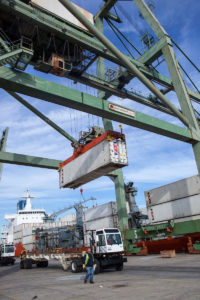 What does a Freight Forwarder Do?

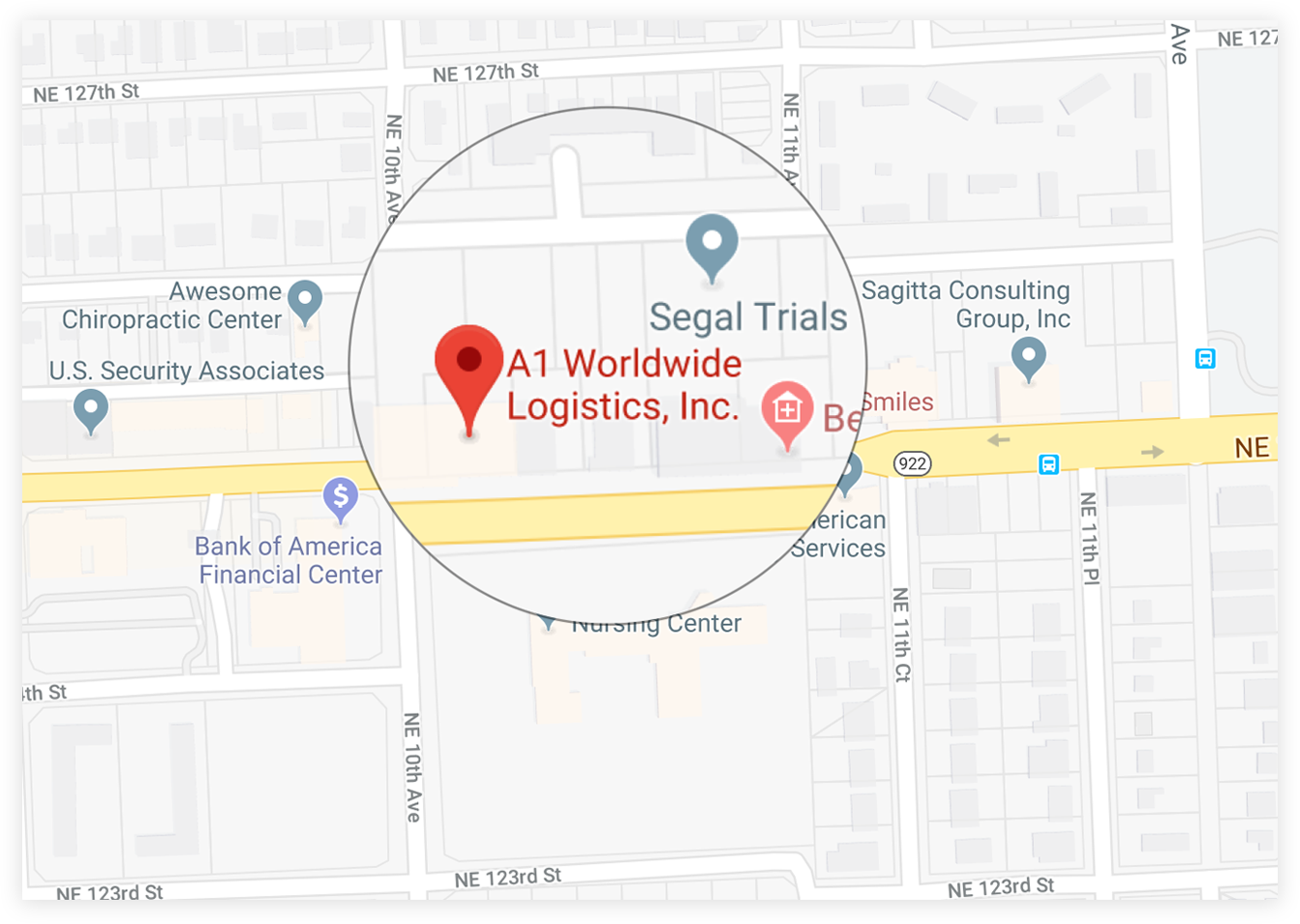
 1035 NE 125th St Suite #320, North Miami, FL 33161.
 a1worldwidelogistics.com
 (305) 821-8995
 Hours: 8AM - 5PM