by A1 WorldWide Logistics | Jan 18, 2024 | grain exports, Shipping Logistics, Transportation
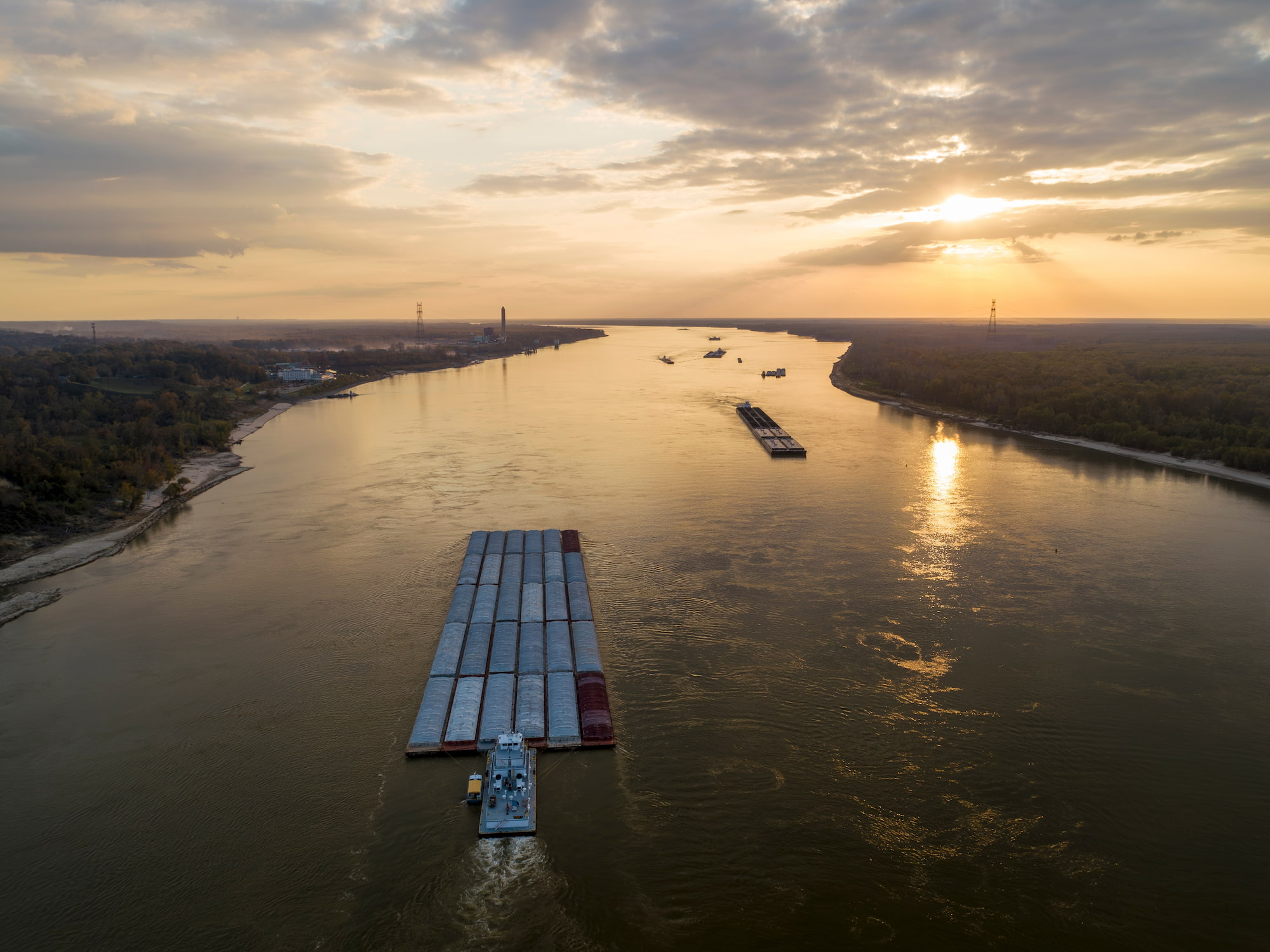
Shipping in the Mississippi River is vital to the U.S. economy, bringing in over $405 billion annually. Flowing from Minnesota to the Gulf of Mexico, the Mississippi River is the 2nd largest river in the U.S. For over 200 years, shippers have used this waterway to move various cargo, including agricultural goods and petroleum products. While containerships can pass through up to a point, the primary transport method is by barges. Barges are inland waterway vessels that are flat-bottomed and do not have engines but move with the assistance of tugboats. The barges carry the containers across since most of the river is too shallow for containerships.
The Importance of Cargo Shipping In The Mississippi River
Since shipping began in the Mississippi River, it has been essential for domestic and international cargo movement. Today, nearly 175 tons of freight move through yearly, which is still growing. 92% of U.S. agricultural exports and 78% of feed grains and soy pass through the river. Other exports include oil, steel, wood, coffee, paper, chemicals etc. Due to the traffic, 41 ports and harbors are in the river and on connecting waterways. A few thousand barges transport the goods to the various ports. Despite its importance, the Mississippi River has had challenges adjusting to the growing traffic because of issues like a lack of infrastructure.
Low Water Levels Are Still A Concern
Another challenge the Mississippi River faces is record-low water levels. Over the last few years, a drought has decreased water levels in the river to a point of concern. Above-normal heat conditions have also added to the decline. An effect was that river barges could not float, meaning that limited cargo could move across. Despite the increase in dredging efforts in 2023, barges were still moving at two-thirds of the standard capacity. Since most U.S. grain shipments go through the waterway, exports may soon be at risk. Along with shipping, lower levels impact drinking water, which the river provides to nearly 20 million people.
New Container Terminal
Despite the current drought, companies plan to grow the Mississippi River’s capabilities. Plaquemines Port announced on January 12 that it completed a deal to build a new container terminal in Plaquemine, Louisiana. The location will be 50 miles from the river’s entrance and be able to serve 22,000 TEU Megamax-24 ships. Nearby, the Port of New Orleans has also started developing a new container terminal on the Mississippi River. This terminal will handle over 180,000 containers in the first year and approximately 1.2 million containers in the 25th year. Along with increasing the traffic going in and out of the river, the ports will expand opportunities for international shipping.
As international shipping continues to grow, the possibilities can be attractive to new shippers; however, beginning may not be as easy. Whether you are an individual or a company, having the assistance of a freight forwarder is ideal when starting. They coordinate the shipping process on behalf of the shipper and educate them throughout the journey. Contact A1 Worldwide Logistics at 305-821-8995 to begin moving your shipment domestically and internationally. Along with movement by sea, we provide other methods of conveyance like air and land to ship your goods.

by A1 WorldWide Logistics | Jan 11, 2024 | Economic trends, Shipping Logistics, Supply Chain
Recent disruptions are leading to ocean shipping rates spiking internationally, particularly on the U.S. West Coast. Rates for specific shipments from Asia to the U.S. West Coast have surged over 50% at the start of 2024. The China-West Coast FBX rate of $2,713 on January 3rd was over 95% higher than in January 2020. The rates are going so high because of the current disruptions in the international shipping industry. In particular, the Israel-Gaza conflict is causing containerships to switch routes and Panama Canal Restrictions. Carriers have already rerouted more than $200 billion of cargo from the Red Sea to other locations.
Why Are Ocean Shipping Rates Spiking
The most significant contributor to the current surge in West Coast rates is the situation happening in the Red Sea. A side effect of the Israel-Hamas war is that the Houthi rebels are attacking shipping routes in support of Hamas. Since mid-November, the Houthi has carried out a total of 23 attacks on containerships passing through The Red Sea. As carrier companies reroute their vessels, short routes like Asia to the West Coast are becoming more attractive. While the Cape of Good Hope has also been another alternative route, it is a longer path. A ship transporting goods from Shanghai to New York via the Cape of Good Hope can take 43 days.
Comparatively, A voyage from Shanghai to California takes nearly 17 days plus 1-5 days to move the cargo from China to New York by truck. This is causing Asia to the West Coast to be an increasingly attractive route. The increase in traffic is causing the container shipping rates to the West Coast to rise. A recent drought in the Panama Canal has also led to a growing number of carriers and surging rates. Initially, the restrictions from the draught caused Asian cargo going to the East Coast to reroute to the Suez Canal. The current situation in the Red Sea is now causing carriers to redirect again.
How Are Shippers Managing Disruption
Despite the conflict’s effect on shipping, many believe the disruptions and current rates are temporary. During the coronavirus pandemic, container rates reached record levels due to the immense demand for moving freight. Congestion and the limited capacity to handle the cargo contributed to the surge. The present situation differs since carriers can handle the rising rates more than the pandemic. The Panama Canal’s restrictions will also soon reduce, with the rainy season approaching May 2024. Tankers and dry bulk containers have not been affected by the threats and continue to transit through the Red Sea.
While current situations may seem unfavorable for international shipping, shippers are finding solutions to mitigate potential impacts on their shipments. Along with rerouting cargo, this includes being up-to-date with any events that affect the transport of goods. Exporters are also bypassing the disruptions by switching to different means of conveyance, like air or land, if possible. Another way that shippers are navigating the current situation is by getting assistance from a logistics provider. Call A1 Worldwide Logistics at 305-821-8995 for a quote to move your shipment to and from the U.S. We give you peace of mind knowing that you or your business can navigate the complex world of international shipping.

by A1 WorldWide Logistics | Jan 4, 2024 | Air Freight, Economic trends, Shipping Logistics, Supply Chain
A continuous Israel-Hamas conflict is growing airfreight shipping due to delays in the Suez Canal. Over the last few months, tensions between the parties have escalated with an attack on Gaza in October of 2023. Cargo that has to pass through the Red Sea, in particular, has felt the effects of the war. The Red Sea is a significant passageway, with nearly 10% of the world’s freight passing yearly. Shippers have recently begun looking at alternate solutions, like redirecting shipments to navigate the conflict. Along with rerouting shipments to safer locations like the Horn of Africa, shippers are looking at air as an alternative.
How the Israel-Hamas Conflict is Growing Airfreight Shipping
Businesses and shippers are seeing no end to the Gaza war and are seeing an impact on cargo movement. Delays and potential danger may result in a surge in air shipping because of the benefits of this conveyance method. Rerouting ocean shipments to locations like the Cape of Good Hope adds up to 14 days to the journey. Congestion from the number of carriers redirecting further may increase shipping times. Using an air carrier can reduce the transport time to nearly one or two days. This is especially crucial for importers and exporters who must move time-sensitive goods for sales or production requirements.
Along with the crisis in the Red Sea, other situations are leading to a growth in air shipping. A growing shortage in container ships is happening at a time when China’s New Year is closely looming. The Chinese New Year is a peak season when significant goods pass through the Red Sea. Meanwhile, a record drought in the Panama Canal is further increasing traffic in the Suez Canal. The sizable traffic further pushes shippers to look for alternatives like air carriers to move their cargo. With nearly 3% of global trade done by air, a high demand can soon raise the percentage.
What Can This Mean For International Shipping?
Despite the majority of the war happening around near Israel, international shipping could start feeling the backlash. Nearly 12% of the world’s trade, including 30% of containers, passes through the Suez Canal. Carrier companies have already increased shipment rates moving through the Suez Canal. A major international carrier company has recently indefinably suspended operations in the canal, causing container spot rates to surge. Prices for shipping crude oil have also been rising. The impact on U.S. shipping may be minor relative to China and Asia. As the war persists, risks to global cargo movement could continue to grow.
Another concern is that the conflict may expand to other countries like Lebanon. Last month, Houthi militants in Yemen attacked several containerships passing through the Red Sea in the span of several days. While disruptions can be adverse when importing/exporting, they should not stop you or your company from moving freight. The shipper should, however, take better precautions to prevent delays and other scenarios from happening. Having a 3PL provider like A1 Worldwide Logistics coordinate your shipment is an ideal way to navigate potential disruptions. Contact us at 305-821-8995 for assistance in transporting cargo internationally. We have various methods of conveyances like air, sea, and land to guarantee that you meet your shipping goals.

by A1 WorldWide Logistics | Dec 28, 2023 | Customs Broker, Customs Clearance, Importing, Shipping Logistics
In international shipping, not using a licensed CHB can adversely impact the shipper and customs brokerage. A licensed Customs Broker (CHB) is an individual or company that has acquired licensing from the U.S. Customs and Borders Protection (CBP). The licensing allows the individual or company to act as an intermediary between the importer and customs authorities. CHBs coordinate with customs to release the goods that a shipper imports into the U.S. Some of the tasks of a licensed CHB can include:
- Ensuring the clearing of goods from customs by ensuring that the imports comply with the laws and regulations of customs
- Preparing and Submitting the required paperwork for customs clearance to customs on behalf of the importer
- Acting as the middleman between the importer and customs authorities and assisting with any issues arising during the clearance process
- Determining the proper classification and valuation of the cargo for tax and customs purposes.
When importers decide to use a Customs Broker, the CHB they choose must run operations legally. For example, all customs businesses that a brokerage does must have the supervision of a licensed CHB. Customs business is any transaction with customs authorities regarding the entry of a shipment into a country. An example is data entry filings, in which the CBP prohibits filing from foreign service centers.
The Ramifications of Not Using a Licensed CHB
Customs Brokers who do not do all customs business under the supervision of a licensed CHB can risk potential repercussions. The consequences can range from monetary fines to termination of the brokerage. It can be helpful for the shipper to ask the broker where they do their work and entry filings. Along with the legal consequences of not doing customs business in the U.S., this can also impact the importer. If the CHB gets in trouble for using an outside source, customs can hold and seize the shipment. This can lead to monetary loss for the shipper and look unfavorable if the importer is a business with customers.
Looking For A Licensed Broker?
Due to the extensive regulations that the importers must follow, customs clearance can be a complex process for shippers. Not only must the documentation be correct, but shippers must also follow the laws and regulations for importation. It is essential to note that each country can have its individual regulations for customs. Failure to adhere to the guidelines can result in delays and extra charges. An ideal way to begin importing into the U.S. is by using a customs broker to coordinate the clearance process.
Although importing into the U.S. without a customs broker is possible, most successful importers utilize their assistance. Both new and experienced shippers use brokers due to the value that they offer. They ensure the successful clearing of cargo from customs and guide and educate you through the process. They also allow the company to focus on other aspects of their business while the broker handles the shipping. Contact A1 Worldwide Logistics at 305-821-8995 to speak to a licensed customs broker regarding bringing your shipment into the U.S. We also provide freight forwarding and trucking services for exporting your goods anywhere internationally.
by A1 WorldWide Logistics | Dec 21, 2023 | Order Fulfillment, Shipping Logistics, Supply Chain, Warehousing
In a world of growing e-commerce, knowing what is dropshipping fulfillment can work wonders for your business. The process began in the late 1920s but became less prominent due to the great depression. Dropshipping then saw a resurgence in the 1950’s due to mail-order catalogues. These publications contained a list of a company’s products that customers could order from and ship directly to them. It wasn’t until the 1990s that the internet boom led to international popularity in dropshipping fulfillment. Buyers transitioned to e-commerce from traditional brick-and-mortar stores. As customers started to purchase goods online, sellers began seeing the advantages of using dropshipping for their company.
What is Dropshipping Fulfillment, and What is the Process?
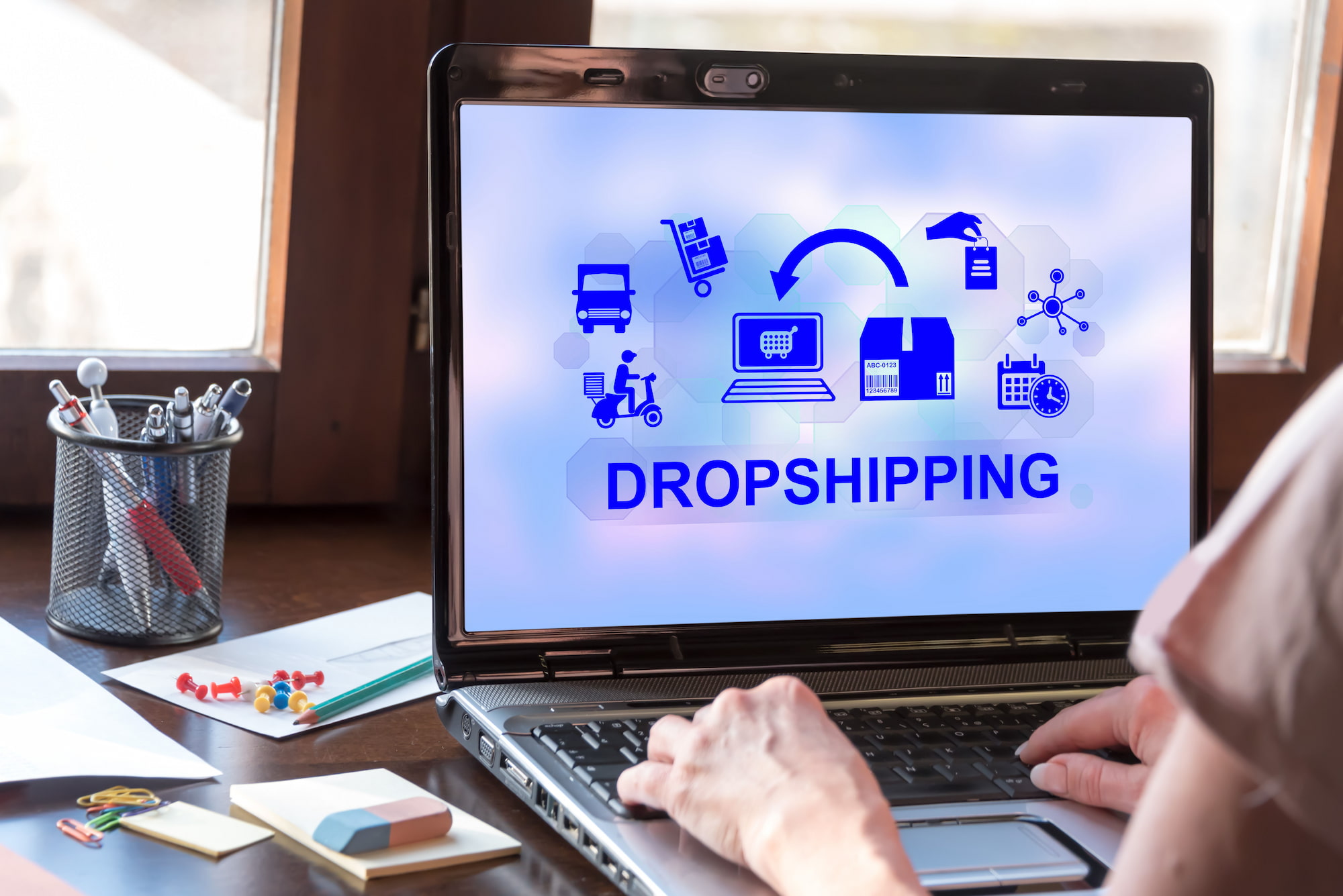
Dropshipping fulfillment is a business model where retailers can sell their products without keeping inventory. The seller has a 3PL (third-party logistics) provider that handles the process of order fulfillment for them. 3PLs maintain the inventory for the seller and may have warehouses for storing and moving the goods to the customer. While dropshipping has been around for longer than the 1990s, e-commerce has changed how sellers view this business strategy. Businesses had an increase in customers from other countries and grew their supply chains internationally.
The overall process of dropshipping fulfillment starts after a seller creates an online store. Once a customer orders a product, the store sends a message to the dropshipping supplier. The supplier is the 3PL warehouse storing the product and will prepare the goods for shipping. Once ready, the supplier will ship the product directly to the customer. During the journey, the seller may provide tracking information so the customer can track the shipment.
Benefits and Challenges of Dropshipping Fulfillment
The reason why dropshipping has grown in recent years is due to the benefits it has on a supply chain. A significant advantage is the low startup cost that a seller can have when using dropshipping fulfillment. Retailers or individuals usually have to pay a lot of upfront investments and have capital for inventory-storing warehouses. If the seller uses dropshipping for an online store, there are no location limitations, and the supplier can ship internationally. The seller can offer a variety of products due to the fulfillment capabilities of a warehouse. Scalability also becomes easier since suppliers can accommodate increasing orders.
While dropshipping has many benefits, there can also be challenges when using this business model. A common drawback is that inventory issues are more likely to happen when sourcing from a warehouse. Tracking which items are in and out of stock becomes more challenging. Supplier errors may also occur, for which the customers will hold the seller responsible. An example is if the products get damaged during the journey to the final destination. It is crucial to choose a trustworthy supplier when starting dropshipping fulfillment.
A1 Worldwide Logistics
Talk to a 3PL provider like A1 Worldwide Logistics to learn more about dropship fulfillment. Along with fulfilling your orders for your customers, we have a customs-bonded warehouse to house your products. A bonded warehouse is a facility where importers can store freight for up to 5 years without payment of duties. This allows the importer to save money and look for customers before they have to pay taxes for the shipment. Contact A1 Worldwide Logistics at 305-821-8995 to learn about our many solutions for your supply chain. Along with warehousing, we transport your goods to and from our facility to the final destination.
by A1 WorldWide Logistics | Dec 14, 2023 | Economic trends, Shipping Logistics, Transportation
A current conflict between Venezuela and Guyana may result in tankers facing a new war soon. In the past year, international shipping has gone through two conflicts simultaneously. The first was Russia’s invasion of Ukraine, and then the more recent Israel-Hamas conflict. Both events influenced oil trade globally and led to scenarios like a surge in oil prices and shipment rerouting. Now, disputes between Venezuela and Guyana regarding Guyana’s prominent oil region of Essequibo are growing. While exporters are currently not too concerned, a potential escalation in tensions can unfavorably impact global oil transport. In particular, crude tankers moving out of the Atlantic Basin may feel the most significant effect.
Why Could Venezuela Invade Guyana?
The conflict between the two countries results from a more than century-long claim dispute of Essequibo. Essequibo is a land territory that the Paris Arbitral Award gave ownership to Guyana in 1899. In 2015, the discovery of major oil deposits in that region resulted in an oil boom in Guyana. In 2019, Guyana’s economy rose nearly 60% in the first half of that year. When the U.S. company found oil in Essequibo, Venezuela’s interest in the region returned. Venezuela’s pursuit of Essequibo has also grown to the present moment with the justification that the 1899 contract was unjust. Nicolas Maduro, the country’s president, has recently threatened an invasion of Guyana and seizing of the region.
If Venezuela does invade Guyana, both countries could face the drawbacks. Since 2019, Guyana’s oil exports have grown to 400,000 barrows daily and could reach 1 million by 2027. An annexation can halt the growth and hurt Guyana’s economy, of which oil shipping makes up a significant part. For Venezuela, different countries could reimpose sanctions, leading to oil companies leaving Guyana and hurting oil production. It is crucial to note that the U.S. has a notable presence in Essequibo, meaning an invasion can be challenging. Guyana’s and Venezuela’s presidents will meet on the island of St. Vincent this week to discuss the issue further.
Will International Shipping Be Disrupted By Tankers Facing A New War?
An escalation in the current tensions between Guyana and Venezuela could impact international tanker shipping. Similar to the Israel-Hamas conflict, tanker rates can surge to significant levels. In the week that Hamas attacked Israel, tanker rates in 16 global trade routes rose an average greater than 50%. Another effect of Venezuela’s invasion of Guyana is a reduction of Atlantic Basin exports. The decrease will be slight and short because numerous countries are increasing oil production. Brazil has been growing its oil production recently, and the U.S. is still the fifth largest oil producer globally.
Other countries outside the Atlantic Basin are also increasing tanker shipping with refinery capacity being built near the Suez Canal. The impact of Venezuela invading Guyana may be small on international tanker movement since the demand from countries like Brazil and the U.S. is much greater. While the effects may be less dire to global oil shipping, a shipper must understand what to expect before starting. Being informed and prepared is essential to ensure the smoothness of a shipment. Contact A1 Worldwide Logistics at 305-821-8995 to begin shipping your goods internationally. We understand the importance of your shipment and will be with you through the entire process.

 1035 NE 125th St Suite #320, North Miami, FL 33161.
 a1worldwidelogistics.com
 (305) 821-8995
 Hours: 8AM - 5PM