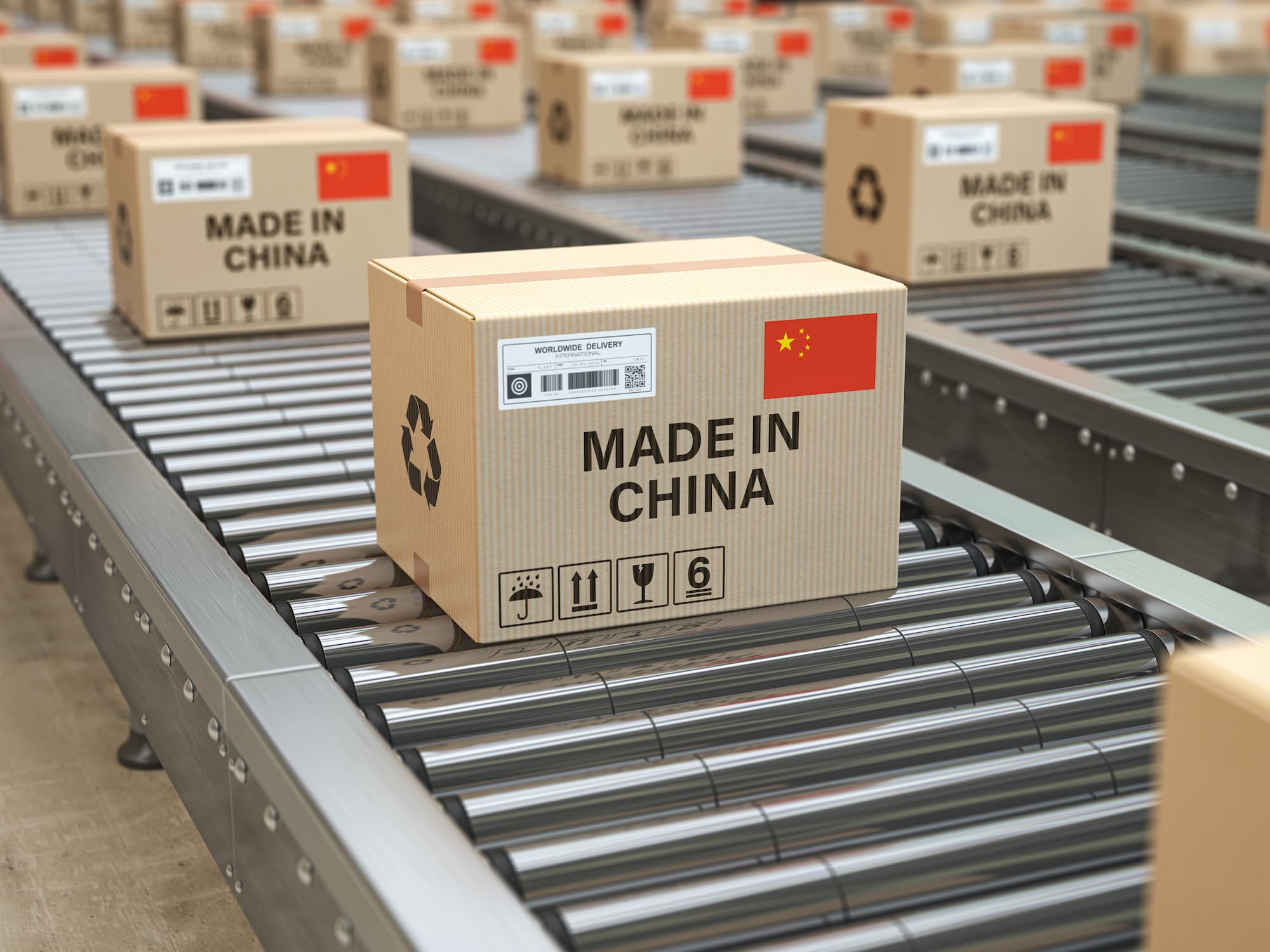
China is the U.S.’s biggest trading partner and the largest exporter of goods internationally. Because of China’s ability to manufacture products on a large scale, importing from the country can present many opportunities. Not only is growth possible for a business, but reduced costs, large quantities of imports, and other benefits are also possible. While importing may seem attractive to first-time shippers, understanding what’s necessary is essential for the shipment’s success. This article will explain how to prepare the required documents and what to expect during your cargo’s shipping journey.
Before deciding what to import, it is also essential to understand that certain goods may have restrictions and specific regulations. For example, any product from China’s “Xinjing” region cannot enter the U.S. The ban is due to human rights issues such as the forced labor of Uyghur Muslims. While you do not need a permit to import from China, certain commodities require an import license. Government agencies like the Food and Drug Administration (FDA) request that imports such as cheese have an import license. Speak to a customs broker if you are uncertain if your shipment needs a permit.
While you do not need a permit to import from China, certain commodities require an import license.
What Are the Necessary Documents
Documentation is a component of the shipping process that must be taken with care to prevent your shipment’s delay. While the documents depend on the imported commodity, specific papers are needed for every import. Certain imports require additional documents like inspection certificates for meat and egg products and energy-efficient labels like air conditioners. The documents may also vary by country, but we will mainly focus on bringing cargo into the U.S. from China. Some of the standard documents include:
Importer Security Filing (ISF)
Bill of Lading/Airway Bill
Commercial Invoice
Packing List
Proof of Insurance
Certificate of Origin (when Applicable)
Arrival Notice
Shipments valued at $2,500 or above require a customs bond; an insurance policy to ensure the payment of taxes. A shipper can get a single-entry or continuous bond, depending on their shipment.
The Journey Begins
Once the freight is ready, it will be sent to a designated port in China for transportation to the U.S. Speak to a freight forwarder to arrange the transportation of the shipment. The main methods of conveyance for shipping internationally are by air or sea. Both ways have their benefits, like pricing and time. When your goods reach the U.S., they must pass through customs. Customs’ objective is the security of the people in the U.S. by preventing anything illegal or harmful into the country. While customs clearance usually takes less than 24 hours, it may take longer if the goods are “Held at Customs.” This happens when customs does not release your goods for various reasons, including unpaid duties and incomplete documents.
While the importation process is perplexing for first-time shippers, it is doable with the proper guidance. Contact A1 Worldwide Logistics at 305-821-8995 or info@a1wwl.com to begin your import journey. We guide you through each shipping process step to provide transparency with our services. Whether you need to speak to a customs broker or a freight forwarder, A1WWL has you covered.
Because of China’s ability to manufacture products on a large scale, importing from the country can present many opportunities.
A1 Worldwide Logistics knows that the first step to achieving success in logistics management is planning, lots of planning. Now, planning takes many forms and involves many moving pieces. Acquiring goods and products, the selection and management of storage facilities, and delivery of products to their destination.
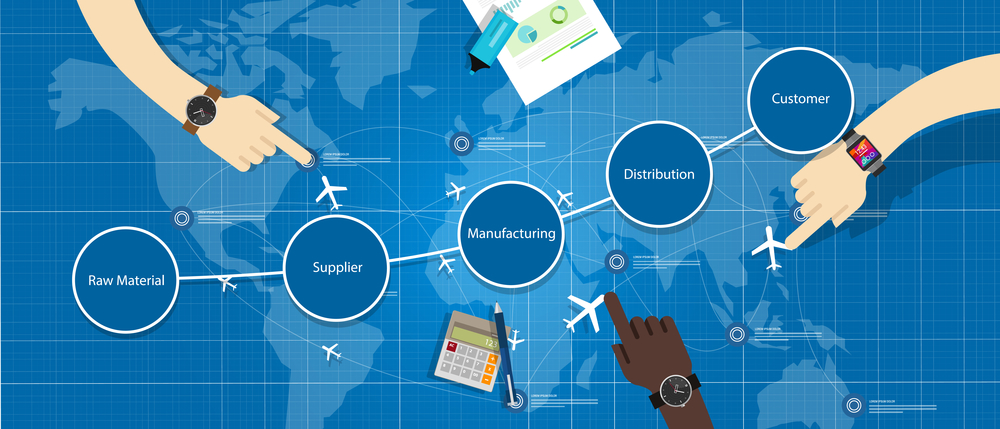
Apart from all the above, the other constraints you will be dealing with are – time, transportation, and of course the costs. An efficient supply chain manager and or customs broker should be able to create a flow chart for the whole operation. The purpose of such planning is to enable efficiency and reliability in the shortest possible time, while, the planning should also aim at maximizing the profits of your logistics operations.
Careful and detailed planning is always a wise plan, but a logistics manager should be able to prepare for the most unforeseen circumstances as well. A well-oiled logistics management company must be ready to deal with issues related to…
The products
Inaccessibility of the transportation or supply chain
Any internal issues in the organization
For this, a detailed contingency plan should be completed to avoid any possible logistics failure. Logistics planning process is unfinished without an emergency contingency plan.
Embrace new technology and automation
In the age of automation and breakneck innovation, technology plays a major role in increasing the efficiency of an organization. Automation and technology like the Blockchain have a vital role in the logistics management optimization.
For instance, business process software can be integrated that provides timely updates regarding the movement of goods. The operator and the client will get details regarding:
The products have been dispatched from the supplier
The arrival of the products at the warehouse, and lastly,
Delivery and acceptance of the products at the destination
This saves a substantial amount of time because a large amount of manual processes and interference is eradicated. Moreover, technologically enhanced tracking dramatically improves the overall logistics process management.
Likewise, the client account details and employee details can be managed using software specifically developed for these tasks. Therefore, logistics management firms should embrace this evolving technology for increasing productivity and efficiency
Value Relationships
Your team is an essential aspect of your organization they are responsible for your potential growth. Whether it’s the logistics driver or the warehouse manager or customs broker everyone should be perfect in his or her respective field of work or skill.
Because of this, you will need to invest in proper and in-depth training of your employees. Regular training workshops keep the employees engaged with the latest trends in the logistics management industry. This dramatically increases your logistics efficiency and potential satisfaction of your clients.
A Logistics manager with impeccable interpersonal skills is crucial for your organization. There will be times when the things don’t go according to the plan. In situations like this, instead of losing their nerve, you need a reliable person who can sort out the issues with the utmost efficiency and professionalism.
Furthermore, the manager should have reliable contacts in the industry. This can be beneficial in tapping additional business opportunities.
Measure and Improvise
Logistics network optimization is incomplete without integrating measurement, analysis, and feedbacks. When you deploy new strategies in the system, you need to measure the output. This is important as it intimates the success or failure of the plan.
Measurement tools and software should be integrated that easily determines and classifies the information as per the requirement. Your future planning is heavily dependent on the measured data. Analyze the metrics related to different operations. This includes:
Cycle time metrics
Cost metrics, and
Service metrics
Generous feedbacks help in improvising. The ideas and suggestions of the employees should be recorded periodically. This ensures that you generate a pool of ideas and at the same time, it reveals any flaws in the system.
Conclusion
If you wish to trump over your competitors, you should adopt the latest technology and innovative approach. Effective logistics management aims to improve the efficiency of the operations, ensuring customer satisfaction, and increase productivity.
These tips and strategies are necessary for process optimization. Every logistics firm that is struggling to boost their operations, they can incorporate these suggestions for logistics network optimization.
Questions?
Questions about how we can help streamline your logistics management needs? Call us at (305) 821-8995 or send us an email at info@a1wwl.com
As A1 Worldwide Logistics, the logistics industry, and the broader business world, look to 2019, it’s time to explore what the new year will bring to logistics and 3PL’s. As a serial innovator in this industry, we’ve outlined a few predictions and trends that we believe will affect the logistics industry will experience over the next year.
Payments Will Be More Secure, And International Transactions Will Be Easier Than Ever
In 2019, new payment technologies will continue to make inroads in the logistics industry on a widespread scale, leading to more security and transparency in transactions globally.
Cryptocurrencies like bitcoin and etherum will become extensively accepted, leading to safer payments with an eye toward maintaining privacy. Whether any significant financial institution introduces a cryptocurrency of their own remains to be seen, but the industry will be prepared. For the logistics industry, cryptocurrency will make it easier for cross-border, international payments to be carried out safely and securely.
Big Data, Blockchain Technology, and Automation Will Transform Logistics
Demand for IT services in the logistics industry appears to have increased in recent years as more companies have begun IT projects in their logistics/supply chain operations. That trend will most likely continue in 2019 as small and midsize importers and exporters even the playing field against larger counterparts by leveraging big data and blockchain technology.
The execution of big data technology will lead to safer supply chains globally. Small and growing importers and exporters stand to gain the most from new technology since they do not have the resources to create a secure supply chain but will be able to rely on freight companies that provide big data capabilities to customers. The supply chain will be more reliable, as importers and exporters will have the ability to communicate quickly with global suppliers and automate complicated tasks to minimize human error and eliminate redundancies.
Blockchain and related technology will increase transparency for importers and exporters in 2019. It will reduce the time and personnel to record communications within the supply chain. When shipping globally, there are many layers involved, so it will benefit shippers to minimize information interruption, reduce the paperwork required, and maintain access to original information without worrying about tampering and or fraud during and after shipment. Additionally, blockchain will eliminate intermediaries, as it enables direct communication between participants.
The Logistics Industry Will Continue To Shrink, Leaving Few Major Players
In 2017 and 2018, significant developments in logistics led to the consolidation of major shipping companies. The result is far fewer shipping carrier options for shippers.
In 2019, further consolidation of the Logistics industry may mean higher rates due to less competition. However, through mergers and acquisitions, shipping companies will offer top-tier customer service and increased capacity. In 2019, consolidation will continue to be a double-edged sword.
Politics and tariffs will continue to effect Logistics
Many businesses have already cited substantial headwinds from tariffs in their earnings results, with taxes affecting their bottom lines. For businesses that haven’t felt direct effects just yet, many are bracing for a worst-case scenario and looking at their supply chains and sourcing for ways to potentially mitigate the costs.
Earlier this year the Trump administration indicated potentially placing tariffs on an additional $269 billion worth of goods from China. Tariffs on $60 billion worth of products are already in effect. The most recent announcement adds $200 billion in value. If another $269 billion are added, the total amount of the Chinese goods taxed by the U.S. will reach $519 billion, which is more than the total amount of goods the U.S. imported from China in 2017.
In closing, it is likely that 2019 will be the most active and challenging year ever in global trade and logistics. As the Trade War between the US and China simmers, the new North American Trade Pact “USMCA” is finalized and America’s attention is directed toward other targets, the environment for logistics professionals will be intense and ever-changing. A1 Worldwide Logistics will be here to help your company navigate these changes and provide the services that keep your company moving forward.
Have questions about how your business is going to handle these tariffs? Give us a call at (305) 821-8995 or send us an email at info@a1wwl.com
At A1 Worldwide Logistics we know that the best-laid plans of mice and men often go awry. The supply chain system you have in place doesn’t exist in a vacuum — it will regularly face challenges, from minor errors and customer whims to unforeseen disasters. Whether it can withstand these tests will depend less on your ability to predict every eventuality and more on how flexible and adept you are at meeting and making the most of unfavorable or unique circumstances.
Granted, developing a sustainable supply chain is about more than handling threats — it requires recognizing and seizing the opportunity to improve your operational efficiency, build closer partnerships with the right third-parties and deliver a superior customer experience that fosters loyalty. Doing so begins with laying the groundwork for adaptability. Below are a few of the first steps you can take toward this endeavor.
Get a Bird’s-Eye View
Problems will inevitably arise. How prepared are you to effectively redirect flow, mitigate any losses, and meet your goals as efficiently as possible with minimal delay? To this end, it’s vital to implement a system that provides access to the full picture.
For instance, if an incident occurs in transit, are you easily able to determine the status of your product? Does your current system provide a clear overview of all available resources and third parties who offer viable alternatives?
At any given moment, you should be able to leverage these connections in real-time to achieve the best possible outcome. Much like air traffic controllers, the most effective strategy is one that allows you to navigate and coordinate all the moving parts of your system to ensure they flow smoothly and effectively.
Sweat the Small Stuff
Pennies add up to dollars. Many businesses are too willing just to cut their losses or don’t realize the degree of revenue loss when they don’t mind the details. More than merely syncing operations to streamline them, ask yourself if your methods are as gainful and constructive as they can be.
If It Ain’t Broke… Fix It Anyway
Just because a process is “working” does not mean it’s working well or as effectively as it could. The market is competitive, and consumers are ever eager to flock to greener pastures that offer quicker and cheaper alternatives.Always analyze and reassess your approach to stay competitive. Order fulfillment is inherently complex, and a one-size-fits-all model won’t cut it. It would be best if you always were working on ways to tailor your strategy around each customer to boost satisfaction. Moreover, to be able to refine the details and customize flows adequately, you’ll need the right tools to analyze everything from carrier performance to margins and revenues. Sustainable models do more than fix problems: They recognize that a less-than-ideal system is problematic.
Creating a sustainable supply chain is challenging. A lasting model is one that recognizes and appreciates the complexity of order fulfillment and reverse logistics. You want an approach that is flexible enough to plan and execute operations both on a macro and micro level, as well as have the means to lend a critical eye to each facet of the process.
Fortunately, there is no shortage of tools and innovative software to help make this happen. Now that businesses can digitize their operations, they can approach network oversight with greater visibility, refined execution, and access to data that exposes pain points and indicates room for growth. The question going forward is: Are you doing all you can to make your operation sustainable? Questions? Contact A1 World Logistics at 305-821-8995 or send us an email at info@a1wwl.com
Imports at many important container ports around the United States have slowed from pre-holiday peak but remain at unusually high as importers continue to bring in containers before tariffs are set to increase in January, these figures are due corresponding to the monthly Global Port Tracker report released on Nov. 9 by the National Retail Federation and Hackett Associates and reviewed by A1 Worldwide Logistics.
“Imports have usually dropped off significantly by this time of year, but we still see numbers that could have set records in the past,” NRF vice president for Supply Chain and Customs Policy Jonathan Gold said.
“Part of this is driven by consumer demand in the strong economy, but retailers also know that tariffs on the latest round of goods are set to more than double in just a few weeks. If there are shipments that can be moved up, it makes sense to do that before the price goes up.”
October logistic throughput was estimated at 1.89 million TEU, up 5.5% YOY. November numbers are forecast at 1.81 million TEU, up 2.9%, and December at 1.78 million TEU, up 3.7%. Jan 2019 is forecast at 1.81 million TEU, up 2.8% over Jan 2018; Feb at 1.8 million TEU, up 0.5% YOY, and March at 1.58 million TEU, up 3.2 %.
Import brokers set a monthly record of just over 1.8 million TEU in July ahead of 10% tariffs on $200 billion in goods from China that took effect in September and are scheduled to rise to 25% in January as Trump’s aggressive tariffs take effect.
“President Trump’s trade war with China and the threat of even higher tariffs in 2019 have created a mini-boom in imports and businesses have rushed to bring goods into the country ahead of the tariffs,” Hackett Associates Founder Ben Hackett said. “We are clearly in a politically motivated trade environment.”
While logistics numbers do not relate precisely with sales, the imports mirror 2018’s strong retail market. NRF recently forecasted that total 2018 holiday season retail sales are expected to increase 4.3 % and 4.8% over last year. Retail sales for all of 2018 are forecast to be up at least 4.5% over 2017.
The rate to ship an ocean container from China to the U.S. is now roughly twice as high as it was this time last year, shipping analysts said, as demand is picking up. “Capacity is insufficient,” said Philip Damas, director of Drewry Supply Chain Advisors Ltd. “Importers are not very happy because they’re struggling to get their cargoes moved in time [and] the prices are twice what they usually are.”
Have questions about how your business is going to handle these tariffs? Give us a call at (305) 821-8995 or send us an email at info@a1wwl.com




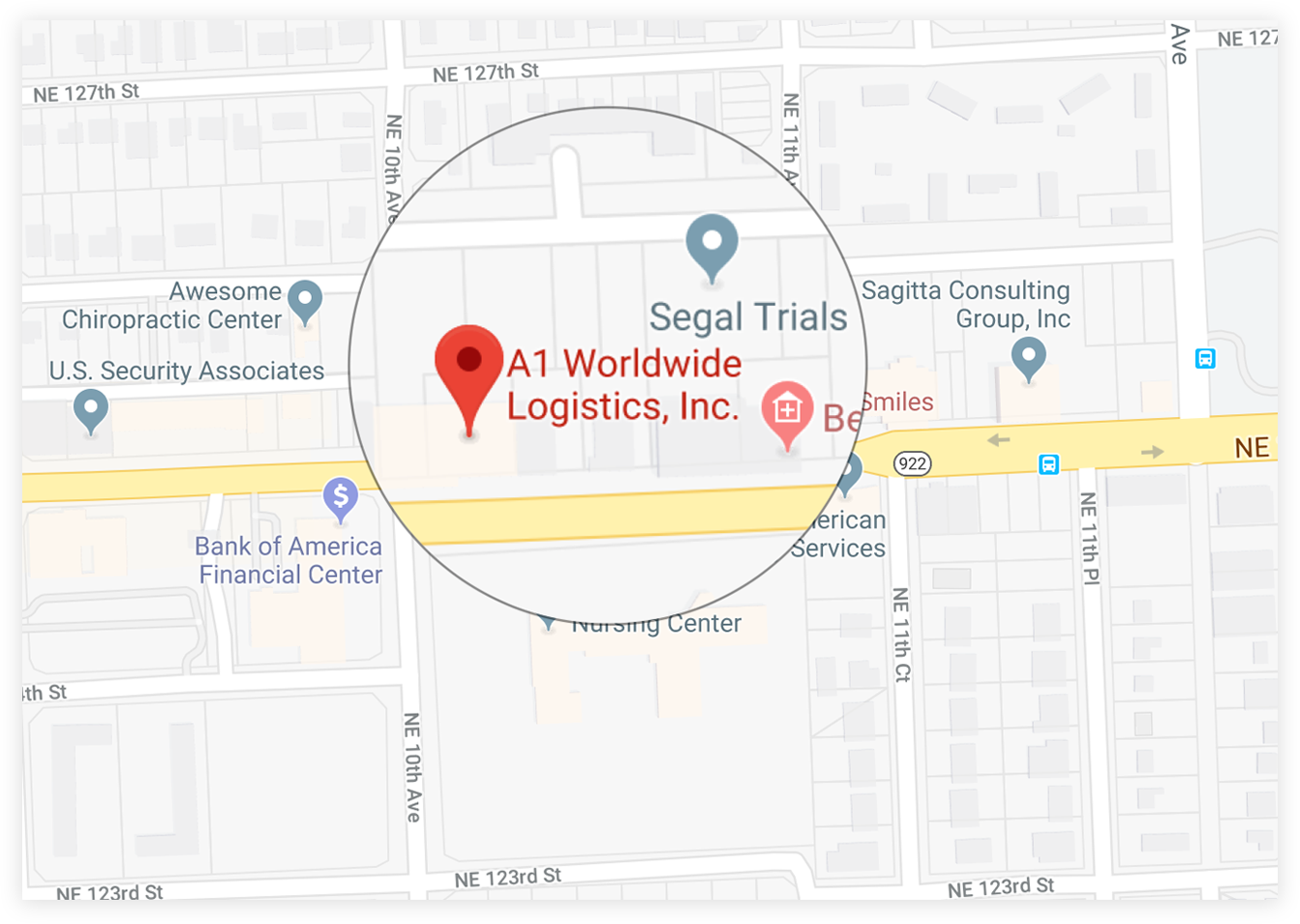
 1035 NE 125th St Suite #320, North Miami, FL 33161.
 a1worldwidelogistics.com
 (305) 821-8995
 Hours: 8AM - 5PM