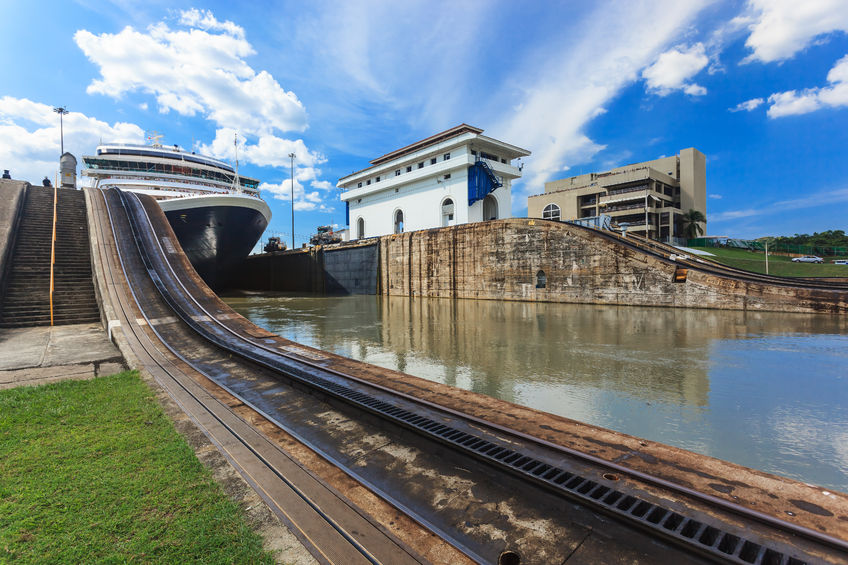
The Panama Canal has been vital for international trade since it’s creation in the early 1900’s. While it has been incredibly useful, it has since needed an upgrade. Between the increase in international trade and the development of larger ships, the Panama canal needs to keep up. This is why the Panama Canal expansion project began.
What changed during the Panama Canal Expansion?
Dredging helps deepen the canal, allowing larger ships to pass through easily.
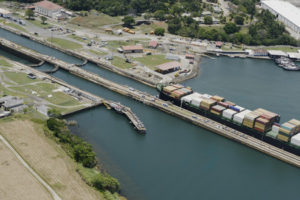
The Third Lane – Perhaps the biggest change in the Panama Canal has been the addition of a third lane. This lets more ships pass through the canal at any given time, drastically increasing traffic through the port.
The Third Set of Locks – The third lane means a third set of locks to balance the flow of water and prevent flooding or bottom scraping. This had to be completed after the third lane had been cleared and formed.
The Deepening – For the other lanes, dredging was done to make larger ships such as Neopanamax vessels clear through easier and with no risk of taking damage from the low levels.
One year Later, what has changed?
So far, the Panama Canal has had their third set of locks open now since June of last year, and so far 13,000 ships have passed through the third lane, including the largest cargo ship in the world. While this has increased overall traffic so far, can it be heralded as a success?
Time points to yes, but if you want to show what a true achievement this is you need to look at the competitors of the Panama Canal during the construction.
The Nicaraguan Canal – The Nicaraguan Canal was the first big opponent to the Nicaraguan Canal and was supposed to open up trade through the earthquake-prone country. But as investors fell through, so did the prospect of a South American competitor.
The Suez Canal – The Suez Canal was the other major canal that was also undergoing radical changes. While it was completed sooner, it also cost 3 billion more than the Panama Canal. These are both great advances for international trade.
A1WWL
A1WWL has been in the business of freight forwarding for many years, and when we read about how the Panama canal has grown, we get excited for the future of our profession. If you would like to learn more about the canal or freight forwarding, please give us a call today!
“The FDA Food Safety Modernization Act (FSMA), the most sweeping reform of our food safety laws in more than 70 years, was signed into law by President Obama on January 4, 2011. It aims to ensure the U.S. food supply is safe by shifting the focus from responding to contamination to preventing it.” – FDA.Gov
How will the FSMA reform Food Safety?
To take a more proactive stance against food safety risks, several programs are broken up into “rules.” These rules are taken as in rules of law.
Final Rule for Foreign Supplier Verification Programs (FSVP) – FSVP is the most important rule for importers out of all the ones on this list. This mandates that Importers be food safety certified and can vouch for the quality of the food arriving per their trade route.
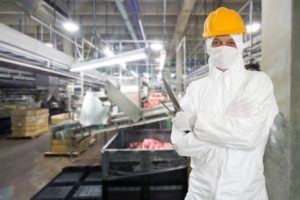
Final Rule for Preventative Controls for Human Food – This ruling is declared for food processing farms and plants across America to ensure there are proper preventative measures in places such as Hazard analysis and oversight management/prevention.
Final Rule for Produce Safety – The ruling that standardizes proper produce procurement and management. This is in place to ensure that all domestic vegetables are safely grown, harvested, packed, and safe for human consumption.
Final Rule on Accredited Third-Party Certification – This ruling is created for those who wish to pursue careers and employment opportunities in enforcing and auditing these standards.
How do these Affect me?
As importers and customs brokers, it is necessary to know everything you can about FSVP. This is a large reform meant to make food consumption healthier for Americans. This means widespread reform for the industry and world trade in general.
If you are a producer of American food, then odds are you’ve already adhered to the ruling because the only ruling here that is not yet fully implemented is FSVP.
A1WWL
If you are finding it difficult trying to determine if you need to be FSVP compliant or if you are having trouble becoming FSVP compliant, give us a call. We are working closely with the government to ensure that your imports are affected as little as possible, and we can help you out! Call us today!
FSVP is the international trade law that has been passed under the Food Safety Modernization Act (FSMA, read more about it here.) FSVP is known as the Foreign Supplier Verification Program. This is a set of programs that are in place to validate and verify that our food safety standards are being upheld.
The purpose of FSMA is to put as many preventative measures between infected food and consumers as possible. With expansions already in place for food production and food growers, the next focus is on importers, which is where FSVP comes in.
What Kind of Imports are Affected?
Food exclusively. If you are a food importer with the intention of reselling the products, you will have to abide by FSVP standards.
How does it affect my Job?
As an Importer, the rules of your job are now expanded. You now have two additional tasks that need to be obeyed.
You must be Food Safety Ready – The concept behind FSVP is that warehouses, where food comes in, should be held to the same standards as restaurants and supermarkets. You must now follow similar food safety rules. For Example, in New York, it is required that all food surfaces and storage spaces be at least 6 inches off the ground at all times, New York Warehouses must now abide by this law as well.
Your Overseas Partners are Food Safe – Once you have declared your warehouse ‘food, safe, and ready,’ you must now begin vouching for your importers. You are required to inspect the delivery methods and the state of the food when it enters your warehouse and communicate this information to the FDA and your trade partners.
A1WWL
If you are finding it difficult trying to determine if you need to be FSVP compliant or if you are having trouble becoming FSVP compliant, give us a call. We are working closely with the government to ensure that your imports are affected as little as possible, and we can help you out! Call us today!
When you are working to be FSVP Compliant, you need to follow these three steps.
1) You need to talk to your customer and supplier to protect your assets and relationships.
2) Register with the FDA to expand your relationship with the government and formulate a food safety program
3) Register to be GSFI certified.
Communicate with your Supplier and Customer – Most people are still unaware of the fact that FSVP is already taking effect. There will be slowdowns, and there will be hiccups as we are all adjusting to this new system. The sooner you convey this to them, the easier the transition will be.
Register with the FDA – Next you will want to register with the FDA. By joining the system, it shows that you are making the positive steps to represent these changes.
Formulate a Food Safety Program (GSFI) – Next you will want to develop food safety routines based on existing protocols. Contact local supermarkets and ask them how they handle their warehouses. Next, you need to be certified by the Global Food Safety Initiative. Becoming Certified will prepare you for any question asked during an inspection.
What to do During Inspections
When an inspector arrives at your warehouse, it is important that you understand the inspector’s intention. Their job is to examine and report to their superiors, but more importantly, they are there to inform you.
Take Notes – Take notes of everything they do. They are going to be giving you all of the answers so take this information and apply it to your existing program.
Ask Questions – Whether you are questioning the process or looking for tips to improve your plan, asking questions is a great way to get better information and possibly save you money.
A1WWL
If you are finding it difficult trying to determine if you need to be FSVP compliant or if you are having trouble becoming FSVP compliant, give us a call. We are working closely with the government to ensure that your imports are affected as little as possible, and we can help you out! Call us today!
No matter where the products come from, two steps must be followed every time: First, the Importer must assume the role of an FSV, next they must follow the ACE system.
The Role of an FSV – The role of an FSV simply means that you are following the protocols of a Food Safety Verifier. Since you maintain a warehouse that is FSVP compliant, you must now take the standards that you have passed and assert it onto the food products being brought in.
The ACE System – Automated Commercial Environment is the official system through which the trade community reports imports and exports. Once you have inspected the products, you must log one of three codes for the products: FSV, FNX, or RNE.
If the products are compliant, you will mark them FSV*. The products will continue through their import process and be distributed as such.
What happens if the Products are not FSVP compliant
There are two classifications to follow through once food products are not considered compliant, they are either dubbed FSX or sent to RNE.
FSVP Exempt (FSX) – Food products that are dubbed FSX do not necessarily need to follow the FSVP guidelines. These can be anything from foods that aren’t held to the same standards, to food that is held to higher standards. For example, Cans are sealed and presumably boxed and withheld, with the exemption of damaged goods, canned foods are by default FSVP compliant and would be parsed through a different branch of FSMA for further inspection.
Research and Evaluation (RNE) – Additionally, if something is not completely FSVP compliant, they could be passed to RNE or Research and Evaluation. When this happens, they inspect whether or not the food is still passable and able to be distributed for healthy ingestion. Depending on how the food is processed, it could be sent back, or it could be distributed under a limited exemption.
A1WWL takes being FSVP compliant very seriously. As part of the Food Safety Modernization Act, there is a lot of information to go through, and we hope that this guide has helped you understand the ins and outs of the FSVP process. IF you would like to learn more about FSVP or how we can help you pass your products through customs easier, please give us a call today!
Special Notes
* – When FSV entities are transmitted to ACE, the following data is required:
• DUNS Number
• Firm Name
• Firm Address
• Entity Role of FSV
• Email Address
Ships are commissioned for work after they have been rigorously tested and inspected. This can be anything from warships being dubbed battle ready or cargo ships shown to be structurally sound. These tests are known as sea trials and are used to identify deficiencies that would need to be fixed beforehand.
How do they become decommissioned?
Ships become decommissioned over time because the sea takes a heavy toll on the structure. This is usually determined when they come to port, and they are inspected. Think of it as a pit stop during a high-speed race, they will see how long it takes to bring the ship back to working order and eventually those repairs will become too costly and thus cargo ships are considered decommissioned.
What happens to them?
There are a few creative ways that cargo ships become decommissioned.
Cargo Reefs – In Texas, it is incredibly common to take old cargo ships and sink them so they may become artificial reefs that sealife can go and live in. The most famous one of these have been known as the Kraken and was featured in a video dubbed ‘Release the Kraken.’

 The Nicaraguan Canal – The Nicaraguan Canal was the first big opponent to the Nicaraguan Canal and was supposed to open up trade through the earthquake-prone country. But as investors fell through, so did the prospect of a South American competitor.
 “The FDA Food Safety Modernization Act (FSMA), the most sweeping reform of our food safety laws in more than 70 years, was signed into law by President Obama on January 4, 2011. It aims to ensure the U.S. food supply is safe by shifting the focus from responding to contamination to preventing it.” – FDA.Gov
 Final Rule for Preventative Controls for Human Food – This ruling is declared for food processing farms and plants across America to ensure there are proper preventative measures in places such as Hazard analysis and oversight management/prevention.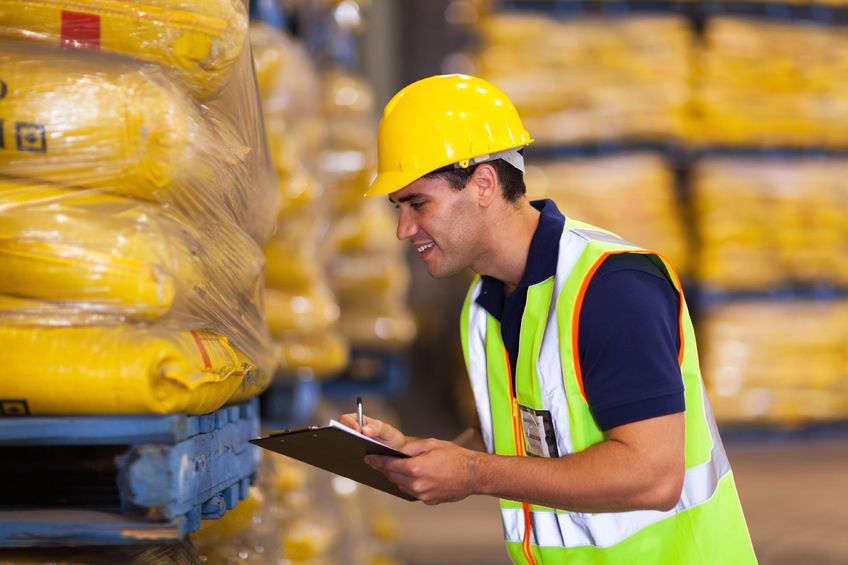
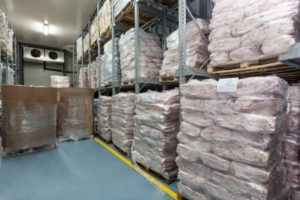 FSVP is the international trade law that has been passed under the Food Safety Modernization Act (FSMA, read more about it here.) FSVP is known as the Foreign Supplier Verification Program. This is a set of programs that are in place to validate and verify that our food safety standards are being upheld.
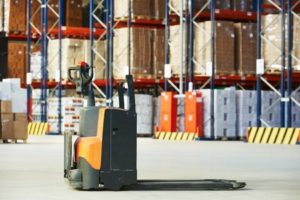
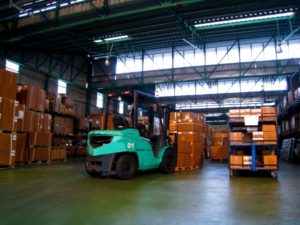 You must be Food Safety Ready – The concept behind FSVP is that warehouses, where food comes in, should be held to the same standards as restaurants and supermarkets. You must now follow similar food safety rules. For Example, in New York, it is required that all food surfaces and storage spaces be at least 6 inches off the ground at all times, New York Warehouses must now abide by this law as well.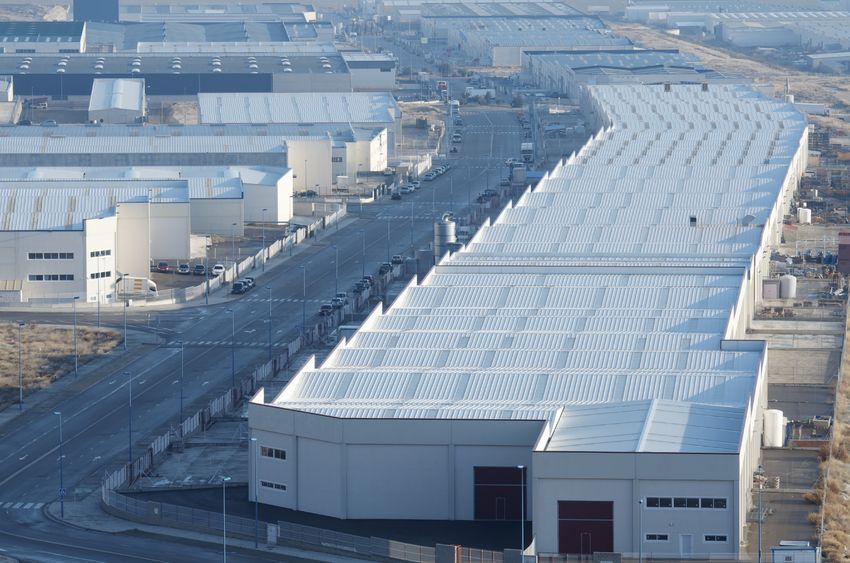
 1) You need to talk to your customer and supplier to protect your assets and relationships.
 Take Notes – Take notes of everything they do. They are going to be giving you all of the answers so take this information and apply it to your existing program.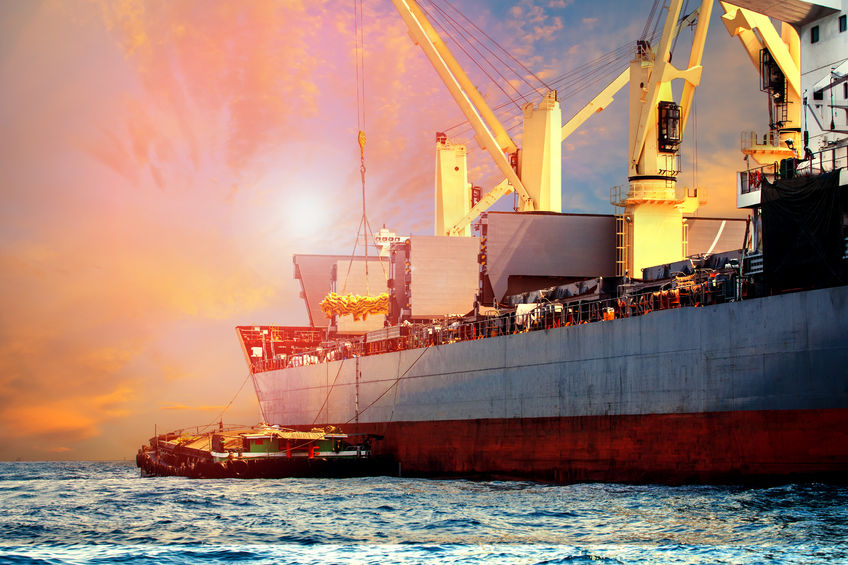
 No matter where the products come from, two steps must be followed every time: First, the Importer must assume the role of an FSV, next they must follow the ACE system.
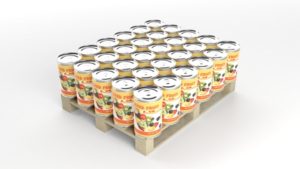
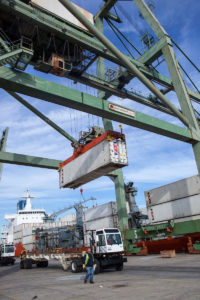 FSVP Exempt (FSX) – Food products that are dubbed FSX do not necessarily need to follow the FSVP guidelines. These can be anything from foods that aren’t held to the same standards, to food that is held to higher standards. For example, Cans are sealed and presumably boxed and withheld, with the exemption of damaged goods, canned foods are by default FSVP compliant and would be parsed through a different branch of FSMA for further inspection.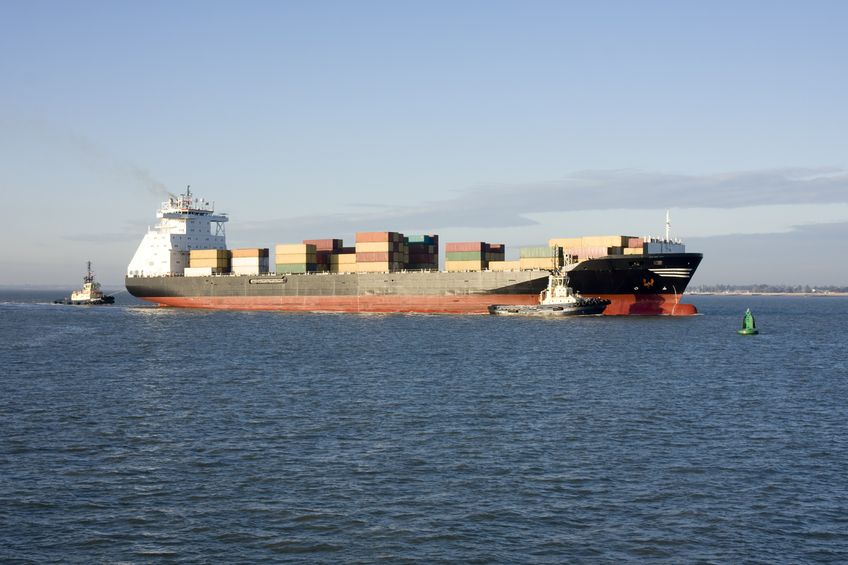
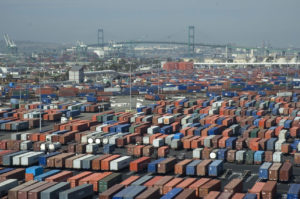 Ships are commissioned for work after they have been rigorously tested and inspected. This can be anything from warships being dubbed battle ready or cargo ships shown to be structurally sound. These tests are known as sea trials and are used to identify deficiencies that would need to be fixed beforehand.
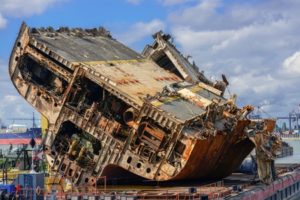 Cargo Reefs – In Texas, it is incredibly common to take old cargo ships and sink them so they may become artificial reefs that sealife can go and live in. The most famous one of these have been known as the Kraken and was featured in a video dubbed ‘Release the Kraken.’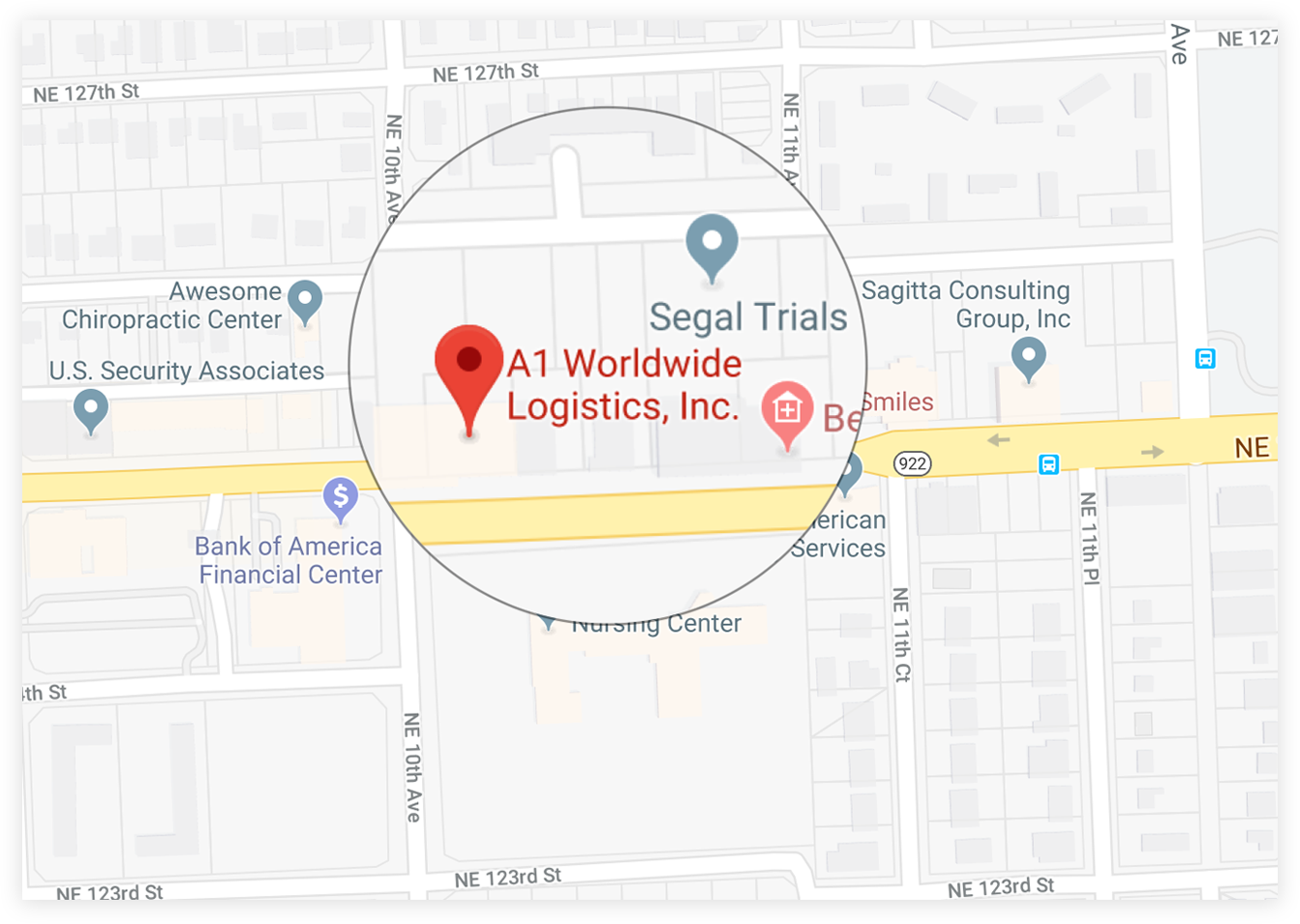
 1035 NE 125th St Suite #320, North Miami, FL 33161.
 a1worldwidelogistics.com
 (305) 821-8995
 Hours: 8AM - 5PM