by A1 WorldWide Logistics | Oct 2, 2025 | Economic trends, Importing, Shipping Logistics
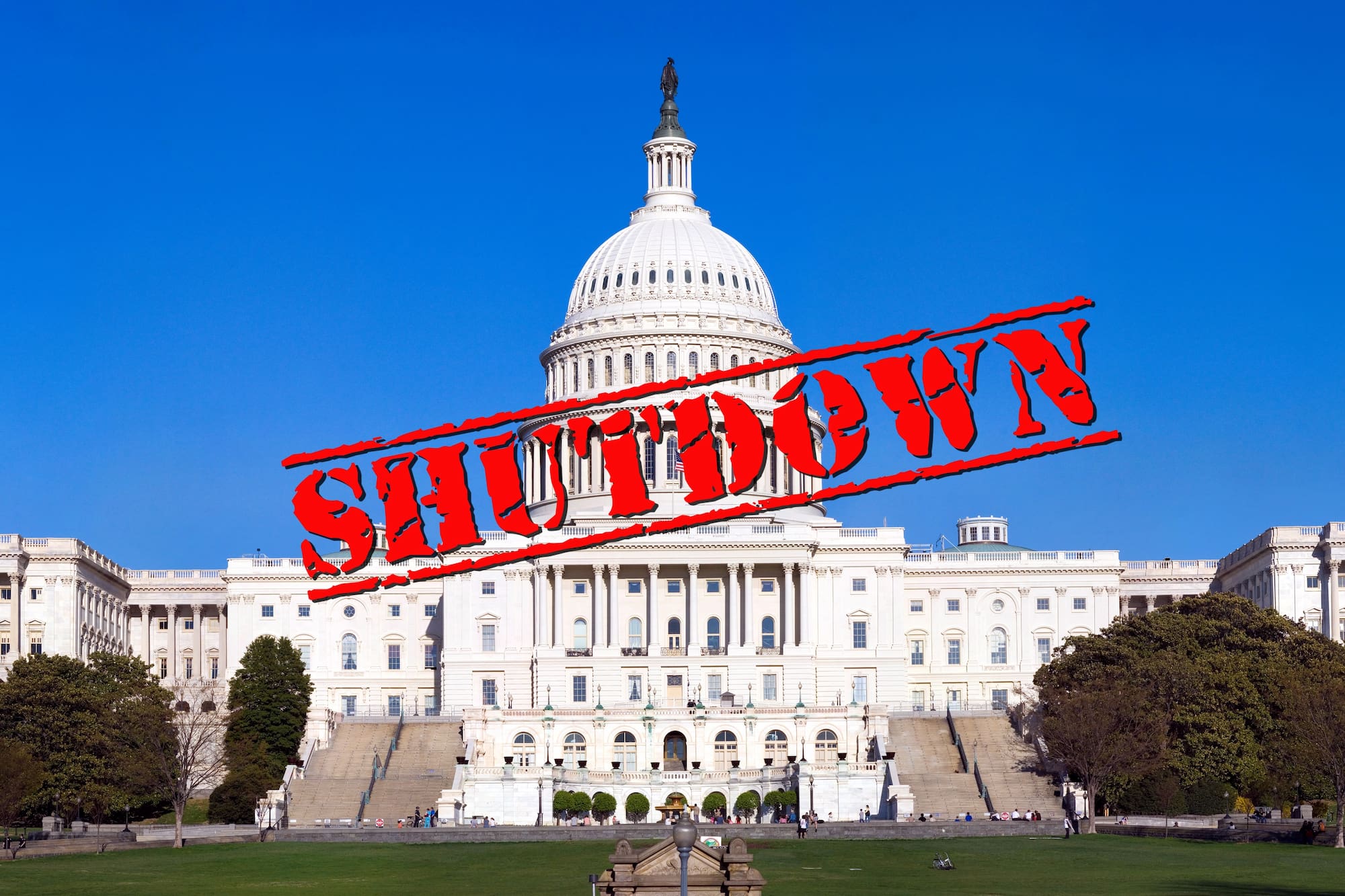
Shippers that bring goods into and out of the US could soon feel the effect as the government shutdown begins. On October 1, Congress disagreed on an operations funding bill, leading to the US government shutting down. When this happens, it can cause widespread disruptions for Americans and the economy in numerous ways. Along with impacting different sectors, a shutdown would directly impact international and domestic shipping. For example, it will affect the CBP (Customs and Border Protection), part of the Department of Homeland Security. This article will explain the impact of a government shutdown on cargo movement and how to protect your shipment.
What Can International Shipping Expect as the Government Shutdown Begins?
One of the most significant effects of a government shutdown on international shipping is increased delays. When this happens, the government will furlough or send home up to 750,000 federal workers without pay. While CBP officials are “essential,” ports will remain open; however the shutdown could furlough other workers, resulting in delays. An example is the FDA (Food and Drug Administration) workers, who may have to inspect certain imports before customs release. Many FDA workers are not essential, meaning the government could temporary discharge them, and fewer staff may lengthen customs clearance. During the last government shutdown in December 2018, delays rose by nearly 20% in the port of Los Angeles.
Delays can have further implications for supply chains, particularly for importers of perishables and pharmaceutical products with limited life spans. In addition to damaged goods, delays could cause higher costs in other parts of the supply chain. An example is drayage, the movement of goods over short distances, like from a seaport to another location. Nonessential functions may also pause for agencies like the Department of Commerce and the US International Trade Administration. This could further interrupt the shipping process by pausing permits and export licenses for shippers. A prolonged shutdown could further hurt trade and push foreign partners to look for countries other than the US to import from.
How Can Shippers Prepare?
Despite the government shutdown already starting, shippers can still protect their shipments during this time. The shipper must be current with any regulations that can impact cargo movement. Reading news articles or speaking to experts on importing and exporting are ideal ways to do this. Although ports run during this time, importers should prepare for longer transit times than usual. Importing through seaports with less traffic or using alternative methods of conveyance, like air or land, can quicken the process. shippers must file paperwork correctly since mistakes can lead to holdups in customs. If customs clearance is delayed, storing the goods in a bonded warehouse can prevent immediate duties.
When shipping cargo internationally, various situations, such as a government shutdown, can impact the process. While alarming, it should not stop the importation of cargo into the US. However, the shipper must take the proper steps to avoid disruption. Along with being informed and planning, an importer can prepare by contacting a customs broker. Brokers are licensed individuals or corporations who arrange the customs clearance process on behalf of the importer. They do this by providing various solutions like ensuring regulatory compliance, providing paperwork, calculating duties, and more. Contact A1 Worldwide Logistics at info@a1wwl.com or 305-425-9456 to speak to our brokers regarding transporting your cargo.
by A1 WorldWide Logistics | Sep 23, 2025 | Economic trends, Importing, Tariffs
President Trump’s tariff hearing date is set for November 5, following an announcement from the Supreme Court. The Supreme Court will review two cases: Learning Resources v. Trump and Trump v. V.O.S. Selections. In Learning Resources v. Trump, businesses challenge Trump’s authority to impose tariffs under the IEEPA (International Emergency Economic Powers Act). The Trump v V.O.S. selections will be the president asking for a review of the ruling striking down the tariffs. Due to the high stakes involved, the Supreme Court is moving the cases on an expedited schedule. If the court rules the tariffs illegal, the US government may have to pay back hundreds of billions to importers.
What Is The Issue Regarding Trump’s Tariffs?
The issue started in April 2025, when Trump issued sweeping tariffs for all countries importing into the US. Along with a baseline 10% tax, this included specific levies for countries like China, Mexico, and Canada. In addition to reducing trade deficits and protecting US industries, another goal is to address drug trafficking. China is one of the most popular illegal importers of fentanyl into the US. Another goal was for Trump to use the tariffs as bargaining tools to force countries into trade deals. Trump relied on the IEEPA Act to justify, which states that the president may allow or block specific international transactions during a declared emergency.
In the US Court of Appeals’ 7-4 ruling, the majority ruled that Trump exceeded his authority in imposing the tariffs. The view is that the president cannot impose broad levies without definite congressional approval. In the opposing argument, the Trump Administration argued that the Court of Appeals argued “what limited tariffs are acceptable.” Another argument was that the ruling reduces presidential powers. On September 9, the Supreme Court agreed to hear the case, with the argument being whether the president can impose broad tariffs under the IEEPA or if it violates the lawmaking authority of Congress. The tariffs will remain in place until the court makes a final decision.
What Can Shippers Expect As Trump’s Tariff Hearing Date Is Set?
While there is current uncertainty for the international shipping industry, the final ruling will determine the future. If the Supreme Court rules that the tariffs are illegal, importers could be entitled to refunds. A ruling in favor of Trump would extend the scope of presidential powers and allow the issuing of more tariffs. Future presidents could also impose levies under the IEEPA without congressional approval. Trump could also re-impose tariffs under other legal authorities if the court rules them as Illegal. Some examples include Section 232 for national security or Section 301 of the Trade Act of 1974.
As the hearing date approaches, your shipment must be protected regardless of the outcome. Whether you’re importing or exporting, unpreparedness can lead to delays, monetary loss, and cargo loss. Cargo loss can be especially detrimental if you are a company with customers who rely on the goods. Speaking to a 3PL (Third-Party Logistics) provider like A1 Worldwide Logistics is ideal when moving cargo internationally. 3PLs are service providers that offer various services for a shipper’s supply chain. These include customs clearance, freight forwarding, domestic shipping, warehousing, and more. Reach us at info@a1wwl.com or 305-425-9456 to learn about our 3PL solutions for ensuring the success of your shipment.

by A1 WorldWide Logistics | Sep 17, 2025 | Economic trends, Importing, Tariffs
International shipping may soon feel the impact of the US-Japan trade deal starting on September 16. On July 22, the Trump Administration reached an agreement with Japan establishing a tariff framework between the countries. The deal includes a 15% baseline on most Japanese imports into the US, including automobiles and auto parts. When Trump returned to the presidency, he hiked the 2.5% duty on Japanese automobiles to 27.5%. The US will equally reduce the rates of automobile imports coming from the EU (European Union) and South Korea.
Some of the other key details from the trade deal include:
- Japanese imports will no longer have additional ad-valorem tariffs and reciprocal duties on top of the 15%.
- The tariff’s adjustments are retroactive to August 7. Importers that come into the US from Japan after that date are eligible for refunds under the deal.
- Japan will invest $550 billion in US projects picked by the US government. These will focus on national and economic sectors, including critical minerals, semiconductors, energy, defense, etc.
- Under the framework, Japan will purchase $8 billion yearly in agricultural goods and increase energy imports to nearly $7 billion yearly. Rice imports will also increase by 75%.
- Civil aircraft and parts imports from Japan will no longer face additional US tariffs.
The US will have the right to increase the baseline tariff amount by more than 15% if Japan fails to meet its commitments.
Why Is Trump Imposing A Trade Deal With Japan?
President Trump has cited various reasons for imposing trade deals with other countries. A primary goal is to “level the field” by reducing the trade deficit between the US’s largest trade partners. Imposing a 15% baseline tariff and securing billions in investments is a way for the US to correct imbalances. The deal could boost the US economy, with Japan buying more US-manufactured products like energy and farm goods. Another goal is for the US to lessen its dependence on China. The two countries have been in a tariff war, and “decoupling” from China will give the US international trade leverage.
What Can The US-Japan Trade Deal Starting Mean For Your Shipment?
Japan is reportedly the US’s fifth most significant trading partner, generating $227.34 billion in two-way trade in 2024. A significant impact may be that the cost of importing cars and other goods from Japan will decrease. In turn, the cost of purchasing an automobile and other products could decrease. A lower import cost may also result in a higher volume of cargo coming from Japan. A side effect would be increased domestic shipping when picking up the shipments from the ports. The deal’s framework could also result in similar deals between the US and other countries.
With the US and Japan reaching a trade deal, it can be a beneficial time for transporting cargo. Despite the opportunity, there are various things that a shipper should be aware of when starting. Failure to prepare can lead to monetary loss, delays, and other disruptions. An ideal way to prepare is to talk to a freight forwarder. A forwarder is a person or company that acts as a middleman between the shipper and the carrier. Along with coordinating freight movement on behalf of the shipper, they provide numerous services for their supply chains. Please speak to us at info@a1wwl.com or 305-425-9752 to talk to a forwarder about exporting and importing into the US.
by A1 WorldWide Logistics | Sep 11, 2025 | Economic trends, Importing, Tariffs
The Supreme Court will hear Trump’s tariff case after an announcement on Tuesday, September 9. In an order released by the court, it was announced that it will review two consolidated cases – Learning Resources v. Trump and Trump v. V.O.S Selections. In Learning Resources v. Trump, two small businesses are challenging Trump’s tariffs imposed under the IEEPA as illegal. The belief is that the president cannot impose broad tariffs without definite congressional approval. In Trump V. V.O.S. Selections, the Trump Administration is asking for a review of a ruling striking down the tariffs. The judges agreed to decide on the case in an expedited timeline, with oral arguments starting in November.
The Supreme Court’s expedited schedule will include:
- Opening briefs due on September 19, 2025.
- Amicus briefs due on September 23, 2025.
- Response briefs due on October 20, 2025
- Amicus briefs in support due on October 24, 2025.
- Reply briefs due on October 20, 2025.
- Oral arguments starting in the first week of November 2025.
Along with the “reciprocal tariffs”, the case will also be for the levies Trump placed on some imports from China, Mexico, and Canada. The tariffs will remain in effect as the case begins.
Why The Supreme Court Will Hear Trump’s Tariff Case In An Expedited Timeline?
The Supreme Court is expediting Trump’s case due to the high stakes involved. If the court rules that the tariffs are illegal, the US government could be required to refund importers billions. In the opposing argument, Trump has collected tens of billions from imports since February, and the Congressional Budget Office forecasts that the tariff could reduce the budget deficit by $4 trillion in the next decade. Economists believe the tariffs will raise costs for importers and customers and create economic instability. Another reason for the expedited process is the question of presidential power that the case raises. The main ruling in the appeals court was that the president did not have unlimited authority to impose tariffs. In the 7-4 decision, the opposing argument was that the ruling reduced presidential emergency powers.
How Will The Case Affect Impact Shipping?
Given the volume of cargo that comes into the US internationally, the case could significantly impact shippers. If the Supreme Court strikes down the tariffs, Shippers could get back the money they lost from the levies. Importing may also be cheaper, leading to more goods entering the US. If the Supreme Court decides to overturn the appeals court’s ruling, the cost of importing could continue to increase. As a result, the increasing cost will be felt in other parts of the supply chain, like domestic shipping. Overturning may also expand presidential powers and may allow for unilateral tariff enforcement by the president.
When shipping cargo internationally, various situations, such as tariffs, can impact the shipper. Regardless of the problem, you must protect your shipment during importation. When bringing goods into the US, an ideal way to prepare is by contacting a customs broker. Brokers are licensed individuals or corporations who arrange the customs clearance process on behalf of the importer. In the US, they act as intermediaries between shippers and CBP (Customs and Border Protection). They ensure customs clearance by providing paperwork, calculating duties, ensuring regulatory compliance, and more. Contact A1 Worldwide Logistics at info@a1wwl.com or 305-425-9456 to speak to a broker regarding your shipment’s success.
by A1 WorldWide Logistics | Sep 4, 2025 | Economic trends, Importing, Tariffs
An appeals court ruled Trump’s tariffs illegal after a 7-4 decision on August 29. In the ruling, the Court of Appeals sided with the Court of International Trade. Along with reciprocal tariffs, this decision could also affect separate levies that Trump placed on Canada, Mexico, and China imports. Despite the ruling, the appeals court will delay issuing a mandate against Trump’s levies until October 14. The purpose is to allow the Trump administration time to appeal to the Supreme Court. If the Supreme Court grants certiorari, the court will make a final ruling by June 2026. This article will explain the reason behind the ruling and what it could mean for international shipping.
Why the Appeals Court Ruled Trump’s Tariffs Illegal
The primary reason behind the ruling is Trump’s unlawful use of the IEEPA (International Emergency Economic Powers Act). Under the IEEPA, the president can allow or block specific international transactions during a declared emergency. However, the president cannot impose broad tariffs without definite congressional approval. In a statement, the justices noted, “It seems unlikely that Congress intended, in enacting IEEPA, to depart from its past practice and grant the President unlimited authority to impose tariffs.” The court did note that the tariffs Trump imposed under statutes are still valid. Examples include levies on steel and aluminum (Section 232) and levies targeting unfair trade practices (Section 201).
In the 7-4 decision, the judges against the majority argued that the president’s right to “regulate importation” should include tariffs. They also argued that the ruling reduces presidential emergency powers. Along with the decision, the appeals court pushed the Court of International Trade to revisit certain parts of the verdict based on the Supreme Court’s decision. Some aspects include whether an injunction against Trump’s levies will affect the tariff payers or the plaintiffs involved. The Trump administration responded to the ruling by stating it would seek an immediate hearing from the Supreme Court. If the Supreme Court maintains the verdict, the government may have to refund importers billions of dollars.
How Could Your Shipment Be Impacted From The Decision?
The ruling could significantly impact shippers, given the volume of cargo imported into the US after Trump started imposing tariffs. Along with reciprocal tariffs, this could include country-specific levies placed on countries like China to curb the inflow of fentanyl. If the Court of Appeal’s ruling stands, importers may be entitled to refunds totaling hundreds of billions. Legal experts expect either class-action lawsuits or trade associations to lead repayment efforts. Shippers could also see a surge in import volumes if Trump’s reciprocal tariff ends permanently. Despite the decision, there is still short-term uncertainty as the case heads to the Supreme Court.
When shipping cargo internationally, different scenarios may arise that can impact your shipment’s success. Failure to prepare can lead to delays, monetary loss, and cargo loss. Along with being up-to-date with regulations like tariffs, another way to prepare before starting is by contacting a freight forwarder. Forwarders are intermediaries between the shipper and the carrier and coordinate freight movement globally. They do this by offering various services, including customs clearance, international and domestic transportation, warehousing consulting, and more. Forwards also guide the shippers on the best steps for ensuring a successful shipment. Reach A1 Worldwide Logistics at info@a1wwl.com or 305-425-9456 to speak to a forwarder about importing or exporting internationally.

by A1 WorldWide Logistics | Aug 28, 2025 | Economic trends, Importing, Tariffs
An investigation by the Trump administration could soon result in Trump imposing furniture tariffs. On August 22, the president announced a “major” tariff investigation on furniture entering the US. The potential rate has not been determined yet, and the examination will happen over the next 50 days. With Trump recently enforcing country-specific tariffs, it is unclear if he will apply the furniture tax on top of them. A white house official also announced it will happen under the Section 232 national security code. Recently, Trump expanded the scope of the Section 232 levy to include steel and aluminum imports. Given the amount of furniture countries import into the US, the tariffs could majorly impact international shipping.
Why Is Trump Imposing Furniture Tariffs?
Trump is pushing furniture tariffs for various reasons in his “America First” agenda. A primary goal is to encourage domestic manufacturing by raising import costs. This could stimulate the economy by creating jobs and returning businesses to the US. The country once considered states like South Carolina, North Carolina, and Michigan major furniture manufacturers. Like reciprocal tariffs, Trump also wants to enforce furniture taxes to encourage fair trade. Trump recently stated, “They charge the US tax or tariff, and we will charge them the exact tax and tariff, very simple.” Economists have the opposite view, noting that the levies could hurt the US economy by raising costs.
The immediate response to the tariffs was significant opposition in the US furniture industry. Trump’s announcement comes when the furniture industry faces numerous challenges. Along with inflation, higher interest rates have led to buyers purchasing fewer homes, lessening the need to buy furniture. Stocks for furniture retailers that rely primarily on importations fell immediately after the announcement, with some falling 7%. However, retailers with the majority of manufacturing in the US have seen a slight stock increase following the announcement. Jason Miller, A professor in supply chain management, stated, “Such a policy will further hurt furniture wholesalers and retailers and serve as a further headwind for container shipping volumes.”
How Will This Impact International Shipping?
In 2021, the US imported approximately $28 billion worth of furniture internationally, with China and Vietnam bringing in the majority. An immediate impact of furniture tariffs could result in higher import costs for many supply chains. Price increases may also fall on customers, with businesses increasing compensating costs. Despite logistical challenges, companies that import furniture have also considered re-sourcing manufacturing supply chains to the US. Bringing back production to the US is also costly and time-consuming; insourcing manufacturing could benefit domestic shipping.
When importing into the US, you must be aware of any regulations that can impact your shipment’s success. Failure to understand what to expect before starting can lead to monetary loss, delays, and cargo loss. Reaching out to a 3PL (Third-Party Logistics) provider like A1 Worldwide Logistics is ideal for getting started. A 3PL is a company that handles a variety of supply chain parts for a client. These include freight forwarding, customs clearance, domestic shipping, warehousing, and more. Speak to us at info@a1wwl.com or 305-425-9752 to learn about our 3PL solutions for your shipment.


 1035 NE 125th St Suite #320, North Miami, FL 33161.
 a1worldwidelogistics.com
 (305) 821-8995
 Hours: 8AM - 5PM