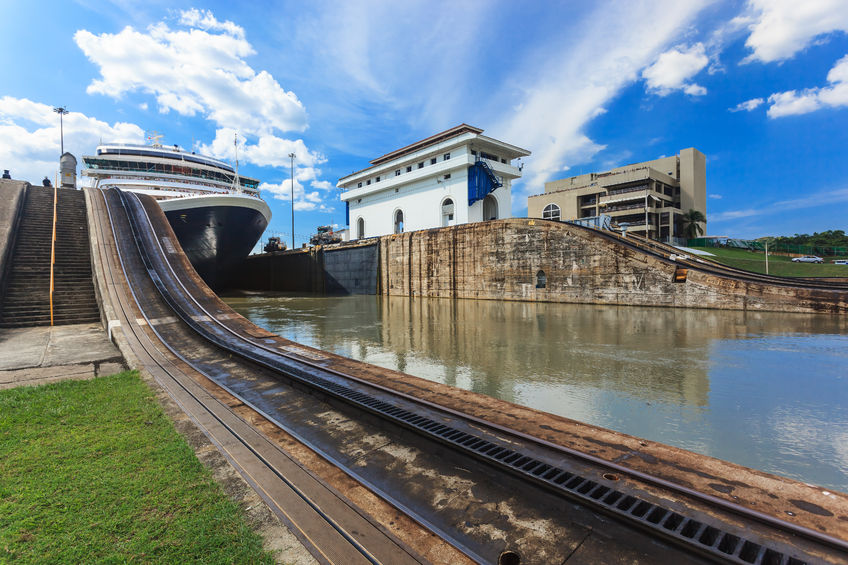
The Panama Canal has been vital for international trade since it’s creation in the early 1900’s. While it has been incredibly useful, it has since needed an upgrade. Between the increase in international trade and the development of larger ships, the Panama canal needs to keep up. This is why the Panama Canal expansion project began.
What changed during the Panama Canal Expansion?
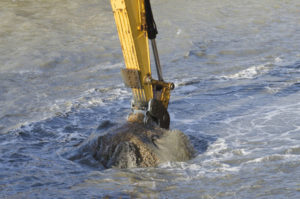
Dredging helps deepen the canal, allowing larger ships to pass through easily.
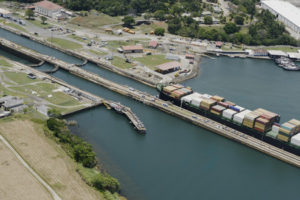
The Third Lane – Perhaps the biggest change in the Panama Canal has been the addition of a third lane. This lets more ships pass through the canal at any given time, drastically increasing traffic through the port.
The Third Set of Locks – The third lane means a third set of locks to balance the flow of water and prevent flooding or bottom scraping. This had to be completed after the third lane had been cleared and formed.
The Deepening – For the other lanes, dredging was done to make larger ships such as Neopanamax vessels clear through easier and with no risk of taking damage from the low levels.
One year Later, what has changed?
So far, the Panama Canal has had their third set of locks open now since June of last year, and so far 13,000 ships have passed through the third lane, including the largest cargo ship in the world. While this has increased overall traffic so far, can it be heralded as a success?
Time points to yes, but if you want to show what a true achievement this is you need to look at the competitors of the Panama Canal during the construction.
The Nicaraguan Canal – The Nicaraguan Canal was the first big opponent to the Nicaraguan Canal and was supposed to open up trade through the earthquake-prone country. But as investors fell through, so did the prospect of a South American competitor.
The Suez Canal – The Suez Canal was the other major canal that was also undergoing radical changes. While it was completed sooner, it also cost 3 billion more than the Panama Canal. These are both great advances for international trade.
A1WWL
A1WWL has been in the business of freight forwarding for many years, and when we read about how the Panama canal has grown, we get excited for the future of our profession. If you would like to learn more about the canal or freight forwarding, please give us a call today!
“The FDA Food Safety Modernization Act (FSMA), the most sweeping reform of our food safety laws in more than 70 years, was signed into law by President Obama on January 4, 2011. It aims to ensure the U.S. food supply is safe by shifting the focus from responding to contamination to preventing it.” – FDA.Gov
How will the FSMA reform Food Safety?
To take a more proactive stance against food safety risks, several programs are broken up into “rules.” These rules are taken as in rules of law.
Final Rule for Foreign Supplier Verification Programs (FSVP) – FSVP is the most important rule for importers out of all the ones on this list. This mandates that Importers be food safety certified and can vouch for the quality of the food arriving per their trade route.
Final Rule for Preventative Controls for Human Food – This ruling is declared for food processing farms and plants across America to ensure there are proper preventative measures in places such as Hazard analysis and oversight management/prevention.
Final Rule for Produce Safety – The ruling that standardizes proper produce procurement and management. This is in place to ensure that all domestic vegetables are safely grown, harvested, packed, and safe for human consumption.
Final Rule on Accredited Third-Party Certification – This ruling is created for those who wish to pursue careers and employment opportunities in enforcing and auditing these standards.
How do these Affect me?
As importers and customs brokers, it is necessary to know everything you can about FSVP. This is a large reform meant to make food consumption healthier for Americans. This means widespread reform for the industry and world trade in general.
If you are a producer of American food, then odds are you’ve already adhered to the ruling because the only ruling here that is not yet fully implemented is FSVP.
A1WWL
If you are finding it difficult trying to determine if you need to be FSVP compliant or if you are having trouble becoming FSVP compliant, give us a call. We are working closely with the government to ensure that your imports are affected as little as possible, and we can help you out! Call us today!
FSVP is the international trade law that has been passed under the Food Safety Modernization Act (FSMA, read more about it here.) FSVP is known as the Foreign Supplier Verification Program. This is a set of programs that are in place to validate and verify that our food safety standards are being upheld.
The purpose of FSMA is to put as many preventative measures between infected food and consumers as possible. With expansions already in place for food production and food growers, the next focus is on importers, which is where FSVP comes in.
What Kind of Imports are Affected?
Food exclusively. If you are a food importer with the intention of reselling the products, you will have to abide by FSVP standards.
How does it affect my Job?
As an Importer, the rules of your job are now expanded. You now have two additional tasks that need to be obeyed.
You must be Food Safety Ready – The concept behind FSVP is that warehouses, where food comes in, should be held to the same standards as restaurants and supermarkets. You must now follow similar food safety rules. For Example, in New York, it is required that all food surfaces and storage spaces be at least 6 inches off the ground at all times, New York Warehouses must now abide by this law as well.
Your Overseas Partners are Food Safe – Once you have declared your warehouse ‘food, safe, and ready,’ you must now begin vouching for your importers. You are required to inspect the delivery methods and the state of the food when it enters your warehouse and communicate this information to the FDA and your trade partners.
A1WWL
If you are finding it difficult trying to determine if you need to be FSVP compliant or if you are having trouble becoming FSVP compliant, give us a call. We are working closely with the government to ensure that your imports are affected as little as possible, and we can help you out! Call us today!
Third Party Logistics (3PL) is businesses that provide one or more varieties of amenities associated with logistics. These services include public and contract warehousing, transportation and distribution management, and freight merging. Third Party Logistics companies stock your product within a warehouse and then ship it to the customer on your behalf. If you’re an e-commerce business, you will want to look for a 3PL that is an expert in inventory management, fulfillment, and returns.
Third Party Logistics play a vital role in the supply chain. From raw materials processed and made by a manufacturer, to packaging and transportation by air, land, or sea, to being stored in a warehouse to be shipped to a user, there are many moving parts. That entire process runs smoothly because of logistics companies working behind the scenes communicating, planning, and coordination. Companies that choose to work with a logistics business will not need to be bothered with the challenges that often arise like customs regulations and the right transportation methods.
Advantages:
• Working with a Professional – The primary focus of a 3PL is to optimize how a company handles their shipments. They are knowledgeable about everything that involves distribution management, warehousing, and shipping.
• Behind-The-Scenes – One of the obstacles of cultivating worldwide is dealing with global fulfillment. Outsourcing the responsibility of documentation, customs, duties, and other issues that arise when dealing with overseas sales will make it easier overall to sell within your country, rush time to delivery and lower shipping prices.
• Cost Efficiency – Because 3PLs specialize in logistics, they have specific expertise compared to their clients. Logistics firms can strategize and lessen a company’s overall delivery and inventory costs, and improve management. 3PLs specialize in meeting the technical requirements to keep IT systems updated more budget and time economically.
A1 Worldwide Logistics
Third Party Logistics companies help businesses maintain their focus on their product or service and help expand your reach across the globe. The expertise in supply chain management, warehousing, transportation, and other operations is of substantial value to various companies. Maximize efficiency, eliminate weak spots that end in lost profits, and guarantee maximum success and profitability with a 3PL. If you have any more questions, comments, or concerns, please give us a call today at (305) 821 – 8995.
Everything You Need to Know About Supply Chain Management
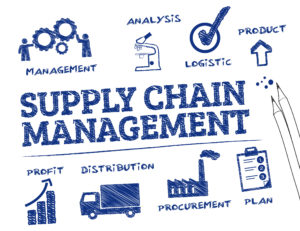
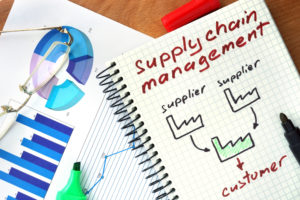
Supply chain management (SCM) is like an umbrella of activities that include sourcing, procurement, conversion, and logistics management. It encompasses the coordination and collaboration with suppliers, liaisons, distributors, and customers. Supply Chain Management is a broader term referring to the connection from the suppliers to the end consumer.
The objective of supply chain management is to gain a competitive advantage and is a modern concept with multiple organizations involved. Ultimately, supply chain management is a fresher version of logistics management. SCM is the operational framework of a cycle from a supplier, manufacturer, wholesaler, and retailer and back again.
What is Logistics Management and How Does It Work?
Logistics management is the part of supply chain management that plans, implements, and controls the efficient-effective forward and reverse flow of storage of goods, services, and information between the points of origin and consumption to meet customer requirements. The primary purpose of logistics is to meet the customers’ requirements flawlessly.
The first step after manufacturing the goods is transporting those goods to the next location. How will they get from point A to point B? Well, the job of a logistics company is to manage a combination of transportation that is the most effective at creating a high value for customers to reach those two points as smoothly as possible. The modes of transportation of materials play a critical role in the movement of supplies throughout the supply chain. The most common methods of transporting goods are through airplanes, trucks, trains, and ships.
The purpose for a warehouse is for when any goods that have been manufactured but do not have a set destination need a place to be housed until they’re ordered. When the products are stored in a warehouse, the logistics company steps in to manage pick and pack, container loading and unloading, and cargo manipulation. Logistics keeps your warehouse working efficiently so you can get back to the core of your business.
A1 Worldwide Logistics
We always provide personalized services for our clients and create a seamless experience through constant communication. Logistics within supply chain management is ever evolving to meet the needs of the customer. Logistics help the supply chain accelerate order fulfillment to meet the expectations of overnight and 2-day shipping etc. A1 Worldwide Logistics has years of experience in the industry and continues to push the boundaries of the capabilities of a logistics business.
A new report by the World Bank Group (Connecting to Compete) reviewed by A1 Worldwide logistics has proven that Advanced economies remain the global leaders in trade logistics and management.
Around the world, most advanced global countries have chased logistics-related transformations and investments to build their infrastructure, accelerate and facilitate transportation and trade, or grow or improve current services. Despite this positive progress, the sixth edition of Connecting to Compete paints a decidedly mixed picture. Advanced countries score, on average, 48% higher than lower-income nations when it comes to logistics performance and growth.
Caroline Freund, director of the macroeconomics, trade & investment global practice at the World Bank Group. Says this on the matter; “Logistics services are the backbone of international trade, Good logistics reduce trade costs, but supply chains are only as strong as their weakest link. For developing countries, getting logistics right means improving their infrastructure, customs, skills, and regulations.”
The World Bank Group’s “Connecting to Compete,” report contains the Logistics Performance Index (LPI), which is a bi-annual report that scores over 160 countries on how efficiently their respective supply chains connect local firms to domestic and international opportunities. The 2018 LPI points to emerging concerns like the resilience of supply chains, their growing environmental footprint, and the urgent need for qualified workers.
A1 Worldwide logistics knows that one of the most pressing concerns is a logistics labor shortage for both advanced and developing countries. Developing countries require large numbers of managerial-level workers, while developed nations face a dire shortage of blue-collar laborers, such as semi-truck drivers. High-income countries are 60% more likely than low-income nations to seek logistics options that are eco-friendly. Environment-friendly logistic options are essential because CO2 emissions from transportation are a substantial contributor to pollution. High-income countries are also more proactive than low-income nations when it comes to increasing their preparedness to potential cyber threats.
Out of all the country’s graded by the LPI, Germany has the highest aggregate score over the previous four LPI issues. Nations that are leading players in the supply chain have ranked highest in logistics performance. Countries that rank lowest tend to be those that are low-income, isolated, fragile or facing conflict political unrest. Among the more moderate to middle-income group countries, large economies such as India and Indonesia and developing economies such as Vietnam stand out as top performers.
“With international trade becoming more dispersed through global value chains, good logistics are more important than ever,” said Christina Wiederer, a World Bank Group economist and report co-author. “Small disruptions to a supply chain can spread rapidly to other countries and regions.
‘Connecting to Compete’ and its Logistics Performance Index help governments understand the link between logistics, trade, and growth, and what policies are necessary for success.”
The report and its Logistics Performance Index are tools created to help governments benchmark their progress on trade logistics across critical criteria, including the quality of trade-related infrastructure, the price of international shipments, logistics competence and quality, and the frequency with which shipments reach their destination on time.
Want to know more about logistics or other technological advances in the industry? Like us on Facebook and follow on twitter to keep up to date with all the latest.

 The Nicaraguan Canal – The Nicaraguan Canal was the first big opponent to the Nicaraguan Canal and was supposed to open up trade through the earthquake-prone country. But as investors fell through, so did the prospect of a South American competitor.
 “The FDA Food Safety Modernization Act (FSMA), the most sweeping reform of our food safety laws in more than 70 years, was signed into law by President Obama on January 4, 2011. It aims to ensure the U.S. food supply is safe by shifting the focus from responding to contamination to preventing it.” – FDA.Gov
 Final Rule for Preventative Controls for Human Food – This ruling is declared for food processing farms and plants across America to ensure there are proper preventative measures in places such as Hazard analysis and oversight management/prevention.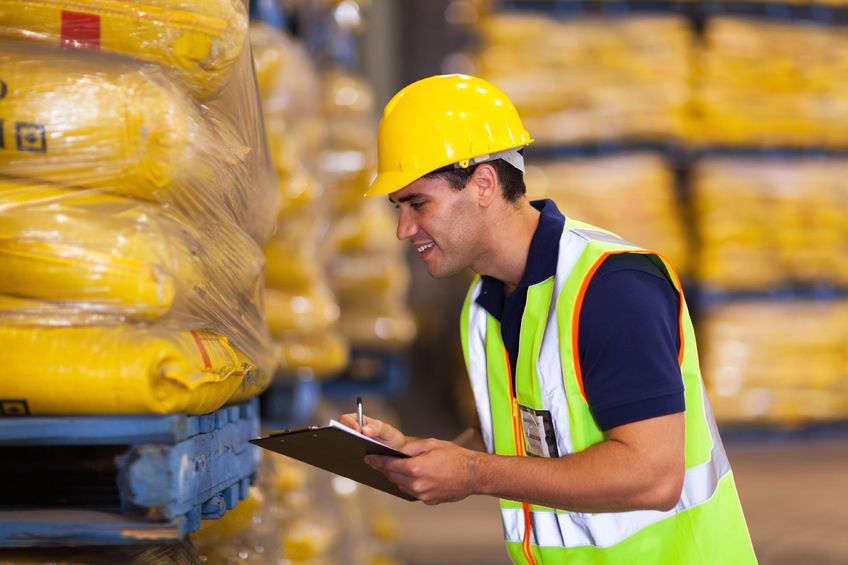
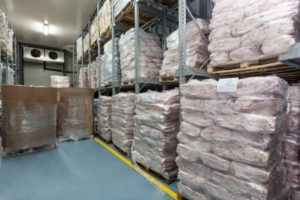 FSVP is the international trade law that has been passed under the Food Safety Modernization Act (FSMA, read more about it here.) FSVP is known as the Foreign Supplier Verification Program. This is a set of programs that are in place to validate and verify that our food safety standards are being upheld.
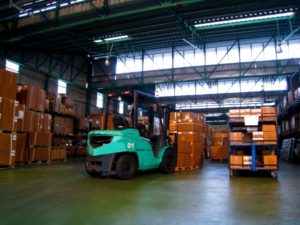 You must be Food Safety Ready – The concept behind FSVP is that warehouses, where food comes in, should be held to the same standards as restaurants and supermarkets. You must now follow similar food safety rules. For Example, in New York, it is required that all food surfaces and storage spaces be at least 6 inches off the ground at all times, New York Warehouses must now abide by this law as well.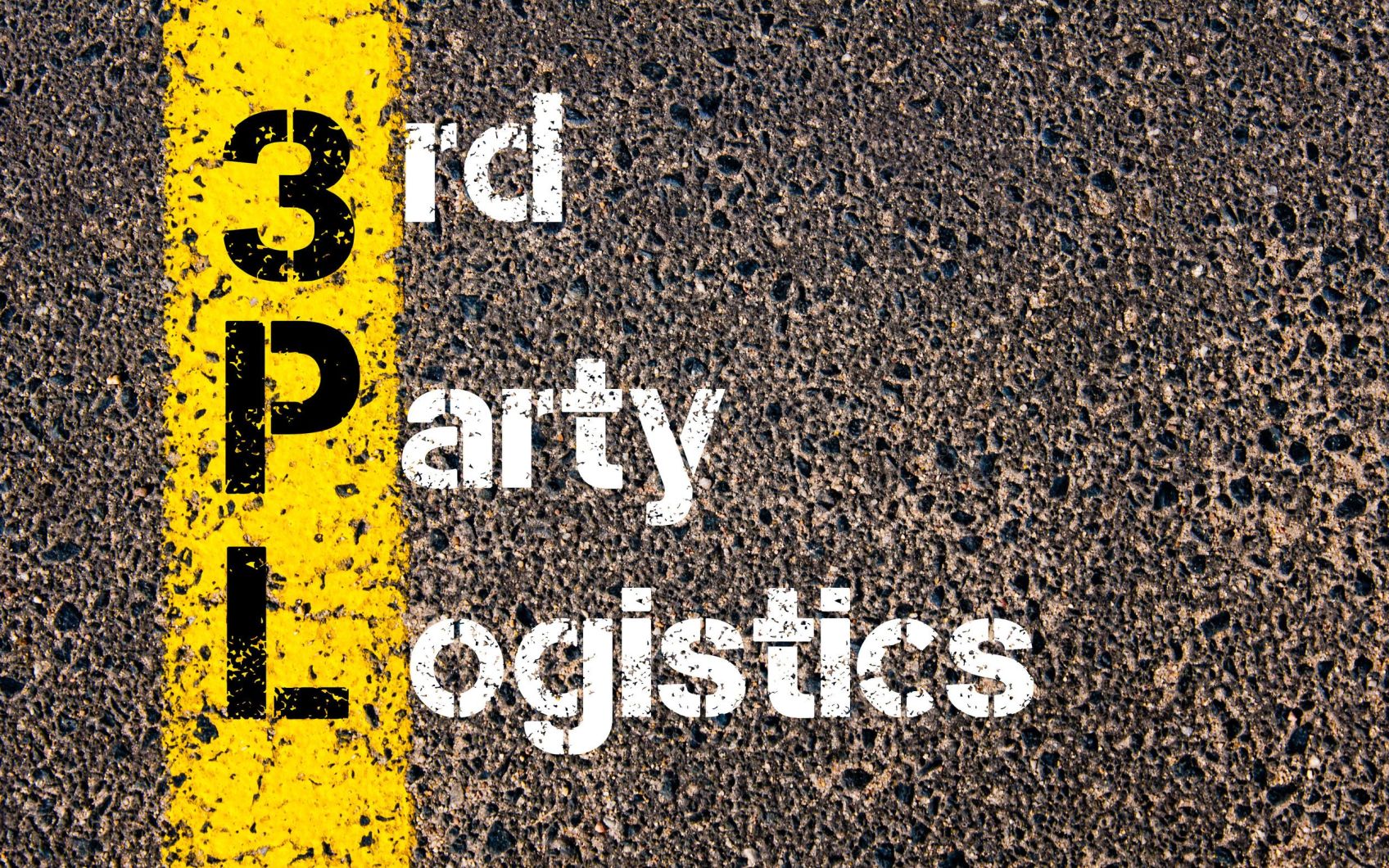

 de Logistics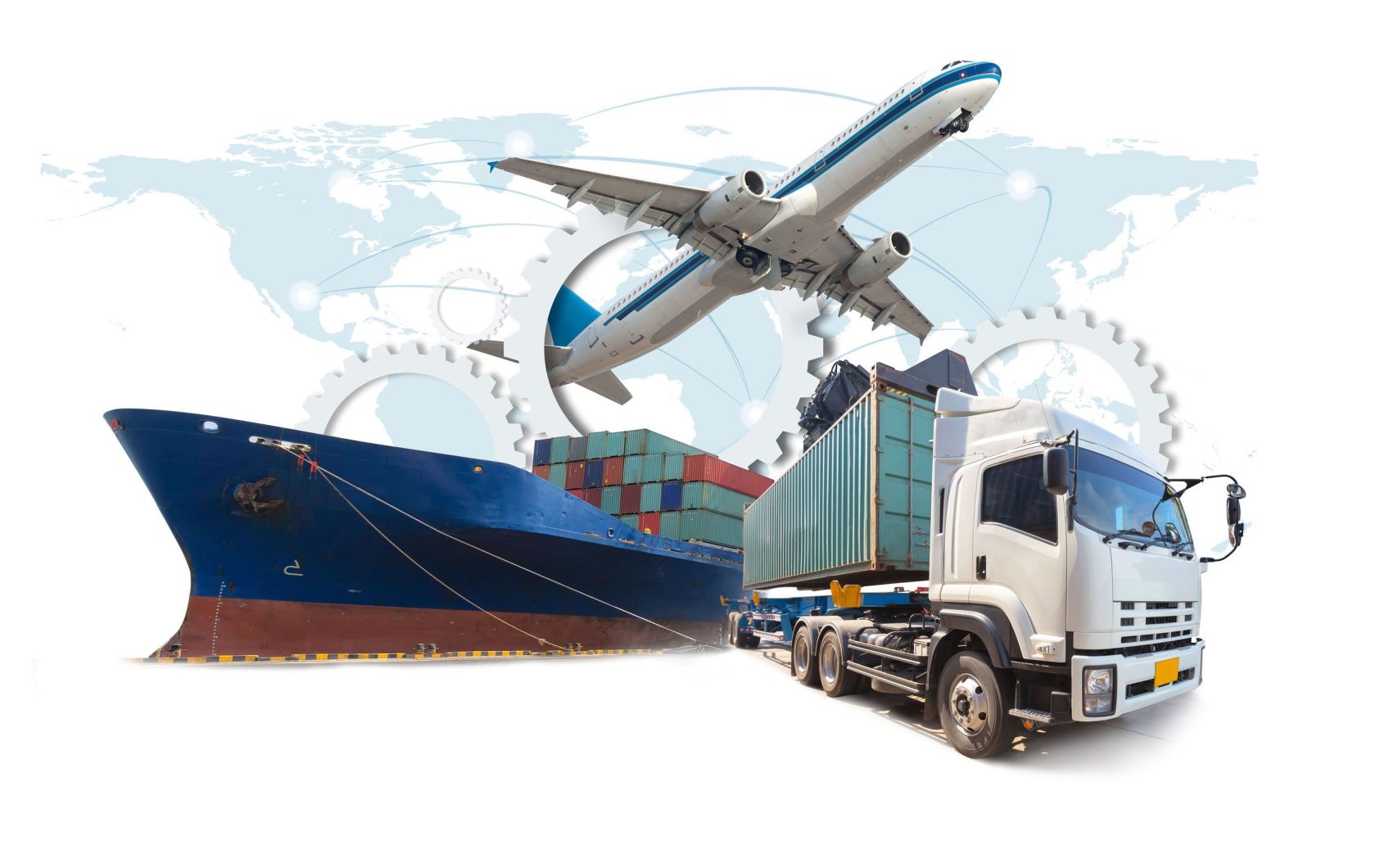
 The purpose for a warehouse is for when any goods that have been manufactured but do not have a set destination need a place to be housed until they’re ordered. When the products are stored in a warehouse, the logistics company steps in to manage pick and pack, container loading and unloading, and cargo manipulation. Logistics keeps your warehouse working efficiently so you can get back to the core of your business.
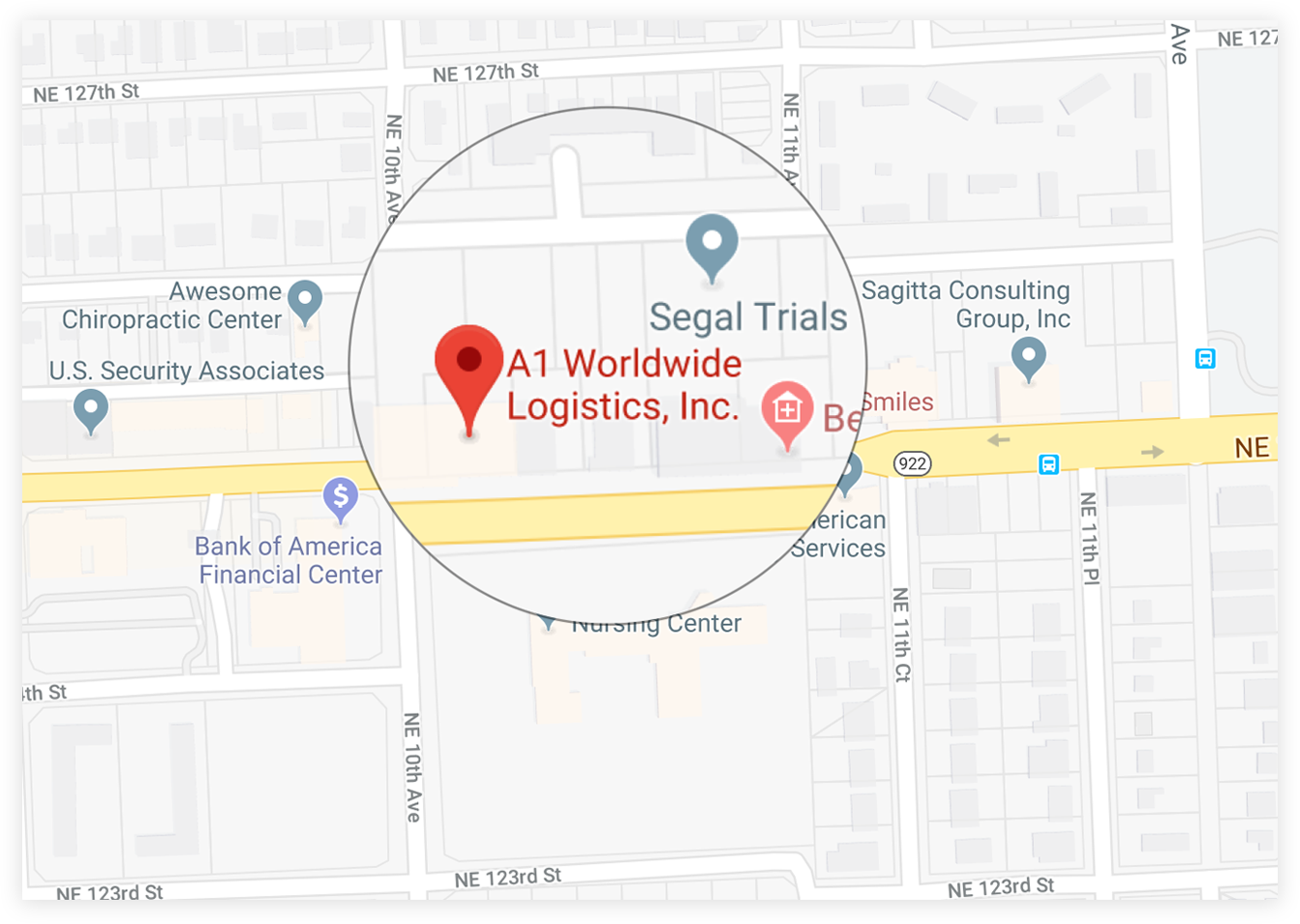
 1035 NE 125th St Suite #320, North Miami, FL 33161.
 a1worldwidelogistics.com
 (305) 821-8995
 Hours: 8AM - 5PM