
by A1 WorldWide Logistics | Feb 19, 2026 | Customs Broker, Economic trends, Shipping Logistics
Navigating the Chinese New Year is essential to consider when shipping during this time of year. Chinese New Year is a 15-day celebration marking the beginning of the year on the lunisolar Chinese calendar. In 2026, the holiday begins on February 17 and finishes with the Lantern Festival on March 3. While it is a time for celebration, the Chinese New Year can significantly disrupt international shipping. Understanding its impact on supply chains is crucial in preventing delays and backlogs. This article explains how the holiday affects shipping and how shippers can prevent disruptions during this period.
How is International Shipping Impacted By the Chinese New Year?
Exporting over $3.5 trillion in 2025, China is the world’s largest shipping company by volume. During the Chinese New Year, carriers, ports, and logistic hubs close or operate at limited capacity. This occurs weeks before and after the holiday, disrupting international shipping and supply chains. In particular, the shutdowns can lead to labor shortages, reduced capacity, and congestion. Port congestion may increase at US ports as shippers import higher-than-usual volumes ahead of the holiday. Customers expecting products may experience delays, especially in mid-to-late February. Another effect is that shippers may experience higher shipping costs due to delays and limited capacity. Truckers who pick up cargo from ports may also see higher costs.
How Can You Navigate the Chinese New Year?
Due to the Chinese New Year holiday, shippers must prepare in advance to prevent disruptions. It is ideal to import months in advance to ensure the cargo reaches the shipper before the holiday rush. Communicating with suppliers and freight forwarders is also beneficial in booking transportation space in advance or finding alternative routes. Importing from countries other than China can help mitigate price increases caused by delays and limited capacity. Switching to air transport is beneficial for smaller shipments that must be delivered within a timeframe. Another consideration is ensuring the paperwork is correct to avoid delays, such as having your goods held at customs.
Although importing goods into the US during this period may seem daunting, it should not disrupt cargo movement. Shippers should, however, take the proper steps to prevent disruptions and delays. When bringing in cargo from China or any other country, it is advisable to consult a customs broker. Customs brokers are licensed corporations, partnerships, and private individuals who arrange customs clearance on behalf of importers. In the US, they ensure shipments comply with CBP (Customs and Border Protection) regulations. Brokers do this by providing documentation, calculating duties, filing entries, and more. Reach our brokers at info@a1wwl.com or 305-912-0631 to learn about our services for getting your goods through customs.
by A1 WorldWide Logistics | Jul 17, 2025 | Shipping Logistics, Supply Chain, Transportation
As August rolls around, it is essential to understand what to expect when shipping during the peak season. The peak season is a time when the demand to ship cargo surges. In the US, it usually starts around mid-August and goes to the end of Autumn. Scenarios like the back-to-school rush and stocking up for the holidays happen during this time. In particular, ocean freight in the Trans-Pacific and Asia-Europe trade lanes has a significantly high traffic volume. Due to the high demand for shipping, shippers can face various challenges during peak season. This article will explain what happens during this period and how to protect your shipment.
What Can You Expect When Shipping During The Peak Season?
Due to the high demand for shipping, shippers can face various disruptions during the peak season, including higher shipping costs. As the freight rates rise as the demand to ship cargo internationally rises, so can the freight rates. Carriers also implement other fees like PSSs (Peak Season Surcharges) and GRIs (General Rate Increases) to compensate. Another challenge from shippers importing and exporting higher cargo volumes is capacity constraints. When the number of shipments increases, carriers can rapidly reach full capacity. Overcapacity can result in overbooking and lead to ships rolling the freight to a later sailing. Being forced to wait longer to ship can be detrimental if the shipper has customers expecting their goods promptly.
Delays can also result from port congestion caused by a high volume of imports. As the containers entering the port begin to surge, wait times for unloading start to increase. In turn, this increases the chances of demurrage charges. Demurrage is a fee that seaport officials place on cargo that stays at a terminal past the last free date. Congestion can also lead to container shortages, particularly in high-demand and inland areas. This could lead to longer shipping times, more expensive repository fees, and booking delays. Along with impacting shippers, the demand for last-mile delivery services puts extra strain on truckers.
How Can You Prepare?
With the peak season potentially impacting international shipping, a shipper must know how to prepare. Preparation can include securing carrier space in advance to guarantee successful delivery and prevent delays. It is also beneficial to ship early to decrease the likelihood of peak season challenges and extra costs. Shipping beforehand may also include stocking up on items to prevent the risk of shortages. Shippers can benefit from diversifying shipping routes and transportation modes to avoid port congestion. For routes, this can include transporting your shipment through ports with less volume to prevent bottlenecks and delays. Moving goods using modes other than sea, such as air, and if possible, land, can also prevent unexpected interruptions.
Although the peak season can be a time of pressure for shippers, it should not stop cargo movement. However, the shipper should take the proper steps to avoid supply chain disruptions. Another way to prepare is to work with a 3PL (Third-Party Logistics) provider like A1 Worldwide Logistics. 3PLs are service providers that offer various services for a shipper’s supply chain. These include international and domestic shipping, warehousing, customs clearance, and more. 3PLs also provide consultation on the best action to protect your cargo during peak season. Speak to us at info@a1wwl.com or 305-425-9752 to learn about our 3PL solutions for ensuring a successful shipment.

by A1 WorldWide Logistics | Jan 28, 2025 | Shipping Logistics, Supply Chain, Transportation
Shipping during China’s New Year can have numerous challenges you should know when starting. The Chinese New Year (or Spring Festival) is a 15-day celebration of the new year in the lunisolar Chinese calendar. In 2025, the holiday will begin on January 29th and conclude with the Lantern Festival on February 12th. The first seven days are holidays in China. During this time, shipping companies, ports, and factories shut down or limit operations. As a result, shippers that move cargo internationally feel the effects of the shutdowns. This article will explain how the Chinese New Year impacts shipping and how to prepare when moving cargo.
What Should You Know When Shipping During China’s New Year?
In international shipping, China is considered one of the biggest global exporters, responsible for nearly 14% of the world’s exports. Due to widespread shutdowns during this period, supply chain disruptions can grow during the Chinese New Year. Along with production and port halts, workers tend to go on vacation to visit families during this period. A significant impact for U.S. importers is that port congestion has become more common. Before the holiday begins and factories close, there is a massive import surge from China. As a result, ports in the U.S. can become congested due to higher volumes, which can also lead to delays. Port congestion can also impact domestic shipping, causing delays in transporting goods to the final location.
As a result of the congestion, shippers may have to pay higher rates due to limited capacity. A higher volume of containers at the port can also increase the likelihood of demurrage and detention charges. Higher costs for the shipper and carrier also fall directly on the customer. Delays come from ports in factories in China working at limited capacity and workers going on vacation. Longer wait times look unfavorable to shipping companies and businesses that deliver products under a specific timeframe. The recovery period after the Chinese New Year can also take a while, meaning a gradual recovery for supply chains.
How Can You Prepare?
With the Chinese New Year’s disruptions in supply chains, shippers should prepare beforehand to mitigate any disturbances. You must understand what to expect and plan to avoid delays. This can include booking container space beforehand and rerouting to different ports in the U.S. If possible, this can mean importing from countries other than China and diversifying suppliers to reduce vulnerability. Switching the conveyance method to air is beneficial for shipments that must move under a specific timeframe. Having extra stock in a company or third-party warehouse in the U.S. can also help in case of delays.
Despite a holiday potentially causing disruptions to supply chains, it should not stop cargo movement internationally. However, shippers should take the necessary steps to prevent disruption. An ideal way to navigate scenarios like the Chinese New Year is by using the assistance of a logistics provider. Logistics providers like A1 Worldwide Logistics have various solutions for shipping goods into and out of the U.S. These services include transportation, customs clearance, warehousing, and much more. They also explain the best steps to mitigate supply chain disruptions. Contact us at info@a1wwl.com or 305-440-5150 to speak to a freight forwarder or customs broker regarding your shipment’s success.
by A1 WorldWide Logistics | Dec 12, 2024 | East Coast Protests, Importing, Supply Chain
The National Retail Federation (NRF) predicts container imports will increase into the new year and could continue into spring. Data from the NRF’s Global Port Tracker, which tracks America’s biggest importers, notes an increase in the near future. In January 2025, the NRF forecasted 2.2 million TEUs (Twenty-Foot Equivalent) more than January 2024. The surge has already been evident, with imports in October 2024 up approximately 9.3% year-over-year. December projections could see a 14.3% TEU import compared to the previous year. As container imports continue to rise, international shipping could have numerous implications. This article will explain why container importations are increasing and the impact it will have on shippers.
What Are Causing Container Imports To Increase?
Various scenarios, such as threats of port strikes and tariff increases, are leading to a rise in container imports. On October 1st, 2024, approximately 45,000 International Longshoremen’s Association (ILA) dockworkers walked out of ports protesting for better contracts. They are also protesting against the use of automation, which threatens job security. Two days later, the strike ended, with the USMX and ILA agreeing to extend contracts until January 15th, 2025. With the extension date nearly a month away, shippers are importing to avoid any potential protests that could arise. The NRF recently urged the ILA and Port employers to continue negotiations, but there was no response.
Another contributor to the container surge is the new tariff imports that the Trump Administration recently announced. When in office, Trump will impose a 25% tariff increase on all goods entering the U.S. from Canada and Mexico, along with an additional 10% tariff on goods coming from China. Shippers import cargo before the inauguration date to avoid an increase in cost. The NRF advocated that the Trump administration should deploy the tariffs more strategically instead of using a broad-based method. Along with increasing taxes, the hikes could result in higher logistic and customer costs. The new tariffs and the potential of a port strike create a sense of urgency for shippers.
How Will Shippers Be Affected By A Rise In Container Imports?
As container imports into the U.S. continue to rise, international shipping can have numerous implications. A higher volume of containers arriving at a port may increase the chances of port congestion, resulting In delays. In turn, this could lead to supply chain disruptions, with delays leading to potential shortages of products. The cost for shippers, carriers, and customers may also rise as the demand for transportation increases. Despite the possible adverse impact of a rise in imports on shippers, it could benefit domestic shipping. Drayage services for picking up containers from ports could soon see a significant increase in volume.
When shipping internationally, it is essential to understand how a rise in imports can impact your shipment. This allows the shipper to take preventive methods to protect their supply chain from disruptions. Another way that an importer or exporter can prepare is by using the help of a 3PL (third-party logistics.) provider. 3PLs handle various parts of a shipper’s supply chain, including customs clearance, shipping storage, and more. They ensure a shipment’s success by assisting you through the journey and providing the best course of action. Call A1 Worldwide Logistics at 305-425-9513 or email us at info@a1wwl.com to learn about our 3PL solutions.

by A1 WorldWide Logistics | Sep 12, 2024 | East Coast Protests, Economic trends, Shipping Logistics
Threats of an ILA walkout are causing the shipping industry to be concerned with the potential impact of a strike. The International Longshoreman’s Association (ILA) will stop working on October 1st when their six-year contract ends. Along with higher wages, other issues include benefits and automation. Talks with the United States Maritime Alliance (USMX) regarding a new contract addressing these concerns have remained unsuccessful. Despite the ILA’s demands, USMX remains unchanged on their current offer. The ILA’s president, Harold Daggett, recently said in an ILA-released video, “Mark my words, well shut them down.” A strike will impact many supply chains that rely on shipping freight internationally.
What Is The Potential Impact Of A Strike?
Due to the ILA’s size, a potential strike can significantly impact the shipping industry differently. The ILA is a union of 45,000 workers in three dozen ports across the East and West Coast. These ports are responsible for approximately 43% of all imports that come into the U.S. The main effect of a strike will be a halt of cargo movement through the ports. As imports and exports stop moving, containers will begin piling, leading to port congestion. Due to congestion, supply chains transporting cargo internationally could experience massive delays in loading and unloading times. A week-long strike may take over five weeks to clear and may even last until 2025.
The disruption from the strike may also impact shipping costs for importers and exporters. When port closures happen, shipping companies raise freight rates due to limited capacity. As vessels pile up in the ports for unloading, it leads to demurrage and detention fees that goes the shipper. To mitigate the delay, more shippers are rerouting their shipments to West Coast ports. Rerouting may become an issue for West Coast ports since it can cause congestion, leading to delays. Similarly, importers could switch to other conveyance methods like land and air. However, this may lead to other expenditures.
Different Sectors Are Urging the ILA And USMX To Come To An Agreement
Different sectors, like the retail and manufacturing industries, have been mainly concerned with the effect of a strike. These industries are pushing the parties to agree to alleviate a potential multibillion-dollar disruption. With the holiday season quickly approaching, companies have already started taking action. The National Retail Federation (NRF) vice president notes, “Many have taken steps to mitigate the potential impact by bringing in products earlier and frontloading the peak shipping season or by shifting products back to the West Coast.” A fear is that retailers will not be able to stock shelves on time for the holidays. Manufacturers’ assembly lines may also shut down if they do not receive the necessary materials on time.
Other industries, like construction, automotive, and farming, will also feel the impact of a strike. Ports with ILA dockworkers like Houston and Savannah import tons of materials for these industries yearly. On a large scale, the economy will feel the effect, and supply chains globally will also feel the effect. While a potential strike can seem daunting if you are a shipper, it should not stop your cargo’s transport. Reach A1 Worldwide Logistics at info@a1wwl.com or 305-425-9513 for any concerns regarding your shipment. Along with educating you on what to expect, we provide transparency and real-time updates on your cargo’s status.

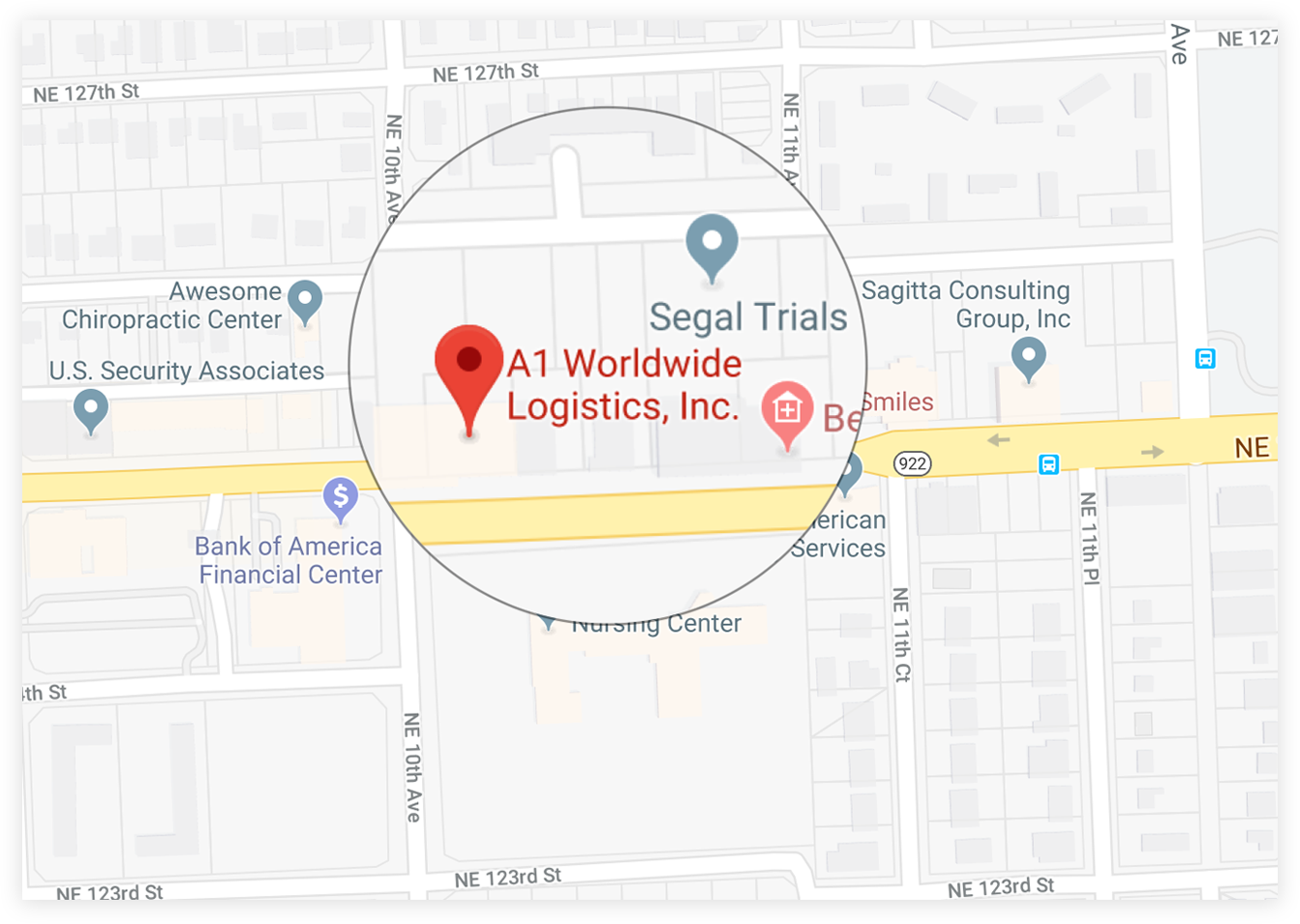
 1035 NE 125th St Suite #320, North Miami, FL 33161.
 a1worldwidelogistics.com
 (305) 821-8995
 Hours: 8AM - 5PM