Share Article in Social Media
U.S. short-sea shipping is one of the trends in cargo movement that has recently surged. Short-sea shipping is a method of cargo movement involving maritime transportation over short distances instead of between continents. An example is using a west coastline to ship from the Port of Seattle to the Port of Long Beach. This can also mean transporting goods to different countries; however, the method involves small inland waterways and coastlines. While shippers did this practice since ancient times, the last few centuries saw a gain in traction in Europe. Today, the EU (European Union) moves nearly 40% of all freight utilizing short-sea shipping.
Benefits from U.S. Short Sea Shipping
Similar to Europe in the past, the U.S. has recently been growing its dependence on short-sea shipping. The shift to waterborne shipping in the U.S. has not been as quick. This is because most of the U.S. is not economically accessible by water compared to Europe. Despite this, shippers have made steps towards short sea shipping. Many advantages have become evident as shippers and carriers have jumped on the trend. The main benefit is that transportation time decreases drastically. The U.S. has nearly 20,000 navigable channels like canals, rivers, and coastal regions that vessels can pass through. Compared to moving goods by truck, shipping through waterways can bypass highway traffic.
This can mean that potential delays become avoided when reaching the final destination. “Sea motorways” in the U.S. have sped up delivery times and may help lower the crowded capacity in trucking. Another advantage of short-sea shipping is the cost savings that can be possible. Moving goods by sea tends to be less expensive than other conveyance methods. This is especially true for moving large volumes of cargo like containers. Fewer CO2 emissions per ton carried also mean that it is an environmentally friendlier alternative compared to inland transportation. With the shipping industry pushing toward an eco-friendlier environment, inland shipping is beneficial in reducing the ecological footprint.
Trade Between the U.S. and Canada Benefit
Canada is known as the U.S.’s largest trade partner, with trade valued at nearly $794 billion in 2022. A recent study analyzed the potential benefit if both countries increased their short-sea shipping capabilities. The analysis examined the cross-border trade relationships between Canada and the U.S. in the Great Lakes. Short-sea shipping in the Great Lakes region can have significant advantages with the volume of freight that passes through. The main advantage is that the amount of shipments made at a time increases drastically. On average, one marine vessel can carry a cargo capacity of over 900 Trucks.
With increased freight in the Great Lakes, carriers can elevate bottlenecks and decrease air pollution. Short-sea shipping may also solve rising fuel costs and delays. While it is a while until short-sea shipping becomes more common in the U.S., shippers still need to move cargo. If you plan on importing or exporting out of the U.S., contact A1 Worldwide Logistics at 305-821-8995 for assistance. Along with transporting your goods by sea, we provide other conveyance methods like land and air to move your shipment.



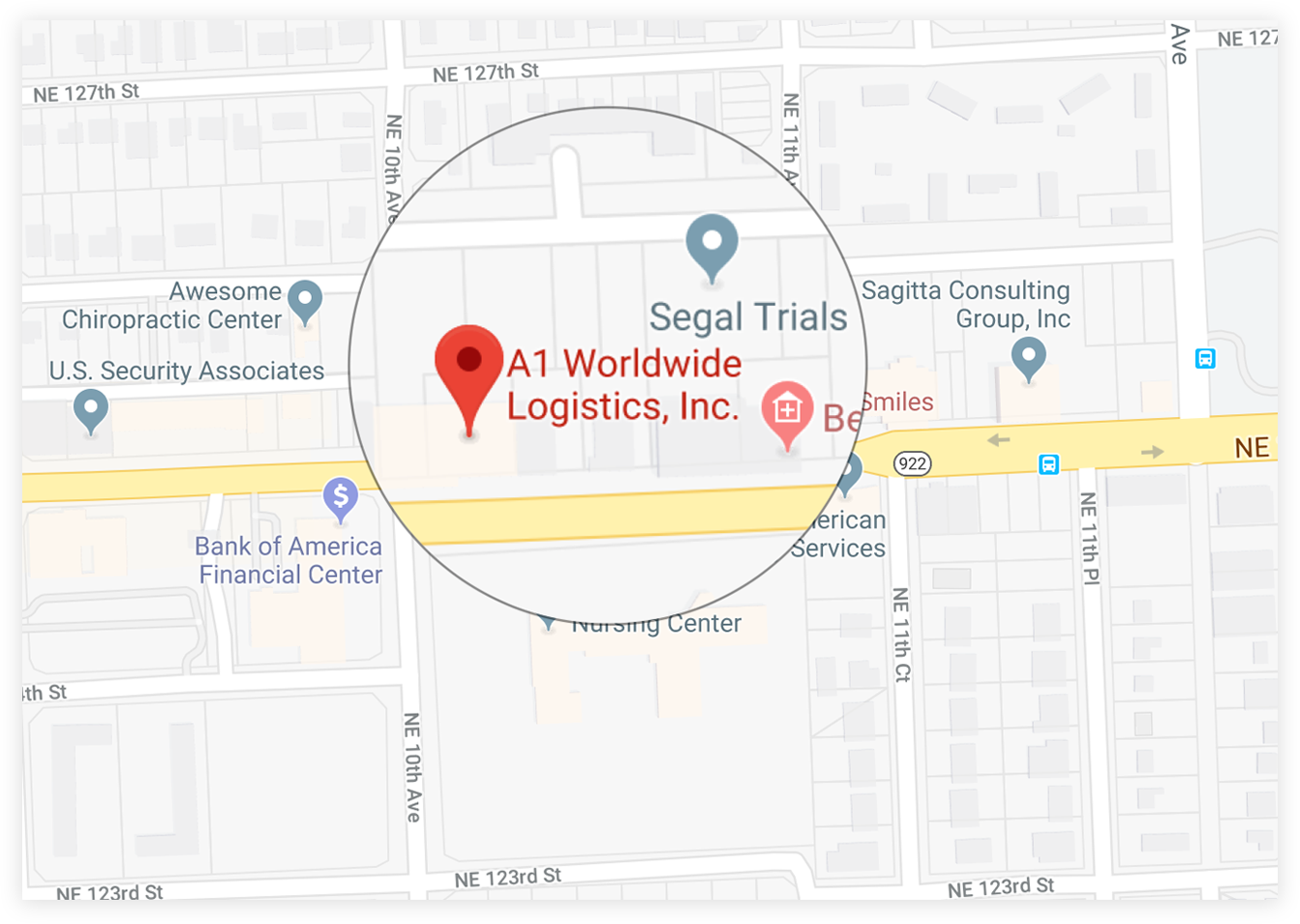
 1035 NE 125th St Suite #320, North Miami, FL 33161.
 a1worldwidelogistics.com
 (305) 821-8995
 Hours: 8AM - 5PM