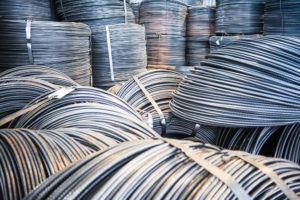
Taxes on Steel went into effect the first week of June, and the repercussions of that decision have arrived. Roughly 400,000 jobs are forecast to be lost compared to the 26,000 that were expected to be created from the metal tariffs.
The Commerce Department granted seven companies a total of 42 exclusion requests yet denied 56 applications from 11 other companies. The basis for approval or denial is if there is no domestic availability and no overriding national security concerns concerning the specific product.
Mid-Continental Steel and Wire
The largest nail manufacturer in the United States, located in Missouri, has recently laid off 60 of it 500 workers last week in response to the increased steel costs. Primarily, the company blames the 25% on imported steel and orders plummeted 50% after the company raised its prices to compensate for the higher steel costs.
Mid-Continental Steel and Wire applied to be exempt from paying the tariff, but unless something is done soon by the commerce department, they are looking to be shut down by Labor Day. There is talk about the company possibly relocating to Mexico to buy the steel without tariffs and export back to the U.S. without taxes. However, they aim to avoid this move to save the jobs in Missouri currently held at the plant.
Borusan Mannesmann Pipe U.S.
Joel Johnson is the CEO of Borusan Mannesmann Pipe U.S., a company that manufactures welded pipe used by energy companies to pull oil and natural gas out of the Earth. He is fighting to keep this pipe factory above ground just east of Houston and out of reach from Trump’s grasp.
His company is among the 20,000 that have submitted a request for exemption from the tariffs. Johnson applied for a 2-year exemption from Trump’s tariffs, but that is proving to be an uphill battle. Without his application approval, Johnson could be facing levies of up to $30 million a year, crushing his hopes of expanding the business in the future.
A1 Worldwide Logistics
At A1 Worldwide Logistics, we’re always keeping tabs on what’s changing in the industry. We’ve kept our business at the top of the logistics world because we’ve weathered through storms locally and internationally. Minimize the worry and stress on shipping and strengthen the logistics for your business by contacting us today at (305) 821 – 8995.
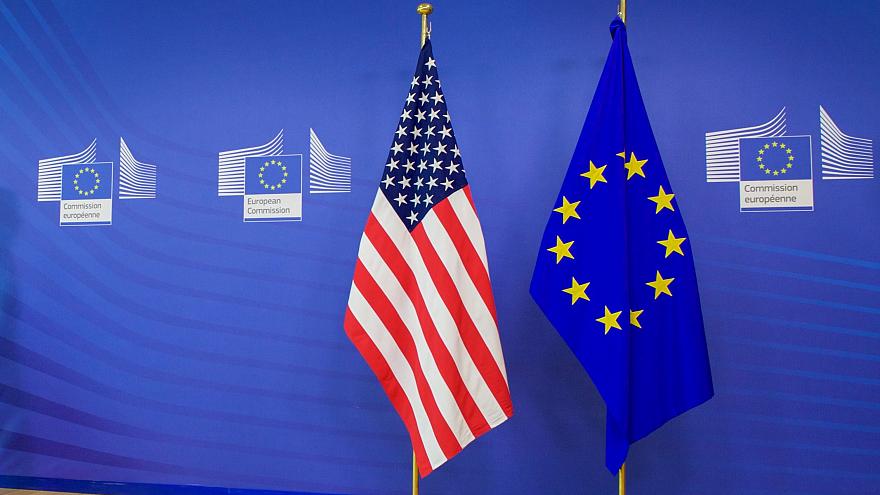
We’ve only recently realized the first time the United States sees a written response from the European Union about retaliatory measures. The European Union has warned the U.S. that if they impose tariffs on the automotive industry, not only will it hurt their economy, but the EU will impose taxes of their own.
Initially, the taxes they announced would take place were toward $3.2 billion of products. The goods include motorcycles, boats, whiskey, and peanut butter. This was only enforced after the U.S. announced taxes on imported steel and aluminum products. If the tariffs go through, the U.S. can expect to feel the repercussions as well.
Between the United States and the European Union, they trade just over $1.2 trillion each year in goods and services. The second round of 160 products of American exports includes sunbeds, paper towels, corduroy pants, and porcelain tableware. Those goods are expectedly worth $4.3 billion a year could be next on the chopping block if there’s nothing quickly resolved. Other exports like jeans and bourbon will experience a 25% tariff from the EU along with cranberries, orange juice, sweetcorn, and peanut butter.
The repercussions of the ongoing disagreements between the U.S. and the European Union would include harm against trade, growth, and jobs in the U.S. and abroad. EU Trade Commissioner Cecilia Malmström says the EU isn’t seeking any issues with the United States; they are merely responding to what Trump is announcing from Washington, D.C.
The EU could retaliate against products worth up to $300 billion of U.S. products. The United States automotive sector could be facing a loss of 4 million jobs. There is a meeting set in the future to happen with the EU commission president traveling to Washington D.C. organized by the Department of Commerce on July 19th.
Experts within the industry have warned that the European Union’s retaliation tactics could encourage Trump’s administration to strike with more taxes resulting in another round of acceleration. The relations between the U.S. and the European Union could have a ripple effect on trade, growth, and jobs in the United States.
With many moving parts in the logistics industry, managing today’s supply chains are becoming more multifaceted with each passing day. Luckily, blockchain provides advantages that make the line of communication and transaction between business’s smoother than ever.
What is Blockchain and How Does It Work?
Essentially, blockchain is a chain of blocks that are linked together and containing information. It is a digit ledger that is distributed globally and is open to anyone. Distribution of blockchain for everyone is another way to keep the blockchain secure, called a P2P network. When someone new joins the network, they receive a full copy of the entire blockchain. If a new block is made, it is sent to everyone else in the system, and it is thoroughly examined to make sure nothing has tampered. When everything is approved, that block is added onto everyone’s chain.
The information stored inside depends on the type of blockchain. For instance, bitcoin will show the sender, receiver, and the amount of money transacted. Hash is like a fingerprint for the block. It is unique to each block and identifies the contents of the block. Once the hash is established, it will have its exclusive code. However, if something is changed, the hash will change along with it, making it easier to notice when modifications are made. Each block contains the hash from the previous one, which makes the chain incredibly secure.
How Can Blockchain Improve Supply Chains?
Blockchain has the chain of command built inside, making it easier for supply chains to increase their efficiency and smoothen the process from the warehouse up to the delivery of payment. Information will not have room to be interpreted or disputed because everyone involved will have the same digital ledger.
Because blockchain is available to everyone, it makes it incredibly accessible for global users. According to Forbes, companies in the food industry enjoy using blockchain for their business because they can keep a record of where their food is coming from, how it’s being processed, stored, and its sell-by-date. Communication alone will be massively impacted because there is ultimate transparency when using blockchain.
A1 Worldwide Logistics
Our company is continually looking toward the future of logistics. With blockchain becoming so well-known over the last ten years, it is one of the most effective ways to keep information and money secure. At A1 Worldwide Logistics, we’re educated on the inner workings of blockchain, and we know this will increase the productivity of supply chain logistics in the future and so on.
The logistics and shipping industry is progressively depending on the advancement of technology to cut costs, increase transparency, and improve processes throughout many aspects. Through the use of smart contracts, blockchain technology may serve as a problem-solver for many of the issues within the trade.
What is a Blockchain Smart Contract?
One of the most recent developments for blockchain is the use of a smart contract. The only difference these contracts hold from normal ones we see every day is that they’re digital. The arrangements are stored on the blockchain and can be used to exchange coins based on specific conditions. Essentially, a smart contract cuts out the middleman, a third-party company.
Smart contracts are immutable. That means that once the contract is created, the code cannot be tampered with and no one can ever make changes to it again. Because it is distributed to everyone involved, a consensus must be formed before any funds are dispersed. No single person can force the funds to be given to them exclusively. Ethereum is a version of blockchain that was explicitly designed to support smart contracts.
How Does This Technology Help in Logistics?
Logistics companies can use smart contracts from anywhere all over the world without any miscommunications. Companies will have the ability to program the purchasing process, therefore, reducing costs and saving time. Businesses will also be able to improve the transaction flow and secure the supply chain.
They secure the supply chain by tagging each product. Information like the origin, the place of storage, authenticity, property certificates, and records will all be stored on one primary ledger. The main benefits include creating a more transparent supply chain that is easily accessible and lessening the amount of cargo theft that can occur. Businesses around the world are researching ways to integrate and apply this technology within their company.
A1 Worldwide Logistics
The ultimate success rate of blockchain is still being tested by large corporations like Walmart, Blockchain in Transport Alliance (BiTA), and UPS. As more and more companies adopt this form of currency, the logistics, and supply chain industry should be looking forward to the exciting advancements to come. A1 Worldwide Logistics is ready to gear our company toward a technologically forward-thinking future continually.
Third Party Logistics (3PL) is businesses that provide one or more varieties of amenities associated with logistics. These services include public and contract warehousing, transportation and distribution management, and freight merging. Third Party Logistics companies stock your product within a warehouse and then ship it to the customer on your behalf. If you’re an e-commerce business, you will want to look for a 3PL that is an expert in inventory management, fulfillment, and returns.
Third Party Logistics play a vital role in the supply chain. From raw materials processed and made by a manufacturer, to packaging and transportation by air, land, or sea, to being stored in a warehouse to be shipped to a user, there are many moving parts. That entire process runs smoothly because of logistics companies working behind the scenes communicating, planning, and coordination. Companies that choose to work with a logistics business will not need to be bothered with the challenges that often arise like customs regulations and the right transportation methods.
Advantages:
• Working with a Professional – The primary focus of a 3PL is to optimize how a company handles their shipments. They are knowledgeable about everything that involves distribution management, warehousing, and shipping.
• Behind-The-Scenes – One of the obstacles of cultivating worldwide is dealing with global fulfillment. Outsourcing the responsibility of documentation, customs, duties, and other issues that arise when dealing with overseas sales will make it easier overall to sell within your country, rush time to delivery and lower shipping prices.
• Cost Efficiency – Because 3PLs specialize in logistics, they have specific expertise compared to their clients. Logistics firms can strategize and lessen a company’s overall delivery and inventory costs, and improve management. 3PLs specialize in meeting the technical requirements to keep IT systems updated more budget and time economically.
A1 Worldwide Logistics
Third Party Logistics companies help businesses maintain their focus on their product or service and help expand your reach across the globe. The expertise in supply chain management, warehousing, transportation, and other operations is of substantial value to various companies. Maximize efficiency, eliminate weak spots that end in lost profits, and guarantee maximum success and profitability with a 3PL. If you have any more questions, comments, or concerns, please give us a call today at (305) 821 – 8995.









 cs
cs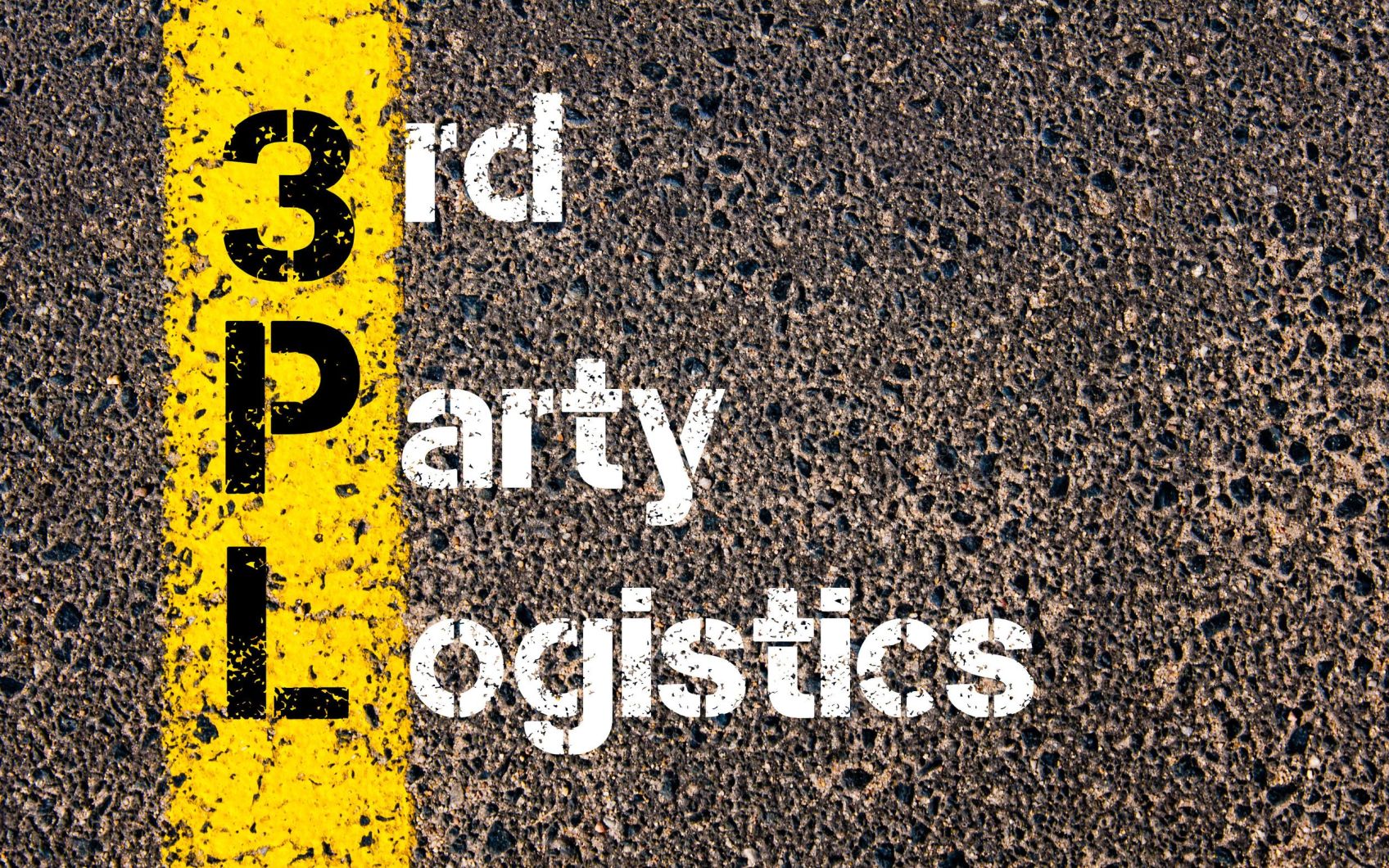

 de Logistics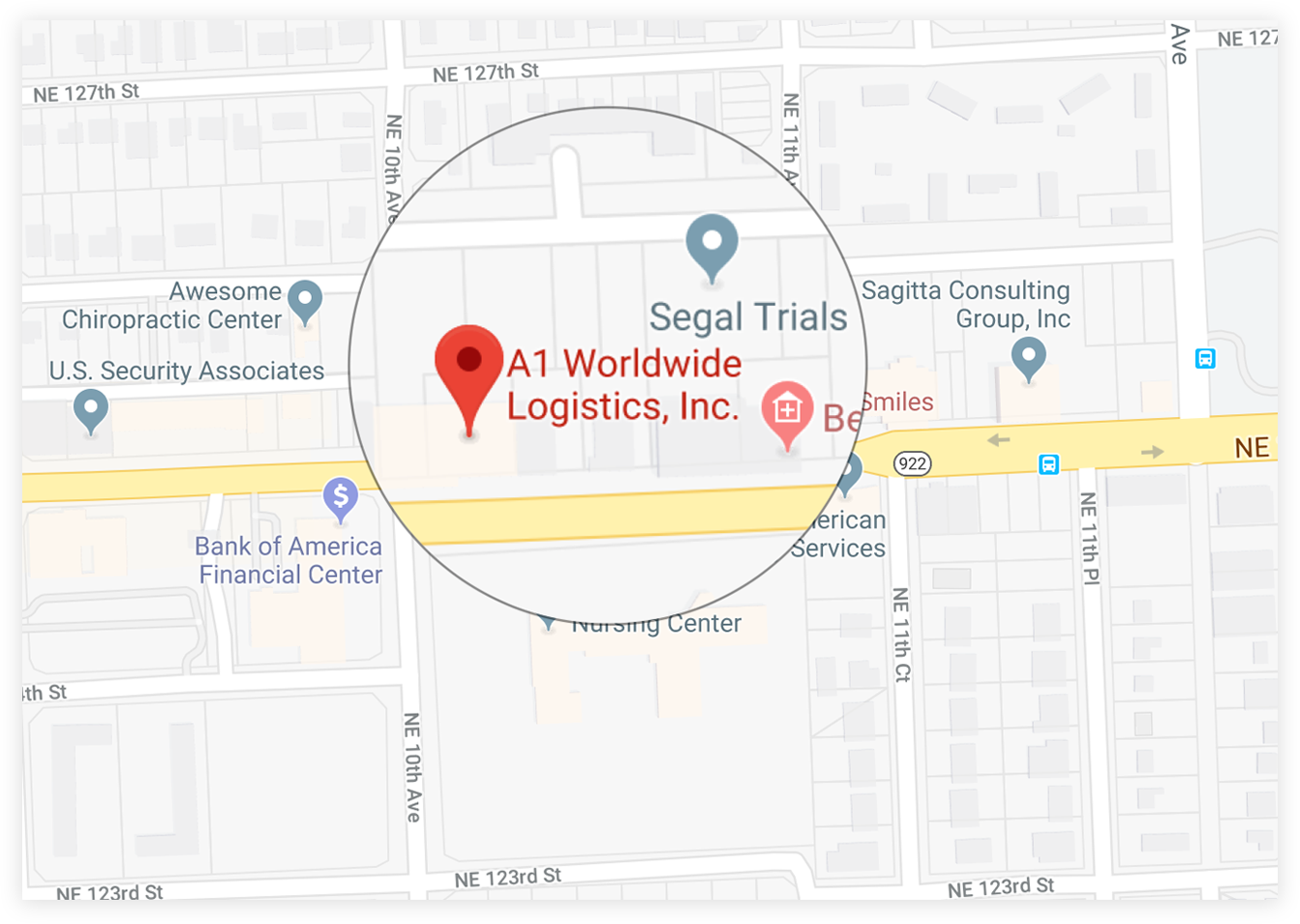
 1035 NE 125th St Suite #320, North Miami, FL 33161.
 a1worldwidelogistics.com
 (305) 821-8995
 Hours: 8AM - 5PM