by A1 WorldWide Logistics | May 15, 2024 | Economic trends, Shipping Logistics, Supply Chain
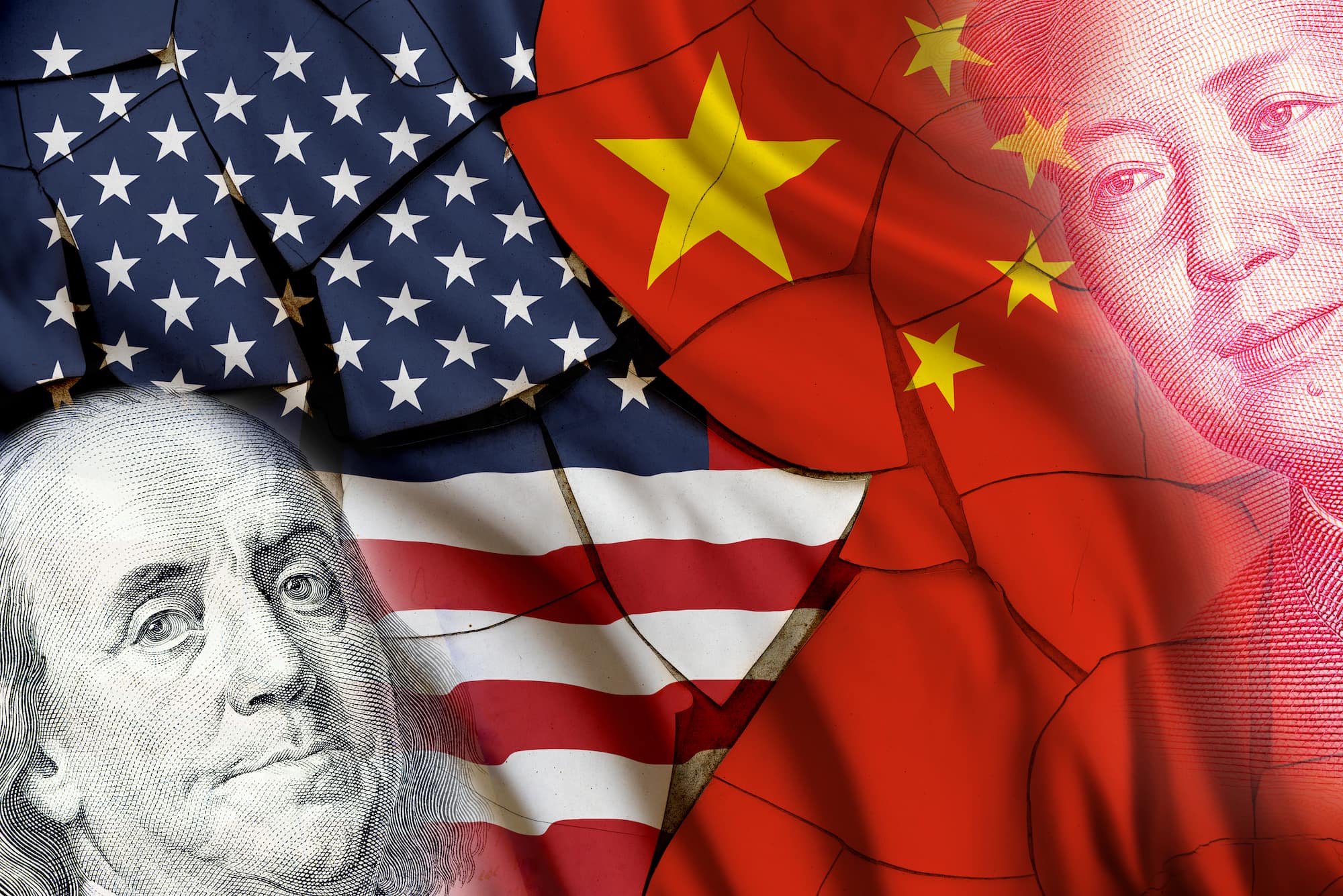
On May 14th, 2024, the USTR Announced strategic adjustments to Section 301 tariffs following a four-year review. U.S. trade representative Katherine Tai initially backed the retention of the Section 301 tariffs for Chinese products. However, there has been a recent strain on U.S. commerce. Due to this, President Biden supervised Tai in either revising or introducing new tariffs. The revisions are a way to counteract the current policy changes introduced by the People’s Republic of China (PRC). China has given signals that it will soon retaliate against the tariff adjustments. The Chinese government stated that the tariff changes will, “seriously affect the atmosphere of bilateral cooperation.”
The key commodities affected by the changes include:
Battery part – Rate increase to 25% in 2024
Electric Vehicles – Rate increase to 100% in 2024
Facemasks – Rate increase to 25% in 2024
Lithium-ion Electrical Vehicle Batteries – Rate increase to 25% in 2024
Lithium-ion Non Electrical Vehicle Batteries – Rate increase to 25% in 2026
Medical Gloves – Rate increase to 25% in 2026
Natural Graphite – Rate increase to 25% in 2026
Other Critical Minerals – Rate increase to 25% in 2026
Permanent Magnets – Rate increase to 25% in 2026
Semiconductors – Rate increase to 50% in 2025
Ship to Shore Cranes – Rate increase to 25% in 2024
Solar Cells (Whether or Not Assembled Into Modules) – Rate increase to 50% in 2024
Steel and Aluminum Products – Rate increase to 25% in 2024
Syringes and Needles – Rate increase to 50% in 2024
The USTR will issue a Federal Register notice regarding the adjustments that will outline the exclusion process and give the protocol for public comments on the tariff adjustments. A1 Worldwide Logistics is closely monitoring the changes and is prepared to guide you through the current situation. We offer solutions for adapting to the tariff increase and ensure the best course of action for the shipment. Contact A1 Worldwide Logistics at 305-425-9456 to navigate the current circumstances and ship your cargo internationally.
by A1 WorldWide Logistics | Jan 25, 2024 | Importing, Shipping Logistics, Supply Chain
Due to China’s significance for international trade, shippers may face challenges when importing during Chinese New Year. Making up roughly 14% of the world’s total exports, China is the largest exporter of goods globally. The Chinese New Year is a festival that celebrates the start of a new year in a lunisolar Chinese calendar. This year, the Chinese New Year will start on February 10th, 2024, and finish on February 24th, 2024. During the holiday, ports, shipping companies, and factories limit operations or shut down, which can cause supply chain disruptions. This article will explain how the Chinese New Year affects shipping and how to prevent delays when moving cargo.
What Should You Know When Importing During Chinese New Year?
Chinese New Year is a 15-day period where business and production in the country decrease. With China being a powerhouse in world trade, a slowdown has a significant impact internationally. A major impact is that supply chain disruptions can grow during this period. Along with factories closing for more than weeks, a considerable part of China’s population is on vacation. Companies that import goods from China may experience delays and unavailability. Meanwhile, there is an increase in demand in the weeks leading up to the holiday, which can mean port congestion. This is at a time when the ports are already operating at limited capacity.
Congestion is not only felt at the ports; trucking services for moving the cargo to its final location also feel the bottleneck. The increase in demand can mean higher shipping costs since there is limited capacity to match it. Along with increased freight rates, carriers may add charges like peak season surcharge. There is also a shortage of containers due to the demand during the holiday. Even after Chinese New Year finishes, businesses and manufacturers do not return to normal immediately. It can take over four weeks for companies to return to normal production levels. Shippers can feel the majority of the impact between mid to late February.
How Can You Protect Your Supply Chain
Because of the impact of the holiday, shippers that have to move their cargo internationally must be ready to prepare. Preparing for the Chinese New Year should be done weeks in advance. Planning ahead can mean booking container space beforehand or communicating your needs with your logistics provider. Using more than one supplier or supplier in different countries can also help. In a scenario where prices increase, using LCL (less than Container Load) is beneficial for your shipment. LCLs keep prices down and can help prevent delays since full container loads are necessary before the cargo can move. Using different methods of conveyance, like air or land, can also assist in avoiding delays.
As the Chinese New Year quickly approaches, it is essential that international shipping is not disrupted by delays or other issues. Another way to protect your supply chain is by talking to a logistics company. Using the help of a dedicated and experienced logistics provider can help you navigate the Chinese New Year. Reach A1 Worldwide Logistics at 305-440-5156 for a quote to move your cargo Internationally. We also provide customs brokerage services to clear your cargo when it reaches the U.S.

by A1 WorldWide Logistics | Jan 4, 2024 | Air Freight, Economic trends, Shipping Logistics, Supply Chain
A continuous Israel-Hamas conflict is growing airfreight shipping due to delays in the Suez Canal. Over the last few months, tensions between the parties have escalated with an attack on Gaza in October of 2023. Cargo that has to pass through the Red Sea, in particular, has felt the effects of the war. The Red Sea is a significant passageway, with nearly 10% of the world’s freight passing yearly. Shippers have recently begun looking at alternate solutions, like redirecting shipments to navigate the conflict. Along with rerouting shipments to safer locations like the Horn of Africa, shippers are looking at air as an alternative.
How the Israel-Hamas Conflict is Growing Airfreight Shipping
Businesses and shippers are seeing no end to the Gaza war and are seeing an impact on cargo movement. Delays and potential danger may result in a surge in air shipping because of the benefits of this conveyance method. Rerouting ocean shipments to locations like the Cape of Good Hope adds up to 14 days to the journey. Congestion from the number of carriers redirecting further may increase shipping times. Using an air carrier can reduce the transport time to nearly one or two days. This is especially crucial for importers and exporters who must move time-sensitive goods for sales or production requirements.
Along with the crisis in the Red Sea, other situations are leading to a growth in air shipping. A growing shortage in container ships is happening at a time when China’s New Year is closely looming. The Chinese New Year is a peak season when significant goods pass through the Red Sea. Meanwhile, a record drought in the Panama Canal is further increasing traffic in the Suez Canal. The sizable traffic further pushes shippers to look for alternatives like air carriers to move their cargo. With nearly 3% of global trade done by air, a high demand can soon raise the percentage.
What Can This Mean For International Shipping?
Despite the majority of the war happening around near Israel, international shipping could start feeling the backlash. Nearly 12% of the world’s trade, including 30% of containers, passes through the Suez Canal. Carrier companies have already increased shipment rates moving through the Suez Canal. A major international carrier company has recently indefinably suspended operations in the canal, causing container spot rates to surge. Prices for shipping crude oil have also been rising. The impact on U.S. shipping may be minor relative to China and Asia. As the war persists, risks to global cargo movement could continue to grow.
Another concern is that the conflict may expand to other countries like Lebanon. Last month, Houthi militants in Yemen attacked several containerships passing through the Red Sea in the span of several days. While disruptions can be adverse when importing/exporting, they should not stop you or your company from moving freight. The shipper should, however, take better precautions to prevent delays and other scenarios from happening. Having a 3PL provider like A1 Worldwide Logistics coordinate your shipment is an ideal way to navigate potential disruptions. Contact us at 305-821-8995 for assistance in transporting cargo internationally. We have various methods of conveyances like air, sea, and land to guarantee that you meet your shipping goals.
by A1 WorldWide Logistics | Dec 7, 2023 | Importing, Shipping Logistics, Supply Chain
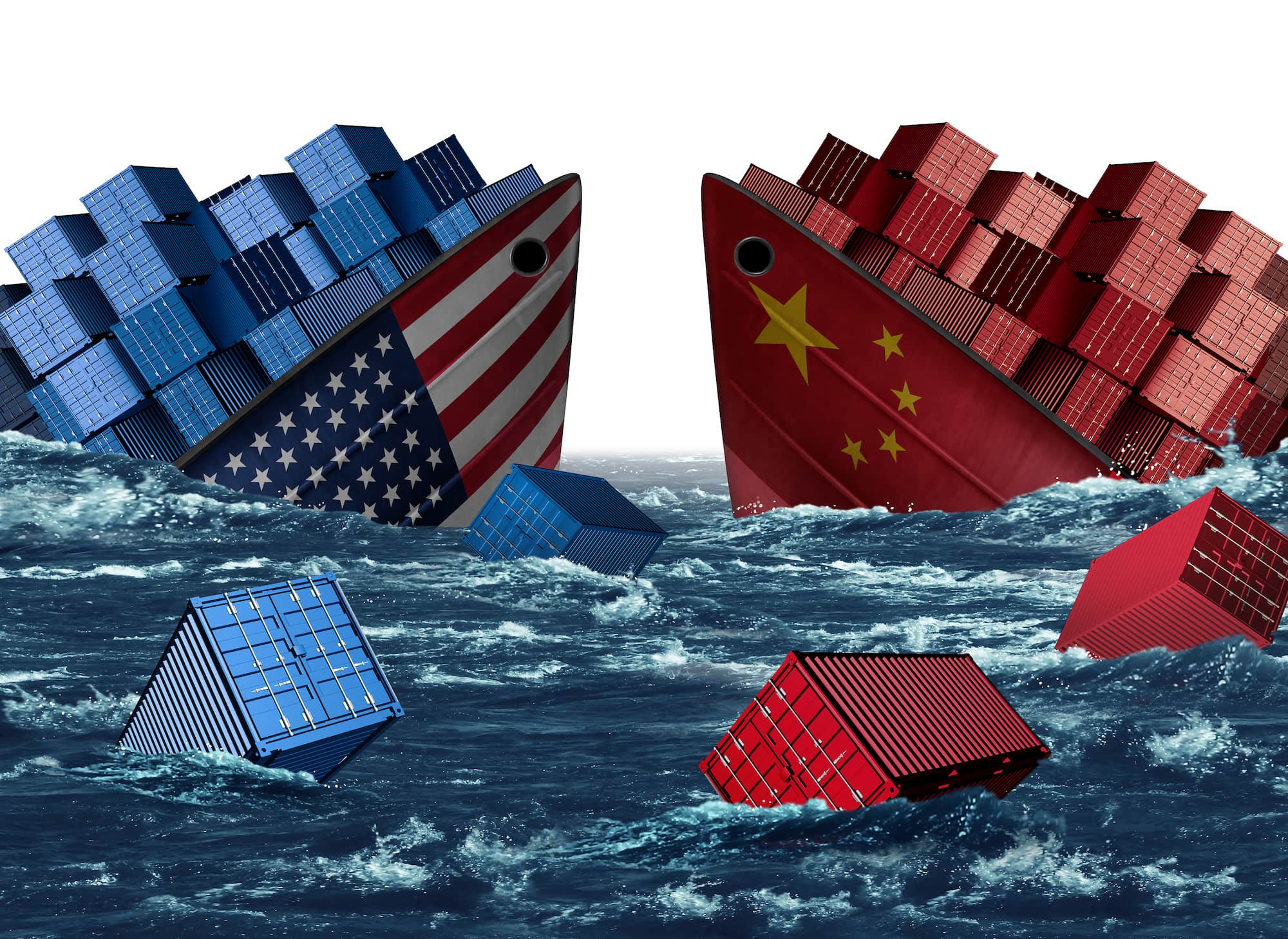
Recently, many U.S. companies have been discussing other sourcing alternatives instead of China, making some ask, “Are China Imports Declining?” For over a century, most labels on goods in the U.S. have had “Made in China” written on them. Single-sourcing imports have always had their benefits and drawbacks. The risks of single-sourcing from China had become more apparent not long ago.
Why Are China Imports Declining?
The coronavirus accelerated present risks and disrupted the supply chains of numerous importers from China. Ports all over China were closed or working at limited capacity due to the pandemic. This created a backlog in freight shipping and challenges for shippers and their customers. Years before the coronavirus was present, the imports from China were already lessening for several reasons. An example of a reason was that the tariff costs that importers had to pay rose to over 20%.
Companies that manufactured goods in China also had intellectual property theft issues. This is the robbery of a company’s products and ideas for their usage. The environmental impact of importing from China was another factor that companies looked at. Producers in China use specific production methods that the U.S. prohibits. This means the environmental effect may be more significant when companies manufacture goods in China instead of the U.S.
Other Alternatives
As companies looked at other options for sourcing, countries like Vietnam became attractive. The country is politically stable and has various growing industries, such as automotive and electronics. The labor costs are also relatively low, making it an ideal candidate for manufacturing companies to move to. Over the past few years, imports from Vietnam and other Asian countries have risen considerably. However, the risks, such as infrastructure and the worry for human rights, remained.
Instead of outsourcing the imports from Asia, another substitute is outsourcing from somewhere closer, like Mexico or Latin America. Mexico is already one of the biggest trading countries with the U.S. The proximity is also a huge benefit for companies that rely on imports. Trucks may become an increasingly popular conveyance method for imports entering the U.S.
Can Reshoring Back to the U.S. Become More Common?
One of the many solutions was to bring the manufacturing of goods back to the United States. There are various advantages and disadvantages associated with moving manufacturing from China to the U.S. One of the main benefits is that the transport times become significantly shorter. Shippers do not need to import into the U.S. from countries that may be far away. Also, if manufacturers make the goods in the U.S., no duties for imports have to be paid.
Despite this, reshoring back to the U.S. may be a difficult task. This is because many companies that outsource to different countries have done so for decades. Going backward on a supply chain with the same process for decades takes time. Offshoring manufacturing to foreign countries also tends to provide cheaper production costs, which can benefit companies instead of reshoring.
A1 Worldwide Logistics
Although the locations where shippers bring in freight may become more diverse, the number of U.S. imports is still increasing. If you plan to ship to and from the U.S., A1 Worldwide Logistics is here to help. We have freight forwarding services for both imports and exports. Call us at 305-821-8995 to get a quote for your shipment.

by A1 WorldWide Logistics | Oct 26, 2023 | 3PL, Shipping Logistics, Supply Chain
Recent U.S. Department of Commerce restrictions have resulted in China limiting graphite exports. Graphite is a mineral that manufacturers use to create pencils, brushes, arc lamps, and batteries for electric vehicles (EVs). China is the world’s most significant graphite producer, producing over 65% natural graphite globally. Starting December 1st, foreign companies will require stricter permits for shipping raw and synthetic graphite out of China. The announcement comes after the U.S. blocked China from importing specific computer chips. The U.S. restrictions aim to prevent China’s access to semiconductors that can fuel breakthroughs in artificial intelligence.
What Does China Limiting Graphite Exports Mean for Shipping?
A decline in graphite exports out of China can negatively impact supply chains globally. Automakers that rely on this mineral to create EV Batteries may feel the main impact of the restrictions. In recent years, the customer demand for EVs has grown, and many are switching to cleaner energy technologies. The World Bank Predicts that graphite demand will rise 500% over the next three decades. Since China makes over 65% of the world’s graphite, EV makers that ship from the country may soon have to look for other alternatives. This can mean importing the mineral from other countries or insourcing the production and buying of graphite in the U.S.
Many EV manufacturers are already importing graphite from countries like Mozambique, which is the 2nd largest producer of graphite. This option may have separate issues because of recent regional labor strikes. Another concern from shippers is that the average price of graphite will spike in the near future. This is due to the demand becoming higher than the supply. The Russia-Ukraine adds to the price since Russia is a significant supplier of the world’s graphite. Manufacturers also have used substances like silicon instead of graphite to create batteries. However, technology for that material is not commercially available.
How Has the U.S. Responded?
The global graphite supply was a concern for the U.S. years before China’s announcement to limit exports. Last year, the U.S. government signed the Inflation Reduction Act into law. This law gives a 10% tax credit to domestic producers of graphite and similar minerals. In February of 2023, the Biden administration gave $3 billion in funding for battery supply chains that use graphite. The goal is to bring more graphite production to the U.S., starting with a processing plant in Alabama. In August, the U.S., South Korea, and Japan met and launched a supply chain early warning system (EWS). This program will share information on disruptions to crucial supply chains like graphite and EV batteries.
When shipping freight internationally, it is essential to be up-to-date with any laws and regulations that arise. Failure to do so can delay shipment and disrupt your supply chain. The best way to prepare is by talking to a freight forwarder or customs broker regarding your cargo’s movement. Forwarders coordinate the transport of your goods, and brokers clear the import once it reaches the destination country. Contact A1 Worldwide Logistics at 305-821-8995 for assistance with your supply chain needs. We help by guiding you through the world of international shipping by providing solutions for reaching your goals.

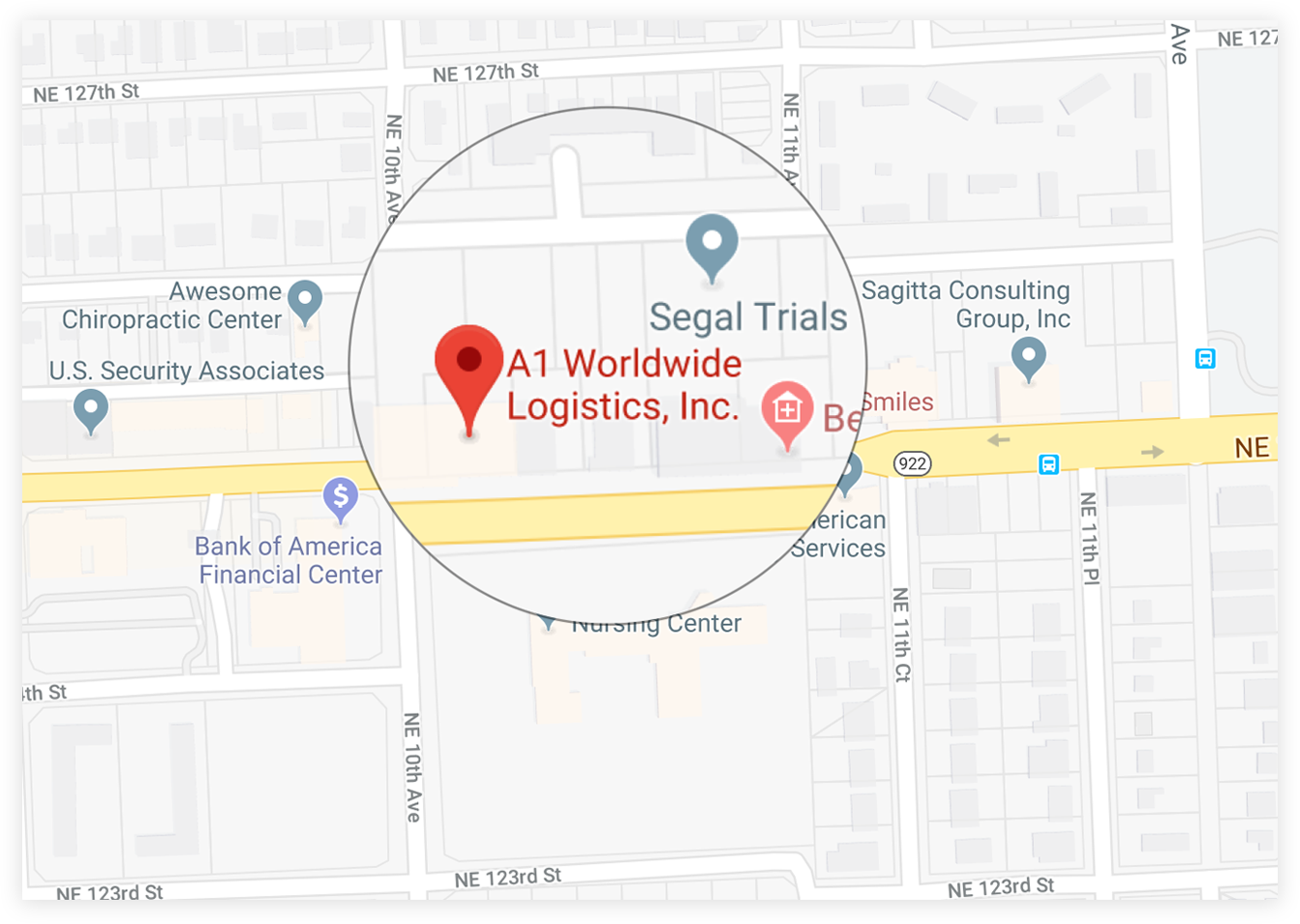
 1035 NE 125th St Suite #320, North Miami, FL 33161.
 a1worldwidelogistics.com
 (305) 821-8995
 Hours: 8AM - 5PM