A convenient way to move your cargo around the world is by air. It is a dependable and quick method of transportation that is favorable in the eyes of the receiver of the shipment. While transporting your freight by air is advantageous, there is a cost rate associated with this method of conveyance. This rate varies depending on different factors that are important to be aware of when getting your air freight to its destination.
Chargeable Rate
This is basically the weight of the cargo and there are two methods used for calculation. The first method is the dimensional weight, which is is the total volume of the freight calculated by multiplying the length, width, and height then dividing it by the total volumetric factor. The other method use is the actual weight of the freight. When calculating, carriers use the higher of these two methods to determine the rate.
Extra charges
The base charge can be one component in determining the total cost of your shipment. There are more fees to be aware of:
Fuel Charges – This is a charge that different means of conveyance charge for gasoline fuel prices. Gas prices tend to fluctuate due to availability and demand, to defend themselves from a loss in profit the carriers add a fuel charge to the base rate of the cargo journey.
Airport Security Charges – Before the freight is loaded on the aircraft it must go through cargo screening requirements to determine any potential threats. Security surcharges are administered to cover the cargo screening This process happens both before the freight leaves the departing airport and once it reaches the landing airport.
Cargo Insurance – During the journey damages and losses can sometimes occur to the cargo unexpectedly. When this happens, the shippers of the cargo are accountable and not the air carrier responsible for the damage. To protect against the monetary loss, shippers pay for insurance before the journey. Cargo insurance may not be required but is recommended.
Customs Clearance Charges– In international trade there are charges for having your cargo exported/imported into a country. The charges come from the documentation that is given to the CBP before the shipment can be processed. If you are looking for a Customs broker to give you an understanding of the customs clearance charges or have freight that needs clearing call us at 305-821-8995 or you could send us an email at info@a1wwl.com.
2020 has been one of the more interesting years in recent times, the coronavirus has left an impact on the logistics of different supply chains globally. Many companies had to adapt their distribution and freight forwarding methods to accommodate the pandemic and the economic downturn. Despite this, an opportunity for learning also arose.
Preparation
This year came as a surprise to many companies that had to suddenly stop or limit their production due to lockdown. With no production, revenue will not be generated, and companies may close due to bankruptcy. Numerous businesses closed various stores across the nation because they were not ready to handle such a situation. Planning means having a contingency plan in case a catastrophic event like the coronavirus occurred.
Using More Digital Supply Chain Technologies
Being up to date with the current happenings of your supply chain can save time and capital loss. With employers in quarantine, this task became more demanding than before. The solution was to have workers do their jobs remotely. The current progress in working remotely may lead to a greater reliance on overseeing and communicating with the supply chain digitally in the future.
Being Creative Amidst the Chaos
One of the biggest lessons that can be learned from the pandemic is how to be innovative during uncertain times. Many different techniques were used to keep the supply chain processes running, here are a few examples:
Diversification: The economic downturn created a scenario where jobs had to expand their services to combat the current situation. Restaurants started to sell take-home meals for the first time and breweries started making hand sanitizer from ethanol.
Reshoring: When a supply chain is spread out across different countries or continents, the time it takes to allocate the goods to the required destination may be longer than if the goods were in-sourced from the same area. Especially with the current shortage of production, reshoring can help speed the process.
Navigating the logistics of a supply chain may sometimes be difficult and confusing to do without proper guidance. A1 Worldwide Logistics is a customs brokerage that is here to make that process easier. Call us at 305-821-8995 for your freight forwarding or customs brokerage needs.
When a person usually thinks of direct shipping, they usually picture a fast and convenient method of getting goods to their required destinations. It is seen as a favorable option to order something online and having it mailed directly to your house in a few days. Also, with the Covid-19 pandemic still bring present it also appears to be the safer option than going to the store to purchase your product. With that said, there may be several disadvantages when dealing with direct-to-customer shipping.
Logistics
The supply chain process of getting goods to their required locations may not always go as perfectly as planned and different factors may impact the logistical journey. If the delivery of the product is not up to par or takes too long, the company delivering the product can be seen negatively in the eyes of the customer. Customs brokers help simplify the process by being the middleman between the company and the customer. They also help make sure that the shippers follow the FDA regulations.
Customs Clearance
The costs that are accrued during the freight forwarding process can affect both seller and the person buying the product. If the seller is a small-sized company and not that big, the shipping costs can be higher than shipping from a company like Amazon. The customs clearance charges may also have an impact on the costs. If you have any questions about customs clearance or need help with the logistics of getting your product to the required destination feel free to contact us at 305-821-8995. We are here for your freight forwarding needs.
Insurance
The common perception is that direct shipping is quick and convenient, but the opposite can happen as well. When a product is forwarded to its respective locations directly, damages to the cargo can sometimes occur. Cargo insurance is a common method to protect against these kinds of damages. There may be a cost incurred but it is small compared to the cost of cargo loss due to damages.
The battle with coronavirus has taken a very interesting turn where several companies are reporting optimistic outcomes in vaccine testing. This has led to the confidence that the allocation of the vaccine to people in need will take place as soon as late December. There are many logistical aspects that will go into the forwarding of the treatment to millions of people.
1. Transportation
The main method of conveyance is going to be by air freight. Since the quantity of the vaccines distributed is going to be so immense, forwarders must be prepared to handle such a large amount of freight. Various vaccines must also be kept at specific temperatures. For instance, Pfizer’s needs to be maintained at -70 degrees Celsius (-94 degrees Fahrenheit) while Moderna and AstraZeneca must be kept at 2-8 degrees Celsius (35.6-46.4 Fahrenheit). The airplanes must have the appropriate accommodation for this task.
2. Storage
When the air freight arrives at the warehouse, the facilities must make sure that they are placed in an area with the same temperature as they were on their journey there. The storerooms should be equipped to handle large-scale quantities while simultaneously having the capacity to keep them at their respective temperatures. In Pfizer’s case, there must be enough dry ice in the storage to house the vaccines. The issue is that the amount of dry ice being produced has reduced due to a lack of ethanol currently being produced.
3. Distribution
The final part of the logistics process will be the dispensation of the vaccine to the public. The first receivers of the vaccine will be hospital workers such as doctors and nurses. Next will be high-risk individuals including people above the age of 65 and people with preexisting health conditions. Lastly, the individuals that have occupations where there is a high likelihood of interacting with other people and everyone else.
A1WWL
If you have questions regarding the logistics of transporting your cargo to the required destination or have anything that you plan on having imported/exported to a location, call us at 305-821-8995 or email us at info@a1ww1.com. We will be there with you from the start of the journey till the destination.
In response to COVID-19, the U.S Food and Drug Administration released new guidelines on March 24, 2020 for manufacturers importing personal protective equipment and other apparatuses. FDA’s priority is to facilitate access to personal protective equipment to gain an upper hand on COVID-19. The U.S Food and Drug Administration stated
“We are engaging with importers and others involved in the import trade community during this pandemic to facilitate the entry of needed products, including PPE, into the U.S. These instructions to importers clarify the types of PPE that can be imported without engaging with FDA. They also include information about the type of information importers can submit to facilitate their entries. We have adjusted our import screening to further expedite imports of legitimate products and are continually monitoring our import systems to prevent and mitigate any potential issues.”
The FDA is allowing the use of personal protective equipment (PPE) for general or commercial use even if it’s not regulated by the FDA. For PPE items, import information will not be required to be transmitted to the FDA. At the time of entry, Importers must transmit the entry information to US Customs and Border Protection services using an appropriate Harmonized Tariff Schedule (HTS) code. The HTS codes are flagged with indicators to help guide whether FDA data is required.
If you have questions about the FD flag on an FDA regulated commodity, please contact the Division of Import Operations: by phone 301-796-0356 or email FDAImportsInquiry@fda.hhs.gov
FD Flags
The HTS code for your product will most likely be associated with an FD flag. This flag acts as an indicator to the customs broker/entry filer that your product needs to be transmitted to FDA for review.
Flag
Meaning
Examples
FD1
May or may not be regulated by FDA: If regulated by FDA, submit entry information; if not regulated by FDA, disclaim
Certain chemicals used in manufacturing drug products vs. industrial use; safety goggles for medical use vs. non-medical use
FD2
Regulated by FDA, but is not food: Submit entry information
Medical Devices, Drugs, Tobacco, and Cosmetics
FD3
May or may not be a food product: If yes, submit Prior Notice (PN) and entry information; if no, disclaim
Salt used for flavoring food vs salt used for treating road surfaces
FD4
Food product: Submit PN and entry information
Fish and seafood, live food animals, dairy products, shell eggs, fruits, vegetables, food and feed ingredients, food and feed additives, infant formula, beverages (including alcoholic beverages and bottled water), bakery goods, snack foods, candy, canned foods, and dietary supplements and dietary ingredients
When importing items for “medical” or “hospital” use, entry information is still required to be submitted for FDA review. Products covered by an emergency use authorization (EUA)—such as diagnostics, masks, and respirators—should be transmitted by importers by an Intended Use Code of 940.000: Compassionate Use/Emergency Use and the appropriate product code for the device.
As manufacturers are working hard to provide these products, importers are going through great lengths to get these essentials in the hands of hospitals and the public. The FDA is working with importers and provide maximum flexibility for PPE products seeking entry into the United States.
Contact
If you any import or exporting questions, give us a call at: (305) 821-8995





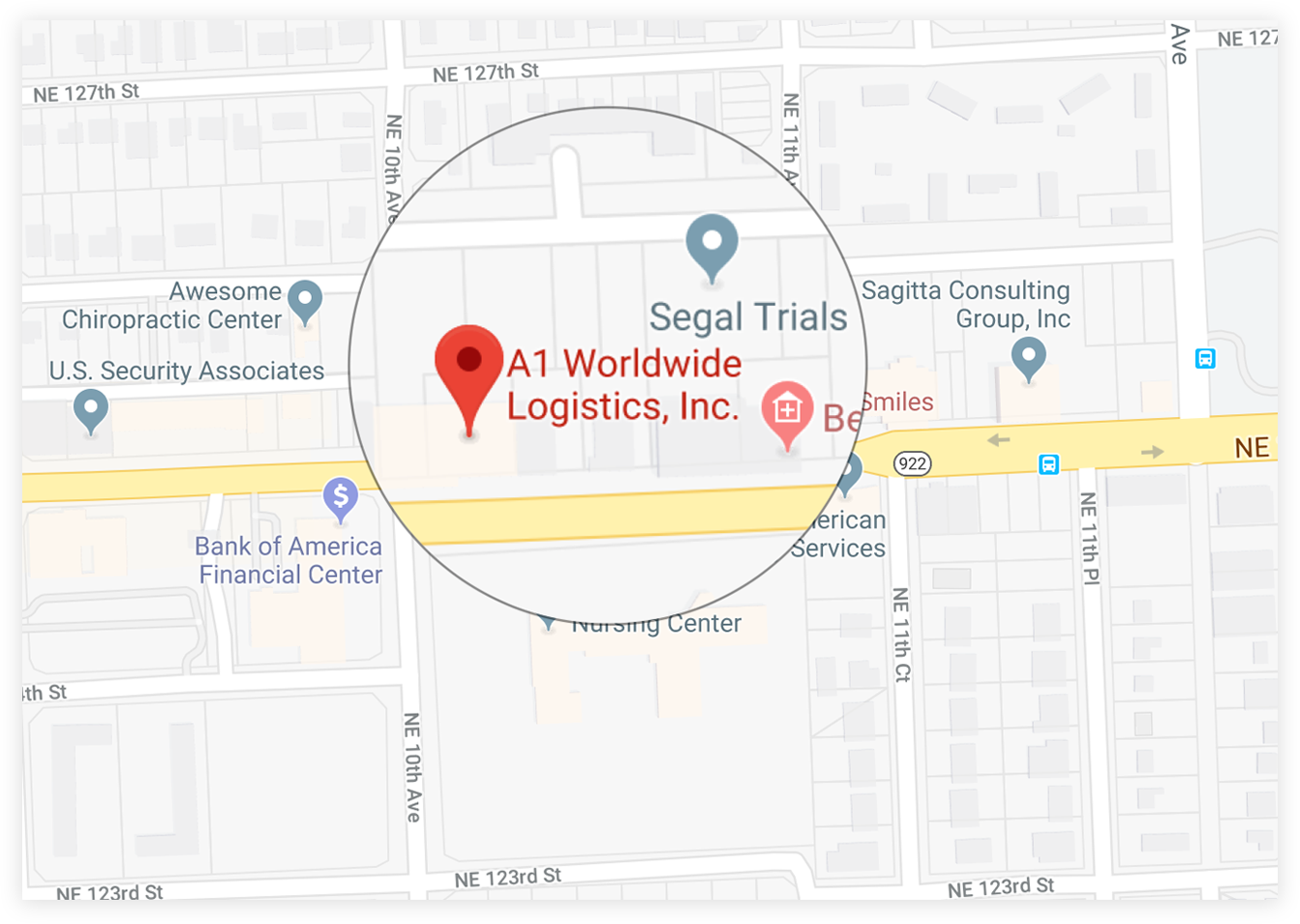
 1035 NE 125th St Suite #320, North Miami, FL 33161.
 a1worldwidelogistics.com
 (305) 821-8995
 Hours: 8AM - 5PM