by Rob Simmons | Dec 30, 2020 | COVID-19, Customs Broker, Customs Broker Miami, Customs Clearance, Freight Forwarding, Shipping Logistics
2020 has been one of the more interesting years in recent times, the coronavirus has left an impact on the logistics of different supply chains globally. Many companies had to adapt their distribution and freight forwarding methods to accommodate the pandemic and the economic downturn. Despite this, an opportunity for learning also arose.
Preparation
This year came as a surprise to many companies that had to suddenly stop or limit their production due to lockdown. With no production, revenue will not be generated, and companies may close due to bankruptcy. Numerous businesses closed various stores across the nation because they were not ready to handle such a situation. Planning means having a contingency plan in case a catastrophic event like the coronavirus occurred.
Using More Digital Supply Chain Technologies
Being up to date with the current happenings of your supply chain can save time and capital loss. With employers in quarantine, this task became more demanding than before. The solution was to have workers do their jobs remotely. The current progress in working remotely may lead to a greater reliance on overseeing and communicating with the supply chain digitally in the future.
Being Creative Amidst the Chaos
One of the biggest lessons that can be learned from the pandemic is how to be innovative during uncertain times. Many different techniques were used to keep the supply chain processes running, here are a few examples:
- Diversification: The economic downturn created a scenario where jobs had to expand their services to combat the current situation. Restaurants started to sell take-home meals for the first time and breweries started making hand sanitizer from ethanol.
- Reshoring: When a supply chain is spread out across different countries or continents, the time it takes to allocate the goods to the required destination may be longer than if the goods were in-sourced from the same area. Especially with the current shortage of production, reshoring can help speed the process.
- Remodeling: Instead of diversifying or reshoring, some corporations renovated their whole supply chain. Suppliers and vendors were substituted for cheaper means of distribution and methods of transporting freight were changed from ocean to air or land.
A1WWL
Navigating the logistics of a supply chain may sometimes be difficult and confusing to do without proper guidance. A1 Worldwide Logistics is a customs brokerage that is here to make that process easier. Call us at 305-821-8995 for your freight forwarding or customs brokerage needs.
by Rob Simmons | Dec 23, 2020 | Customs Broker, Customs Clearance, Delivery, Freight Forwarding, Shipping Logistics, Transportation
When a person usually thinks of direct shipping, they usually picture a fast and convenient method of getting goods to their required destinations. It is seen as a favorable option to order something online and having it mailed directly to your house in a few days. Also, with the Covid-19 pandemic still bring present it also appears to be the safer option than going to the store to purchase your product. With that said, there may be several disadvantages when dealing with direct-to-customer shipping.
Logistics
The supply chain process of getting goods to their required locations may not always go as perfectly as planned and different factors may impact the logistical journey. If the delivery of the product is not up to par or takes too long, the company delivering the product can be seen negatively in the eyes of the customer. Customs brokers help simplify the process by being the middleman between the company and the customer. They also help make sure that the shippers follow the FDA regulations.
Customs Clearance
The costs that are accrued during the freight forwarding process can affect both seller and the person buying the product. If the seller is a small-sized company and not that big, the shipping costs can be higher than shipping from a company like Amazon. The customs clearance charges may also have an impact on the costs. If you have any questions about customs clearance or need help with the logistics of getting your product to the required destination feel free to contact us at 305-821-8995. We are here for your freight forwarding needs.
Insurance
The common perception is that direct shipping is quick and convenient, but the opposite can happen as well. When a product is forwarded to its respective locations directly, damages to the cargo can sometimes occur. Cargo insurance is a common method to protect against these kinds of damages. There may be a cost incurred but it is small compared to the cost of cargo loss due to damages.
by Rob Simmons | Dec 17, 2020 | Freight Forwarding
Over the timeline of a few hundred years, technological developments in freight forwarding have holistically affected the process in positive ways. A recent trend has been the usage of technology in different aspects such as warehousing, shipping, and vehicle transportation.
Automation
Each of the variety of aspects of the supply chain is slowly transitioning into automation. In warehouses, it is becoming more common for storage handling such as scanning, lifting, and moving to be done by technology. Also, more of the conveyance means to get to the warehouse are becoming self-automated such as self-driving cars.
Time
What used to take longer in the freight forwarding process is being shortened thanks to advancements in technology. Humans work for a certain number of hours a day and may take time off. Machinery does not have these limitations and can work without needing to take a break, which leads to a higher output in a shorter period.
Expenses
Unless you are working for a charity, you are going to want compensation for your labor. Automation may be cheaper than the average worker because it does not require a salary. The only costs they need are for development and maintenance. The advancements in machinery have also made it possible for technology to do much more tasks for less amount of money than in the past.
Jobs will be lost
The issue with automation is that the jobs that were done by humans in the past will be done by technology that can do the same job in a quicker and more accurate way. On a large scale, this can lead to the loss of millions of jobs. An example of this previously mentioned can be self-driving trucks becoming more common in the freight forwarding process. More truck drivers may become jobless as more vehicles become self-automated.
Jobs will be Created
Despite the jobs that will be lost, new jobs will be created in their place. There must be someone there to engineer and watch over the machinery in case of malfunction. Also, with technology influencing a certain part of the supply chain process, humans can focus their attention on and create jobs for other parts that need improvement.
A1WWL
If you need help with all your international freight needs or would like to get a quote for your shipments, feel free to call us at 305-821-8995 so our customs brokers can help you.

by Rob Simmons | Dec 11, 2020 | COVID-19, Freight Forwarding
The battle with coronavirus has taken a very interesting turn where several companies are reporting optimistic outcomes in vaccine testing. This has led to the confidence that the allocation of the vaccine to people in need will take place as soon as late December. There are many logistical aspects that will go into the forwarding of the treatment to millions of people.
1. Transportation
The main method of conveyance is going to be by air freight. Since the quantity of the vaccines distributed is going to be so immense, forwarders must be prepared to handle such a large amount of freight. Various vaccines must also be kept at specific temperatures. For instance, Pfizer’s needs to be maintained at -70 degrees Celsius (-94 degrees Fahrenheit) while Moderna and AstraZeneca must be kept at 2-8 degrees Celsius (35.6-46.4 Fahrenheit). The airplanes must have the appropriate accommodation for this task.
2. Storage
When the air freight arrives at the warehouse, the facilities must make sure that they are placed in an area with the same temperature as they were on their journey there. The storerooms should be equipped to handle large-scale quantities while simultaneously having the capacity to keep them at their respective temperatures. In Pfizer’s case, there must be enough dry ice in the storage to house the vaccines. The issue is that the amount of dry ice being produced has reduced due to a lack of ethanol currently being produced.
3. Distribution
The final part of the logistics process will be the dispensation of the vaccine to the public. The first receivers of the vaccine will be hospital workers such as doctors and nurses. Next will be high-risk individuals including people above the age of 65 and people with preexisting health conditions. Lastly, the individuals that have occupations where there is a high likelihood of interacting with other people and everyone else.
A1WWL
If you have questions regarding the logistics of transporting your cargo to the required destination or have anything that you plan on having imported/exported to a location, call us at 305-821-8995 or email us at info@a1ww1.com. We will be there with you from the start of the journey till the destination.
by Rob Simmons | Nov 25, 2020 | Shipping Logistics
What Is Cargo Insurance?
During the international shipment of your goods, there can be a possibility that damage, loss, theft, or even contamination may occur. When this happens, your business deals with financial loss and if you or your company constantly ships goods globally, this loss will accumulate over time. This loss could be greatly decreased or even avoided with cargo insurance. Cargo insurance is a type of transportation insurance that covers the value of goods that ship through air land and ocean.
Why is Cargo Insurance Valuable?
Unexpected accidents may sometimes occur during the worldwide shipment of your cargo to its destinations and since there are many different aspects that go into transportation logistics, these accidents could go unseen until the cargo reaches the final point, and by then it’s too late. This is where the value of insuring any shipment with cargo insurance before departing comes into play. There is a wide variety of situations that your cargo can be covered from, such as:
• The cargo sinking into the ocean
• The cargo being denied entry through customs
• The transportation vehicle of the cargo has been damaged
• Cargo damage from natural disasters such as floods, earthquakes tornadoes, etc.
Also with the world becoming more globalized, not only is there a greater risk to your cargo with the increasing methods of transportation, but also a greater chance that your cargo can be covered from these risks.
Who is Liable for Cargo Damage?
When damage happens to your cargo or your cargo gets lost at sea like in the incident previously described ONE Aquilla, the carriers of the cargo carry the liability. The issue with this is that because the liability that the carriers carry is small in comparison to the value of the damage costs to your cargo, especially if the cargo shipment is large. The carrier liability also does not include defective products, so it’s very limited. With cargo insurance, you pay a small up-front fee relative to the total cargo that is being transported. The fee is not only small compared to the cargo damage, but also compared to the opportunity cost of having your goods gone, for example, if you’re a company that was planning on selling the goods for a profit. Despite not being required, cargo insurance is highly recommended, not only for companies but individuals as well.
Unexpected Incidents
As previously described, in the world of freight forwarding there is a chance that the goods may be lost or damaged on the way to their destination. One such unexpected incident that happened recently was in the Pacific where container vessel ONE Aquilla lost over 100 containers overseas due to bad weather conditions.
The vessel was on its way to Long Beach California from China when a storm struck, and the containers vanished under the sea. It’s important to note that with the Pacific being the biggest ocean, it usually takes more than 10 days for a shipment to go from China to California; meaning that there are bound to be choppy seas and bad weather conditions on the journey.
Shipping containers usually weigh over a ton and with the number of containers that were lost overseas, (over 100), think about the amount of capital from assets that were lost. With cargo cover, this large monetary loss could have been easily avoided by the people and companies shipping their goods.

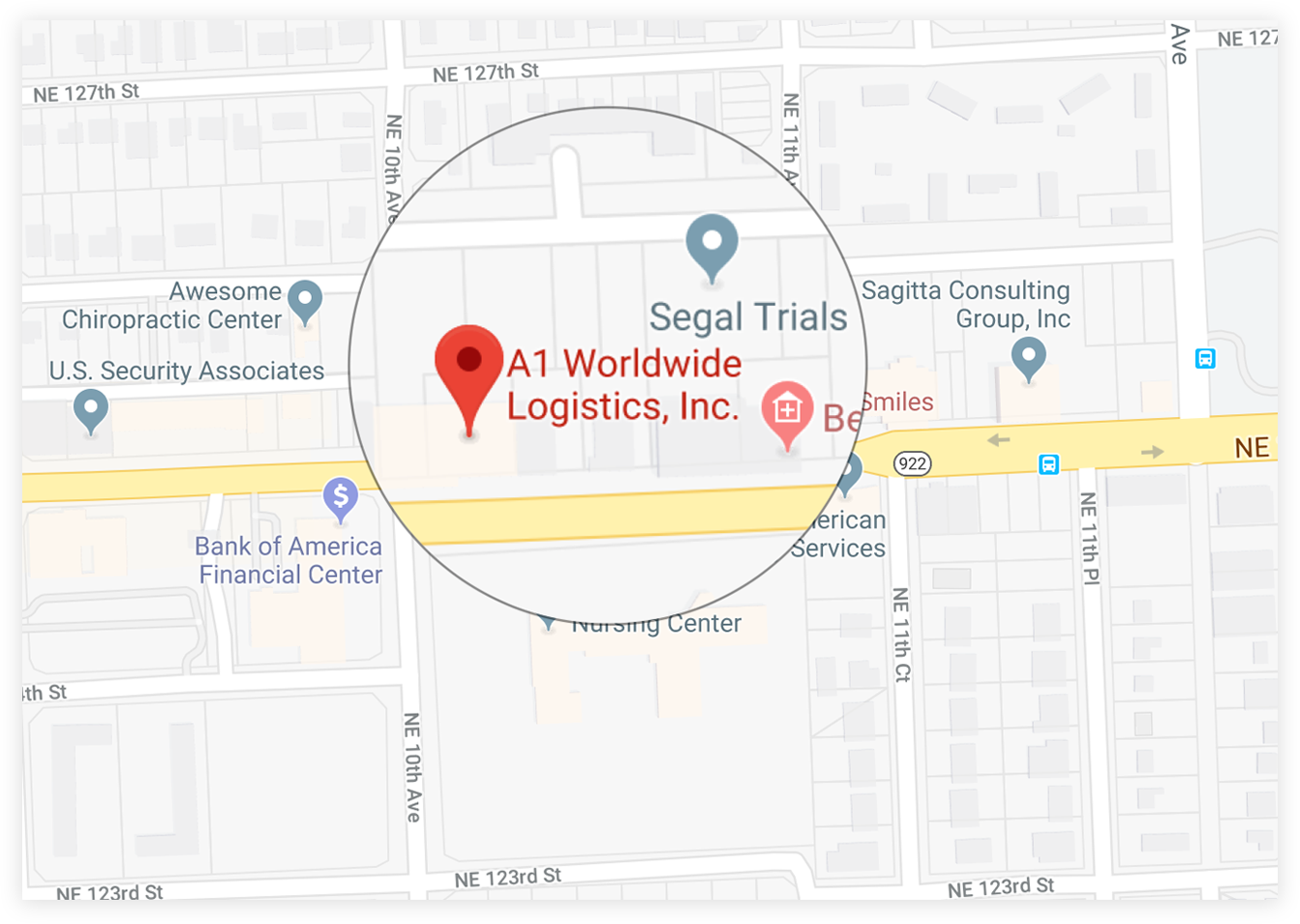
 1035 NE 125th St Suite #320, North Miami, FL 33161.
 a1worldwidelogistics.com
 (305) 821-8995
 Hours: 8AM - 5PM