The tech revolution has taken over every industry, and the Supply Chain is no exception. With the arrival of digitalization, the Logistics & Supply Chain industry is going through a transformation. A1 Worldwide Logistics knows that as logistics become the backbone of every industry like retail, eCommerce, FMCG, hospitality, and healthcare. Businesses are aligning their strategies concerning the ongoing and upcoming logistics trends, i.e., Robotics, Artificial Intelligence (AI) and Machine-Learning algorithms. With these recent technological innovations, logistics companies are endeavoring to stay ahead of the curve and in front of their competitors. Based on A1 Worldwide Logistics observation of the past two years, here are some trends that shaped the logistics industry in 2018 and beyond:
Blockchain- The Blockchain technology first made its presence felt in the logistics in 2017 and has rapidly expanded to every facet of the industry. With the unparalleled security and transparency it offers, blockchain is an ultra-secure way to store and transmit transactional data. Also, it improves credibility with foolproof transactions. For example, if a customer’s ID is available digitally through a blockchain-based application, he cannot falsify it at the time of delivery. Likewise, a unique blockchain enabled registration number of every vehicle can be mapped to an outstanding delivery job. According to recent studies, By 2022, 27% of global companies will be conducting or using artificial intelligence and blockchain based automation applications in transactional procurement
The rise of Elastic Logistics-Elastic logistics refers to the flexibility to increase and reduce capacities to better align demands within the supply chain at any given timeframe. Elastic automation solutions increase the agility and elasticity of the logistics infrastructure to meet market fluctuations cost-effectively. It is not strictly a “one size fits all” solution. However, it provides a highly customizable answer to requirements like cost control, warehouse management, geographic restrictions, distributions channels, priority deliveries, and much more. The interaction of demand and supply defines the day-to-day operations in the logistics & supply chain industry.
Data-driven Logistics Driving Pre-emptive Logistics-. By anticipating the needs and analyzing data-patterns, companies can predict the demand, plan and align their logistics operations well in advance. In the ever-changing business world, staying ahead in delivering the right service at the right time is the key, and data-driven logistics will only help enhance the future of logistics. Companies are adopting big-data algorithms, data-visualization techniques, and smarter analytics to boost process efficiency and service quality by shortening the delivery times.
Overall, the trend is moving toward simplifying cumbersome processes; eliminate mundane and repetitive tasks to enhance the effectiveness of the organization and improving customer. A1 Worldwide logistics is here to guide your business in everything logistics related. Whether you are shipping electronics across town or sending a yacht to Singapore, we make it easy. Send us an email at info@a1wwl.com or call us at (305) 821-8995 and we’ll help you discover the right logistics solution for your business.
It is never too early to start planning your businesses holiday shipping and logistics in October – November; the ‘trick’ is to begin planning now to manage your holiday deliveries during this holiday season. The ‘treat’ is that A1 Worldwide Logistics a leading provider of logistics and Supply Chain services and has put together a checklist to help small to SMB owners understand seasonal trends that can affect their businesses and the strain on the shipping industry during this frantic shipping time.
This year was substantial due to trends and challenges that kept the shipping industry busy. Logistics pressures will intensify as the holidays begin, with high season surcharges, a rush of customers orders and other constant weather-related delays.
A1 World Logistics recommends all businesses, large or small take these four steps to get ahead of seasonal pressure and reduce the effect of delayed, lost or damaged shipments:
Set Realistic Expectations: No company is exempt from delays due to weather conditions, driver shortages and other industry realities. Embrace logistics clarity with customers when there is a spike in shipping volume and carriers are stretched thin. This is your businesses chance to be as accommodating and realistic as possible when setting peoples expectations for customer orders. Handle any delayed, damaged or lost shipments by providing regular updates on an estimated solution.
Be Diligent with Scheduling: Keep in mind that there are fewer business days and there can be more weather disruptions during the holiday season, which means transit times for shipping may surge, and guarantees are often suspended. Planning by getting your ‘just in time inventory’ out early and accelerating urgent shipments whenever possible will help you avoid delays. Don’t risk putting your business and customers in a bind by not planning for the correct number of transit days.
Plan Accordingly: Be aware that time-sensitive merchandise such as fresh food requires more care and attention. Confirm all paperwork and labels reflect the priority of the delivery and consider contacting your carriers rep to restate the shipment’s time sensitiveness. Also, be mindful of your shipping technique since a loading dock may treat your load as a lower priority if it requires more time and labor due to awkward or odd-proportioned packaging.
Consider Hiring a Professional: Logistics is a multidimensional industry, and it is beneficial to have someone as your shipping guide—throughout the year, but particularly during the holiday season. A third-party logistics expert like A1 Worldwide Logistics, A1 provides you with a level of service and expert consultation that ensures you’re using the best shipping options for your specific needs. Whether it’s considering seasonal price hikes, comprehending insurance, accessing vast carrier partners or getting help with tracking and troubleshooting, A1 Worldwide Logistics is your industry expert.
Here at A1 Worldwide Logistics, we know from experience that as the B2C and B2B markets have grown and evolved, customers are demanding faster shipments, greater flexibility, and more clarity in the order lifecycle and logistics process.
As such, A1 Worldwide Logistics knows that only with true innovation can you establish real-time visibility with the power to make changes can you achieve the agility that clients demand and stand out from your competition.
To help your business grow and scale, here are four trends you can use to supercharge your Supply Chain Orchestration (SCO). These trends will allow you to completely transform your businesses supply chain and provide the best service to your clients at a cost-effective price.
Establish end-to-end logistics visibility. A comprehensive, all-inclusive picture of your supply chain, combined with the ability to act, allows you to optimize every individual client order. You must be able to granularly analyze logistic costs against your customer’s satisfaction to find the perfect balance that enables the highest volume of on-time, completed orders.
Get real-time control of your business inventory network. Inventory distortion, including out-of-stocks and overstocks, costs businesses over $1.2 trillion globally. That is a massive sum of money to be losing to inventory issues. It’s no surprise that many forward-thinking companies are rushing to have complete visibility of not just their internal inventory, but also the whole network—custom brokers, suppliers, warehouses, and in-transit stock.
Dynamic planning wins out over high-level stationary planning based on forecasts, cutting down on inventory that is always depreciating and ensuring customers get their orders swiftly. SCO can show you exactly where the stock is at any given moment, and also enables your business to ship directly from different locations or even reroute stock in-transit.
Remember that your customer is looking to buy a complete “experience.” Customers have a vast choice of vendors for their desired product; what decides customers continued loyalty in the future is the experience they have ordered from your business. It has been proven that repeat customers order more, spend more, and refer more customers. In short, they bring in more money and business, so it’s vital to create amazing customer experiences and to build customer loyalty.
Optimize every part of your supply chains. The path to a genuinely customer-centric methodology comes through optimizing for specific orders. Factoring in every factor from stock readiness to timeliness, and tailoring every step to achieve a great customer experience without overspending, requires supply chain optimization.
A1 Worldwide Logistics understands that it is important to have a long-term attitude towards development and execution and recognize that logistics trends come and go, and it can make little logic to deeply invest in proclaimed technological improvements just because they’re “the latest thing.”
While high-tech progression brings with its solutions that can transform how businesses in the supply chain interrelate, it’s imperative for all participants to be a little bit cynical when any company introduces a purportedly game-changing innovation.
Adopters of New Technology
3PLs are characteristically the early adopters of new advancements, as a large portion of their value proposition to their customers is their ability to utilize trailblazing technology to solve supply chain challenges.
These logistics providers continuously keep their ears to the ground attending conferences and investigating the latest technologies seeking new abilities. 3PLs can make a solo outlay in technology and influence that capability across many transporters.
While it is common for 3PLs to be on the leading edge of technical improvements, it’s vital that all supply chain participants do their due diligence when looking for a technology partner. They should select a logistics provider that has a stable fiscal footing, a well-reasoned plan for progress and a solid track record of data safekeeping. This goes together with choosing a firm that has an articulated plan and enough know-how and experience in the supply chain arena not to get caught up with superfluous trends.
Technology Partners
Technological advancements in the supply chain have brought growing quantities of logistics data to industry participants. This has lead to an increase in unconventional analytics to turn that data into actionable info, a skill in which technology providers excel. Shippers are using analytics in combination with real-time visibility data to identify holdups within their procedures and providers’ networks. This visibility allows them to estimate when deliveries will arrive at the planned destination with greater confidence. The future is bright in this area due to improving visibility technology, more advanced analytics, and integrated collaboration tools available to 3PLs.
Because of this heavy scrutiny, there’s a chance that for some companies, data excess might be on the horizon. Five years ago, big data was becoming a trending topic, and now, the amount of data available in the supply chain is overwhelming. As time goes on, data will only become more readily available. As that continues to progress, smart systems that leverage that data to create tangible business solutions will be in demand.



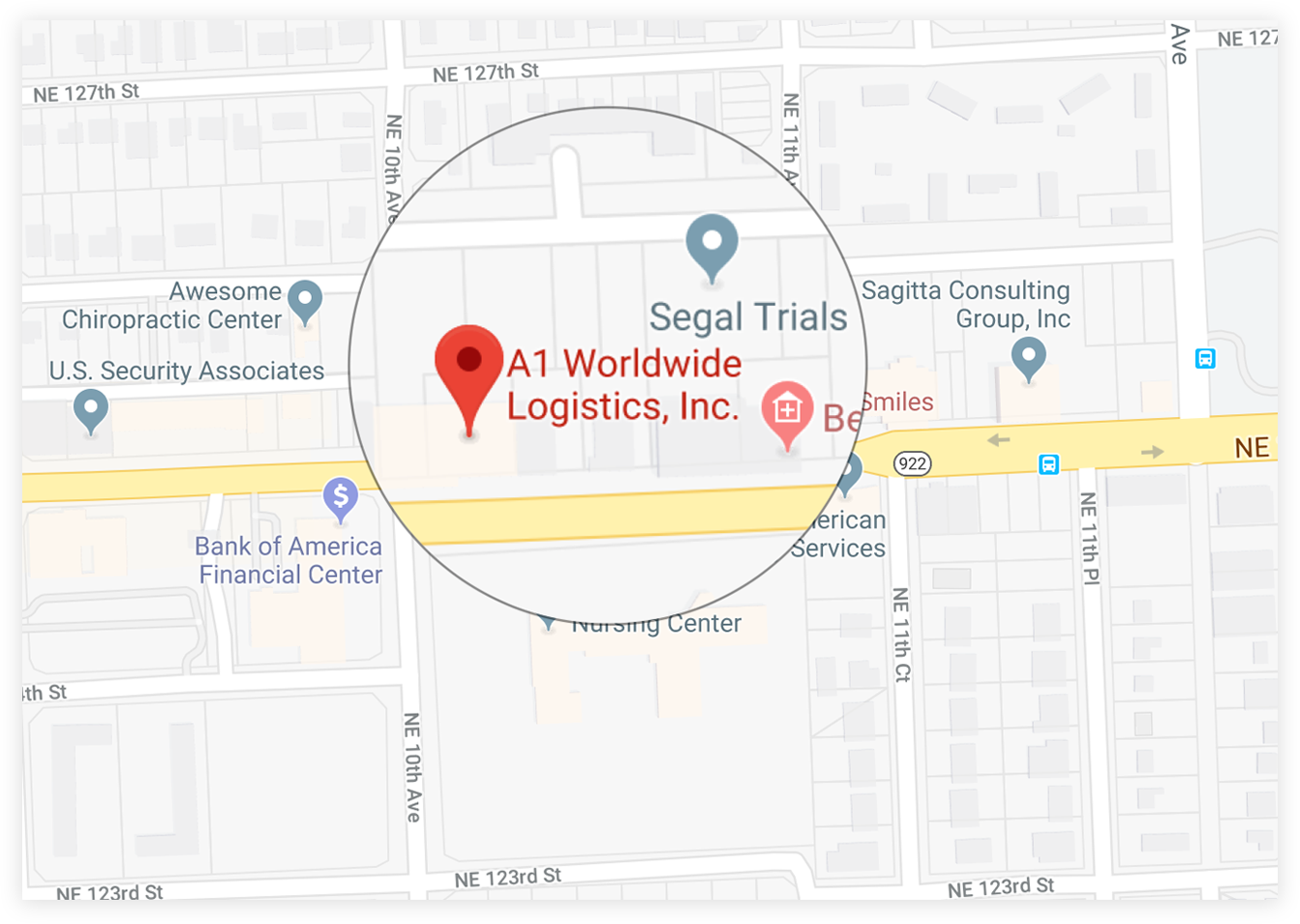
 1035 NE 125th St Suite #320, North Miami, FL 33161.
 a1worldwidelogistics.com
 (305) 821-8995
 Hours: 8AM - 5PM