
by A1 WorldWide Logistics | Jan 20, 2026 | Economic trends, Importing, Supply Chain
La industria del transporte internacional podría ver pronto un cambio en el principal país proveedor de café para Estados Unidos. Brasil, responsable de casi el 30 % del café verde (sin tostar) que ingresa al país cada año, ha sido históricamente el mayor proveedor de café para EE.UU. Sin embargo, en octubre, tanto Perú como Colombia superaron a Brasil en la cantidad de granos de café importados a Estados Unidos. Otros países, como México, así como productores de África y el Sudeste Asiático, también han registrado un crecimiento significativo en las importaciones de café. En mayo de 2025, el volumen total importado de todos los países superó los 4.600 TEUs. Este artículo explica las razones del cambio en las importaciones de café y lo que podría significar para los transportistas.
¿Por qué está cambiando el principal proveedor de café de EE.UU.?
Una de las principales razones del cambio en los países exportadores de café son los aranceles impuestos por el presidente Trump. Desde su regreso al cargo, Trump ha impuesto gravámenes a los principales socios comerciales de Estados Unidos. Algunas de las justificaciones incluyen combatir prácticas comerciales desleales y fortalecer la economía estadounidense. En julio, la tasa arancelaria de Brasil alcanzó el 50 %, en comparación con el impuesto base del 10 % aplicado a las importaciones provenientes de Perú y Colombia. Como resultado, los transportistas han comenzado a diversificar sus cadenas de suministro, abasteciéndose de café de países con tasas impositivas más bajas.
El CEO de ImportGenius, Michael Kanko, señaló:
“La lección más amplia para los importadores ha sido que necesitan diversificar sus cadenas de suministro, lo que ayuda a mantener los precios estables y a protegerse frente a cambios repentinos en la política arancelaria”.
Otro objetivo de los aranceles era devolver la producción a Estados Unidos para fortalecer la economía y crear empleo. Sin embargo, el efecto fue el contrario, provocando inflación. Reubicar las cadenas de suministro de productos como el café en EE. UU. UU. también puede ser complejo y costoso. Los gravámenes sobre los granos de café importados hicieron que los precios aumentaran casi un 41 % respecto al año anterior. Debido al aumento de los costos del café y otros alimentos importados, el presidente Trump redujo recientemente los aranceles sobre más de 200 productos. El 15 de noviembre, Trump firmó una orden ejecutiva que eliminó los gravámenes previos sobre bienes como el café y otros alimentos. Como resultado, los precios mundiales del café disminuyeron, lo que generó optimismo entre importadores y tostadores.
¿Cómo está afectando este cambio a los transportistas?
A pesar de que la presión de costos ha disminuido y los precios del café han bajado, puede tardar en verse un cambio significativo. Con los recientes aumentos y reducciones arancelarias, aún persiste incertidumbre al importar café. Otros factores, como el clima, el costo de vida y el rendimiento de las cosechas, también pueden afectar directamente a las cadenas de suministro. Las empresas más pequeñas podrían tener dificultades para recuperarse por completo de los altos costos de importación de los últimos meses.
Con las cadenas de suministro aún volátiles, los transportistas deberían seguir diversificando sus fuentes de abastecimiento. Esto puede incluir importar desde países distintos a Brasil, como Perú o Colombia, e incluso trasladar parte de la producción nuevamente a Estados Unidos.
Debido a su alta demanda, la importación y exportación de café a Estados Unidos pueden representar una excelente oportunidad para los transportistas. Aun así, existen varios aspectos del proceso logístico que deben considerarse al inicio. Al enviar productos como café, puede resultar beneficioso hablar previamente con un freight forwarder. Los forwarders son empresas o individuos que coordinan el movimiento de carga en nombre del transportista. Ofrecen servicios como transporte internacional, distribución doméstica, despacho aduanal, almacenamiento y más. A1 Worldwide Logistics cuenta con servicios de freight forwarding y otras soluciones para garantizar el éxito de tu envío. Contacta a nuestros forwarders en info@a1wwl.com o al 305-425-9456 para comenzar a mover tu carga a cualquier parte del mundo.

by A1 WorldWide Logistics | Jan 15, 2026 | Economic trends, Importing, Tariffs
A recent announcement has President Trump threatening a new 25% Tariff on Iran’s trading partners. On January 12, the President announced the levies on a social media post. Notable countries that the tariff could affect include India, China, the United Arab Emirates, Turkey, and others. Although the White House has not published final guidelines, Trump noted that the decision was “final and conclusive”. With the Supreme Court currently examining the legality of other tariffs issued by Trump, this announcement further heightens uncertainty.
Why Is Trump Threatening A New 25% Tariff on Iran’s Trading Partners?
The primary reason for the 25% tariff is ongoing geopolitical tensions. Ongoing protests in Iran resulted in casualties of over 2000 people, and the tariff is a pressure against it. Trump recently stated, “If Tehran violently kills peaceful protesters, they will come to their rescue.” The president issued similar “secondary tariffs” last year for countries that buy oil from Venezuela. Trump’s goal is to coerce countries engaging with the Iranian economy to reconsider their ties amid the ongoing anti-government protests. Along with the levies, Trump has also talked about the idea of taking military action against Iran.
Could This Tariff Affect Your Shipment?
Iran’s trading partners that import into the US could face a primary impact if Trump enforces the tariffs. One of the most significant US importers and trading partners of Iran is China. Given the volume of goods coming from China, a tariff could increase import costs for shippers. China has already threatened retaliatory measures in response to Trump’s announcement. The spokesperson for the Chinese embassy in Washington, Liu Pengyu, noted, “Beijing would take all necessary measures to safeguard its legitimate rights and interests.” US importers could soon have to choose between American markets and economic engagement with Iran.
Regardless of whether Trump enforces the tariffs, international cargo movement should not be halted. Shippers should, however, take the proper steps to protect their cargo from disruptions. One way to prepare in advance is to speak with a freight forwarder, such as A1 Worldwide Logistics. Forwarders are companies or individuals that coordinate freight movement on behalf of the shipper. They do this by providing services like cargo transport, international and domestic shipping, customs clearance, warehousing, and more. Speak to our forwarders at info@a1wwl.com or 305-425-9456 to begin moving your shipment to its final destination.

by A1 WorldWide Logistics | Jan 13, 2026 | Economic trends, Exporting, Freight
As international shipping continues to shift, the industry can soon see Canada leading the BRICS economy. BRICS is a group of emerging economies comprising ten countries, including Brazil, China, Russia, India, and others. Over the last few years, the BRICS market has expanded, now accounting for 40% of the global economy. Although Canada is not a part of BRICS, Canada’s largest trading partners are in the group, including China and India. As Canada continues to expand its trade, the concurrent growth of BRICS countries may significantly impact shipping.
How Is Canada Leading The BRICS Economy?
While not being a member of BRICS, Canada’s primary exports are to countries in the bloc. A popular commodity that Canada exports is wheat, and it is the world’s third-largest shipper. With Canada as a major trader in BRICS, the country could soon account for 44% of the world’s grain consumption. Canadian exporters also benefit from fast-growing consumer markets in energy, critical minerals, and agriculture. The BRICS push for reduced reliance on the US dollar and greater economic cooperation will also lead to growth opportunities.
What Can This Mean For Shipping?
The reliance on Canadian exports may continue to rise as BRICS reshapes global trade. US tariffs on Canadian imports could further prompt Canadian shippers to diversify their supply chains to BRICS countries. Coincidentally, imports into the US from Canada may also increase, as both countries remain significant trade partners. Maintaining trade relations with the US while engaging pragmatically with BRICS economies will expand Canada’s global presence.
As Canada becomes a major player in global trade, imports and exports between the US and Canada could increase. Despite the opportunities for international shipping, shippers may face risks when starting. An ideal way to prepare is by coordinating with a 3PL (Third-Party Logistics) Provider. 3PLs provide a range of supply chain logistics services, including international and domestic shipping, customs clearance, warehousing, and more. Reach A1 Worldwide Logistics at info@a1wwl.com or 305-425-9752 to learn about our solutions for ensuring your shipment’s success.

by A1 WorldWide Logistics | Jan 8, 2026 | Economic trends, Importing, Tariffs
A final Supreme Court ruling on tariffs imposed by the Trump Administration could come as early as Friday. Friday, January 9, will be an opinion day where the Supreme Court will discuss and potentially make a decision. In 2025, Trump imposed levies under the International Emergency Economic Powers Act (IEEPA), which is currently before the Supreme Court. Given the urgency of the situation, the Court agreed to expedite the review. A final decision will have a significant impact on international shipping and could reshape US trade policy.
What Will The Court Be Deciding On?
The primary decision would be on the legality of President Trump’s tariffs imposed under the IEEPA. In 2025, two federal courts ruled that the tariffs were illegal in a 7-4 decision. The argument was that Trump lacks the authority to impose the levies without explicit congressional approval. Following the verdict, the president requested an immediate review, citing national security as a justification for IEEPA tariffs. Trump also argued that the levies have collected billions for the US economy. In a social media post, Trump said the ruling against the tariffs would be a “terrible blow” to the US economy.
What Could The Supreme Court Tariff Ruling Mean For Shipping?
The final ruling could significantly impact international shipping. If the Court rules that the tariffs are illegal, the US government could be required to refund importers billions of dollars. Shippers must understand that only those who meet strict deadlines and comply with protocols are eligible. If the Court rules Trump’s tariffs legal, his presidential powers may expand, potentially leading to unilateral tariff enforcement. Along with rising costs for US importers, this could continue to strain relations with US trade partners. There is also a chance of potential retaliatory tariffs.
Regardless of the ruling, your shipment mustn’t be disrupted during this period of uncertainty. The shipper should, however, take appropriate steps to prevent delays, financial losses, and cargo loss. In addition to staying current with news and regulations, shippers can prevent disruptions by engaging a freight forwarder. Forwarders act as intermediaries between shippers and carriers, coordinating cargo movement. They do this by offering services like international and domestic shipping, customs clearance, warehousing, and more. Speak to our forwarders at info@a1wwl.com or 305-425-9752 for assistance with exporting and importing into the US.
by A1 WorldWide Logistics | Jan 5, 2026 | Economic trends, Importing, Tariffs
An announcement from President Trump has led to the White House delaying tariffs until 2027. In particular, Trump is postponing planned tariff hikes on imported furniture products for one year. Some of these products include upholstered furniture, kitchen cabinets, and vanities. In September 2025, Trump imposed a 25% tariff on these goods and planned to raise it to 50% in 2026. The White House recently signed an order postponing the increase, which took effect on January 1, 2026. This delay is part of a rollercoaster of
tariff enforcement and reversals that has impacted the US in 2025.
Why Is The White House delaying tariffs?
The decision to delay a tariff increase follows the Trump Administration’s announcement of ongoing positive negotiations with trade partners. A significant issue was national security concerns related to the importation of wood products. The president initially imposed the 25% tariffs after a Section 232 investigation found that an overreliance on foreign timber may harm the US’s defense capabilities. Trump is delaying the tariffs to allow further negotiations with trade partners. The delay may also be due to addressing customer concerns about price increases.
What Can This Mean for Your Shipment?
Given the volume of furniture imported into the US, this postponement could significantly affect shipping, including lowering import costs. Trump’s initial imposition of the 25% tariff led to an immediate increase in import costs. Various parts of the supply chain were affected, from the importer to the customer. Truckers who had to move the goods to the final destination also incurred costs. A recent rollback of tariffs on 200 food products has further lessened inflation concerns. Demand for imports of goods such as furniture could also increase in the coming weeks as Trump reduces tariffs.
Despite tariff delays, importers should still take precautions when importing into the US. In addition to staying current with tariffs and regulations, consulting a customs broker is an ideal way to prepare. Customs Brokers are intermediaries between shippers and the US CBP (Customs and Border Protection) and coordinate customs clearance. They do this by ensuring regulatory compliance, providing documentation, calculating duties, filing entries, and more. Contact A1 Worldwide Logistics at 305-440-5156 or info@a1wwl.com to speak with our brokers about your shipment.
by A1 WorldWide Logistics | Dec 11, 2025 | Economic trends, Importing, Shipping Logistics
China hit a $1 trillion trade surplus for the first time on December 8. Over the last 11 months of 2025, China’s surplus reached $1.08 trillion, beating 2024’s $992 billion amount. A trade surplus is the value of how much a country exports that exceeds its imports. In 2025, China’s exports rose to nearly $3.4 trillion while its imports declined to $2.3 trillion. Exports from China rose almost 5.9% year-over-year in November alone, while imports grew about 1.9%. The $1 trillion figure is also significant, given the ongoing trade war between China and the US. With China exporting less cargo to the US, the resulting surplus could significantly impact international shipping.
How Did China Hit A $1 Trillion Trade Surplus?
When President Trump returned to office, the trade war between the US and China escalated. Tariffs imposed by both countries soon rose above 100% until they reached a trade deal. The surplus stems from the actions China took following Trump’s 2024 election victory. Soon after the election, as Trump began imposing tariffs, China started diversifying its exports away from the US. Exports from China shifted to the European Union, Latin America, Africa, Southeast Asia, and other regions. To guard against US tariffs, Chinese companies also established new manufacturing hubs in countries outside China. Many of these hubs manufactured high-tech goods, such as electronics and semiconductors, which contributed to China’s export surge.
Other exports, such as electric vehicles, to countries like Germany and Japan also contributed to the surge. As exports to other countries increased, shipments to China’s largest trading partner, the US, declined. In November, exports to the US fell nearly 28.6%, marking the eighth consecutive month of double-digit declines. Many of the goods Chinese exporters imported into the US were shipped by manufacturers outside China. Another cause of the surplus is that the Chinese yuan is cheaper than that of many trading partners. In turn, this makes Chinese products more affordable to produce and more attractive for customers in other countries.
What Can This Mean For International Shipping?
As China continues to grow as the world’s largest exporter, the effects could soon be felt on international shipping. As the country becomes more attractive to global importers, it could exert greater influence on global pricing and product availability. There is also concern that China’s export surge could exacerbate trade tensions between the US and other countries. Countries that import from China may begin imposing their own tariffs and trade restrictions on Chinese goods. For shippers, this can mean rising import costs, which could be passed on to various parts of the supply chain, including domestic shipping and customers. Many economists also believe that China’s firm reliance on exports could be unsustainable in the long run.
As the international shipping industry continues to evolve, it can be both positive and negative for shippers. Importers unfamiliar with regulations or the shipping process may experience disruptions, including delays. To prevent disruptions, it is advisable to consult a customs broker when starting. Customs brokers are licensed professionals, like individuals or corporations, who facilitate the importation of cargo through a country’s borders. In the US, brokers ensure compliance with CBP (Customs and Border Protection) by offering a range of solutions for shippers. Some of these services include calculating duties, providing documentation, filing entries, offering consultations, and more. Contact our brokers at info@a1wwl.com or 305-425-9456 to ensure a successful importation process.

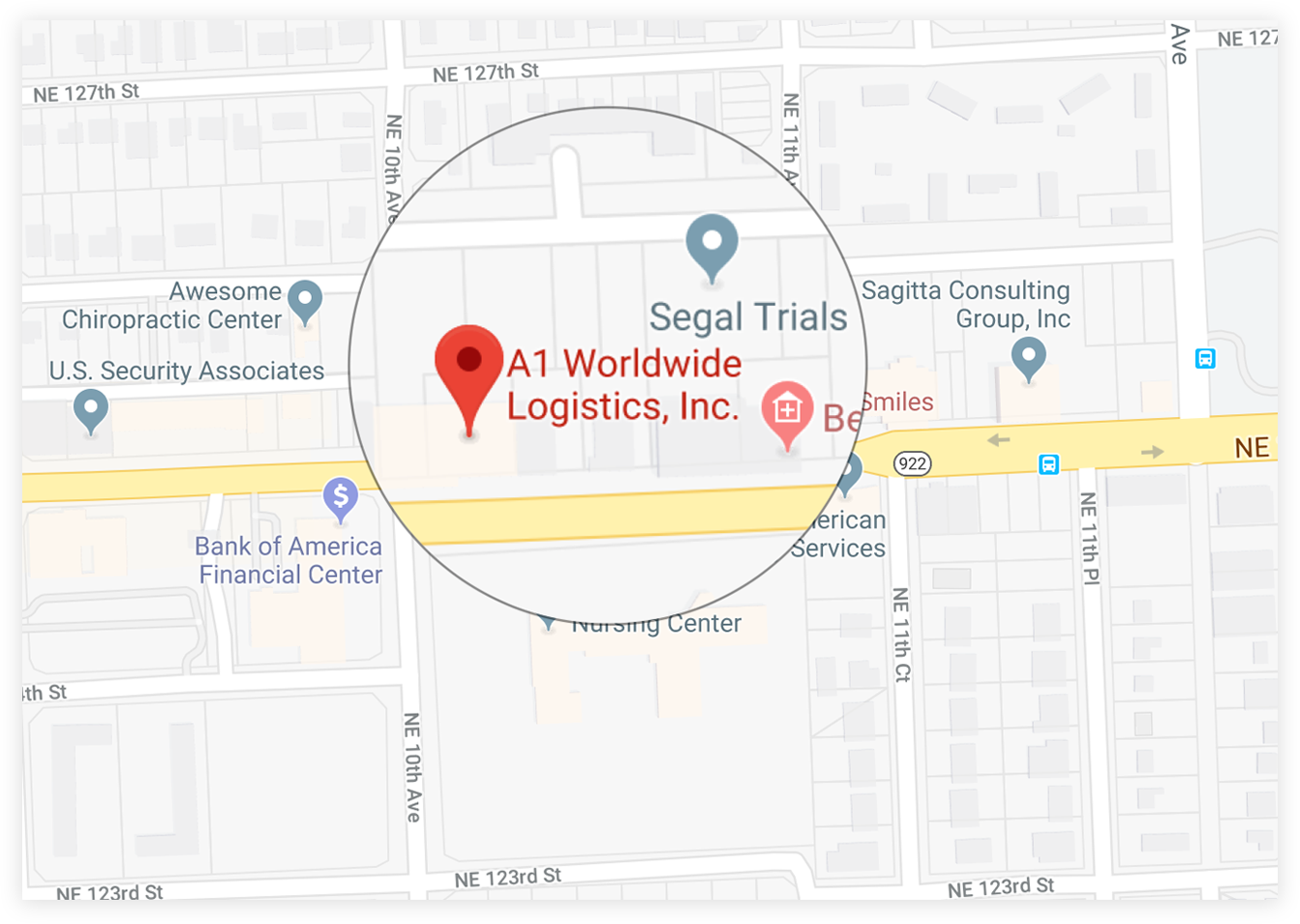
 1035 NE 125th St Suite #320, North Miami, FL 33161.
 a1worldwidelogistics.com
 (305) 821-8995
 Hours: 8AM - 5PM