by A1 WorldWide Logistics | Nov 12, 2025 | Air Freight, Economic trends, Importing
With the holiday season rapidly approaching, shippers could soon see the government shutdown impacting air imports. Since October 1, the US has been in a government shutdown that has currently reached 41 days. The shutdown occurred after Congress failed to pass the required appropriations bill for funding government operations. In particular, Senate Republicans blocked Democratic proposals for extending healthcare, while Democrats have rejected the GOP’s funding plan. Along with impacting sectors like the CBP (Customs and Border Protection), international shipping has also felt the shutdown. In addition to affecting various modes of transportation, such as sea and land, the shutdown has directly impacted air imports.
How Is The Government Shutdown Impacting Air Imports?
Soon after the government shutdown began, federal workers were furloughed and sent home without pay. Key partner agencies, including the CBP (Customs and Border Protection), EPA (Environmental Protection Agency), and the FDA (Food and Drug Administration), employed some of the workers. As a result of the agencies operating with limited staff, operations are also restricted. Inspections and certifications for imports arriving by air could be delayed, resulting in longer customs clearance times. On Friday, October 7, the FAA (Federal Aviation Administration) reduced travel capacity by 10% at 40 of the busiest airports. The reason was due to controller staffing shortages, which may soon intensify with the approaching holiday season.
A significant effect that the government shutdown could soon have on air cargo imports is longer lead times. This can be especially problematic if the goods are perishables or cargo that must be transported on an expedited schedule. The overall cost could also increase due to delays and potential rerouting to other airports. Demurrage costs resulting from an excessive backlog can further increase expenditures, which are spread across various supply chain components. In addition to impacting the shipper and carrier, the customer may also directly feel the effects of higher prices. In addition to having a ripple effect on supply chains, the shutdown could also strain economic growth.
How Can Shippers Protect Their Shipments?
Since the holiday season is a time of pressure for shippers, the government shutdown can add greater stress. Due to this, importers should take greater steps to protect their cargo during this time. To start, it is essential to book air cargo space in advance to avoid delays. Holidays like Christmas tend to lead to increased imports over usual, resulting in limited capacity. For less urgent freight, using alternative conveyance methods, such as ocean and land, can be beneficial. For potential delays, shippers can build buffers and plan for various scenarios, factoring them into their supply chain timelines. It is also essential that all documentation is correct to prevent delays during the customs clearance process.
Transporting freight during a government shutdown can seem daunting, but it should not stop the flow of goods. The shipper should, however, take the proper steps to prevent disruptions to their supply chains. Another way to protect your shipment during this time is by reaching out to a freight forwarder. Forwarders are individuals or companies that organize cargo movement on behalf of the shipper. They achieve this by offering a range of services, including international and domestic shipping, customs clearance, warehousing, document preparation, and additional support. A1 Worldwide Logistics offers forwarders and other solutions to ensure the success of your shipment. Speak to our forwarders at info@a1wwl.com or 305-425-9752 to begin moving goods into and out of the US.

by A1 WorldWide Logistics | Nov 5, 2025 | Economic trends, Importing, Tariffs
A legal dispute between President Trump and the US appeals court continues, with the Supreme Court arguments starting today. The Supreme Court heard a case regarding Trump’s IEEPA (IEEPA Emergency Economic Powers Act) tariffs. Two federal courts have recently ruled the levies illegal after a 7-4 decision. The ruling was that Trump exceeded his authority and could not issue tariffs without explicit congressional approval. Oppositely, the Trump Administration argued that the levies are justified under the IEEPA, citing national security as a reason. After the ruling, the president requested an immediate review, and the Supreme Court agreed to an expedited timeline. The case will also concern specific tariffs that Trump imposed on imports from China, Mexico, and Canada.
What Happened During The Oral Arguments?
During the oral arguments, the Supreme Court heard statements from representatives on both sides of the tariffs issue. Solicitor General D. John Sauer argued first on behalf of the Trump Administration. His primary argument was that the tariffs were not designed to raise revenue but to regulate foreign powers. He noted, “The fact that they raise revenue is only incidental.” His argument received an objection from Justice Sonia Sotomayor, noting how President Trump boasted about the tariff’s revenue multiple times. Justice Elena Kagan further noted how the power to tax and regulate foreign commerce belongs to Congress, not the president. Roberts also pressed the court on whether tariffs on imports are an executive power or belong to Congress.
The Supreme Court also heard the argument challenging Trump’s tariffs. Neil Katyal, a lawyer for small businesses against the levies, argued that Trump’s interpretation of IEEPA is flawed. Katyal also stated, “Tariffs are taxes. They take dollars from Americans’ pockets and deposit them in the US Treasury. Our founders gave that taxing power to Congress alone.” During the hearing, various justices questioned whether the reasons for imposing the tariffs met the threshold established under the IEEPA. Some of these reasons include trade deficits and the importation of drugs. The tariffs will remain in place while the final decision is expected to be made in mid-2026.
What Could Shippers Expect As The Supreme Court Arguments Start?
With the oral arguments beginning, shippers should be aware of how the outcome will impact their shipment. If the Supreme Court rules in favor of Trump’s tariffs, the cost of importing into the US could increase. Presidential powers could also expand if the levies remain in place, allowing for unilateral tariff enforcement. If the court strikes down the tariffs, importers may be eligible for billions in refunds. A ruling against the tariffs could also reduce the presidential powers. Even if the court rules the levies illegal, Trump has other options for imposing taxes allowed by Congress. The Supreme Court’s final ruling on the case could be expected before the end of June 2026.
Although the Supreme Court’s ruling will have a significant impact on shipping, it should not halt cargo movement. Shippers should, however, take the necessary steps to prevent potential supply chain disruptions and successfully transport their cargo. In addition to staying current with regulations, speaking to a customs broker is an ideal way to prepare. Brokers are licensed professionals who facilitate the clearance of imports across the country’s borders. They accomplish this by providing services such as calculating duties, preparing documents, filing entries, offering consultation, and more. In the US, they ensure compliance with the CBP (Customs and Border Protection). Contact A1 Worldwide Logistics at info@a1wwl.com or 305-425-9456 to speak to our brokers regarding importing anywhere internationally.

by A1 WorldWide Logistics | Oct 30, 2025 | Economic trends, Importing, Tariffs
President Trump is raising Canada tariffs by 10% after an announcement on October 25. In a social media post, Trump said he would increase duties on Canadian imports due to a TV ad. The president will add the 10% to previously imposed tariffs, raising the total amount to 45% for certain goods. Canadian imports have been subjected to a 35% tax since August 1. The tariff increase will not affect importations that fall under the USMCA (United States-Mexico-Canada Agreement). Trump has not yet specified the scope of the latest raise and what goods will be affected. This article will explain Trump’s goal behind the tariff increase and its impact on shippers.
Why Trump Is Raising Canada Tariffs By 10%?
The 10% rise came after Canada aired a TV ad featuring former president Ronald Regan criticizing tariffs. Trump immediately responded by calling the advertisement a fraud and stating, “All trade negotiations with Canada are hereby terminated”. The Ronald Regan Presidential Foundation also issued a statement protesting the unauthorized use of selective audio and video. Dominic LeBlanc, Canada’s minister responsible for US-Canada trade, responded to the levies, noting, “Progress is best achieved through direct engagement with the U.S. administration”. The 10% tariff could be part of several levies that Trump has placed on Canada since returning to office. On February 1, the president imposed a 25% tax on most US imports.
On August 1, Trump raised the tariff from 25% to 35%, citing Canada’s “continued inaction and retaliation.” The levies are intended to reduce trade imbalances and address unfair trade practices. Trump has tried to “level the field” between the US and its largest trading partners. The president is also using the tariffs to address Canada’s failure to stop the flow of fentanyl and illegal US immigration. Trump is also attempting to boost the US economy by bringing manufacturing and business back to the US. While the goal is to create jobs, economists believe this could have the opposite effect and create inflation.
How Will The Tariff Raise Impact Shippers?
Canada is a significant trade partner for the US, so the tariff increase will significantly impact shippers. If Trump does impose the 10% levy, importers could see an increase in costs for bringing goods into the US. In particular, industries relying on raw materials from Canada, like automotive and construction, will feel the higher costs. The cost could fall in various parts of a supply chain, including the shipper, international and domestic carriers, customer, etc. There is also a fear that Canada may impose retaliatory levies, raising expenditures. Shippers may look for countries to import from other than Canada or bring production back to the US.
Disruptions like tariffs can affect transportation when importing or exporting from the US. Although the disturbances should not stop cargo movement, the shipper should take the correct steps to protect their shipment. An ideal way to prepare when starting is by contacting a freight forwarder. Forwarders are third-party companies that act as intermediaries between the shipper and the carrier transporting the goods. They do this by offering solutions like providing paperwork, coordinating cargo movement, negotiating rates, warehousing, and more. Forwarders also have consulting services to help shippers navigate disruptions that can affect their shipments’ transport. Speak to our forwarders at info@a1wwl.com or 305-425-9752 to begin moving your goods anywhere internationally.
by A1 WorldWide Logistics | Oct 23, 2025 | Economic trends, Importing, Tariffs
While less talked about than large corporations importing into the US, shippers have seen the IEEPA tariffs impact small importers. Smaller and mid-sized importers like mom-and-pop stores have suffered significantly from President Trump’s IEEPA taxes. Earlier this year, Trump used the IEEPA (International Emergency Economic Powers Act) to impose reciprocal levies for most US importers. After an appeals court ruled the levies Illegal, the Supreme Court agreed to hear the case on an expedited schedule. With the case going to the Supreme Court next month, smaller importers have a high level of uncertainty. This article will explain the potential impact on smaller importers and how to protect their cargo during this time.
How Are The IEEPA Tariffs Impacting Small Importers?
The impact of Trump’s IEEPA tariffs on small to mid-sized importers may depend on the Supreme Court’s final ruling. Shippers could be eligible for a refund if the court decides the tariffs are illegal. However, many would not qualify for a refund because they:
- Didn’t file a protest within 180 days of liquidation.
- Had no visibility into when CBP finalized entry liquidation.
- Lacked legal counsel or customs guidance.
A primary argument from the appeals court is that the president is unlawfully using the IEEPA to impose tariffs. The belief is that although Trump can allow tariffs during an emergency, he cannot impose them without definite congressional approval.
The Supreme Court’s ruling could decide whether smaller importers are eligible for refunds and whether they can survive. If the court rules in Trump’s favor, the cost of importing could continue to rise. The presidential powers may also expand, meaning that Trump may be able to impose more tariffs, further raising costs. For a smaller importer, a 25% tax increase can tighten margins and increase fees to the point of disruption. Unlike smaller shippers, larger multinational corporations tend to have enough capital reserve to absorb fluctuating tariffs. Countries affected by the tariffs could respond by imposing retaliatory levies, which can further impact the shipper.
What Steps Can The Smaller Importers Take To Protect Their Cargo?
Due to the impact of the IEEPA tariffs on smaller importers, the shipper must prepare beforehand. Shippers should plan for worst-case scenarios regardless of the final ruling to navigate the uncertainty. If the tariffs are invalidated, they should work with a broker to file a protest on time to get refunded. If Trump’s tariffs stay, the smaller-sized shipper may have to adjust pricing or diversify sourcing. This could include shipping from a country less impacted by Trump’s taxes or, if possible, bringing manufacturing back to the US and shipping the cargo domestically. Importing in bulk can also assist in lessening importation costs.
Situations like tariffs can disrupt the supply chain process when importing into the US. While they should not stop cargo flow, shippers should take precautions to prevent disruptions. An ideal way to start is by contacting a customs broker. Brokers are licensed individuals or corporations who arrange the customs clearance process on behalf of the importer. They do this by ensuring that the shipment follows the laws and regulations of the country of import. In the US, they ensure compliance with the Customs and Border Protection (CBP). Brokers also provide other services like documentation, calculating duties, filing ISFs, etc. Contact A1 Worldwide Logistics at info@a1wwl.com or 305-425-9456 to speak to our brokers and discuss a successful importation with our broker.
by A1 WorldWide Logistics | Oct 21, 2025 | Customs Broker, Customs Clearance, Importing
Ya seas un importador nuevo o experimentado, garantizar una importación exitosa es esencial al traer carga a los Estados Unidos. EE. UU. es el mayor importador del mundo y en 2023 recibió más de 3 billones de dólares en mercancías. Puede resultar atractivo comenzar debido a los numerosos beneficios para empresas y remitentes. Sin embargo, se deben tomar precauciones especiales para evitar posibles interrupciones en el proceso. Muchas cosas pueden salir mal al importar, lo que puede resultar en pérdidas económicas o incluso en la pérdida de la carga. Este artículo explica qué puede salir mal al importar y da consejos para asegurar un envío exitoso desde el inicio.
¿Qué puede salir mal durante el proceso de importación?
Debido a la complejidad de importar a EE. UU. y otros países, hay muchos factores que pueden fallar. Un problema común al mover carga son los retrasos en el despacho de aduanas. Numerosos motivos pueden causarlos, como documentación incorrecta, tarifas impagas, incumplimiento de regulaciones de embalaje o etiquetado, entre otros. Estas retenciones pueden ser especialmente perjudiciales para empresas que envían productos directamente a clientes.
Otro escenario frecuente es ingresar mercancías con el código arancelario incorrecto. Tener el código equivocado puede provocar la incautación del envío y otras sanciones por incumplimiento. Incluso después de que la aduana libera la carga, recoger o devolver tarde un contenedor puede generar cargos por sobreestadia o retención.
Consejos para asegurar una importación exitosa
Aunque escenarios como daños en la carga pueden ser inevitables, hay aspectos del proceso que el importador sí puede controlar. Algunas formas de garantizar un envío exitoso incluyen:
- Tener la documentación correcta: Un remitente puede necesitar varios documentos al importar a EE. UU. Ejemplos: conocimiento de embarque (bill of lading), lista de empaque, certificado de origen, aviso de llegada, factura comercial, entre otros. Los importadores también deben verificar que todos los documentos estén presentados correctamente. La documentación incorrecta puede hacer que la carga quede retenida en aduanas y generar costos adicionales.
- Conocer las reglas y regulaciones de importación: Todos los países tienen normas que deben seguirse al importar, y EE. UU. no es la excepción. Antes de enviar, el importador debe conocer estas regulaciones y asegurarse de que su mercancía las cumpla. Por ejemplo, está prohibido importar ciertos artículos como ajenjo, piel de perro o de gato.
- Determinar el código arancelario correcto: Al igual que la documentación, el remitente debe garantizar que utiliza el código arancelario HS adecuado. El HS (Harmonized System) es un método para clasificar los bienes comercializados. Estos códigos ayudan a las aduanas a calcular impuestos, además de otras funciones. Para encontrar el código correcto, se recomienda usar una base de datos arancelaria o la asistencia de un agente de aduanas.
- Prepararse para los riesgos – La importación internacional a EE. UU. conlleva numerosos riesgos, especialmente al comenzar. Además de los consejos anteriores, el remitente debe tomar medidas adicionales, como utilizar transportistas confiables para proteger su carga. También es recomendable contar con un seguro de carga para escenarios inevitables, como un accidente en el que el envío caiga al mar.
¿Cómo empezar?
Incluso con todos estos consejos, comenzar puede ser un reto para los importadores principiantes. Una forma ideal de iniciar es contar con el apoyo de un agente de carga y un agente de aduanas para simplificar el proceso.
Los agentes de carga actúan como intermediarios que coordinan el movimiento de tu mercancía hacia y desde EE. UU.
Los agentes de aduanas asisten en el despacho cuando la carga ingresa al país.
Ambos profehttp://+tel:3054259513sionales se encargan de parte del proceso de importación, permitiendo que el remitente se concentre en otras áreas de su cadena de suministro.
Comunícate con A1 Worldwide Logistics al 305-425-9513 o al correo info@a1wwl.com para comenzar a importar desde cualquier parte del mundo. Contamos con agentes de carga, agentes de aduanas y diversas soluciones para asegurar el éxito de tu importación.

by A1 WorldWide Logistics | Oct 9, 2025 | Economic trends, Importing, Tariffs
President Trump’s IEEPA tariffs Supreme Court ruling could potentially reshape international trade. On November 5, the Supreme Court will hear two consolidated cases – Learning Resources v. Trump and Trump v. V.O.S. Selections. In V.O.S. Selections vs Trump, the US Court of Appeals argues that the IEEPA does not authorize sweeping tariffs. Trump recently used the IEEPA (International Emergency Economic Powers Act) to impose reciprocal tariffs for most US importers. Due to the situation’s urgency, the Supreme Court agreed to review the case on an expedited schedule. The outcome of the ruling may significantly impact trade for shippers and the US government.
What Are The Major Risks for Trade From Trump’s IEEPA Tariffs Supreme Court Ruling?
The Supreme Court’s ruling has various risks, including redefining presidential authority over trade and policy. If the court rules against the Trump administration, the scope of what presidents can do under IEEPA may be limited. Also, if the court declares some or all of the tariffs unlawful, importers could be eligible for refunds. Even if refunds happen, only those who meet strict deadlines and compliance protocols may be eligible. For example, importers must file protests within 180 days in advance, which businesses may be unaware of. Enforcement of the tariffs may continue as the government appeals or reorganizes policy despite the court finding them illegal.
If the Supreme Court rules for Trump’s levies, the presidential powers may expand, resulting in greater unilateral tariff enforcement. Another concern is that global trade relationships will be strained if the tariffs stay. Some of the US’s largest importers, like China, Mexico, and Canada, have protested the levies. A ruling on the tariffs could lead to retaliatory measures or prompt the countries to seek other trading partners. Various supply chains could also be disrupted by the tariffs, as import costs rise significantly. The costs could fall on different parts of the supply chain, including domestic shipping, and on customers if the importer is a business.
How Importers Should Prepare
Due to the potential impact the ruling will have on shipping, the importer should prepare beforehand. Shippers must review past imports to determine if the tariffs fall under legal challenge. Being current with the court case by reading news articles is also essential. Shippers must also check liquidation dates to ensure that CBP (Customs and Border Protection) has not finalized the entry. Shippers should file protests to preserve refund rights if the Supreme Court rules against the Trump Administration. It is crucial to plan the following action if the tariffs stay in place. This can mean returning supply chains to the US, shipping in bulk to avoid excess costs, etc.
Although the Supreme Court’s ruling could significantly impact international shipping, it should not stop cargo movement. However, the shipper must take appropriate actions to prevent disruptions like delays and monetary loss. An ideal way to prepare when shipping cargo internationally is by contacting a freight forwarder. Forwarders act as the middlemen between the shipper and carrier and coordinate the cargo’s movement. They offer solutions like customs clearance, international and domestic shipping, warehousing, and more. Forwarders also provide consultation to educate the shipper on the best steps for transporting goods to the final destination. Speak to our forwarders at info@a1wwl.com or 305-425-9752 for assistance with exporting and importing into the US.

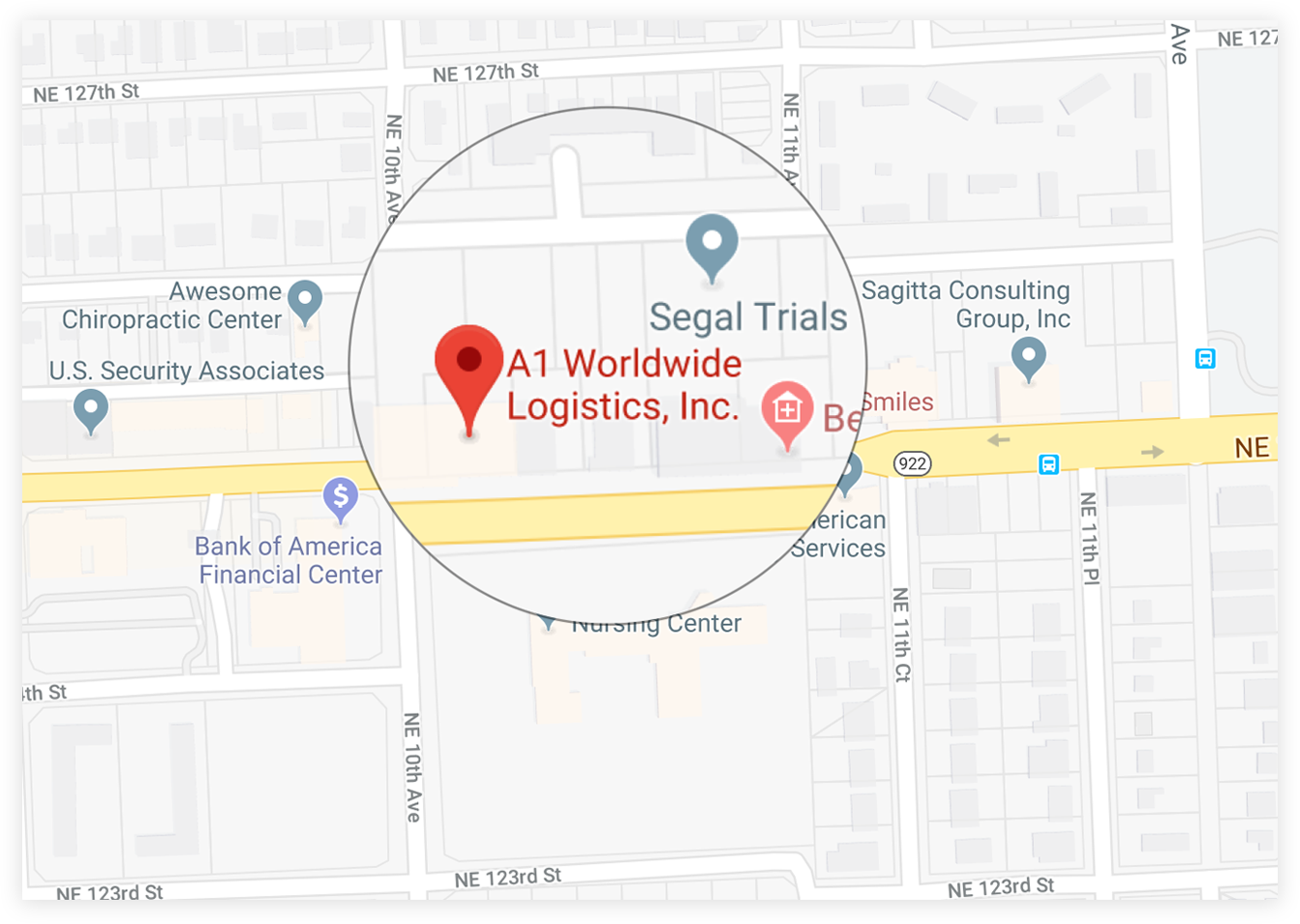
 1035 NE 125th St Suite #320, North Miami, FL 33161.
 a1worldwidelogistics.com
 (305) 821-8995
 Hours: 8AM - 5PM