by A1 WorldWide Logistics | May 19, 2022 | Freight Forwarding, Import and Export Experts, Shipping Logistics, Supply Chain, Transportation
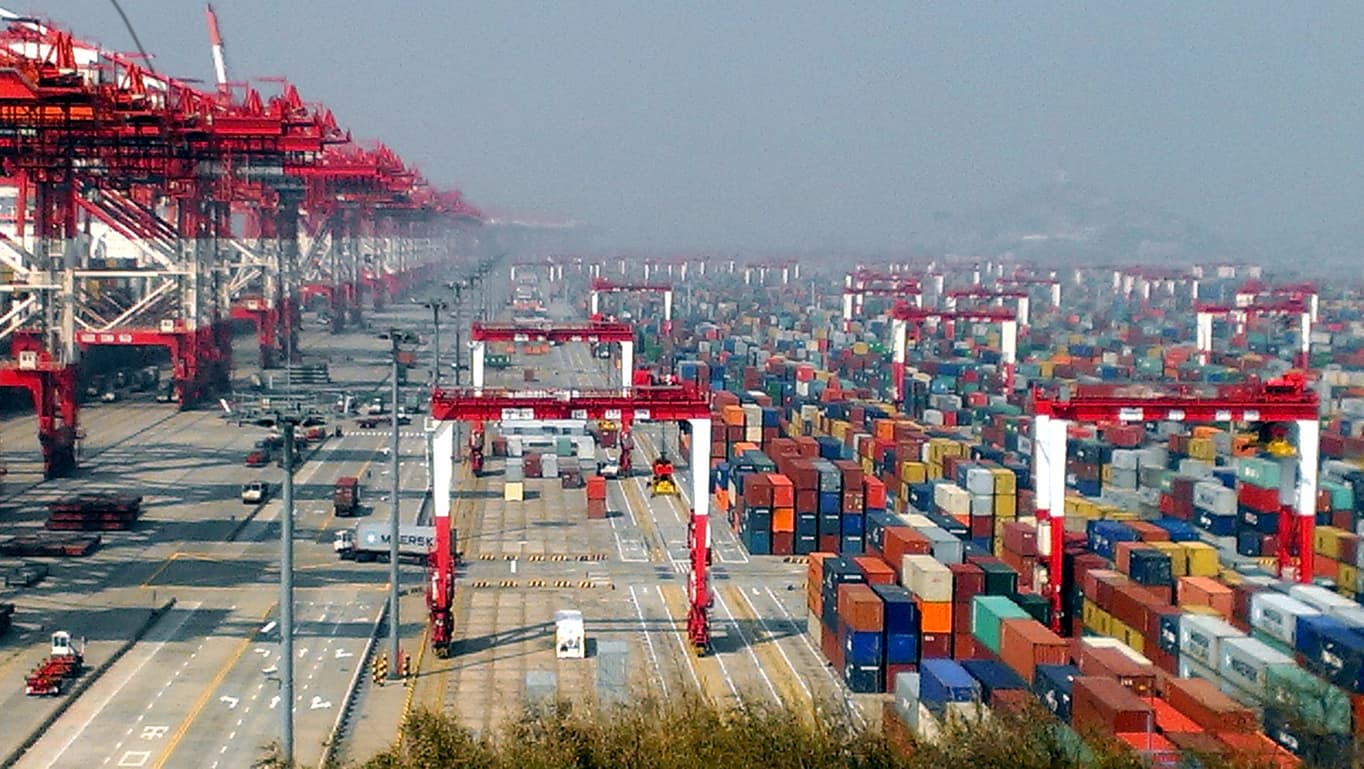
In the past few weeks, the Port of Shanghai had been working at a limited capacity due to the coronavirus pandemic. Now, operations in the port have opened to close to normal levels. Shanghai, China, has been on lockdown because of the “zero COVID” policy and has started to reopen in stages. This opening began with industrial production and manufacturing industries and then went to commercial businesses like stores and pharmacies. Additionally, The Port of Shanghai has slowly opened import and export operations. City authorities have noted that “normal life” will return to Shanghai on June 1, 2022.
This reopening of the city and port is significant for the world of international shipping. When Shanghai and its port shut down, the shipping industry instantly felt the blow. Overseeing an estimated 744 million tons of cargo yearly, the Port of Shanghai is the largest and busiest seaport globally. The lockdown immediately increased the number of container ships outside the port by 195% and affected global supply chains. To prevent a backlog, 20,000 employees worked in the Shanghai port to keep it operating during the lockdown. The result was a throughput of 82% containers passing through the port in April compared to April of last year.
What May Happen in the Upcoming Months
As Shanghai returns to everyday life, the supply chains for various companies may resume pre-lockdown levels of normality. With increasing orders being placed from reopened manufacturing factories, the Port of Shanghai will feel increasing pressure. Not only is freight being exported out of the port but into the port as well. The need for trucks to move freight from and to the port will also rise. Because the Port of Shanghai is so extensive, the opening is highly positive for Shanghai and the world’s economy.
Once the lockdown ends, different ports worldwide may experience a higher volume of containers than usual. This is due to the containers pent up in the Port of Shanghai. Ports like the Port of Rotterdam, which has dealt with congestion in the past, may feel the load. The Port of Los Angeles has been stable during the lockdown due to assistance from the port of Ningbo. When the Port of Shanghai went on lockdown, the Ningbo port took its freight and moved it to the Port of Los Angeles. This movement was done with a priority and helped alleviate pressure for both ports. With the holiday season approaching in a few months, ports and shippers may have to prepare early for any circumstance.
Shipping World Continues to Move
During the last few years, the pandemic and the lockdowns have made their presence known in the world of international shipping. On the one hand, the urgency to have freight shipped has increased due to a spike on ecommerce and, on the other, staff dealing with shippings at the ports and through all the supply chain has been limited (public health restrictions).
Shippers may need more than ever to move their goods and we’re here to help. If you plan on importing/exporting freight from anywhere internationally, contact A1 Worldwide Logistics at 305-821-8995 to get started. With the biggest port in the world fully operational, we want to make sure your cargo is transported with no problems. A1WWL has experience importing cargo from China such as vehicles, electronics, metal clothing, etc. We also have exported machinery, luxury items, furniture, and much more from the U.S. to China.

by A1 WorldWide Logistics | Apr 21, 2022 | Freight Forwarding, Shipping Logistics, Supply Chain, Technology, Transportation
The transportation industry has seen massive growth and development in freight movement over the last few decades. A recent topic that has become popular in the Transportation and Logistics industries is the usage of 3D printing. Advances in technology lead some to believe that 3D printing may help the industries grow. Others predict that 3D printing can have an opposite effect and interrupt freight movement. This was recently discussed in a virtual session at The Economic Club of New York. One of the topics brought up was the effect that 3D printing may have in the future.
Pros and Cons of 3D Printing
3D printing is a manufacturing process that converts digital data into a three-dimensional image. One of the main benefits of 3D printing is that it will streamline the supply chains of transporting products. The traditional supply chain process involves obtaining, manufacturing, and transporting goods to customers. 3D printing may allow companies to create goods in their location instead of importing the products elsewhere. Manufacturing goods in one’s facility can save money, time, and resources. 3D printing also allows for versatile, complex design due to its method of digital creation.
One of the main disadvantages of 3D printing is the effect that it could have on the freight forwarding/transportation industries. A freight forwarder is an intermediary between shippers and transport companies who coordinate the movement of goods internationally. With companies creating products in their facilities through 3D printing, the need for a freight forwarder becomes lessened. The way that many companies create products today is by outsourcing materials from different countries. Freight forwarders may coordinate the importing of those materials internationally.
What Effect will 3D printing have on the Transportation Industry?
The current supply chain model for manufacturing and moving freight involves many steps. Companies source cheap labor overseas, and then pay to get the goods transported. With 3D printing, a portion of the supply chain could be gone, although any statement suggesting that goods will be made in anyone’s basement are truly exaggerated. Perhaps, in many (many!) years from now, the international movement of goods may be replaced with the international movement of designs and information to create the goods.
3D printing may impact globalization because it is based in the countries’ permanent exchange of goods. With companies creating goods domestically, supply chains could become less dependent on other countries to be effective. A nationwide lockdown or a conflict between two countries may become less of a disruption to a supply chain.
A1 Worldwide Logistics
While 3D printing may impact the future of transportation, it may be a while before 3D printing becomes standard practice. Freight still has to be moved internationally. When moving freight, it is essential to have a freight forwarder that understands the world of international shipping. A1 Worldwide Logistics has experience working with freight transport methods such as ocean, air, and land. Contact us at 305-821-8995 or info@a1wwl.com for a quote to get your goods moving today. We also have customs brokers to arrange the customs clearance process of your imports.

by Rob Simmons | Sep 23, 2021 | Freight Forwarding, Transportation
Over the last year, freight demand has increased to an overwhelming amount, and it has had a direct impact on the trucking industry. The coronavirus pandemic led to a lockdown all across the U.S and people were told to remain home. This led to an increase in e-commerce because the easiest way to purchase goods turned to online. When goods are purchased online, they may be brought in from somewhere international. After the good reaches the country, trucks tend to be the main method to move the freight to the stores or warehouses. The need for trucking rose because of the reliance on e-commerce.
Retail Freight Shipping Likely to Persist
With schools and offices opening back up again, national customer spending is having increasing attention on retail goods. Goods such as office equipment and school supplies are becoming a more common type of freight being moved. Another retail freight that is increasingly being transported by trucks is clothes. During the pandemic, people stayed at home and went to work and school remotely. There wasn’t a great need for new clothing but with everything returning to more in-person, many could have plans on updating their wardrobe.
How the Demand Affects LTL Trucking
LTL (less than truckload) shipping is the moving of freight that is smaller than an FTL (full truckload) and doesn’t take up an entire trailer. Freight for this type of shipping tends to weigh less than 10,000 pounds and may only take a space of a truck. As the U.S. slowly comes back from the coronavirus pandemic, the pressure to move goods is being added to the already large demand. With FTL carriers experiencing an excess volume of freight from shippers nationwide, the overflow is going to the LTL sector. This affected the LTL carrier sector around the U.S in both a positive and negative way.
The benefit of having such a large requirement to move freight for the LTL sector is the chance to make a profit for the carriers. Companies such as FedEx Freight have seen an increase in volume over the past few months and an increase in revenue. Despite this benefit, capacity is still strained in the LTL sector. Because of this, certain LTL customers are being forced to make difficult choices for their customer base. A tight capacity means that the LTL carrier may turn down certain customers for more profitable core customers.
Lack of Available Truck Drivers
While the demand to have freight moved nationwide has been increasing, there has been a growing shortage of truck drivers to meet that demand. The shortage has been persistent for years, but the coronavirus pandemic helped increased the scarcity. There are various reasons why there is a shortage of drivers including veterans retiring faster than new drivers are entering the workforce. Out of those new drivers, there may only be a small amount that are licensed Class 8 drivers. Many younger people are also finding other alternatives for work like going into the warehousing industry. It has even gotten to the point that trucking companies are bringing in foreign workers.
A1 Worldwide Logistics
There are many different parts of a supply chain that freight has to go through before reaching its final destination. Trucking, which may be overlooked in international shipping can be as important as the rest of the supply chain. When your shipments reach airports or seaports, trucking is what tends to get your shipments to their final destination. Contact us at 305-821-8995 or info@a1wwl.com if you are looking for a quote to move freight or want to find out about our trucking services.
by Rob Simmons | Sep 21, 2021 | Freight Forwarding, Supply Chain, Transportation
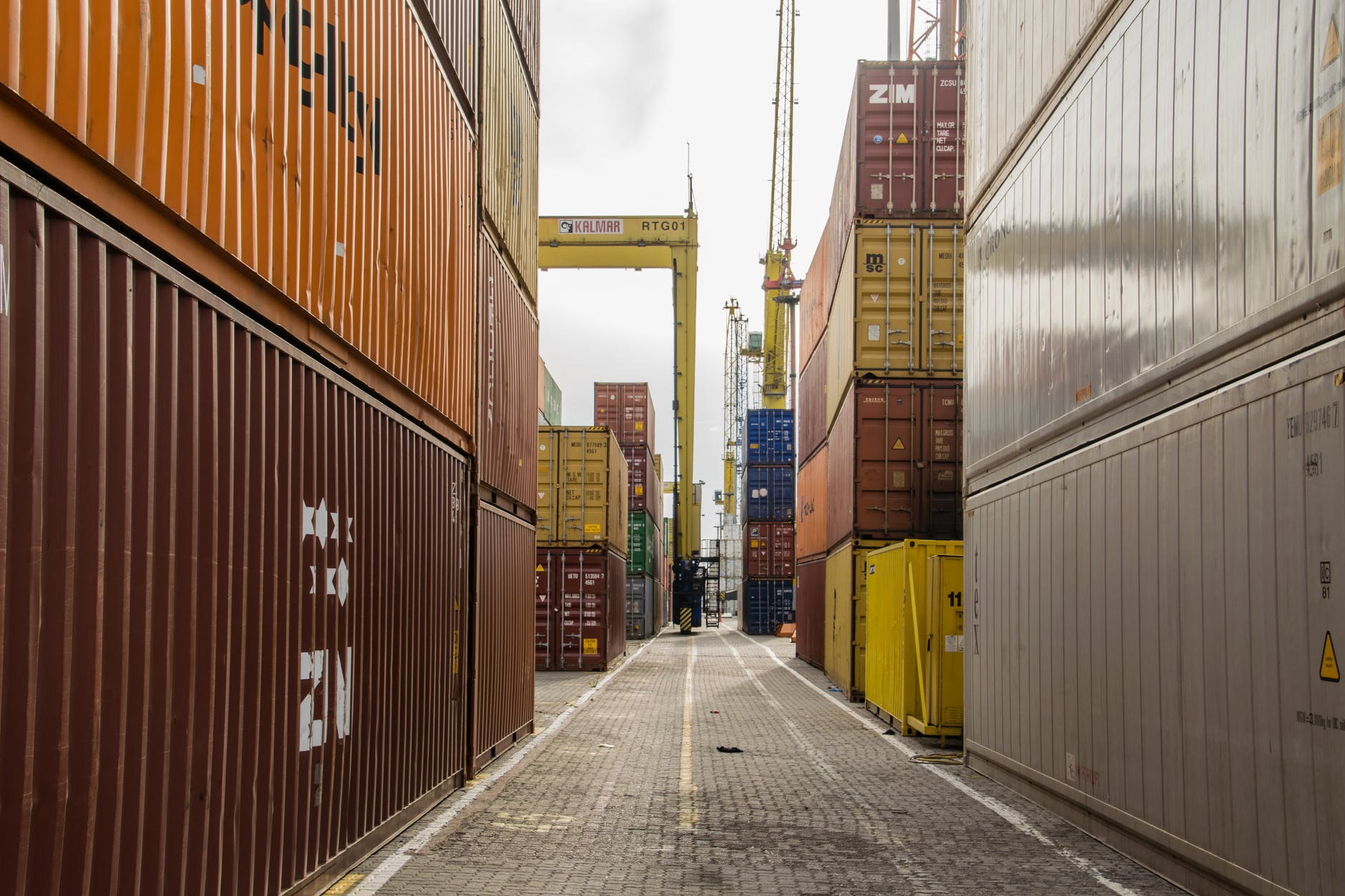
CMA CGM, one of the biggest ocean freight movers recently announced its plan to freeze its rising spot rates through February 1st, 2022. This may come as a surprise to the freight shipping industry with the cost to ship containers recently reaching unprecedented heights globally. Drewry’s World Container Index recently reported that its spot rates have increased for 21 straight weeks. The demand to move freight internationally has exceeded the available capacity to do so. With the holiday season quickly approaching, the upcoming months may see rates soar even further.
The Effect may have on the CMA CGM and the Shipper
Rising spot rates for moving freight have led to record levels of profit for carriers. This may be the reason why it is such a big surprise to many that CMA CGM has halted its rising spot rates. Some shippers believe that the reasoning behind putting a cap on the spot rates is due to the little space that the ocean carrier has to move freight. There is a belief that CMA CGM Is almost fully booked for the next few months. This also may mean that the company may be trying to reserve vessel space for long-term contract customers.
It is important to distinguish the difference between contract and spot customers. Contractual customers tend larger to be companies that have stronger preexisting relationships with the carriers. Spot customers may be smaller customers that look for the best deals to move freight. CMA CGM capping its spot rates may give contractual customers more leverage because of their established long-term relationship with the carrier. With the limited capacity in the current market, the carrier has to prioritize who gets vessel space.
With the current freight shipping market already strained, CMA CGM may be seeking to focus on their current customer relationships. The company has also previously released a statement that in the past 15 months, the company has added over 780,000 TEUs. This means that CMA CGM’s capacity to move freight has increased over 10% since the start of 2020.
Can This Be a Positive Sign for the Freight Shipping Market
Many different factors have resulted in rising spot rates in the freight shipping market over the past year. From lack of capacity on carriers to congestion in many ports globally, each situation has worked together to have an unfavorable impact on the shipping industry. The COVID-19 pandemic also limited the number of available port workers and created a backlog of incoming freight. It was reported in late August that the total number of container-carrying vessels anchored at the port of Los Angeles was close to 5 times the amount pre-COVID.
While there are those that believe that the pausing of the rising freight rates could be due to minimal space, others may see it as a positive sign of things to come. CMA CGM may be predicting a return to normalcy with the freight shipping market returning to pre-COVID levels. Only time will tell if other carriers follow the trend and stop or even lower their rising spot freight rates.
A1 Worldwide Logistics
Planning on moving freight globally and need help with the logistics behind doing so? We at A1 Worldwide Logistics provide many services to make sure that your freight reaches its intended destination swiftly and securely. Contact us at 305-821-8995 or email us at info@a1wwl.com for a quote to ship your goods internationally. We also have customs brokers to assist in making sure that your shipment meets federal obligations.
by Rob Simmons | Sep 8, 2021 | Customs Clearance, Freight Forwarding, Import and Export Experts, Shipping Logistics, Transportation
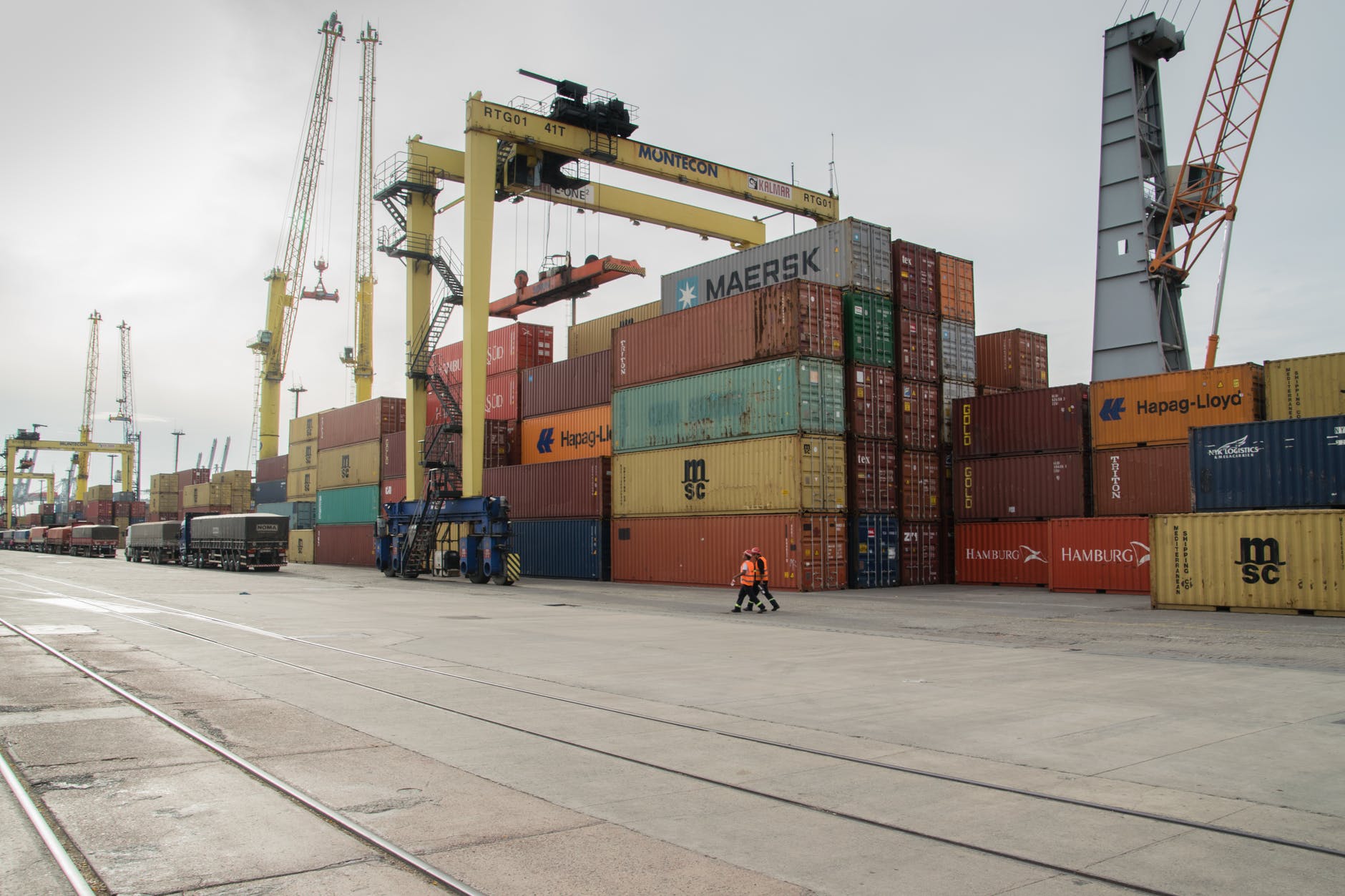
The current international freight shipping market is seeing a sizeable distribution of spot prices. When shipping containers, a spot price is a cost for moving freight shipments to a certain destination. Earlier this year there was a report that spot prices were high compared to last year, but they still are growing in the present moment. With spot rates growing for certain freight shippers, other shippers are finding a decrease in spot rates, and this can create an unbalanced spread.
The reason that the spread is so wide may be attributed to the current market. Situations such as port congestion and a scarcity of containers created a high demand in the market. The demand in trucking and warehousing has also risen compared to the capacity. Plus, with the holiday season quickly approaching, the demand may increase. This has led to a high push for shippers to get space on a freight vessel, rising the spot rates.
Why are Some of the larger Customers Getting the Leverage?
The trend in the spot rates may be more favorable for larger shippers than mom-and-pop shippers. The larger or more attractive shippers tend to pay fewer spot rates than smaller importers. This is because compared to a smaller shipper, larger freight shippers may offer more benefits for the carrier. Larger freight volumes from big shippers can be attractive to the carriers. Larger shippers may also provide the carrier with lengthy contracts and tend to have an already established relation to the carrier.
Xeneta, a shipping index and a benchmark for comparing ocean freight rates recently did an analysis of the market rates for the China-Los Angeles ports. They reported the short-term market rates had a high and low difference of around $1200 a few months ago. At the same time last year, the China-Los Angeles ports had a high and low difference of only $150. If this trend continues, there is a fear that smaller shippers may not be able to compete in the freight shipping market.
The Dependance on Location
One of the main contributors to the spot prices is where the freight leaves from and the final destination of the shipment. The trans-Pacific is the region in the Pacific Ocean where several countries cross over to do trade. Because of the vast number of countries doing trade in the trans-Pacific market, different countries may have their own market. This also can mean that they have their own spot prices.
For example, shipping from China may be cheaper than shipping from Japan. This is because China has some of the largest container ports in the world and may be able to move more freight in a certain time period. This high volume of freight that is able to be moved can lead to higher profits for carriers.
The destination of the freight being moved may also affect the spot price. The port of Los Angeles has experienced an immense amount of congestion in the past year. Even at the present moment, there are freight container vessels waiting to be unloaded. If a shopper plans on moving their freight through this port, short-term rates may be high due to waiting times. Now compare the situation to the Port of Hueneme a few miles away. With less congestion and traffic, the shipping rates per container may be less.
A1 Worldwide Logistics
Knowledge of the international freight shipping market is important when you plan on moving freight. Particularly in the current market, it is critical that you are getting a fair and understandable quote for your shipments. Contact us at 305-821-8995 or at info@a1wwl.com to get a quote on your shipment. Our freight forwarders look for the best quote prices for moving your shipments domestically and globally.

by Rob Simmons | Aug 30, 2021 | Freight Forwarding, Shipping Logistics, Transportation
Regular LTL (Less Than Load) and FTL (Full Truck Load) may come up in the conversation when transferring freight by truck but what tends to be discussed less is moving mid-sized freight. This can be thought of as the freight with the shipping size between common LTL and FTL. More than 5 pallets of freight or a linear size between 10-28 feet could be an example of this. The main type of mid-size freight shipments is PTL (partial truckload) and Volume LTL (volume-less than truckload).
Volume LTL’s can be described as a freight shipment that is six or more pallets that weigh over 5,000lbs and does not fill a full truck. Partial truckloads are similar in the aspect that they are not an FTL but there are some differences. Partial truckloads also do not need a freight class. A freight class is a systematized method to determine freight rates for LTL shipments. The delivery times also may be different. With partial truckload, the truck delivers the freight straight to the receiver. Volume LTL typically follows a network designated by a carrier so it may not be a straight delivery.
What Are Some Drawbacks?
When shipping mid-sized freight there may be some downsides for both volume LTL and PTLs that you should be aware of. Although partial truckloads may deliver straight to the receiver, they may also have to pass through consolidation facilities. This could mean that additional stops. These stops can create more time for delivery may not be ideal if you want your freight as soon as possible. The truck driver also may not begin the journey to deliver the freight until the trailer is fully packed.
Similar to PTLs, volume LTLs also may have slowed delivery times due to the multiple stops. Volume LTL stops at various terminals on their journey where they are unloaded and loaded with other shipments. Not only may this slow down speeds, but this amount of handling may also increase the chances of freight getting damaged. As previously mentioned, volume LTLs have a freight classification system to control pricing. Although this system was designed to clarify freight shipping rates, it may also complicate them as well. Without proper research, shippers may charge more than the correct amount for freight rates.
The method of the classification system is that you pick a number between 50-500 and that number will determine how you calculate freight rates. Incorrect calculations can occur and may not be favorable for the customer. Another drawback is that the liability if freight is damaged or lost is very limited. This is because volume LTL is only a dollar per pound. This means that if something expensive like jewelry gets damaged, the shipper may lose large amounts of capital.
Shared Truckloads
A method to move midsized freight without having to deal with some of the drawbacks can be by shipping STL (shared truckload). A shared truckload is when instead of only having one shipper’s freight on a truck, multiple shippers combine their shipments to one truckload. This can be beneficial to both the shipper and the carrier. For the shipper, STLs lower the chances of damage and speeds the delivery process. Similar to FTLs, STLs deliver directly to their appointed destination without having to go through terminals and hubs. This means that the delivery is streamlined, and freight may not be damaged by handling when going through hubs.
The benefit of not having to stop through hubs to unload and load is also beneficial for companies that want to quicken their supply chain. and Money can also be saved with STLs because shippers only pay for their occupied truck space. STL may also be beneficial to the environment. With freight being shared in a truckload, the number of trucks delivering freight decreases. With fewer trucks on the roads and highways, less gas is released into the atmosphere.
A1 Worldwide Logistics.
When freight is shipped globally, people may tend to focus on getting their freight to the ports and overlook the last mile. When the goods arrive at the ports it is important that the goods are brought to their final destination in perfect condition, and we can assist with that. Our forwarders will find the best, dependable carriers to move your freight. If you plan on moving freight and are looking for a quote, call us at 305-821-8995.


 1035 NE 125th St Suite #320, North Miami, FL 33161.
 a1worldwidelogistics.com
 (305) 821-8995
 Hours: 8AM - 5PM