
by A1 WorldWide Logistics | May 16, 2024 | Importing, Shipping Logistics, Transportation
A type of import that can be challenging when starting is importing olive oil to the U.S. The reason is due to the various regulations and procedures that the shipper must follow. Organizations like the FDA (Food and Drug Administration) and CBP (Customs and Borders Protection) dictate these policies. Despite this, the U.S. is the 2nd largest importer of olive oil globally. In 2020, the U.S. had a share of 17.9% of all world imports and brought in over 403 thousand tons. Many benefits of olive oil have caused an uptake in the amount brought in recently, especially for restaurants and retail. With the growing push for healthier nutrition, shippers can benefit from importing olive oil.
What Should You Know About Importing Oil To The U.S.
There are numerous things shippers should know before bringing olive oil into the U.S. It is essential to understand the various regulations for importation. The country of origin also has numerous guidelines a shipper must follow before exporting. The FDA is the U.S.’s primary regulatory body and can be very strict on requirements. Examples of FDA prerequisites include a food facility registration, Foreign Supplier Verification Program (FSVP), prior notice of import, etc. The FDA also mandates that olive oil ships from an approved region follow safety standards and be labeled correctly. Failure to follow requirements can result in a delay or rejection of your import.
Along with the FDA, a shipper must adhere to regulations the CBP sets. The CBP is in charge of enforcing trade laws for the U.S., ensuring importers comply. This is to prevent any dangerous or prohibited cargo from entering the country. Additionally, the CBP ensures that import duties are issued and collected upon entry. Duties on olive oil shipments are based on the value of shipments. The blend of olive oil, such as virgin, extra virgin, and certified organic, also determines duties. The CBP may also require that the shipper obtain a customs bond in oil shipments valued at or over $2500.
What Is The Process For Importation
Before leaving the country of origin, the shipper must ensure that the cargo has the proper product labeling. Labeling includes crucial information like expiration dates, specifications, quality certificates, etc. The importer must also prepare the documentation beforehand to prevent holdups and delays. Some of the documents for importation include:
- Bill of Lading or Airway Bill
- Commercial Invoice
- Arrival Notice
- Certificate of Origin
Olive oil also requires other certificates like the Phytosanitary Certificate and the Certificate of Analysis. Two primary ways that olive oil ships internationally are by air and sea. Using the assistance of a freight forwarder can help find a suitable carrier regardless of the conveyance method. Once the shipment reaches the U.S., the CBP (U.S. Customs and Border Protection) will stop and inspect the shipment. When customs releases the shipment, you can move it to the final destination by trucking service.
The process of importing olive oil into the U.S. can be complex and could take more steps than the ones described in the article. Having assistance from a freight forwarder and customs broker can help streamline the process. A1 Worldwide Logistics has both services and more to ensure the success of your shipment. Reach us at 305-821-8995 to begin importing into the U.S. from anywhere internationally. Whether you bring in olive oil or any other commodity, we guide you through the process.

by A1 WorldWide Logistics | Feb 22, 2024 | Importing, Shipping Logistics, Supply Chain
A common question that new shippers tend to ask themselves when starting is what are free trade zones (FTZs). FTZs are specialized locations where shippers can import, re-export, manufacture, and store shipments with limited involvement of customs agencies. FTZs may also have extensive manufacturing facilities where companies import raw materials rather than ship finished products. These zones are usually around major seaports, airports, or areas with geographical advantages to trade. For example, the Colon Free Zone is near the Panama Canal and is the largest FTZ in the Western Hemisphere. Although there are similar areas globally, this article will focus on U.S. FTZs, known as foreign-trade zones.
In the U.S., FTZs began with the Foreign-Trade Zones Act of 1934, which helped encourage foreign commerce. The U.S. Customs and Border Protection (CBP) enforces import laws and monitors zone activities. Today, there are 298 FTZs located near throughout the 50 states. The U.S. further breaks the areas down into two types: general-purpose zones and subzones. A general-purpose zone is a location like a port or industrial park available to the general public. Subzones are private sites that a single company uses for a specific purpose. Compared to General-Purpose Zones, all financial responsibilities go to the single company with the permit.
How Can A Shipper Benefit Knowing What Are Free Trade Zones?
FTZs have numerous advantages when importing goods into the U.S. One of the most significant benefits is the cost savings the shipper can have. When merchandise is in the zone, it is exempt from customs duties and exercise tax. Duties only have to be paid by the importer when the cargo leaves and enters the local market. No duty payments are also needed if the shipper exports the product in FTZ. FTZs also allow for cost reduction by reducing merchandise processing fees (MPF) and inverted tariffs. An inverted tariff is when raw materials have a higher duty rate than the finished product. In FTZs, you can pay the lower rate.
An FTZ has many logistics benefits for a supply chain. Since CBP does not subject FTZs to duties, importers can use them to repair, inspect, and remove defective products. Companies that import and export large amounts of products benefit considerably from cost savings. FTZs also can help streamline supply chains by allowing for direct delivery. Direct delivery is when an import can go directly to the location in the FTZ without customs approval. Businesses with a substantial number of shipments often use this for quickness. Zone-to-zone transport of shipments is also possible free of customs duty payments since the cargo moves “in-bond.”
Customs Bonded Warehouse
When shipping goods internationally, it is essential to take proper precautions to ensure the success of a shipment. Along with FTZs, shippers have significantly benefited from using a customs-bonded warehouse. A bonded warehouse allows freight storage without paying taxes for up to five years from the import date. This allows the importer to look for customers and save money before they have to pay taxes for the shipment. You can also re-export the shipment free of tax payments during that time. Contact A1 Worldwide Logistics at 305-821-8995 or info@a1wwl.com to learn about our bonded facility.
by A1 WorldWide Logistics | Jun 6, 2022 | Customs Broker, Customs Broker Miami, Customs Clearance, Import and Export Experts
The importation of goods is complex and has shown the modern-day importance of customs brokers. International imports have gone up significantly, with various factors contributing to this, like the growth of e-commerce and globalization. A significant number of importations means that more protection against the movement of illegal and dangerous goods is essential. Customs brokers ensure that importers follow the government guidelines.
Imagine a person or company that wants to begin selling a product internationally. This person may well benefit from a customs broker. For example, what if the seller is in China and gets their first customer in the United States? Since international trade has many regulations and costs, bringing the product to the U.S. may seem intimidating to the seller. The customs broker will help simplify the process.
Customs brokers may also help avoid penalties for importing goods. Let’s say that you are importing an item into the U.S. for the first time. You receive a message from customs saying that your import was classified incorrectly and that you will be fined. Being a first-time shipper, you may not be familiar with how to classify a good and make a mistake. You may also not receive the item you imported. Contacting a customs broker would have saved you money and time since brokers understand how to classify imports.
Another common daily case is the importation of pets. A first-time importer recently fell in love with a dog and wanted her to be imported into Miami. At first, the importation process was tedious, with a tremendous amount of paperwork. Bringing the dog through U.S. customs was stressful until they hired a customs broker. Now, the dog is in a loving home in Miami.
What are Customs Brokers
When freight enters a country, it goes through customs clearance before reaching its final destination. This process is handled by a customs broker. A customs broker is a company or individual that clears goods entering a country for a shipper. They act as the middleman between the importer and the country that they are importing to. A customs broker’s duties are to make sure that the importers comply with the country’s regulations that they are importing into. Customs brokers also ensure that your imported goods are under the correct harmonized code, which are part of a system that customs authorities use to assign taxes to imported goods. In few words, customs brokers act as guides for the entire customs clearance process.
Why do We Need a Customs Broker?
 Most first-time importers are not familiar with the customs clearance process. If specific regulations regarding imports are not followed, it causes the importer trouble, and delays the entire supply chain. For example, in the United States, certain toys that are considered dangerous may be banned from importation. If you try to import an illegal toy, customs may fine you over $1000. Certain imports may also require a permit before entry.
Another example is soil, which is prohibited from entering the U.S unless the importer has a certified permit. There can be many CBP (Customs and Border Protection) regulations that an importer has to follow and memorize. To save time and speed up the import process, they can hire a customs broker. A customs broker also lets the shipper understand the taxes of importing. They may pay the importer’s duties to customs and then send the bill to the importer. This helps the shipper avert unnecessary expenses since customs brokers know the duties and taxes involved in your import.
Are You Looking for a Customs Broker?
Bringing goods into the United States can seem intimidating and stressful to importers. This can be whether you are bringing imports into the U.S. for the first time or a company that plans on continuously importing. One of the most prominent locations where shippers get goods into the U.S is Miami, Florida. Ranking in the top 10 ports in terms of volume of imports, Port Miami brought in 1,066,738 TEU (Twenty foot Equivalent Unit) in 2020. A1 Worldwide Logistics is a Miami based logistics company whose team is prepared to guide you through the customs clearance process. Our customs brokers help you clear dry cargo, perishable items, food products, automobiles, and much more through customs. Contact us at 305-821-8995 to clear your merchandise and start the importation process.


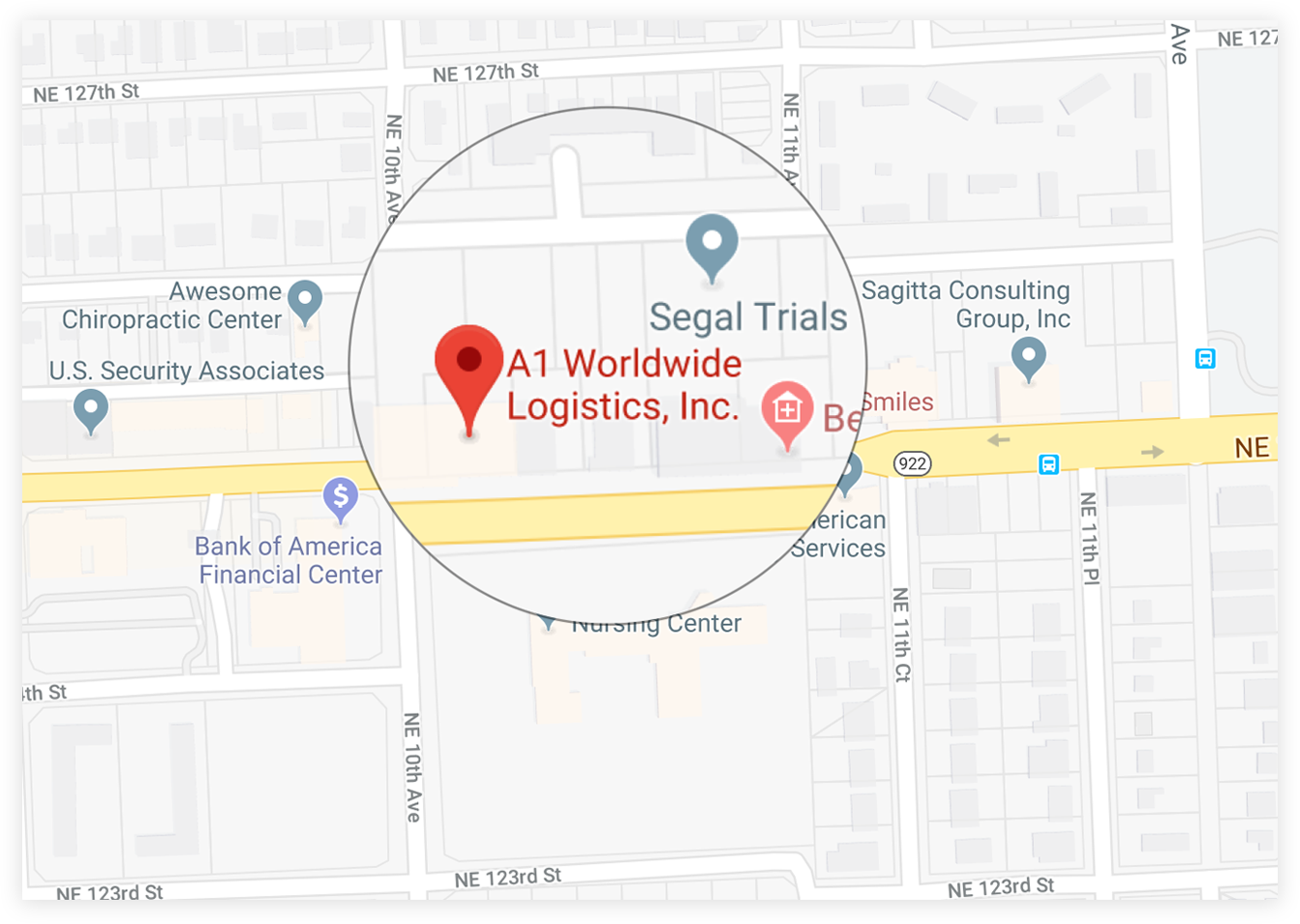
 1035 NE 125th St Suite #320, North Miami, FL 33161.
 a1worldwidelogistics.com
 (305) 821-8995
 Hours: 8AM - 5PM