
by A1 WorldWide Logistics | Nov 26, 2025 | Economic trends, Importing, Supply Chain
The international shipping industry could soon see the top US coffee importer shifting from Brazil. Responsible for nearly 30% of the unroasted coffee brought into the US each year, Brazil is the US’s largest supplier. However, in October, both Peru and Colombia overtook Brazil in the amount of coffee beans imported into the US. Other countries, like Mexico, and producers in Africa and Southeast Asia have also seen a significant growth in coffee imports. In May of 2025, the total amount imported from all countries exceeded 4600 TEUs. This article will explain the reason for the change in coffee imports and what it could mean for the shipper.
Why Is The Top US Coffee Importer Shifting?
A primary reason for the change in coffee-importing countries is President Trump’s tariffs. Since his return to office, Trump has been imposing levies on the US’s biggest trade partners. Some of the justifications include addressing unfair trade practices and strengthening the US economy. In July, Brazil’s tariff rate reached 50% compared to the baseline 10% tax on imports from Peru and Colombia. As a result, shippers have begun diversifying their supply chains by sourcing coffee from countries with lower tax rates. ImportGenius CEO Michael Kanko noted, “The broader lesson to importers has been that they need to diversify their supply chains, which helps keep prices stable and protect them against sudden changes to tariff policy.”
Another goal behind the tariffs was to bring production back to the US to strengthen the economy and create jobs. However, it had the opposite effect, leading to inflation. Insourcing supply chains for products like coffee to the US can also be complicated and costly. The levies on coffee beans imported into the US led to prices rising to nearly 41% above last year’s levels. Due to increasing costs for coffee and other food imports, President Trump recently cut tariffs on 200+ items. On November 15, Trump signed an executive order that removed previous levies on goods like coffee and other foods. As a result, global coffee prices dropped, leading to optimism among importers and roasters.
How Is The Shift Affecting Shippers?
Despite the cost pressures easing and coffee prices lowering, it may be a while before there is a significant change. With the recent tariff spikes and cuts, there is still uncertainty when importing coffee. Other factors, including weather, cost of living, and harvest yields, could directly impact supply chains. Smaller companies may also struggle to fully recover from the high import costs over the last few months. With supply chains still volatile, shippers should continue to diversify their supply chains. Diversifying can include importing from countries other than Brazil, like Peru or Colombia, and even bringing production back to the US.
Due to its popularity, exporting and importing coffee into the US may be an excellent opportunity for shippers. Despite this, there are various parts of the supply chain process you should be aware of when you start. When shipping goods like coffee, it can be beneficial to talk to a freight forwarder beforehand. Forwarders are companies or individuals that coordinate freight movement on behalf of the shipper. They do this by providing services like cargo transport, domestic shipping, customs clearance, warehousing, and more. A1 Worldwide Logistics has forwarding and other services to ensure your shipment’s success. Speak to our forwarders at info@a1wwl.com or 305-425-9456 to begin moving your shipment anywhere internationally.
by A1 WorldWide Logistics | Nov 12, 2025 | Air Freight, Economic trends, Importing
With the holiday season rapidly approaching, shippers could soon see the government shutdown impacting air imports. Since October 1, the US has been in a government shutdown that has currently reached 41 days. The shutdown occurred after Congress failed to pass the required appropriations bill for funding government operations. In particular, Senate Republicans blocked Democratic proposals for extending healthcare, while Democrats have rejected the GOP’s funding plan. Along with impacting sectors like the CBP (Customs and Border Protection), international shipping has also felt the shutdown. In addition to affecting various modes of transportation, such as sea and land, the shutdown has directly impacted air imports.
How Is The Government Shutdown Impacting Air Imports?
Soon after the government shutdown began, federal workers were furloughed and sent home without pay. Key partner agencies, including the CBP (Customs and Border Protection), EPA (Environmental Protection Agency), and the FDA (Food and Drug Administration), employed some of the workers. As a result of the agencies operating with limited staff, operations are also restricted. Inspections and certifications for imports arriving by air could be delayed, resulting in longer customs clearance times. On Friday, October 7, the FAA (Federal Aviation Administration) reduced travel capacity by 10% at 40 of the busiest airports. The reason was due to controller staffing shortages, which may soon intensify with the approaching holiday season.
A significant effect that the government shutdown could soon have on air cargo imports is longer lead times. This can be especially problematic if the goods are perishables or cargo that must be transported on an expedited schedule. The overall cost could also increase due to delays and potential rerouting to other airports. Demurrage costs resulting from an excessive backlog can further increase expenditures, which are spread across various supply chain components. In addition to impacting the shipper and carrier, the customer may also directly feel the effects of higher prices. In addition to having a ripple effect on supply chains, the shutdown could also strain economic growth.
How Can Shippers Protect Their Shipments?
Since the holiday season is a time of pressure for shippers, the government shutdown can add greater stress. Due to this, importers should take greater steps to protect their cargo during this time. To start, it is essential to book air cargo space in advance to avoid delays. Holidays like Christmas tend to lead to increased imports over usual, resulting in limited capacity. For less urgent freight, using alternative conveyance methods, such as ocean and land, can be beneficial. For potential delays, shippers can build buffers and plan for various scenarios, factoring them into their supply chain timelines. It is also essential that all documentation is correct to prevent delays during the customs clearance process.
Transporting freight during a government shutdown can seem daunting, but it should not stop the flow of goods. The shipper should, however, take the proper steps to prevent disruptions to their supply chains. Another way to protect your shipment during this time is by reaching out to a freight forwarder. Forwarders are individuals or companies that organize cargo movement on behalf of the shipper. They achieve this by offering a range of services, including international and domestic shipping, customs clearance, warehousing, document preparation, and additional support. A1 Worldwide Logistics offers forwarders and other solutions to ensure the success of your shipment. Speak to our forwarders at info@a1wwl.com or 305-425-9752 to begin moving goods into and out of the US.

by A1 WorldWide Logistics | Oct 30, 2025 | Economic trends, Importing, Tariffs
President Trump is raising Canada tariffs by 10% after an announcement on October 25. In a social media post, Trump said he would increase duties on Canadian imports due to a TV ad. The president will add the 10% to previously imposed tariffs, raising the total amount to 45% for certain goods. Canadian imports have been subjected to a 35% tax since August 1. The tariff increase will not affect importations that fall under the USMCA (United States-Mexico-Canada Agreement). Trump has not yet specified the scope of the latest raise and what goods will be affected. This article will explain Trump’s goal behind the tariff increase and its impact on shippers.
Why Trump Is Raising Canada Tariffs By 10%?
The 10% rise came after Canada aired a TV ad featuring former president Ronald Regan criticizing tariffs. Trump immediately responded by calling the advertisement a fraud and stating, “All trade negotiations with Canada are hereby terminated”. The Ronald Regan Presidential Foundation also issued a statement protesting the unauthorized use of selective audio and video. Dominic LeBlanc, Canada’s minister responsible for US-Canada trade, responded to the levies, noting, “Progress is best achieved through direct engagement with the U.S. administration”. The 10% tariff could be part of several levies that Trump has placed on Canada since returning to office. On February 1, the president imposed a 25% tax on most US imports.
On August 1, Trump raised the tariff from 25% to 35%, citing Canada’s “continued inaction and retaliation.” The levies are intended to reduce trade imbalances and address unfair trade practices. Trump has tried to “level the field” between the US and its largest trading partners. The president is also using the tariffs to address Canada’s failure to stop the flow of fentanyl and illegal US immigration. Trump is also attempting to boost the US economy by bringing manufacturing and business back to the US. While the goal is to create jobs, economists believe this could have the opposite effect and create inflation.
How Will The Tariff Raise Impact Shippers?
Canada is a significant trade partner for the US, so the tariff increase will significantly impact shippers. If Trump does impose the 10% levy, importers could see an increase in costs for bringing goods into the US. In particular, industries relying on raw materials from Canada, like automotive and construction, will feel the higher costs. The cost could fall in various parts of a supply chain, including the shipper, international and domestic carriers, customer, etc. There is also a fear that Canada may impose retaliatory levies, raising expenditures. Shippers may look for countries to import from other than Canada or bring production back to the US.
Disruptions like tariffs can affect transportation when importing or exporting from the US. Although the disturbances should not stop cargo movement, the shipper should take the correct steps to protect their shipment. An ideal way to prepare when starting is by contacting a freight forwarder. Forwarders are third-party companies that act as intermediaries between the shipper and the carrier transporting the goods. They do this by offering solutions like providing paperwork, coordinating cargo movement, negotiating rates, warehousing, and more. Forwarders also have consulting services to help shippers navigate disruptions that can affect their shipments’ transport. Speak to our forwarders at info@a1wwl.com or 305-425-9752 to begin moving your goods anywhere internationally.

by A1 WorldWide Logistics | Sep 17, 2025 | Economic trends, Importing, Tariffs
International shipping may soon feel the impact of the US-Japan trade deal starting on September 16. On July 22, the Trump Administration reached an agreement with Japan establishing a tariff framework between the countries. The deal includes a 15% baseline on most Japanese imports into the US, including automobiles and auto parts. When Trump returned to the presidency, he hiked the 2.5% duty on Japanese automobiles to 27.5%. The US will equally reduce the rates of automobile imports coming from the EU (European Union) and South Korea.
Some of the other key details from the trade deal include:
- Japanese imports will no longer have additional ad-valorem tariffs and reciprocal duties on top of the 15%.
- The tariff’s adjustments are retroactive to August 7. Importers that come into the US from Japan after that date are eligible for refunds under the deal.
- Japan will invest $550 billion in US projects picked by the US government. These will focus on national and economic sectors, including critical minerals, semiconductors, energy, defense, etc.
- Under the framework, Japan will purchase $8 billion yearly in agricultural goods and increase energy imports to nearly $7 billion yearly. Rice imports will also increase by 75%.
- Civil aircraft and parts imports from Japan will no longer face additional US tariffs.
The US will have the right to increase the baseline tariff amount by more than 15% if Japan fails to meet its commitments.
Why Is Trump Imposing A Trade Deal With Japan?
President Trump has cited various reasons for imposing trade deals with other countries. A primary goal is to “level the field” by reducing the trade deficit between the US’s largest trade partners. Imposing a 15% baseline tariff and securing billions in investments is a way for the US to correct imbalances. The deal could boost the US economy, with Japan buying more US-manufactured products like energy and farm goods. Another goal is for the US to lessen its dependence on China. The two countries have been in a tariff war, and “decoupling” from China will give the US international trade leverage.
What Can The US-Japan Trade Deal Starting Mean For Your Shipment?
Japan is reportedly the US’s fifth most significant trading partner, generating $227.34 billion in two-way trade in 2024. A significant impact may be that the cost of importing cars and other goods from Japan will decrease. In turn, the cost of purchasing an automobile and other products could decrease. A lower import cost may also result in a higher volume of cargo coming from Japan. A side effect would be increased domestic shipping when picking up the shipments from the ports. The deal’s framework could also result in similar deals between the US and other countries.
With the US and Japan reaching a trade deal, it can be a beneficial time for transporting cargo. Despite the opportunity, there are various things that a shipper should be aware of when starting. Failure to prepare can lead to monetary loss, delays, and other disruptions. An ideal way to prepare is to talk to a freight forwarder. A forwarder is a person or company that acts as a middleman between the shipper and the carrier. Along with coordinating freight movement on behalf of the shipper, they provide numerous services for their supply chains. Please speak to us at info@a1wwl.com or 305-425-9752 to talk to a forwarder about exporting and importing into the US.
by A1 WorldWide Logistics | Sep 4, 2025 | Economic trends, Importing, Tariffs
An appeals court ruled Trump’s tariffs illegal after a 7-4 decision on August 29. In the ruling, the Court of Appeals sided with the Court of International Trade. Along with reciprocal tariffs, this decision could also affect separate levies that Trump placed on Canada, Mexico, and China imports. Despite the ruling, the appeals court will delay issuing a mandate against Trump’s levies until October 14. The purpose is to allow the Trump administration time to appeal to the Supreme Court. If the Supreme Court grants certiorari, the court will make a final ruling by June 2026. This article will explain the reason behind the ruling and what it could mean for international shipping.
Why the Appeals Court Ruled Trump’s Tariffs Illegal
The primary reason behind the ruling is Trump’s unlawful use of the IEEPA (International Emergency Economic Powers Act). Under the IEEPA, the president can allow or block specific international transactions during a declared emergency. However, the president cannot impose broad tariffs without definite congressional approval. In a statement, the justices noted, “It seems unlikely that Congress intended, in enacting IEEPA, to depart from its past practice and grant the President unlimited authority to impose tariffs.” The court did note that the tariffs Trump imposed under statutes are still valid. Examples include levies on steel and aluminum (Section 232) and levies targeting unfair trade practices (Section 201).
In the 7-4 decision, the judges against the majority argued that the president’s right to “regulate importation” should include tariffs. They also argued that the ruling reduces presidential emergency powers. Along with the decision, the appeals court pushed the Court of International Trade to revisit certain parts of the verdict based on the Supreme Court’s decision. Some aspects include whether an injunction against Trump’s levies will affect the tariff payers or the plaintiffs involved. The Trump administration responded to the ruling by stating it would seek an immediate hearing from the Supreme Court. If the Supreme Court maintains the verdict, the government may have to refund importers billions of dollars.
How Could Your Shipment Be Impacted From The Decision?
The ruling could significantly impact shippers, given the volume of cargo imported into the US after Trump started imposing tariffs. Along with reciprocal tariffs, this could include country-specific levies placed on countries like China to curb the inflow of fentanyl. If the Court of Appeal’s ruling stands, importers may be entitled to refunds totaling hundreds of billions. Legal experts expect either class-action lawsuits or trade associations to lead repayment efforts. Shippers could also see a surge in import volumes if Trump’s reciprocal tariff ends permanently. Despite the decision, there is still short-term uncertainty as the case heads to the Supreme Court.
When shipping cargo internationally, different scenarios may arise that can impact your shipment’s success. Failure to prepare can lead to delays, monetary loss, and cargo loss. Along with being up-to-date with regulations like tariffs, another way to prepare before starting is by contacting a freight forwarder. Forwarders are intermediaries between the shipper and the carrier and coordinate freight movement globally. They do this by offering various services, including customs clearance, international and domestic transportation, warehousing consulting, and more. Forwards also guide the shippers on the best steps for ensuring a successful shipment. Reach A1 Worldwide Logistics at info@a1wwl.com or 305-425-9456 to speak to a forwarder about importing or exporting internationally.

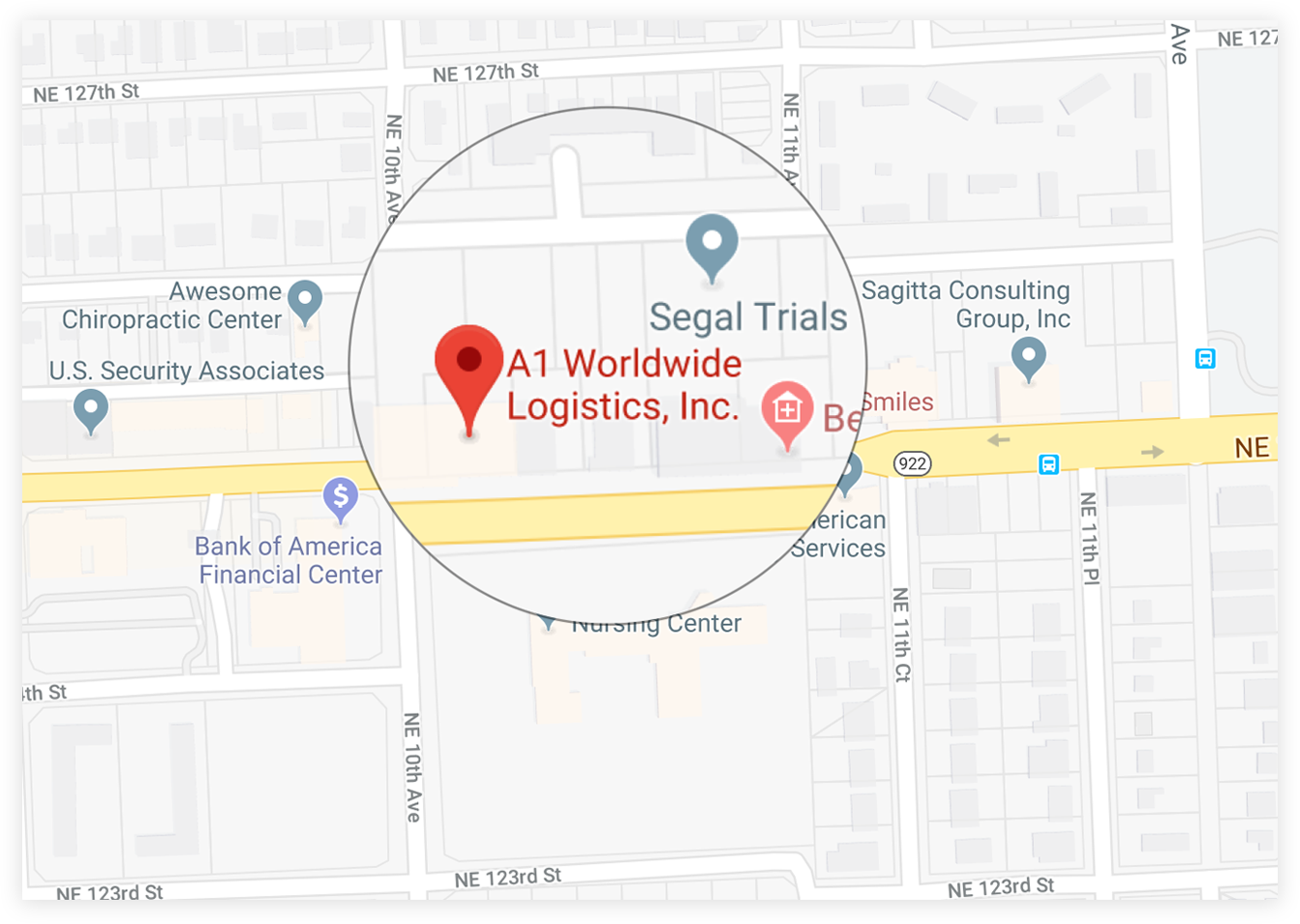
 1035 NE 125th St Suite #320, North Miami, FL 33161.
 a1worldwidelogistics.com
 (305) 821-8995
 Hours: 8AM - 5PM