
by A1 WorldWide Logistics | Apr 21, 2022 | Freight Forwarding, Shipping Logistics, Supply Chain, Technology, Transportation
The transportation industry has seen massive growth and development in freight movement over the last few decades. A recent topic that has become popular in the Transportation and Logistics industries is the usage of 3D printing. Advances in technology lead some to believe that 3D printing may help the industries grow. Others predict that 3D printing can have an opposite effect and interrupt freight movement. This was recently discussed in a virtual session at The Economic Club of New York. One of the topics brought up was the effect that 3D printing may have in the future.
Pros and Cons of 3D Printing
3D printing is a manufacturing process that converts digital data into a three-dimensional image. One of the main benefits of 3D printing is that it will streamline the supply chains of transporting products. The traditional supply chain process involves obtaining, manufacturing, and transporting goods to customers. 3D printing may allow companies to create goods in their location instead of importing the products elsewhere. Manufacturing goods in one’s facility can save money, time, and resources. 3D printing also allows for versatile, complex design due to its method of digital creation.
One of the main disadvantages of 3D printing is the effect that it could have on the freight forwarding/transportation industries. A freight forwarder is an intermediary between shippers and transport companies who coordinate the movement of goods internationally. With companies creating products in their facilities through 3D printing, the need for a freight forwarder becomes lessened. The way that many companies create products today is by outsourcing materials from different countries. Freight forwarders may coordinate the importing of those materials internationally.
What Effect will 3D printing have on the Transportation Industry?
The current supply chain model for manufacturing and moving freight involves many steps. Companies source cheap labor overseas, and then pay to get the goods transported. With 3D printing, a portion of the supply chain could be gone, although any statement suggesting that goods will be made in anyone’s basement are truly exaggerated. Perhaps, in many (many!) years from now, the international movement of goods may be replaced with the international movement of designs and information to create the goods.
3D printing may impact globalization because it is based in the countries’ permanent exchange of goods. With companies creating goods domestically, supply chains could become less dependent on other countries to be effective. A nationwide lockdown or a conflict between two countries may become less of a disruption to a supply chain.
A1 Worldwide Logistics
While 3D printing may impact the future of transportation, it may be a while before 3D printing becomes standard practice. Freight still has to be moved internationally. When moving freight, it is essential to have a freight forwarder that understands the world of international shipping. A1 Worldwide Logistics has experience working with freight transport methods such as ocean, air, and land. Contact us at 305-821-8995 or info@a1wwl.com for a quote to get your goods moving today. We also have customs brokers to arrange the customs clearance process of your imports.
by A1 WorldWide Logistics | Apr 12, 2022 | Freight Forwarding, Shipping Logistics, Supply Chain
Several districts in China have been on lockdown for the past few weeks due to Covid, and the impact is now being felt on global supply chains. As outbreaks began to surge in Shanghai, the lockdown has lengthened until further notice. This was after an announcement of 16766 positive coronavirus cases on April 5. Even before the lockdowns returned to China in March, many supply chains worldwide struggled to keep up with the overwhelming demand. With some of the world’s biggest ports being shut down, global supply chains may feel more significant stress.
In the past few years, the demand for shipping internationally has risen significantly. After the coronavirus made its way worldwide, ordering goods online instead of driving to a store became more common. When goods are bought online, they tend to be transported from different countries like China. While the number of goods shipped rose, the coronavirus was still present. Limited workers, lockdowns, and other effects of the coronavirus started to show in the supply chains of different companies globally.
How does this impact supply chains
One of the leading exports out of ports like Yantian and Shanghai located in China are electronic products. Manufacturers that create electronic products for large companies like Apple, Tesla, Samsung, and others are being forced to suspend operations. Foxconn, an electronics supplier to Apple, has recently announced that it will pause operations in Shanghai. Since Foxconn is one of Apple’s biggest suppliers, this may lead to product shortages in the next few weeks. The supplier outages will affect the supply chains of Apple and dozens of other electronics companies as well.
Companies have decided to move their manufacturing facilities away from lockdown zones to keep supply chains going during the current lockdown. However, the goods still have to be transported to the ports by truck. Not only are several highways shut down in the lockdown zones, but truck drivers also have to test negative for Covid a certain period before bringing containers to the ports.
Not only will the lockdowns affect production, but the shipping of the products as well. Because many ports in China are shut down, shipping orders can become delayed. China has some of the most prominent ports in the shipping world and many orders may be backlogged. This could mean that ports in Europe and the United States will increase inbounding cargo in the near future, further growing congestion in those ports. The ports in the Los Angeles area saw their fair share of issues last year. From equipment shortage to the backlog of vessels stuck at the ports, the lockdowns in China may prolong the challenges.
A1 Worldwide Logistics
Although different supply chains may be strained at the moment, the world of shipping is continuing. Freight is still being moved internationally. However, much greater precautions than usual may have to be taken when transporting goods. You must be informed of what to expect. If you need assistance with any part of your supply chain, contact A1 Worldwide Logistics at 305-821-8995. Our services include international shipping, customs clearance, trucking, warehousing, etc.
by Rob Simmons | Sep 21, 2021 | Freight Forwarding, Supply Chain, Transportation
CMA CGM, one of the biggest ocean freight movers recently announced its plan to freeze its rising spot rates through February 1st, 2022. This may come as a surprise to the freight shipping industry with the cost to ship containers recently reaching unprecedented heights globally. Drewry’s World Container Index recently reported that its spot rates have increased for 21 straight weeks. The demand to move freight internationally has exceeded the available capacity to do so. With the holiday season quickly approaching, the upcoming months may see rates soar even further.
The Effect may have on the CMA CGM and the Shipper
Rising spot rates for moving freight have led to record levels of profit for carriers. This may be the reason why it is such a big surprise to many that CMA CGM has halted its rising spot rates. Some shippers believe that the reasoning behind putting a cap on the spot rates is due to the little space that the ocean carrier has to move freight. There is a belief that CMA CGM Is almost fully booked for the next few months. This also may mean that the company may be trying to reserve vessel space for long-term contract customers.
It is important to distinguish the difference between contract and spot customers. Contractual customers tend larger to be companies that have stronger preexisting relationships with the carriers. Spot customers may be smaller customers that look for the best deals to move freight. CMA CGM capping its spot rates may give contractual customers more leverage because of their established long-term relationship with the carrier. With the limited capacity in the current market, the carrier has to prioritize who gets vessel space.
With the current freight shipping market already strained, CMA CGM may be seeking to focus on their current customer relationships. The company has also previously released a statement that in the past 15 months, the company has added over 780,000 TEUs. This means that CMA CGM’s capacity to move freight has increased over 10% since the start of 2020.
Can This Be a Positive Sign for the Freight Shipping Market
Many different factors have resulted in rising spot rates in the freight shipping market over the past year. From lack of capacity on carriers to congestion in many ports globally, each situation has worked together to have an unfavorable impact on the shipping industry. The COVID-19 pandemic also limited the number of available port workers and created a backlog of incoming freight. It was reported in late August that the total number of container-carrying vessels anchored at the port of Los Angeles was close to 5 times the amount pre-COVID.
While there are those that believe that the pausing of the rising freight rates could be due to minimal space, others may see it as a positive sign of things to come. CMA CGM may be predicting a return to normalcy with the freight shipping market returning to pre-COVID levels. Only time will tell if other carriers follow the trend and stop or even lower their rising spot freight rates.
A1 Worldwide Logistics
Planning on moving freight globally and need help with the logistics behind doing so? We at A1 Worldwide Logistics provide many services to make sure that your freight reaches its intended destination swiftly and securely. Contact us at 305-821-8995 or email us at info@a1wwl.com for a quote to ship your goods internationally. We also have customs brokers to assist in making sure that your shipment meets federal obligations.
by Rob Simmons | Sep 8, 2021 | Customs Clearance, Freight Forwarding, Import and Export Experts, Shipping Logistics, Transportation
The current international freight shipping market is seeing a sizeable distribution of spot prices. When shipping containers, a spot price is a cost for moving freight shipments to a certain destination. Earlier this year there was a report that spot prices were high compared to last year, but they still are growing in the present moment. With spot rates growing for certain freight shippers, other shippers are finding a decrease in spot rates, and this can create an unbalanced spread.
The reason that the spread is so wide may be attributed to the current market. Situations such as port congestion and a scarcity of containers created a high demand in the market. The demand in trucking and warehousing has also risen compared to the capacity. Plus, with the holiday season quickly approaching, the demand may increase. This has led to a high push for shippers to get space on a freight vessel, rising the spot rates.
Why are Some of the larger Customers Getting the Leverage?
The trend in the spot rates may be more favorable for larger shippers than mom-and-pop shippers. The larger or more attractive shippers tend to pay fewer spot rates than smaller importers. This is because compared to a smaller shipper, larger freight shippers may offer more benefits for the carrier. Larger freight volumes from big shippers can be attractive to the carriers. Larger shippers may also provide the carrier with lengthy contracts and tend to have an already established relation to the carrier.
Xeneta, a shipping index and a benchmark for comparing ocean freight rates recently did an analysis of the market rates for the China-Los Angeles ports. They reported the short-term market rates had a high and low difference of around $1200 a few months ago. At the same time last year, the China-Los Angeles ports had a high and low difference of only $150. If this trend continues, there is a fear that smaller shippers may not be able to compete in the freight shipping market.
The Dependance on Location
One of the main contributors to the spot prices is where the freight leaves from and the final destination of the shipment. The trans-Pacific is the region in the Pacific Ocean where several countries cross over to do trade. Because of the vast number of countries doing trade in the trans-Pacific market, different countries may have their own market. This also can mean that they have their own spot prices.
For example, shipping from China may be cheaper than shipping from Japan. This is because China has some of the largest container ports in the world and may be able to move more freight in a certain time period. This high volume of freight that is able to be moved can lead to higher profits for carriers.
The destination of the freight being moved may also affect the spot price. The port of Los Angeles has experienced an immense amount of congestion in the past year. Even at the present moment, there are freight container vessels waiting to be unloaded. If a shopper plans on moving their freight through this port, short-term rates may be high due to waiting times. Now compare the situation to the Port of Hueneme a few miles away. With less congestion and traffic, the shipping rates per container may be less.
A1 Worldwide Logistics
Knowledge of the international freight shipping market is important when you plan on moving freight. Particularly in the current market, it is critical that you are getting a fair and understandable quote for your shipments. Contact us at 305-821-8995 or at info@a1wwl.com to get a quote on your shipment. Our freight forwarders look for the best quote prices for moving your shipments domestically and globally.

by Rob Simmons | Aug 12, 2021 | Freight Forwarding, Shipping Logistics, Supply Chain, Transportation
Forwarders like Senator International and DB Schenker have been looking at alternatives for their freight which is steering them towards Rockford. Rockford airport may be seen as a life vest for the supply chains of many.
Why is O’Hare airport becoming so congested?
The main reason why the airport has become over clogged is because of the overwhelming amount of freight volume. In 2020, the coronavirus pandemic created a surge in e-commerce and that surge was felt in airports worldwide. There was also a rise in ocean imports as well, which clogged seaports and led to companies switching to airfreight to move their cargo. This increased the amount of cargo at the airport. In O’Hare’s case, the freight volume rose to over 14%. It grew at such a rate that an already busy airport could not keep up. The amount of freight that is backed up at the airport is so extensive that forwarders started renting nearby warehouses to accommodate it.
Another cause of the congestion related to the coronavirus pandemic is the replacement of airplanes that are used fully for air freight with passenger airplanes. This is because passenger airplanes have less space for freight and combined with everything else may create a bottleneck effect. The shortage of workers that the airport has been facing in the past months has also contributed to the congestion. When there are not enough workers to handle the loading and unloading of the incoming cargo, it can create a backlog over time.
Rockford Airport
Located roughly an hour away from O’Hare airport is the less crowded Rockford Airport. The congestion of O’Hare has made this airport an ideal choice for freight forwarders to store their freight. Forwarders such as Senator International have already signed leases to have a large amount of space in Rockford’s new warehouse that they recently started building. This airport is currently being called one of the quickest growing airports in the world in terms of freight tons.
One of the main benefits that forwarders had in switching to Rockford Airport is the customized service. Since Rockford is not as large and crowded as O’Haire, planes carrying air cargo are able to have valued importance. When the freight plane arrives at Rockford it may only take a few minutes for it to find parking. Compare this to O’Hare where there may not even be parking space because of the traffic. Also, truckers may wait for hours to pick up a freight load at O’Hare. Since Rockford has less traffic the time it takes the freight can be loaded onto the trucks from the aircraft can be streamlined massively.
A1 Worldwide Logistics
Importing and exporting air freight during these distinctive times may seem intimidating and could be challenging. If you have any questions or want to find out more information, call us at 305-821-8995. We provide transparency and assistance throughout the whole process so you can feel confident that your cargo is moved thoroughly.

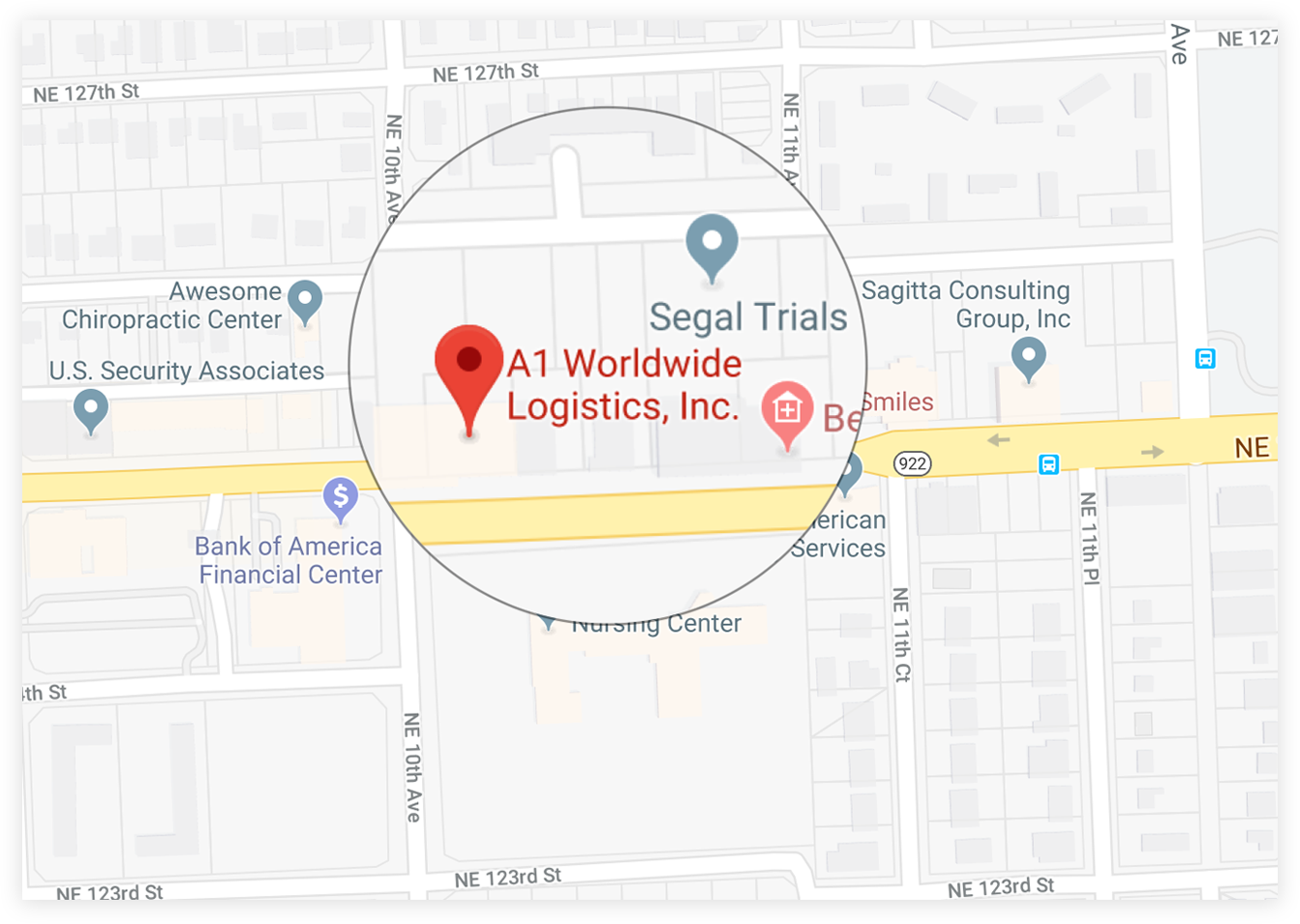
 1035 NE 125th St Suite #320, North Miami, FL 33161.
 a1worldwidelogistics.com
 (305) 821-8995
 Hours: 8AM - 5PM