
by A1 WorldWide Logistics | May 29, 2025 | Economic trends, Importing, Tariffs
A ruling by the US Court of International Trade (CIT) has resulted in the Federal court blocking Trump’s tariffs. Termed “Liberation Day”, the president signed an executive order on April 2 introducing a 10% tax for most trading partners. On May 28, a three-judge panel from the CIT determined that Trump’s tariffs were unlawful. In particular, the court noted that the administration had exceeded its authority under the International Emergency Economic Powers Act (IEEPA). The court ruling was also against the higher tariffs Trump proposed for imports from Canada, China, and Mexico. With the tariffs potentially having a significant impact on trade, the blocking is a landmark decision for international shipping.
Why Is the US Federal Court Blocking Trump’s Tariffs?
The blocking of Trump’s tariffs comes after various businesses and states filed lawsuits against the levies. Some of the states included Delaware, Illinois, Maine, Oregon, Arizona, Colorado, New Mexico, New York, and Vermont. The argument was that Trump’s enforcement overstepped presidential powers, and CIT eventually sided with the plaintiffs, blocking the tariffs. The court released a statement stating, “The Worldwide and Retaliatory Tariff Orders exceed any authority granted to the President by IEEPA to regulate importation by using tariffs.” CIT further noted that the president’s reasons for imposing taxes do not represent “unusual and extraordinary threats.” The IEEPA is a US law that grants the President authority to regulate economic transactions when declaring a national emergency.
President Trump’s goal behind enforcing reciprocal tariffs is to address trade imbalances with the US’s trading partners. Trump has argued that trading partners, like China and the European Union, have imposed significantly higher tariffs on US imports. The levies are a tool to pressure countries into making better trade deals and reducing trading barriers. There is also a goal to bring manufacturing back to the US to create jobs and stimulate the economy. While it could boost domestic shipping and production, analysts believe it may harm the economy by creating inflation. There was also a fear that countries would impose their retaliatory tariffs.
What Was The Response To The Decision?
Immediately after the court blocked the tariffs, the Trump administration announced plans to appeal the ruling. The next step could be a potential escalation of the case to the Supreme Court. While there hasn’t been a direct response from Trump, administration officials strongly opposed the appeal. Stephen Miller, White House Deputy Chief of Staff, released a statement stating, “The judicial coup is out of control.” White House spokesperson Kush Desai said, “It is not for unelected judges to decide how to properly address a national emergency.” The ruling could soon disrupt US ports due to the uncertainty for importers that were navigating the active tariffs.
Despite the tariffs being on pause, A shipper should be aware of what to expect when transporting cargo. Lacking a proper understanding when starting can lead to delays, financial loss, and cargo loss. Shippers must stay informed about news that could impact their shipments. Another way to prepare when importing into the US is by contacting a Licensed Customs Broker. Customs brokers are individuals or firms that assist importers in meeting federal requirements for customs clearance. They accomplish this by offering services such as providing documentation, calculating tariffs, classifying cargo, ensuring compliance, and more. Contact A1 Worldwide Logistics at info@a1wwl.com to speak with a broker about the success of your shipment.
by A1 WorldWide Logistics | May 8, 2025 | Economic trends, Importing, Supply Chain
U.S. and China talks are starting after weeks of tariff escalation between the two Countries. Chinese and U.S. Representatives will meet in Switzerland from May 9 to May 12. Treasury Secretary Scott Bessent and U.S. Trade Representative Jamieson Greer are meeting to explore a potential reduction of tariffs. The decrease could include potentially setting rates between 40% and 60%, and tax exceptions for critical sectors. A trade war resulted in tariff threats reaching over 100% for both countries and could have significant consequences. Scott Bessent stated, “The current tariff war isn’t sustainable, especially on the Chinese side.” The meeting with Chinese and U.S. officials will focus on de-escalation rather than deciding on a trade deal.
How Did The Trade War Escalate?
In the last few months, Trump has released, paused, and increased tariffs on imports into the U.S. While the Trump administration put levies on most U.S. importers, they hit China the hardest. China responded by announcing its levies on U.S. imports, and a back-and-forth led to a trade war. Despite the tariffs’ negative impact on both countries, Chinese officials said the government will not back down. The meeting will de-escalate tensions before tariffs from two of the world’s biggest traders negatively impact international shipping. Trade experts believe that negotiations between the countries could take months.
President Trump has imposed tariffs on the most prominent importers into the U.S. for various reasons, including reducing trade imbalances. He believes the tariffs will “level the field” between the U.S. and other trading partners like China, Canada, and Mexico. A goal is to encourage domestic manufacturing by raising import costs. This could stimulate the economy by creating jobs from bringing businesses back to the U.S. Economists believe it will have an opposite effect, increasing costs and leading to a potential recession. Trump is also enforcing tariffs to stop immigration and the inflow of drugs. China is responsible for the majority of fentanyl that comes into the U.S.
What Can Shippers Expect With U.S. And China Talks Starting?
Along with being one of the largest shippers globally, China is also the top trading partner of the U.S. Talks could potentially lessen the impact that tariffs will have on shippers transporting goods internally. Although the talks may lower import tariffs, the costs to bring cargo to the U.S. could significantly rise. The cost increase could be felt in different parts of an importer’s supply chain and fall on their customers. Shippers may begin looking at moving production to nearby countries like Japan and Taiwan to avoid the price increase. Trucking services like drayage could also be more costly as container rates rise.
When shipping cargo internationally, the shipper must know anything that can disrupt their shipment. Shippers can do this by being current with any news affecting their cargo and planning beforehand. They can also be ready by speaking to a freight forwarder. Forwarders are intermediaries between the shipper and the carrier that coordinate the movement of goods internationally. They offer solutions like document preparation, freight transport using various conveyances, customs clearance, warehousing, etc. A1 Worldwide Logistics has forwarders that ensure your supply chain’s success regardless of the situation. Speak to our forwarders at info@a1wwl.com or 305-440-5156 regarding finding the best action to protect your shipment.
by A1 WorldWide Logistics | Apr 24, 2025 | Economic trends, Importing, Shipping Logistics
An ongoing trade war remains, with the U.S. imposing fees on Chinese ships docked at U.S. ports. On April 17, the Trump administration announced a long-term multi-phase plan to increase charges on China-built vessels. The USTR (United States Trade Representative) gave a guideline that will start in 180 days from April 17. Afterward, the charge will be $50 per net ton per U.S. voyage. The charge will increase incrementally to five times yearly and be $140 by April 17, 2028. More specifically, Chinese-built carriers will see:
- A fee of $50% per net ton on October 14, 2025.
- A fee of $80% per net ton on April 17, 2026.
- A fee of $110% per net ton on April 17, 2027.
- A fee of $140% per net ton on April 17, 2028.
Why Is the U.S. Imposing Fees on Chinese Ships?
The proposed fees aim to address China’s dominance in global shipbuilding and boost the U.S. maritime industry. While China builds approximately 1,700 commercial ships yearly, the U.S. only builds around five. USTR Ambassador Jamieson Greer noted, “The Trump administration’s actions will begin to reverse Chinese dominance, address threats to the U.S. supply chain, and send a demand signal for U.S.-built ships.” The increase in U.S. vessel building is part of a bigger goal to bring manufacturing back domestically. Similarly, Trump recently released various tariffs to bring production to the U.S. and boost the economy. Similar to the tariffs, the Chinese ship fees have had a backlash from major players in the international shipping industry.
U.S. shippers and importers expressed concerns that the Chinese ship fees would have devastating consequences. Vice president of the AAFA (American Apparel and Footwear Association), Nate Herman, stated, “These measures are driving up shipping costs, shrinking GDP, and reducing U.S. exports.” Initially, the proposal was up to $1.5 million per port call for China-built vessels; however, industry backlash resulted in adjustments. The USTR will phase in these changes over time and consider concerns from shippers and port operators. Specific China-built ships, including ones carrying U.S. government cargo, will be exempted from the fees.
What Can This Mean For International Shipping?
The fees will significantly impact international shipping due to the goods imported into the U.S. from China-built carriers. In 2024, the U.S. imported approximately 13.4% of all imports from China, totaling $438.9 billion. As previously mentioned, shippers could soon see the U.S. import cost rise from the vessel fees. The cost of importing goods into the U.S. has risen due to the tariffs enforced by the Trump administration. Shippers may begin rerouting their supply chains and importing from less costly countries like Japan and Taiwan. Players in the domestic shipping industry believe these fees could disrupt freight markets and lead to operational challenges for trucking.
When shipping cargo internationally, different scenarios can arise that can affect your shipment’s success. Situations like cost increases and tariffs may impact several parts of a supply chain and cause other problems. An ideal way for a shipper to protect their cargo is by speaking to a 3PL (third-party logistics) provider. 3PLs are service providers that offer various services like freight forwarding, customs clearance, domestic shipping, warehousing, and more. They also stay with you throughout the transportation journey until the goods reach their destination. Reach A1 Worldwide Logistics at info@a1wwl.com or 305-425-9513 to learn about our numerous 3PL solutions for your supply chain.
by A1 WorldWide Logistics | Feb 27, 2025 | Economic trends, Importing, Shipping Logistics
After a postponement in January, President Trump made an announcement regarding the Canada and Mexico tariffs starting next month. On February 24th, Trump said the tariffs “will go forward” and begin on March 4th. Most imports from Canada and Mexico into the U.S. will see a 25% tax hike. Energy product imports from Canada will see a reduced 10% rate. Initially, the tariffs were going to begin in February. However, agreements to enhance border security postponed the enforcement date. Imports from China have already felt a 10% tariff hike. With Canada and Mexico being the most significant trade partners of the U.S., the tariffs will directly impact international shipping.
Why Is Trump Imposing Tariffs?
The goal behind the tariffs is to address illegal immigration and drug importation into the U.S. Trump noted, “Thousands of people are pouring through Mexico and Canada, bringing crime and drugs at levels never seen before.” The majority of illegal fentanyl imports to the U.S. also come from China. Illegal immigration from Mexico was initially the reason for the postponement, to strengthen borders. Another purpose behind the tariffs is to bring manufacturing and business back to the U.S. As companies begin operating in the U.S., they believe it will stimulate the economy and create jobs. Importers and companies have a separate belief that this will hurt the economy and cause inflation.
When President Trump announced the tariffs, Canada and Mexico strongly opposed the enforcement. While the U.S. agreed to delay the tariffs, there are plans for retaliatory measures if the hikes occur. Mexico may enforce possible duties on produce, cheese, aluminum, and steel from 5% to 20%. Canada Prime Minister Justin Trudeau announced potential tariffs of 25% on up to $115 billion in U.S. imports. Trudeau noted, “We didn’t ask for this, but we will not back down.” Despite a more recent announcement by Trump regarding a longer extension to April, the White House announced that the tariffs will start next week. Trump also recently imposed a 25% tariff on steel and aluminum imports and plans to enforce reciprocal tariffs soon.
What Can Shippers Expect With Canada and Mexico Tariff Starting?
China, Mexico, and Canada are the U.S.’s biggest trading partners responsible for most imports. The 25% tariffs on the countries will significantly affect countless supply chains by raising shipping costs and leading to disruptions. Another fear is that the hikes could lead to a trade war, with the countries adding tariff hikes. U.S. Importers may begin bringing goods from other countries to avoid higher prices. Tariff hikes could positively impact domestic shipping if manufacturing returns to the U.S. due to a greater trucking demand.
When shipping cargo internationally, a shipper should be ready for anything impacting their shipment’s success. Along with monetary loss, disruptions can lead to loss of cargo, which can negatively impact a business’s relationship with customers. When bringing goods into the U.S., speaking to a customs broker is an ideal way to prepare. Brokers are licensed professionals who facilitate the clearance of imports across the country’s borders. They do this by handling documents, calculating duties, filing entries, and more. In the U.S., brokers ensure compliance with the CBP (Customs and Border Protection). Contact A1 Worldwide Logistics at info@a1wwl.com or 305-425-4956 to talk to a broker regarding importing into the U.S.

by A1 WorldWide Logistics | Feb 13, 2025 | Customs Clearance, Importing, Shipping Logistics
Due to its popularity, importing chocolate into the U.S. can be an excellent opportunity for shippers. Especially during holidays like Valentine’s Day, Easter, and Halloween, chocolate imports usually increase due to the demand. While beneficial, the process can be complex for importers due to the steps involved. Failure to import correctly can result in delays, monetary loss, and cargo loss. Disruptions can especially be harmful if the shipper has customers expecting chocolate products. This article will explain the process for importing chocolate and what to expect when starting.
What To Know Before Importing Chocolate Into The U.S.
Before bringing chocolate into the U.S., a shipper must understand the rules and regulations for importation. Chocolate is regulated by the U.S. Food and Drug Administration (FDA) and must follow its requirements. The FDA separates the requirements by chocolate types, including bittersweet chocolate, buttermilk chocolate, chocolate liquor, milk chocolate, white chocolate, mixed dairy product chocolate, skim milk chocolate, and sweet chocolate. Each type has its formulation that shippers must follow, and failure to do so may result in customs holding the goods. The FDA requires that the importer files a Prior Notice before the shipment arrives in the U.S. A Prior Notice includes vital information like shipper, importer, manufacturer information, product details, carrier and arrival information, and more.
The deadline for filing a Prior Notice depends on the method of conveyance. Importers by air have a deadline of four hours before arrival, while importers by sea have eight hours before arrival. It is also essential to understand that chocolate imports have duties and taxes based on the type. A shipper can determine the tariff amount by finding the HTS (harmonized Tariff Schedule) code related to the cargo. When packaging, the labeling should contain the ingredients, nutritional facts, and allergen warnings, like if the chocolate contains peanuts.
The Journey Begins
Once ready to ship the chocolate internationally, shippers can use various conveyance methods, like air, sea, or land. Air can be ideal for speed, while sea is beneficial if you are shipping a large volume. The importer must keep the chocolate at a specific temperature during the journey to prevent melting or spoilage. Before the cargo enters the U.S., shippers must provide the necessary paperwork to the CBP (Customs and Border Protection). Some of the documentation required for customs clearance includes:
- Bill of Lading or Airway Bill
- Commercial Invoice
- Packing List
- Arrival Notice
Importations into the U.S. by sea must also have the importer submit an ISF (Import Security Filing). ISFs detail the content of the cargo, who is importing it, the seller/buyer address, and more. Failure to provide the appropriate documentation can lead to financial penalties and customs seizing the cargo. Once customs releases the shipment, you can contact a freight broker with carriers to move it to the final destination.
When bringing chocolate into the U.S., the shipper must be ready for anything that could affect the shipment. An ideal way to avoid disruptions when importing is by using the help of a customs broker. Brokers are licensed individuals or companies that coordinate the clearance of shipments through customs. They do this by providing paperwork, filing customs entries, paying duties, and more. Brokers also communicate with their clients through customs clearance, educating them. Contact A1 Worldwide Logistics at 305-435-9456 or info@a1wwl.com to begin importing chocolate to the U.S. Along with brokers, we also have freight forwarders, domestic transport, warehousing, and more services for ensuring your shipment’s success.

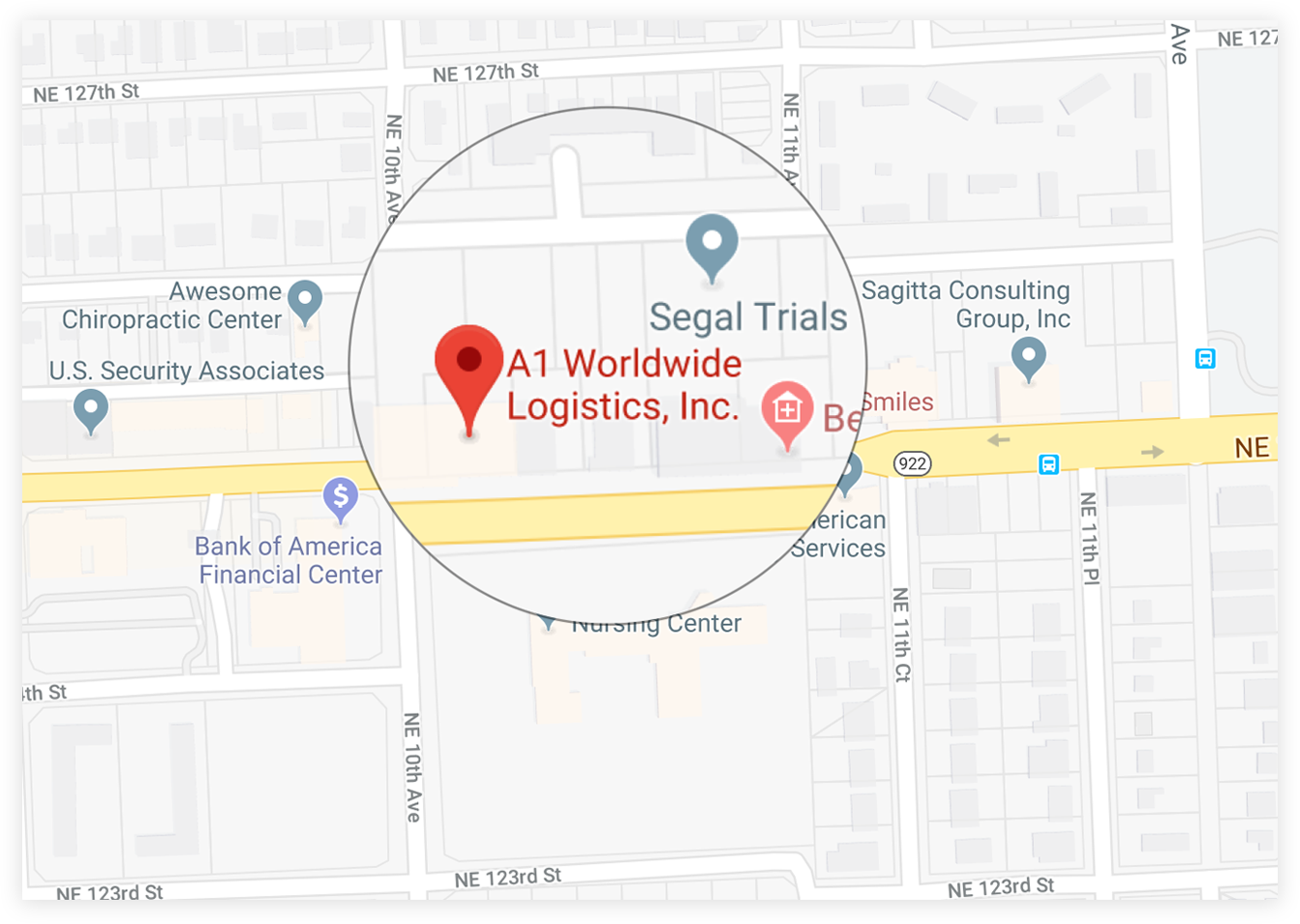
 1035 NE 125th St Suite #320, North Miami, FL 33161.
 a1worldwidelogistics.com
 (305) 821-8995
 Hours: 8AM - 5PM