by A1 WorldWide Logistics | Feb 26, 2026 | Economic trends, Importing, Tariffs
The international shipping industry could still feel the effects of levies, with President Trump imposing Section 122 tariffs. On February 20, the Supreme Court ruled against Trump’s tariffs imposed under the International Emergency Powers Act (IEEPA). Following the ruling, the president announced levies under Section 122 of the Trade Act of 1974. Section 122 allows for the temporary levies of up to 15% for a period of 150 days. Trump originally announced he would raise tariffs to 15%; however, they began at 10% on February 24. This article explains Trump’s goal in imposing Section 122 tariffs and what they could mean for the shipping industry.
Why Is Trump Imposing Section 122 Tariffs?
Along with the issuing of Section 122 tariffs as a response to the Supreme Court’s decision, President Trump’s goal is to address trade imbalances. Imposing a 10% tariff is Trump’s way of “level the field” to reduce trade deficits. The Trump Administration argued that rising imports and growing trade gaps justify the levies to boost the economy. Another reason for the Section 122 tariffs is to be used as temporary leverage in trade talks. Similar to the IEEPA levies, Trump is pressuring trading partners to revisit trading terms and create more favorable US deals. The tariffs are part of an economic strategy to bring manufacturing back to the US and boost the economy.
What Can The Shipping Industry Expect With Levies Continuing?
With levies continuing, shippers may expect certain US imports to remain more expensive. Certain levies, including a Section 232 tariff on imports such as steel, aluminum, and vehicles, also remain in effect. With the court ruling that IEEPA tariffs are unlawful, importers could be entitled to refunds. However, the Supreme Court has yet to provide any guidelines. It is essential to understand that specific goods imported during the transition window will be exempt from the 10% surcharge. More specifically, the exemption applies to goods loaded on a vessel or in transit before 12:01 on February 24. Goods that entered the US for consumption before February 28 will also be exempt from Section 122 tariffs.
With tariffs for importing still in place, shippers should take precautions when importing into the US. Failure to take precautions can result in delays, financial losses, and cargo loss. Disruptions can be especially unfavorable if the importer is a business with customers. In addition to staying current with tariffs and regulations, speaking with a 3PL (third-party logistics) provider is ideal before starting. 3PL’s are service providers that assist with various aspects of the supply chain. These can include customs clearance, freight forwarding, domestic shipping, warehousing, and more. 3PLs also provide consultation services to navigate issues such as tariffs. Contact A1 Worldwide Logistics at info@a1wwl.com or 305-425-9456 to begin moving your cargo to the final destination.
by A1 WorldWide Logistics | Feb 12, 2026 | Economic trends, Importing, Tariffs
A recent trade agreement will result in the US lowering Bangladesh tariffs to 19%. On February 9, American adviser Jamieson Greer met with Bangladesh advisor Sheikh Uddin to sign the Agreement on Reciprocal Trade. In addition to lowering the levy from 20% to 19%, certain textiles and apparel products will enter the US duty-free. These goods include US-sourced cotton and manufactured fibers. The agreement will also expand market access between the two countries, particularly for American industrial and agricultural products. This will cover goods ranging from machinery and communication equipment to dairy and beef products. With the ongoing international trade war over the last year, the news is a relief.
Why Is The US Lowering Bangladesh Tariffs and Finalizing A Trade Agreement?
The US and Bangladesh have reached a trade deal for various purposes, including strengthening bilateral trade ties. Lowering tariffs and offering duty-free importing for apparel made with US material will expand Bangladesh importers’ access to US markets. The access will increase trade flows between the two countries and strengthen economic ties. Another goal of the trade agreement is to support Bangladesh’s garment sector, which relies on exports. Lower and duty-free tariffs on imports like garments made from US cotton will benefit American retailers and help sustain orders. On a broader scale, the US has been negotiating with Bangladesh and other countries over the past year to reduce trade frictions caused by tariffs and strengthen trade relationships.
What Can This Mean For Shipping?
The Agreement on Reciprocal Trade between Bangladesh and the US could significantly impact international shipping. Both countries may benefit from increased cargo imports and exports, as well as access to each other’s markets. The US has been making similar deals with countries such as India for greater bilateral cooperation. A hope is that the US will continue to negotiate trade agreements that benefit importers and exporters. Supply chains that import from Bangladesh could also benefit from lower import costs, which in turn reduce costs for other components, such as domestic shipping.
As tariffs on imports from Bangladesh decline, it will be more beneficial for importers bringing goods into the US. It is still essential that the shipper take the necessary steps to avoid delays that could result in financial losses. To prevent shipping disruptions, it can be beneficial to consult a freight forwarder, such as A1 Worldwide Logistics. A forwarder is a person or company that acts as a middleman between the shipper and the carrier. They do this by offering a range of solutions, including providing documentation, customs clearance, warehousing, and consulting services. Speak to our forwarders at info@a1wwl.com or 305-423-9456 to begin moving your goods anywhere internationally.
by A1 WorldWide Logistics | Feb 5, 2026 | Economic trends, Importing, Tariffs
The US and India reach a trade deal following a call between President Trump and Indian Prime Minister Narendra Modi. On Monday, February 2, Trump announced that he will lower tariffs on imports from India to 18%. Originally, he imposed levies ranging from 25% to 50%. Trump’s announcement comes a few days after India signed a trade deal with the EU (European Union). The deal will also have India purchasing $500 billion in US products, including energy, technology, agriculture, and other products. Given the volume of goods the two countries ship to each other, the deal may be significant for international shipping.
Why Did Trump Impose And Cut The Tariffs On India?
Trump’s original reason for imposing a 25% tariff on India was due to its purchase of oil from Russia. Before that, Trump also imposed Section 232 duties on steel and aluminum and IEEPA reciprocal tariffs, raising taxes to 50%. On February 2, Trump reduced the reciprocal tariffs to 18% and fully removed the levies on Russian oil. A primary reason is to strengthen bilateral cooperation between the two countries and increase India’s investment in US products. Narendra Modi noted that the deal will lead to “immense opportunities for mutually beneficial cooperation.” Trump has also indicated a potential future agreement under which India increases its reliance on US crude oil rather than on rivals such as Russia and Iran.
How Will The Shipping Industry Be Impacted As The US And India Reach A Trade Deal?
Given the volume of goods traded between the two countries, the new deal will significantly benefit international shipping. India is a major importer of metals and pharmaceuticals from the US, and lower tariffs can increase imports. Less trade friction will give India better access to US markets and vice versa. An increase in imports will also benefit domestic shipping, including drayage for transporting cargo to and from ports. The US has reached similar trade deals with countries in the EU (European Union) and South Korea. A hope is that the US will continue negotiating trade deals with other countries, leading to lower tariffs.
Despite lower taxes potentially reducing import costs from India, shippers should still exercise caution when starting. Failure to be prepared can cause disruptions, including customs delays, resulting in financial losses. Disruptions can be especially detrimental if the importer is a business with customers who expect their products. Shippers can prepare by contacting a 3PL (third-party logistics) provider before starting. A 3PL is a company that handles various supply chain functions for a client. These may include customs clearance, freight forwarding, domestic shipping, warehousing, and more. Contact A1 Worldwide Logistics at info@a1wwl.com or 305-425-9456 to learn about our 3PL solutions for your shipment’s success.

by A1 WorldWide Logistics | Jan 30, 2026 | Customs Broker, Customs Clearance, Importing
When importing into the US, there are several considerations a shipper should keep in mind when using a customs brokerage. A customs broker is a company or private individual that coordinates the release of goods from customs. In the US, they ensure compliance with CBP (Customs and Border Protection) regulations. Despite the convenience of using a broker, delays can still occur, disrupting the shipping process. Finding a good customs broker can help lessen the impact of disruptions. This article explains common mistakes in the importation process and how to find a broker who can mitigate them.
What Can Go Wrong When Using A Custom Brokerage?
One of the most common issues when using a customs brokerage to import into the US is compliance risks. Trade regulations are constantly changing, and the importer must comply to avoid holdups. Some examples include licensing requirements and, more recently, tariffs. An importer who overlooks regulatory changes may violate US trade laws and face fines and other consequences. Relying on an underqualified broker for customs clearance increases the risk of regulatory noncompliance. Brokers who struggle to communicate between importers and Customs authorities also pose a challenge.
Another common issue when using a customs broker is the incorrect classification of goods. Customs brokers are responsible for assigning Harmonized System (HS) codes. An HS code is a number that customs use to classify cargo for tariff payments. The purpose of these codes is to determine duties and regulatory requirements. Misclassifying cargo can lead to incorrect duty payments, triggering fines and audits. The importer must provide proper cargo descriptions to the broker to prevent this.
What to Look For When Deciding on a Customs Brokerage?
There are several factors a shipper should consider when selecting a customs brokerage. Major considerations include knowledge and experience. A broker should understand how to import a wide range of goods across different industries. Having credibility and the appropriate licensing can help in showing knowledge. Another critical factor is accessibility. Given the urgency of importing, constant direct communication with the broker is essential. Whether via phone or email, limited accessibility can disrupt the shipping process. Being technologically savvy is also necessary, given technology’s role in coordinating the customs clearance process. Brokers who have and understand various software can reduce costs and increase efficiency.
A1 Worldwide Logistics
Finding a reliable customs brokerage to clear your imports may not be simple, but it is essential to successful importation. Failure to find a suitable broker may disrupt the importation process, resulting in financial losses. A1 Worldwide Logistics understands this and has brokers ready to ensure a successful importation into the US. We offer customs brokerage and other services for importing into the US. Some solutions include calculating duties, providing documentation, filing entries, and more. Reach us at 305-423-9456 or info@a1wwl.com to speak with our brokers about clearing your shipment, regardless of the country.

by A1 WorldWide Logistics | Jan 28, 2026 | Economic trends, Importing, Tariffs
A recent announcement could result in President Trump raising South Korea tariffs to 25%. In a January 26 social media post, Trump threatened to increase South Korea’s import levies from 15% to 25%. The president further stated that the increase will apply to imports, including automobiles, lumber, and pharmaceutical products. Goods subject to Trump’s original baseline reciprocal tariffs will also be affected by the duties. The US initially lowered tariffs on South Korean goods from 25% to 15% as part of a trade deal in July 2025. South Korean officials were caught off guard by the announcement and are planning to speak with the US about the issue.
Why Is Trump Raising Tariffs on South Korean Imports?
President Trump’s primary reason for raising tariffs on South Korea is its failure to ratify a trade deal. In 2025, both countries agreed on a trade and investment framework valued at approximately $350 billion. The deal included the US lowering tariffs on specific Korean imports and South Korea investing in certain US industries. President Trump is increasing levies due to South Korea’s delay in implementing their part of the deal. On a social media post, Trump noted, “South Korea’s Legislature is not living up to its deal with the United States.” The goal is to use tariffs as leverage between Korea and other trade partners.
How Can Shippers Be Affected By Trump Raising South Korea Tariffs?
Since South Korea is a major US trading partner, a tariff increase will significantly impact US trade. Imports into the US from Korea could see a price increase, which will fall on other supply chain parts. In particular, the automobile and pharmaceutical industries will face higher costs. Despite Korea’s plans to “respond calmly,” if it does impose retaliatory tariffs, the cost could rise further. Shippers may begin sourcing from other countries or bring sourcing back to the US. Domestic shipping will also be affected, with drayage services potentially increasing import pickup costs.
With the tariff war ongoing, it is essential to ensure a successful shipment. Failure to prepare can lead to delays and financial losses, which is especially harmful if the importer has customers. An ideal way to prepare is by contacting a freight forwarder. Forwarders act as intermediaries between the shipper and the carrier, coordinating cargo movement on the shipper’s behalf. They do this by offering a range of solutions, including paperwork, customs clearance, warehousing, and more. Forwarders also provide consultation services to help navigate issues such as tariffs. Reach A1 Worldwide Logistics at Info@a1wwl.com or 305-425-9456 to speak to our brokers regarding your shipment’s success.

by A1 WorldWide Logistics | Jan 20, 2026 | Economic trends, Importing, Supply Chain
La industria del transporte internacional podría ver pronto un cambio en el principal país proveedor de café para Estados Unidos. Brasil, responsable de casi el 30 % del café verde (sin tostar) que ingresa al país cada año, ha sido históricamente el mayor proveedor de café para EE.UU. Sin embargo, en octubre, tanto Perú como Colombia superaron a Brasil en la cantidad de granos de café importados a Estados Unidos. Otros países, como México, así como productores de África y el Sudeste Asiático, también han registrado un crecimiento significativo en las importaciones de café. En mayo de 2025, el volumen total importado de todos los países superó los 4.600 TEUs. Este artículo explica las razones del cambio en las importaciones de café y lo que podría significar para los transportistas.
¿Por qué está cambiando el principal proveedor de café de EE.UU.?
Una de las principales razones del cambio en los países exportadores de café son los aranceles impuestos por el presidente Trump. Desde su regreso al cargo, Trump ha impuesto gravámenes a los principales socios comerciales de Estados Unidos. Algunas de las justificaciones incluyen combatir prácticas comerciales desleales y fortalecer la economía estadounidense. En julio, la tasa arancelaria de Brasil alcanzó el 50 %, en comparación con el impuesto base del 10 % aplicado a las importaciones provenientes de Perú y Colombia. Como resultado, los transportistas han comenzado a diversificar sus cadenas de suministro, abasteciéndose de café de países con tasas impositivas más bajas.
El CEO de ImportGenius, Michael Kanko, señaló:
“La lección más amplia para los importadores ha sido que necesitan diversificar sus cadenas de suministro, lo que ayuda a mantener los precios estables y a protegerse frente a cambios repentinos en la política arancelaria”.
Otro objetivo de los aranceles era devolver la producción a Estados Unidos para fortalecer la economía y crear empleo. Sin embargo, el efecto fue el contrario, provocando inflación. Reubicar las cadenas de suministro de productos como el café en EE. UU. UU. también puede ser complejo y costoso. Los gravámenes sobre los granos de café importados hicieron que los precios aumentaran casi un 41 % respecto al año anterior. Debido al aumento de los costos del café y otros alimentos importados, el presidente Trump redujo recientemente los aranceles sobre más de 200 productos. El 15 de noviembre, Trump firmó una orden ejecutiva que eliminó los gravámenes previos sobre bienes como el café y otros alimentos. Como resultado, los precios mundiales del café disminuyeron, lo que generó optimismo entre importadores y tostadores.
¿Cómo está afectando este cambio a los transportistas?
A pesar de que la presión de costos ha disminuido y los precios del café han bajado, puede tardar en verse un cambio significativo. Con los recientes aumentos y reducciones arancelarias, aún persiste incertidumbre al importar café. Otros factores, como el clima, el costo de vida y el rendimiento de las cosechas, también pueden afectar directamente a las cadenas de suministro. Las empresas más pequeñas podrían tener dificultades para recuperarse por completo de los altos costos de importación de los últimos meses.
Con las cadenas de suministro aún volátiles, los transportistas deberían seguir diversificando sus fuentes de abastecimiento. Esto puede incluir importar desde países distintos a Brasil, como Perú o Colombia, e incluso trasladar parte de la producción nuevamente a Estados Unidos.
Debido a su alta demanda, la importación y exportación de café a Estados Unidos pueden representar una excelente oportunidad para los transportistas. Aun así, existen varios aspectos del proceso logístico que deben considerarse al inicio. Al enviar productos como café, puede resultar beneficioso hablar previamente con un freight forwarder. Los forwarders son empresas o individuos que coordinan el movimiento de carga en nombre del transportista. Ofrecen servicios como transporte internacional, distribución doméstica, despacho aduanal, almacenamiento y más. A1 Worldwide Logistics cuenta con servicios de freight forwarding y otras soluciones para garantizar el éxito de tu envío. Contacta a nuestros forwarders en info@a1wwl.com o al 305-425-9456 para comenzar a mover tu carga a cualquier parte del mundo.

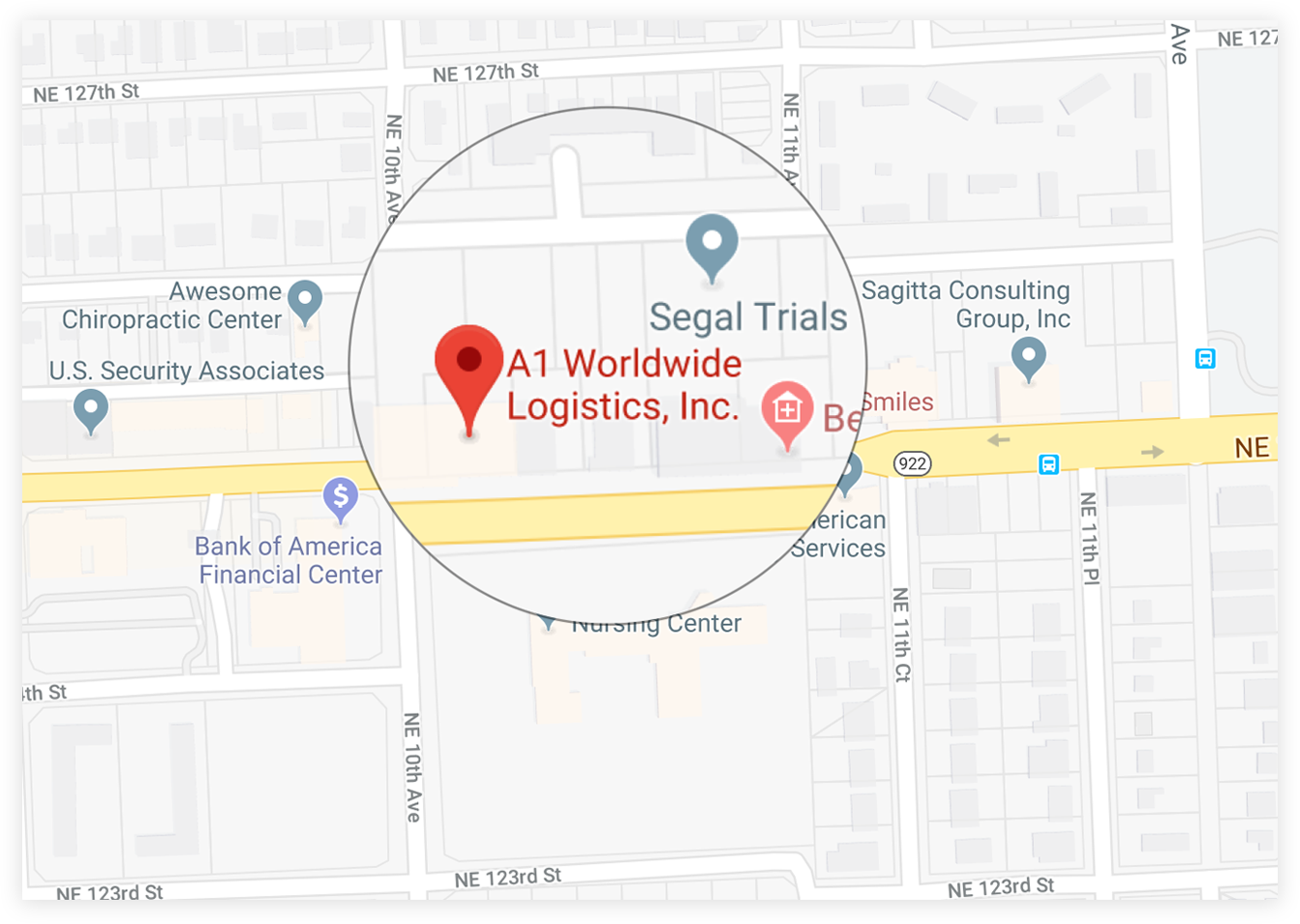
 1035 NE 125th St Suite #320, North Miami, FL 33161.
 a1worldwidelogistics.com
 (305) 821-8995
 Hours: 8AM - 5PM