How To Import Acidified Foods

How To Import Acidified Foods

Known as a confusing import in the international shipping industry, this article explains how to import acidified foods. Acidic foods are foods with a pH level of 4.6 or below. Some examples include vinegar, fermented pickles, lemons, artichokes, pickled vegetables,...

New Regulations Reshaping Logistics

New Regulations Reshaping Logistics

International and domestic shipping could soon see new regulations reshaping logistics industry compliance. In the last few months, two regulatory decisions have impacted five major sectors of the logistics industry. These include freight brokers, freight forwarders,...

Working With A Miami Customs Broker

Working With A Miami Customs Broker

Due to the complexities of importing into the US, there are numerous benefits to working with a Miami customs broker. A Customs Broker is a licensed professional who coordinates the release of goods from customs upon entry into a country. In the US, brokers ensure...

What Is An ISF Filing?

What Is An ISF Filing?

While not common for someone who has never imported before, a shipper must understand what an ISF filing is. An Importer Security Filing (ISF), also known as a 10+2, is a form that has important information about a shipment. On the filing, importers must have...

¿Qué saber antes de importar aguacates a EE. UU.?

Share This Article

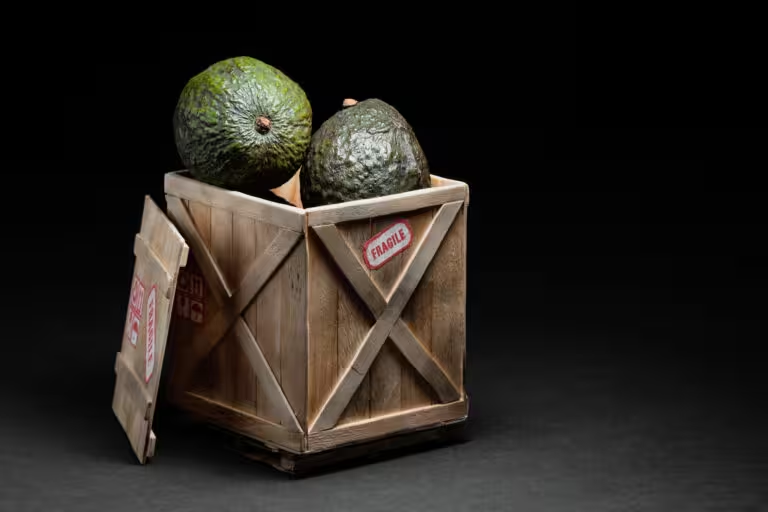
Antes de ingresar aguacates a EE. UU., el remitente debe entender que existen varias normas y regulaciones a seguir. El Departamento de Agricultura de EE. UU. (USDA), a través de su División de Frutas y Verduras, regula las importaciones de aguacates y cuenta con subdepartamentos especializados. Por ejemplo, el Servicio de Inspección de Sanidad Animal y Vegetal (APHIS) regula la entrada de plantas para evitar la introducción de plagas y enfermedades. En el caso de los aguacates, APHIS hace cumplir los requisitos fitosanitarios.

Todos los envíos mayores a 25 kilos (55 lbs.) deben ser inspeccionados por el USDA para verificar su grado y madurez. El USDA exige que todos los aguacates tengan un grado dos antes de ingresar, cumpliendo con características varietales específicas. Además, existen requisitos de maduración como color, peso y tamaño que deben cumplirse.

Es importante conocer los riesgos de enviar aguacates y cómo evitarlos. Al ser una fruta perecedera, los aguacates son vulnerables a dañarse o descomponerse. Antes de salir del lugar de origen, el exportador debe empacar adecuadamente para evitar exposición al calor o la humedad. Generalmente se utilizan cajas limpias o huacales ventilados para reducir daños y permitir la circulación de aire. La cadena de frío debe mantenerse desde el almacenamiento hasta la entrega.

También es necesario considerar los aranceles de importación: para los aguacates, la tarifa es de 11,2 centavos de dólar por kilogramo.

¿Cuál es el proceso de importación?

Cuando el remitente está listo para transportar los aguacates, debe utilizar un transportista refrigerado para evitar que se estropeen. Se pueden usar diferentes medios —aéreo, terrestre o marítimo— siempre y cuando la temperatura se mantenga adecuada. En los envíos internacionales, se recomienda usar un contenedor refrigerado (reefer).

El importador debe preparar con antelación la documentación necesaria, como:

  • Factura comercial
  • Certificado fitosanitario
  • Conocimiento de embarque marítimo o guía aérea
  • Certificado de origen

Al llegar al puerto de entrada, los funcionarios de CBP (Aduanas y Protección Fronteriza) y APHIS inspeccionarán la carga para verificar el cumplimiento normativo. Un agente aduanal puede facilitar el proceso de despacho, garantizando que el remitente cumpla con los requisitos federales. Estos agentes también ayudan con la clasificación de productos, el pago de aranceles y la preparación de documentos. Una vez liberada la carga, se puede coordinar el transporte hasta su destino final.

Debido a la cantidad de regulaciones que exige EE. UU., el proceso de importar aguacates puede ser complejo para remitentes sin experiencia. Por ello, muchas empresas optan por trabajar con un agente de carga. Los agentes de carga son intermediarios entre el remitente y las compañías de transporte, asegurando que la carga se coordine de manera eficiente y segura.


A1 Worldwide Logistics, Inc.

📍1035 NE 125th St #320, North Miami, FL 33161, USA

🌍 a1worldwidelogistics.com

📞 305-821-8995

🕒 Hours: 8AM – 5PM

Send your request

3pls have helped e-commerce businesses grow over the last decade.

How 3PLs Help With E-Commerce

From warehousing and inventory management to order fulfillment, shipping, and returns, 3PLs help e-commerce businesses streamline operations, and reduce costs.

The logistics industry could soon see the impact of new regulations appearing over the last few months.

New Regulations Reshaping Logistics

The logistics industry could be entering a new era of compliance including recent developments the Montgomery v. Caribe Transport II ruling and a new White House Executive Order targeting forced labor, and misclassification.

The government has denied the CIT's motion for a Section 122 tariff stay.

CIT Denies Section 122 Tariff Stay

The tariff battle is far from over. The Court of International Trade (CIT) has denied the government’s request to pause enforcement of its ruling striking down President Trump’s Section 122 tariffs.

What should shippers understand with the first wave of tariff refunds starting May 12.

Tariff Refunds Starting May 12

Big news for importers! The first wave of tariff refunds is set to begin May 12, giving businesses a long-awaited opportunity to recover funds paid under the now-overturned IEEPA tariffs.

Freight forwarding in Miami is an excellent opportunity for shippers.

Freight Forwarding In Miami

Whether importing into or out of the US, freight forwarding in Miami can be an ideal solution for your shipment.