by A1 WorldWide Logistics | Jul 31, 2025 | Economic trends, Importing, Tariffs
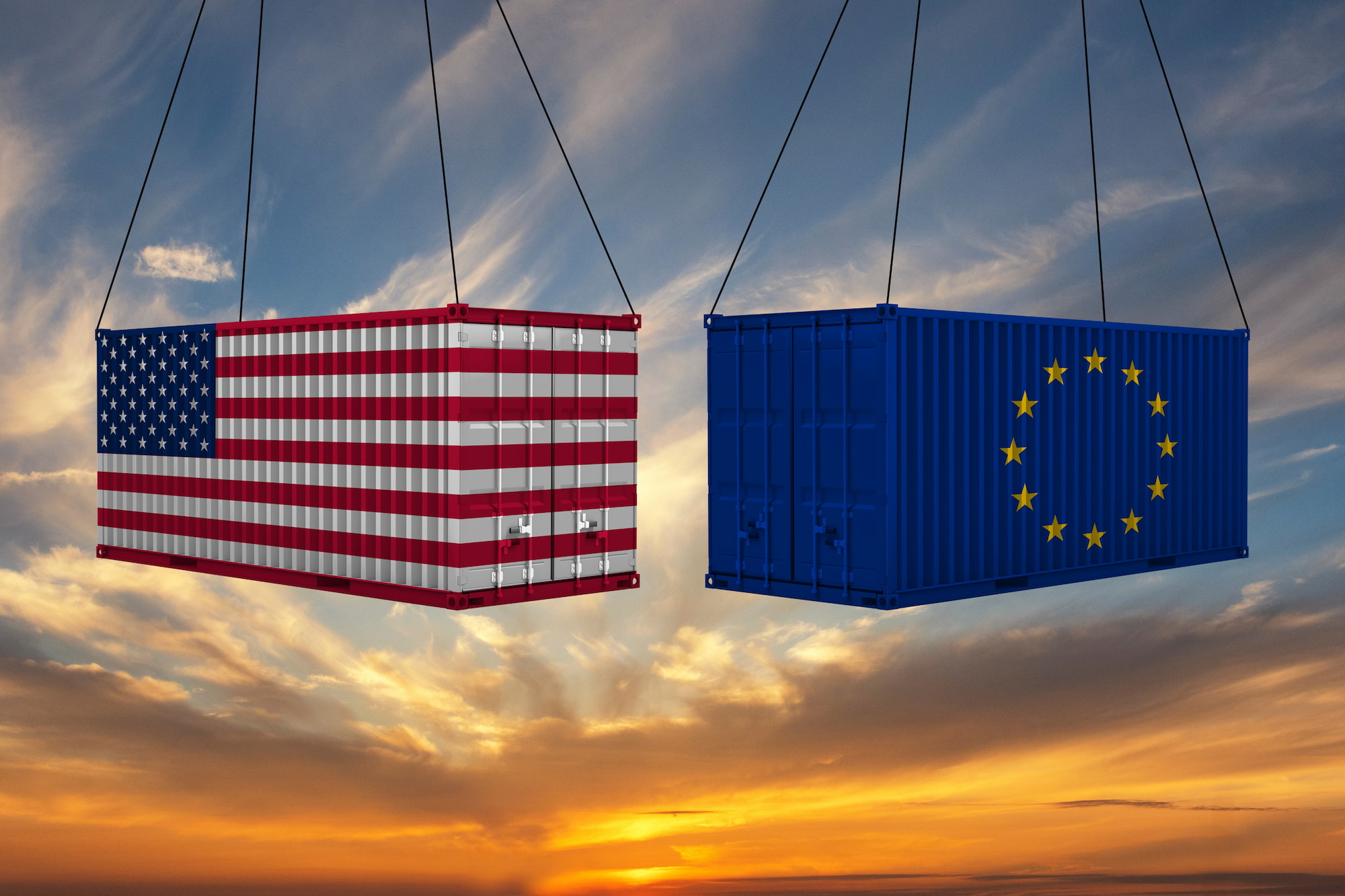
On July 27, the US and EU reached a trade deal that may have avoided a potential transatlantic tariff war. In particular, the parties reached a framework for an arrangement that will set 15% on most EU (European Union) imports. The amount is down from the 30% tax that Trump threatened on EU goods earlier this month. Certain products, like pharmaceuticals, chemicals, and aircraft components, would not be impacted by the tariffs. The deal also includes the EU purchasing $750 billion in energy from the US and $600 billion in US investment. With the EU being one of the largest trading partners of the US, the agreement will significantly impact international shipping.
How Did The Trade Deal Come To Be?
The deal was made after a back-and-forth between the US and countries in the EU that lasted years. During Trump’s original presidency, he imposed a 25% tariff on steel and 10% on aluminum imports from the EU. The EU responded by enforcing levies on $3.2 billion worth of US goods. In Trump’s second presidency, he threatened a 30% tax on all EU goods and a now-cancelled 200% tax on alcohol. The EU then announced counter-tariffs on $100 billion worth of US goods, including soybeans and cigarettes. After further tariff delays, the EU called for emergency talks, eventually leading to the July 27 deal.
European Commission President Ursula von der Leyen noted, “This deal provides a framework from which we will further reduce tariffs on more products, address non-tariff barriers, and cooperate on economic security.” Despite the agreement stabilizing current trade relationships between the US and EU, the final deal has yet to be made. The goal behind Trump’s imposing tariffs on the UK is part of a broader strategy to reduce trade imbalances. There is also a push to bring manufacturing and businesses back to the US to stimulate the economy. Trump has made similar agreements with other trade partners like Japan, Indonesia, and the UK before the August 1 deadline.
What Was The Reaction As The US and Europe Reached A Trade Deal?
In 2024, the US imported nearly $606 million in shipments from the EU, making it the US’s largest trade partner. The announcement of a deal led to a generally positive response from importers and exporters from all countries involved. Trump said, “It was a very interesting negotiation. I think it’s going to be great for both parties.” European leaders also applauded the agreement for bringing clarity, stability, and predictability to the trading relationship. Despite the positive response, there is still a fear that the 15% tariff will raise the cost of shipping. This is not only for shippers and international/domestic carriers, but also for customers.
While tariffs can be stressful, they should not stop the importation of cargo into the US. The shipper should, however, take the proper steps to avoid delays and supply chain disruptions. Along with being current with tariffs and regulations, speaking to a customs broker is an ideal way to prepare. Customs Brokers are intermediaries between shippers and the US CBP (Customs and Border Protection). They are licensed individuals or corporations who arrange the customs clearance process on behalf of the importer. Brokers do this by providing documentation, ensuring regulatory compliance, and more. Contact A1 Worldwide Logistics at 305-440-5156 or info@a1wwl.com to speak to our brokers about importing anywhere globally.

by A1 WorldWide Logistics | May 29, 2025 | Economic trends, Importing, Tariffs
A ruling by the US Court of International Trade (CIT) has resulted in the Federal court blocking Trump’s tariffs. Termed “Liberation Day”, the president signed an executive order on April 2 introducing a 10% tax for most trading partners. On May 28, a three-judge panel from the CIT determined that Trump’s tariffs were unlawful. In particular, the court noted that the administration had exceeded its authority under the International Emergency Economic Powers Act (IEEPA). The court ruling was also against the higher tariffs Trump proposed for imports from Canada, China, and Mexico. With the tariffs potentially having a significant impact on trade, the blocking is a landmark decision for international shipping.
Why Is the US Federal Court Blocking Trump’s Tariffs?
The blocking of Trump’s tariffs comes after various businesses and states filed lawsuits against the levies. Some of the states included Delaware, Illinois, Maine, Oregon, Arizona, Colorado, New Mexico, New York, and Vermont. The argument was that Trump’s enforcement overstepped presidential powers, and CIT eventually sided with the plaintiffs, blocking the tariffs. The court released a statement stating, “The Worldwide and Retaliatory Tariff Orders exceed any authority granted to the President by IEEPA to regulate importation by using tariffs.” CIT further noted that the president’s reasons for imposing taxes do not represent “unusual and extraordinary threats.” The IEEPA is a US law that grants the President authority to regulate economic transactions when declaring a national emergency.
President Trump’s goal behind enforcing reciprocal tariffs is to address trade imbalances with the US’s trading partners. Trump has argued that trading partners, like China and the European Union, have imposed significantly higher tariffs on US imports. The levies are a tool to pressure countries into making better trade deals and reducing trading barriers. There is also a goal to bring manufacturing back to the US to create jobs and stimulate the economy. While it could boost domestic shipping and production, analysts believe it may harm the economy by creating inflation. There was also a fear that countries would impose their retaliatory tariffs.
What Was The Response To The Decision?
Immediately after the court blocked the tariffs, the Trump administration announced plans to appeal the ruling. The next step could be a potential escalation of the case to the Supreme Court. While there hasn’t been a direct response from Trump, administration officials strongly opposed the appeal. Stephen Miller, White House Deputy Chief of Staff, released a statement stating, “The judicial coup is out of control.” White House spokesperson Kush Desai said, “It is not for unelected judges to decide how to properly address a national emergency.” The ruling could soon disrupt US ports due to the uncertainty for importers that were navigating the active tariffs.
Despite the tariffs being on pause, A shipper should be aware of what to expect when transporting cargo. Lacking a proper understanding when starting can lead to delays, financial loss, and cargo loss. Shippers must stay informed about news that could impact their shipments. Another way to prepare when importing into the US is by contacting a Licensed Customs Broker. Customs brokers are individuals or firms that assist importers in meeting federal requirements for customs clearance. They accomplish this by offering services such as providing documentation, calculating tariffs, classifying cargo, ensuring compliance, and more. Contact A1 Worldwide Logistics at info@a1wwl.com to speak with a broker about the success of your shipment.

by A1 WorldWide Logistics | May 1, 2025 | Economic trends, Importing, Supply Chain
The White House released plans for Trump to ease auto tariffs on U.S. car imports. On April 3, President Trump imposed a 25% tariff on cars and light-duty trucks entering the U.S. The automobile tariff was separate from the 10% duty that the president enforced on all U.S. trading partners. Trump then paused tariffs on automobile imports from Mexico and Canada for one month. The pausing was to give automakers time to prepare before the duties took effect on May 3. President Trump is now announcing plans to provide tariff relief for carmakers. This article will explain the policy changes and how they could impact importers bringing foreign-made cars into the U.S.
How Is Trump Easing Auto Tariffs?
Beginning on May 3, a portion of the automobile and auto part tariff will see a reimbursement of the costs. The new policy states that automakers assembling their vehicles domestically can apply to offset up to 3.75% of tariff fees. Trump’s offset rate was calculated by applying the 25% import duty to 15% of the value of U.S.-assembled vehicles. These costs will be for auto imports that automakers use to assemble cars in the U.S. for one year. The offset rate will fall to 2.5% in the second year before the Trump administration phases it out completely. The Commerce Department will have 30 days to create a process for automakers to provide documentation to obtain the offset.
Trump’s new policy will not conflict with the 25% auto tariff the administration enacted earlier this month. It will also prevent tariffs from stacking on each other, including those on aluminum and steel imports. The goal behind easing the levies is to bring manufacturing back to the U.S. Trump said, “We just wanted to help them during this little transition. If they can’t get parts, we didn’t want to penalize them.” He believes bringing production to the U.S. will stimulate the economy by creating jobs. Analysts predict the opposite effect will happen, and manufacturing costs will rise, hurting the economy.
The Response Of Automakers And Shippers To The Tariffs
Despite the new policy easing auto tariffs for importers, there have been concerns about the long-term impact of the tariffs. Automakers believe bringing business back to the U.S. will be timely and costly. The higher costs could fall on customers purchasing vehicles. Job cuts have already started for automaker companies, bringing production back to the U.S. Companies in the automaking industry have been pushing for leniency from Trump’s tariffs for months. Trump’s policy changes are a response to the concerns of automakers and shippers. While tariffs could negatively impact international shipping, many believe that production may potentially positively affect the movement of goods domestically.
When importing into the U.S., it is essential that you are aware of anything that can affect your shipment. Failure to prepare can result in delays, monetary loss, and cargo loss. One of the best ways to ensure successful importation is by speaking to a customs broker. Customs Brokers are individuals or corporations that facilitate cargo movement through international borders. They do this by ensuring that the shipment complies with the laws and regulations of the country of import. Brokers also provide other services like documentation, calculating duties, filing ISFs, etc. Contact A1 Worldwide Logistics at 305-425-9513 or info@a1wwl.com to speak to a broker regarding the importation of your goods.
by A1 WorldWide Logistics | Mar 27, 2025 | Economic trends, Shipping Logistics, Supply Chain
As the April 2nd date approaches, the Trump administration announced that the reciprocal tariffs will be softer than anticipated. Earlier this year, President Trump signed an executive order to implement mutual taxes on imports from U.S. trade partners. These are separate from recent ones Trump released for steel and aluminum imports and specific countries. The order was to address unfair trade imbalances by other countries. By matching tariffs that other nations place on imports from the U.S., Trump is pressuring them to reduce theirs. The central countries affected include China, Canada, Brazil, Mexico, and the European Union. As the date nears, Trump said he will likely be more lenient than reciprocal.
Why Reciprocal Tariffs Will Be Softer
On Monday of this week, Trump revealed that the reciprocal tariffs won’t be as wide-ranging as initially proposed. He stated, “I may give a lot of countries breaks. It’s reciprocal, but we might be even nicer than that.” The reason behind the leniency is that Trump believes that if it were reciprocal, it would be difficult for importers. While Trump has proposed to soften the tariff’s impact, he has plans to announce extra tariffs soon. In particular, for imports like pharmaceuticals, lumber, semiconductor chips, autos, and aluminum. April 2nd is also when USMCA exemptions for Trump’s 25% tariffs on Canada and Mexico imports expire.
Along with leveling the trading field with other countries, Trump is implementing tariffs to bring manufacturing back to the U.S. This will stimulate the economy by creating jobs and increasing U.S. production. It could also benefit the trucking industry by improving the freight volumes that shippers move domestically. Economists and companies in the U.S. have a separate belief that it would hurt the economy and raise prices. Another goal behind the tariffs is to address drug trafficking and illegal immigration. The majority of fentanyl that smugglers bring into the U.S. comes from China and Canada. Countries targeted by U.S. tariffs, like Canada, China, and the EU, have announced retaliatory measures against the U.S.
The Tariffs Will Still Impact International Shipping
Despite the reciprocal tariffs potentially being softer, they will still have a major effect on the international shipping industry. In 2024, The U.S. imported nearly 13.5% of goods totaling approximately $3.35 trillion, making it the most significant importer globally. Countless supply chains could feel increased import costs that could fall on the customer. Shippers also fear that other countries will retaliate, leading to a trade war that will increase tariff hikes. Another effect is that supply chains that require international shipping could face disruptions from adjusting to the tariffs. Readjusting trade routes and relocating manufacturing to other countries can be challenging and costly.
Bringing goods into the U.S. can seem intimidating and stressful to importers, especially with potential tariffs. Being unprepared can result in delays, cargo loss, and extra expenses. This can especially look bad if you are an importer with customers receiving your shipment. Speaking to a customs broker is an ideal way to protect your cargo when importing. Brokers coordinate the clearance of an import by ensuring that they comply with a country’s customs regulations. They also offer various services, including documentation, paying duties, filing customs entries, and more to ensure your shipment’s success. Reach A1 Worldwide Logistics at 305-440-5156 or info@a1wwl.com to speak to a broker regarding importing into the U.S.

by A1 WorldWide Logistics | Mar 12, 2025 | Economic trends, Importing, Shipping Logistics
An executive order President Trump signed on February 10th has aluminum and steel tariffs starting today. Aluminum and steel importations into the U.S. will have a taxation of 25%. Yesterday, Trump announced that Canada would have to double the tariff and pay 50% for imports. The doubling was in response to Canada imposing a 25% tariff on electricity sold to the U.S. Trump has threatened more tariffs if Canada keeps imposing on U.S. agricultural and dairy products. During his first presidency, steel and aluminum imports saw 25% and 10% taxes on various articles. With the number of shippers that bring these types of goods to the U.S., the tariffs will significantly impact international shipping.
Why Is Trump Enforcing Tariffs On Aluminum And Steel?
The aluminum and steel taxes are part of Trump’s wide range of tariffs on U.S. imports. Since returning to office, Trump has imposed tariffs on the most significant U.S. trade partners, including Mexico, Canada, and China. Some are delaying until further months, including a 25% tariff on all goods from Mexico and Canada and a 20% tariff on imports from China. The primary reasons behind the tariffs are to address trade imbalances and bring manufacturing back to the U.S. Trump believes that returning production to the U.S. will stimulate the economy and create jobs. While it could boost domestic shipping, there is a fear that it will hurt international shipping.
With the amount of importers that bring goods to the U.S., the tariffs will affect numerous supply chains. If businesses are importing, the costs from the tariffs could fall on the customers. Another goal behind the taxes is to fight against the importation of drugs and illegal immigration. Canada and China are responsible for the majority of fentanyl that smugglers bring to the U.S. The original reason behind extending the 25% tariffs for Mexico and Canada imports was to straighten country borders. Trump noted, “Thousands of people are pouring through Mexico and Canada, bringing crime and drugs at levels never seen before.”
How Are Countries Reacting To Aluminum And Steel Tariffs Starting?
Due to the significant hike in aluminum and steel ship costs, various countries, particularly Canada, have opposed the tariffs. Canada is the most considerable steel exporter to the U.S., bringing over 6.6 million tons in 2024. The initial response was to charge a 25% surcharge on U.S.-bound electricity. However, Trump lowered the steel and aluminum tariffs to 25% from 50% due to Canada halting the surcharge. Other countries like China have reacted by expressing concerns and announcing potential reciprocal taxes. The European Union also responded to the tariffs by announcing its levies on billions of dollars worth of U.S. exports.
While tariffs may seem alarming, they should not stop shippers from importing into the U.S. However, shippers must take the appropriate steps when starting. Along with keeping up-to-date with the news, you can do this by speaking to a customs broker. Customs Brokers coordinate the clearance of an import by ensuring that they comply with a country’s customs regulations. They offer various services like documentation, paying duties, filing customs entries, etc. Brokers also educate shippers on what to expect and how to prepare when starting. Reach A1 Worldwide Logistics at 305-425-9513 or info@a1wwl.com to talk to a broker regarding importing your goods into the U.S.


 1035 NE 125th St Suite #320, North Miami, FL 33161.
 a1worldwidelogistics.com
 (305) 821-8995
 Hours: 8AM - 5PM