
by A1 WorldWide Logistics | May 6, 2022 | Agricultural imports, Customs Broker, Customs Broker Miami, Customs Clearance, Import and Export Experts, Shipping Logistics, Supply Chain
On April 28, the Indonesian government began banning palm oil export. At first, the export ban included only bleached, refined, and deodorized palm oils. However, very soon the ban got to include all types of palm oils. Palm oil is an edible oil used in many food products, detergents, cosmetics, and other products. 60% of the world’s palm oil is estimated to be produced and exported from Indonesia.
Why Is the Ban Happening
One of the main reasons Indonesia is banning palm oil exports is to boost domestic availability. The amount of palm oil available for use in Indonesia has decreased significantly due to rapidly rising prices. In a few months, the price of palm oil has increased by over 40%. Situations such as the COVID-19 pandemic and the war in Ukraine have increased demand for palm oil, as it is a substitute for sunflower oil, which Russia and Ukraine traditionally produce and are now scarce due to the war and economic restrictions. Producers in Indonesia have raised the price to a point where locals can no longer afford to buy the product. There have been protests on the streets of Indonesia due to the shortage.
Authorities in Indonesia have stated that the ban will remain in place until affordability and availability improve in the country. However, analysts predict that Indonesia could shorten the span to a few weeks. This is because palm oil is an ingredient in many food products globally (such as chips, Oreos, candy, and cereal). A short export pause can hurt Indonesia’s economy and the global food economy.
With Indonesia consuming around 33% of its palm oil production, the ban will quickly raise the availability in the country. The ban may create opportunities for countries like Colombia, Malaysia, and Thailand to export palm oil.

The Effects of Banning Palm Oil
Banning palm oil may have different effects on both local and worldwide buyers. The first of them is, obviously, a generalized edible oil inflation. The export ban will be beneficial for Indonesian citizens because it could lower the price of palm oil, but since the ban is for exporting the goods, it may negatively affect importers outside of Indonesia. As previously mentioned, countless food manufacturers use palm oil as an ingredient. The cost of palm oil is relatively cheap, making the finished product affordable for the customers. Without access, manufacturers may have to purchase more expensive oil options, increasing the price of the finished good.
Many importers have already decided to look at different countries like Malaysia to purchase palm oil. Responsible for producing 25% of the world’s palm oil, Malaysia is the second-biggest producer after Indonesia. The global demand has also moved to alternatives like soybean oil. The problem is that Argentina, the biggest producer of soybeans, is currently in a drought. Export taxes for soybean oil have also risen as a direct response to the war in Ukraine. Despite the issues presently being faced, the futures prices for soybean and palm oils have risen to record heights.
When the Indonesian government lifts the ban, the demand to export palm oil and other goods will still be existent. If you are a producer of palm oil or need to import palm oil into the U.S., Contact A1 Worldwide Logistics at 305-821-8995. Our skilled importers will guide you through the shipping process. We also offer customs brokerage services for goods coming into the U.S.
#exports #imports #COVID-19 #Indonesia #Ukraine #Russia #logistics #palmoil #exporting #customsbrokerage
by Rob Simmons | May 14, 2021 | Customs Broker, Customs Broker Miami, Customs Clearance, Freight Forwarding, Technology
Since its start in the early 1800s freight forwarding has developed into a whole industry. As logistics and technology have evolved over the years, so has freight forwarding. Innovations in forwarding have led to goods being moved around further distances faster. Supply chains also grew to be more well-built and resilient. Recently, a common trend that we may be seeing more of is freight forwarding companies becoming more digitalized. These digitalized forwarding companies have also seen increasing collaborations with TMS providers to enhance their capabilities.
The Benefits of more Digitalized Forwarding
The process of freight forwarding is intricate with many different components involved. If one thing goes wrong, it may harm the whole process. For example, If the paperwork is incorrect at the start, the freight may not be allowed to reach the final destination. Digitalized forwarding allows simple mistakes to be avoided. When the paperwork is transferred into a system, errors can be checked for much easier and in a timely manner. Also, the documents can be re-examined conveniently since they up uploaded and viewable at any time.
Another important benefit is that the tracking of the freight is much more possible. This is because real-time tracing allows for constant updates of your shipment. The date that the freight will reach its final destination may also be predicted much easier. The quotation process may also become more accurate. Although it may be costly to transition into a more digitalized system the benefits can outweigh the costs. One way many companies are doing this is by adopting a TMS platform.
What is a TMS?
A transportation management system (TMS) is software that provides a clear view of the operations of the freight shipping process. This is by having digital access to information such as the coordination and movement of freight. It also assists with planning and record-keeping of the freight. When a freight forwarding company partners with a TMS like Descartes or BluJay, the supply chain processes become more efficient. Over the next few years, a large number of freight forwarding companies could transition into becoming paperless and using TMS software.
A1Worldwide Logistics
if you are looking for a freight forwarder to move your goods internationally, were here to help. We organize the transport of freight by various ways such as ocean and air. We also assist with drayage services. If you are looking for a free quote, call us at 305-821-8995 or email us at info@a1wwl.com.

by Rob Simmons | May 5, 2021 | Customs Broker, Customs Broker Miami, Customs Clearance, Freight Forwarding, Shipping Logistics
With e-commerce becoming more common over the years there has been a stronger need for logistics than in the past. Especially with the coronavirus forcing many to purchase their goods online. In Amazon’s case, this led to an expansion of Amazon’s freight delivery stations. When customers purchase goods online, they tend to expect the goods to reach them in a timely manner. Amazon took note of this and created freight delivery stations all across the United States to meet customer needs. In 2021, the number of delivery stations is predicted to be over 500 by the end of the year.
What is a Delivery Station
To understand what a delivery station is, it is important to understand insourcing. Insourcing means using a company’s own resources to complete a job that was previously done by an outside source or a third party. In Amazon’s case, the delivery station acts similarly to the U.S. Postal Service. Once the freight reaches the postal service, they get prepared for final mile delivery. Instead of outsourcing for final mile delivery services, delivery stations give that task to Amazon.
The delivery station is just one of the many different ways that Amazon is expanding its logistics operations. With the growing demand from the customers, the delivery stations are improving Amazon’s supply chain. This is by widening their reach and having the customers get their freight in a swifter manner. Amazon’s Wagon Wheel program is also allowing for the development of delivery stations in rural, secluded areas. The plan is for amazon to one day have total coverage of the U.S.
Advancements in Logistics
Delivery stations are just one of many examples of how companies like Amazon are developing ways to meet the logistical needs of the customers. Before the goods even reach the delivery stations, they may have to go through the sorting centers or fulfillment centers. Fulfillment centers are where the items from orders are picked and moved to sort centers. Sorting centers are where these items are put together and then are moved to delivery stations. With more of these types of warehouses being built across the U.S., Amazon is demonstrating how the logistics process is growing and developing.
Other companies like FedEx and Home Depot have followed the trend as well. FedEx is currently creating warehouses solely for storing and moving large freight. Home Depot has also created centers such as last-mile centers similar to Amazon to deliver to the customers. With all of the recent growth, there can be no telling what lies in the future for the world of logistics.
A1 Worldwide Logistics
If you are looking for final mile delivery services such as local pick-ups and deliveries for your freight, call us at 305-821-8995. We make sure that your goods are handled with care throughout the whole journey up to the final destination.

by Rob Simmons | Apr 30, 2021 | Customs Broker, Customs Broker Miami, Customs Clearance, Freight Forwarding, Import and Export Experts, Shipping Logistics, Supply Chain
The value of wine imported into the United States has always been greater than the value of beer imported. However in 2020 this changed, and the value of beer imported into the U.S. surpassed the value of wine. Different theories and methods have been proposed as to why this is happening such as government policy and the coronavirus.
Did Covid-19 Affect This?
A common belief is that the coronavirus led to beer becoming a wanted commodity. This is because, with high levels of unemployment, the level of economic depression went up. This could have led to more consumption of beer. Beer is known for being a countercyclical good, meaning that when the economy is bad, it does well. On the other hand, the import of beer has been increasing and hitting records for over a decade. There may be other reasons why beer is doing so well. Despite the coronavirus may not have an effect on the beer imports it could have affected the wine imports.
Where is most Beer Imported From?
When beer comes into the U.S. it is imported from various countries. Mexico was responsible for over 70% of beer imported in 2020. Mexico’s market share and imports have been steadily increasing over the last 20 years. And this includes the importing of beer. Other countries like Canada, Germany, and the Netherlands have decreased beer imports over that time period, however. A belief is that the proximity of Mexico to the U.S. means that the customer will get their product quicker. Since Mexico is so close it may seem like an ideal country of choice. Instead of further regions.
The Impact of Tariffs on Wine
In 2019 tariffs were placed on wine from France and other countries in Europe before the coronavirus even reached the U.S. The result of this was felt all last year and even in 2021. The importing of French wine dropped greatly. Interestingly, Italy did not have tariffs placed on its wine in 2019. Italy’s wine imports not only stayed relatively steady but surpassed France.
Months after the tariffs were placed on the wine was when the coronavirus hit the U.S. The shutting down of restaurants and bars that order wine internationally added to the decline since they are the largest business sectors that rely on wine. With a 25% tariff and businesses closing, the wine industry felt the effects.
A1 Worldwide Logistics
When importing goods such as wine or beer from a foreign supplier they have to go through customs. The customs clearance process tends to not be simple, and you may be lost if it’s your first time doing it. Finding an experienced customs broker to guide you through the process can save you time and energy. If you are looking for a customs broker, call us at 305-821-8995 or email us at info@a1wwl.com for or information.
by Rob Simmons | Apr 16, 2021 | Customs Broker, Customs Broker Miami, Customs Clearance, Freight Forwarding, Shipping Logistics
When moving your goods internationally one must be aware of how to prevent mishaps in the customs clearance process. There is a wide range of complexities when getting freight from point A to B. Sometimes this journey may not go as smoothly as planned and your goods may be held in customs. While there are certain incidents that may not be averted like bad weather, there can be ways to ease the process.
What are some potential mishaps that can occur during customs clearance?
When cargo goes through customs clearance, certain situations may create setbacks and elongate the time that the goods reach the final destination. The paperwork may not be completed or correct. The description of the cargo may precise enough to pass through customs. Before the freight even gets to the point of customs clearance there is a small chance that the goods may be damaged or lost at sea. Having insurance on the cargo can be useful if this happens.
How to prevent potential disasters?
Before even shipping a good internationally you must know if the good is allowed to be imported into that country. This may be especially important for companies that are distributing their goods internationally with e-commerce. The shipper must make all the required payments before the goods depart the country of origin. Also, make sure that the goods are classified correctly. For example, there may be goods that are classified as hazmat or hazardous materials.
Another way to prevent mishaps in the customs clearance process is to be detailed when documenting the information. This may include the following:
- Be very precise when describing what is being imported such as having the correct dimensions. (length width and height)
- Have a good estimate on the total value of the product that is being moved.
- Make sure all the necessary documents are properly filled out. This can include forms such as the Bill of Lading, Commercial invoice, etc.
Find a good Customs Broker
One of the greatest ways to make sure that the customs clearance process goes smoothly as possible is to find a good customs broker. A customs broker acts as an intermediary between the importer/exporter and governing customs bodies. They make sure that all the requirements are met for international goods. When looking for a customs broker it is important to look for someone that has familiarity and experience with the process. It may also be beneficial to check if they have good reviews.
The customs clearance process can be tedious and daunting, especially if it’s your first time doing it. However, knowing what you’re doing can save time and energy. If you Are looking for a customs broker or want to know more about the required documentation needed when going through customs clearance, call us at 305-821-8995.
by Rob Simmons | Mar 30, 2021 | Customs Broker, Customs Broker Miami, Customs Clearance, Delivery, Freight Forwarding, Shipping Logistics, Supply Chain
After over a year of stagnant to moderate business, we may be seeing a return to regularity for air freight similar to pre-Covid-19 levels. Associations such as the International Air Transport Association (IATA) and the Association of Asia Pacific Airlines (AAPA) both had positive outlooks for 2021. The IATA has noted that in January of 2021 the demand for air freight was still 3.2% lower compared to January 2019. This is before the coronavirus was announced as a global health emergency.
Despite this, the 3.2% was still higher than the 4.0% decrease in air cargo demand in December 2020, showing a small increase. It was also reported that the Asia-Pacific region’s internal load factor in January 2021 was 74%. This is a positive sign meaning that air freight is returning to high levels of demand for that region.
How does the ocean freight market affect this?
In late 2020, port congestion occurred in numerous ports across the U.S. Particularly on the west coast. Freight shipments were backed up for days and even weeks. The cause of this is the sudden surge in e-commerce due to the pandemic. With stores being temporarily closed and restrictions being put in place, online purchases became the easier alternative. The issue arises from the overwhelming amount of e-commerce purchases.
When goods are purchased online, they may be brought in internationally. The freight that was imported into the U.S. exceeded expectations and caused congestion in ports across the nation. Companies started to move their freight by air to combat the delays. Different aircraft manufacturers adapted and released planes solely for air cargo. In turn, the market for air cargo has managed to stay afloat and still growing today. Despite the pandemic inhibiting business for aircraft manufactures, a new lane arose where profit could be made.
Will Transportation fees move up?
As previously mentioned, the demand for air freight has seen a steady increase compared to Mid-2020. Comparatively, the freight capacity has not yet grown to meet the demand due to the regulations still in place in the industry. Airfreight companies have taken advantage of this and hiked up their rates in response. With how volatile the market is at the moment; it may be too early to tell what the future holds in terms of pricing.
Boeing to produce more planes.
The positive forecast for the air freight industry extends far past 2021 for many companies. In response to the demand, Boeing stated that during the next 2 decades, over 4000 airplanes will be made for the Southeast Asia region. This is part of the 40000 new airplanes that Boeing projects on needing over the next 2 decades. This includes the 2000+ airplanes that Boeing projects will be needed for the cargo industry.
A1WWL
If you are looking for a freight forwarding company to assist with your supply chain needs, do not hesitate to call us at 305-821-8995. We assist with air and ocean freight for both imports and exports.

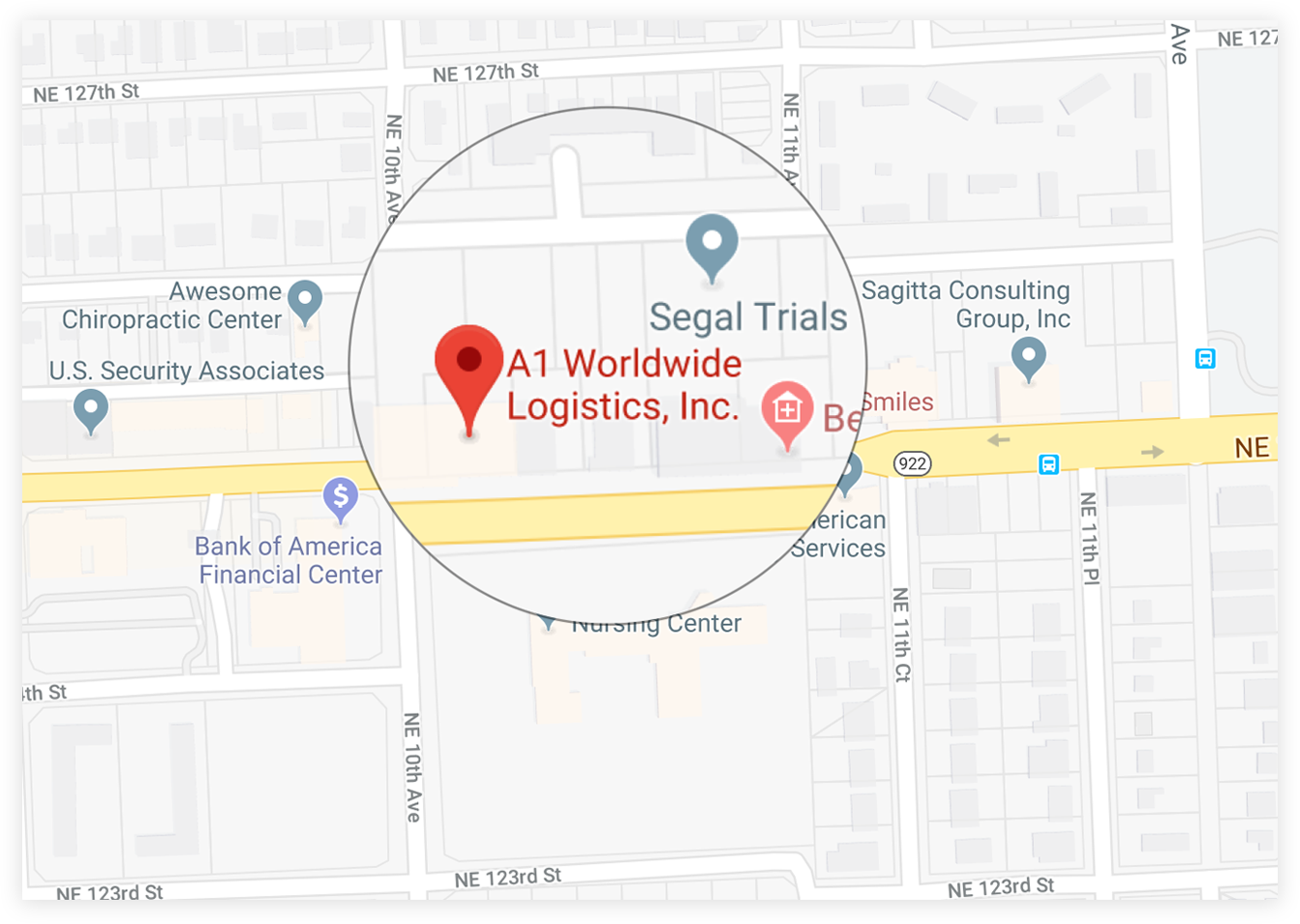
 1035 NE 125th St Suite #320, North Miami, FL 33161.
 a1worldwidelogistics.com
 (305) 821-8995
 Hours: 8AM - 5PM