
by A1 WorldWide Logistics | Aug 17, 2023 | Shipping Logistics, Supply Chain, Transportation
Compared to the shipment of regular-sized goods, shipping oversized cargo internationally has been known to be more difficult. Not only are the safety measures different, but the overall transportation logistics differ. Numerous industries, like construction, manufacturing, and mining, rely on oversized shipping to progress their supply chains. Individual shippers also ship large-sized freight like cars and boats globally. While there are various ways to transport oversized cargo, the most common is by truck and ocean vessels. Shipment by air is rare due to the size of an aircraft, so this article will focus on sea transportation. For transporting large loads domestically by truck, click here.
Regulations For Oversized Cargo
One of the essential precautions the shipper should take before shipping freight internationally is to research the regulations. The guidelines may depend on what shippers move for oversized cargo due to the number of goods considered sizeable. Breakbulk is a term used to describe freight that cannot fit in a standard 20 or 40-foot container. Some of the common measurements for breakbulk consideration are:
- A height greater than 13.6ft
- A With greater than 8.6ft
- A Length longer than 53ft
- A weight of over 80,000lbs
How Vessels Transport Oversized Cargo
Once the cargo is ready to ship, a truck with a specialized trailer will transfer it to a seaport. The typical method for loading at a port is by a mechanical crane that lifts the container off the truck and secures it on the vessel.
The loading method differs slightly since standard containers do not transport oversized cargo. How ports load large goods on a vessel depends on the shipper’s item and the container moving the shipment. Open-top containers carrying long scrap metal are placed on a containership similar to regular containers. However, if the scrap metal sticks out of the container, the container will not stack on the standard containers. The carrier will also keep the container in a different location and have a tarp draped to prevent damage. Another type of container used in breakbulk shipping is a flat rack.
Flat racks are containers without walls or roofs with foldable sides on the front and back. Unlike open-top containers, flat racks can accommodate extra wide loads and bulky goods that cannot enter a standard container. The type of cargo that this container transports are large machinery and vehicles that can’t fit in a standard container. In international shipping by sea, cars, RVs, and trucks that ship by flat racks use RoRo to board vessels. RoRo or Roll-on/Roll-off is a method of loading where wheeled freight uses built-in ramps to mount ships. The ship secures the goods throughout the journey until rolled off the ramp at the final destination.
How to Begin Shipping Oversized Cargo International
While moving oversized cargo internationally has many benefits, starting may not be as simple. There are not only more supply chain parts than the ones mentioned in the article, but numerous regulations exist. The paperwork the U.S. and other countries require for import/export may also be confusing. Hiring a freight broker to walk you through the process is the best way to start shipping. Contact A1 Worldwide Logistics at 305-821-8995 or info@a1wwl.com for a quote to move your oversized cargo internationally. We also provide customs clearance for goods for shipments entering the U.S.

by A1 WorldWide Logistics | Aug 10, 2023 | Economic trends, Importing, Shipping Logistics, Supply Chain
Technological advancements over the past few decades have opened up the possibilities for seaports of the future. Seaports have been necessary for moving freight locally and internationally for thousands of years. The first recorded harbor was the Wadi al-Jarf, built on the Red Sea coast of Egypt. This was estimated to be built around 4500 years ago. Today, many of the biggest companies in the world depend on harbors to keep their supply chains running. Innovations in technology have led to the growth of ports and the shipping industry, which continues to grow. This article will explain the latest trends and predictions for the seaports of the future.
How will the Seaports of the Future be Different?
A common term used when describing seaports of the future is a smart port. Smart ports are harbors that use advanced tech like AI (Artificial Intelligence), automation, data, and blockchain to enhance their capabilities. Digitalization is one of the most significant trends that will continue to grow. Multiple components from inside to outside operations may become more digitally connected for greater productivity. Before entering the port, real-time GPS tools will monitor the boats and containers entering and leaving the facility. This can slow down traffic and speed up supply chains. Ports can use the same technology to track containers that leave the seaport, decreasing port traffic.
Digitalization will also lead to better data exchange through the IoT. The Internet of Things (IoT) is any object with sensors and software that can communicate over the Internet. Along with everyday life, IoT has become used in various industries like international shipping. Future smart ports could install data-transmitting software on infrastructure like roads, terminals, and warehouses. The purpose will be to collect information about operating systems and improve overall performance. Along with growing port efficiency, digitalization allows for better employee safety. Examples are vehicles and cargo handling equipment with sensors that monitor surroundings for nearby workers.
Digital solutions can also help collect info to increase the amount of environmental sustainability in the ports. This is especially important with the current goal of reducing CO2 emissions to zero by 2050. The Port of Esbjerg in Denmark uses a digital system to monitor CO2 emission outputs. One of the goals of smart ports is to use technology to create more eco-friendly operations.
Automation Will be a Growing Focus
Artificial intelligence has led to a greater use of automation in work environments like ports. Automation is the usage of technology to perform tasks with limited human interaction. With current ports worldwide already having specific automated operations, future ports may be fully autonomous. This doesn’t come with challenges, such as costs and complexity of operations. In time, technological advancements and an increase in data analytics will assist in the push. The Port of Shanghai has already opened the world’s largest fully automated terminal.
While future seaports open up new opportunities for international shipping, it may be a while before the change happens. However, ports are still vital to supply chains when moving cargo globally. The shipping process may not always be as easy; situations like having goods stuck at the seaport can happen. Having a logistics company move the freight for you is the best way to ensure the delivery of your shipment. Contact A1 Worldwide Logistics at 305-821-8995 for assistance with importing into the U.S. or exporting Internationally.
by A1 WorldWide Logistics | Aug 3, 2023 | Customs Broker, Shipping Logistics, Supply Chain
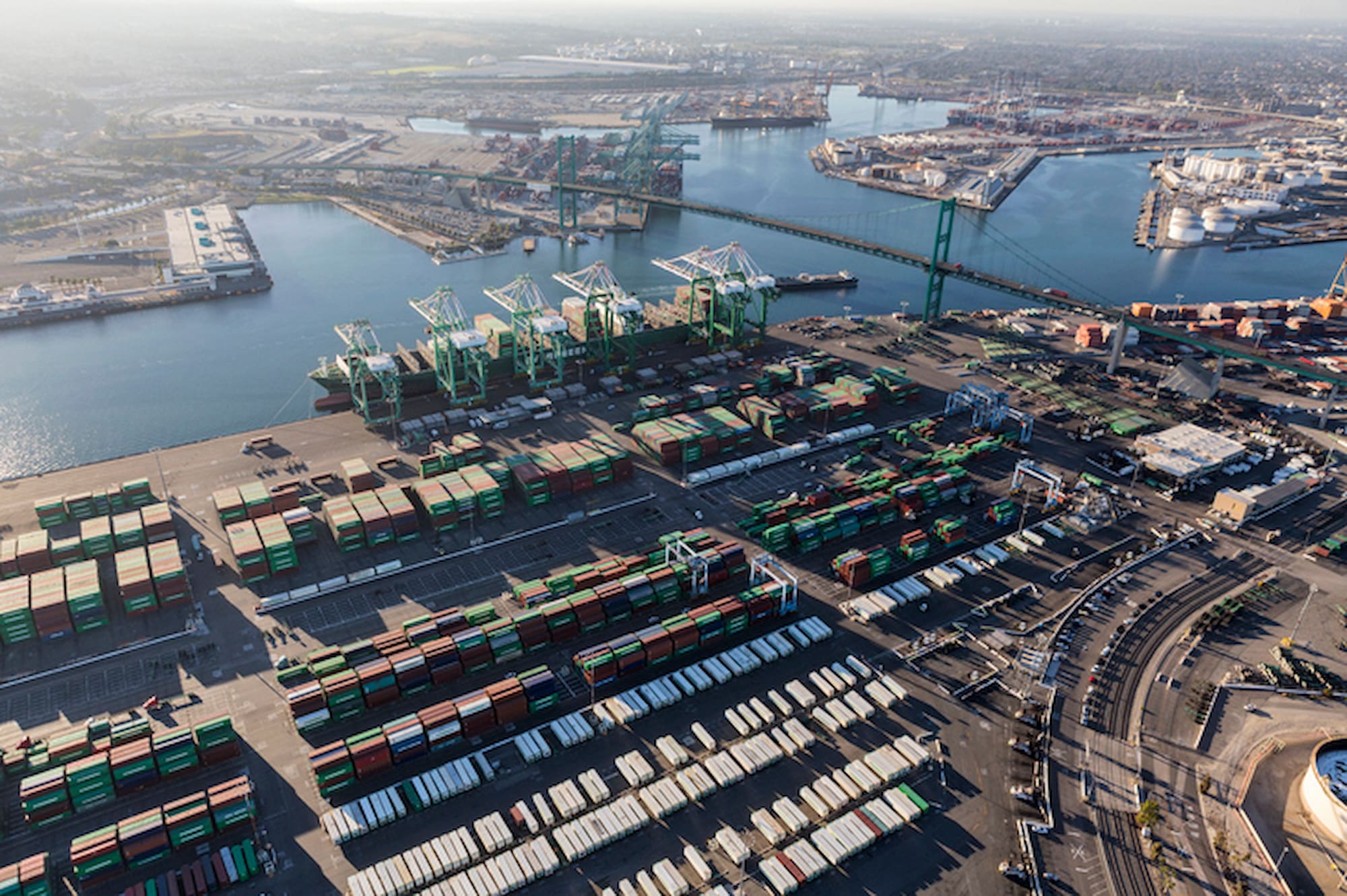
Last year, The California government had a report regarding California ports receiving $1.2 billion in federal grants. California Governor Gavin Newsom officially announced the grants on July 6, 2023. Capital will be put aside for multiple projects in Los Angeles, Long Beach, and Oakland ports. The purpose of the grants is for an overall improvement of port systems while creating zero-emission infrastructure to lower pollution. Newsom noted, “These investments will modernize our ports, reduce pollution, eliminate bottlenecks, and create a more dynamic distribution network.” Along with port upgrades, these investments will create over 20,000 jobs in the three ports.
Why are the California Ports Receiving $1.2 Billion in Grants?
During the coronavirus pandemic, the California ports’ cargo volumes grew to record levels. This resulted in congestion, delays, and equipment shortages and revealed several weak links in the ports. The state of California acted by issuing grants to fund development and modernization. While the goal is to build a more effective system for freight movement, various projects will help achieve this. One of the most significant projects is to enlarge the Maritime Support Facility. The Maritime Support facility is in charge of providing chassis and extra storage for all of the terminals in the Los Angeles and Long Beach ports. Bottlenecks in the past years led to overflowing containers and a limited amount of chassis to move the containers.
Along with growing infrastructure, the projects also include improving port roads. In the port of Los Angles, State Route 47 meets Navy Way and Seaside Avenue. These routes tend to get congested, leading to delays for shipments inside and out of the port. The California government will award $41.79 million in grant money to renovate the route to reduce collisions and lower traffic. A two-lane road by the port of Los Angeles is being made to cut traffic. Other grants include hundreds of millions to develop zero-emission cargo handling equipment in the Ports of Oakland and Long Beach. The plans mentioned are some of the 15 projects to improve and develop the ports’ capabilities.
How Will Shippers Benefit?
The Port of Los Angeles is known as the biggest seaport in the U.S., with the other ports following closely. With the amount of cargo moved through the ports yearly, renovations will significantly impact international shipping. In the past few years, the coronavirus pandemic grew the amount of goods bought online. This increased imports from countries like China. A side effect was a shipment surge resulting in port congestion and delays. The port improvement projects are a significant step towards fixing the challenges and keeping up with the demand. Shippers will benefit by decreasing the number of supply chain disruptions for them and their clients.
Port infrastructure upgrades not only benefit regular shippers but first-time shippers as well. However, it may not be enough to ensure the entire freight movement process runs smoothly. It is crucial to talk to a customs broker and freight forwarder to guarantee the moving of your cargo. Contact A1 Worldwide Logistics at 305-821-8995 for customs clearance and assistance in getting your goods to the final destination. Whether you are importing into or out of the U.S., we will guide you through the shipping process.

by A1 WorldWide Logistics | Jul 28, 2023 | Importing, Shipping Logistics, Transportation
A confusing process for many beginner shippers is understanding how to import construction materials into the U.S. Examples of this material include steel, concrete, wood, and other substances used for building structures. Nearly 32% of all building goods used in the U.S. come from various countries. The reason is due to the costs saved from offshoring goods from a country like China, nearly 50 percent. While importing may seem attractive, there are many precautions that the shipper must take beforehand. This article will be a brief introduction to bringing construction cargo to the U.S. For more information on starting, contact A1 Worldwide Logistics at 305-425-9513 to speak to a freight forwarder.
Why is Understanding How to Import Construction Materials Complex?
Shippers must follow various laws and regulations when importing goods from different countries. Most building supplies brought into the U.S. come from China, so China will be the country of focus. An example of a regulation is banning imports coming into the U.S. from China’s Xinjiang region. This is due to reported forced labor of the Uyghur Muslims used for product production. Understanding the laws and guidelines is the first step of the importation process.
Along with the regulations of the exporting country, it is essential to know the importing country’s laws. In the U.S., Customs and Border Protection (CBP) oversees imported freight. Construction materials like granite and sand require permits from regulatory agencies before U.S. entry. When choosing a supplier, it is vital to use a trustworthy source to ensure quality materials. Before importing freight, another consideration is the paperwork that CBP requires. Different types of goods can require specific documents, but the general paperwork includes:
- Arrival Notice
- Bill of Lading/Airway Bill
- Commercial Invoice
- Importer Security Filing (ISF)
- Packing List
Since construction materials tend to ship in large quantities, the import may be costly. Shipments valued at or over $2500 require a customs bond. It is crucial to note that the shipper should submit the documents to customs days before leaving the origin country.
The Importation Process
Once the materials are ready to be imported to the U.S., they will be moved to a port in the origin country. Two of the most common methods of conveyance used in freight movement are transportation by air or sea. Containerships frequently move construction supplies due to the number of goods carried at a time. When the cargo first reaches the U.S. from an international country, they are subjected to import duties. Duties are tax payments required by the CBP, and shippers calculate them using the Harmonized Tariff Schedule.
Any cargo entering the U.S. risks being held up at customs before being released. This can be due to many reasons, such as poorly completed paperwork and unpaid duties. If the shipment goes smoothly and the filing is correct, customs will release the goods to the importer. While the import process may be complex, hiring a customs broker streamlines the process. A broker coordinates with U.S. customs to ensure the release of your cargo. To speak to one of our experienced customs brokers, contact a1 worldwide logistics at 305-821-8995.
by A1 WorldWide Logistics | Jul 18, 2023 | Freight Forwarding, Shipping Logistics, Supply Chain
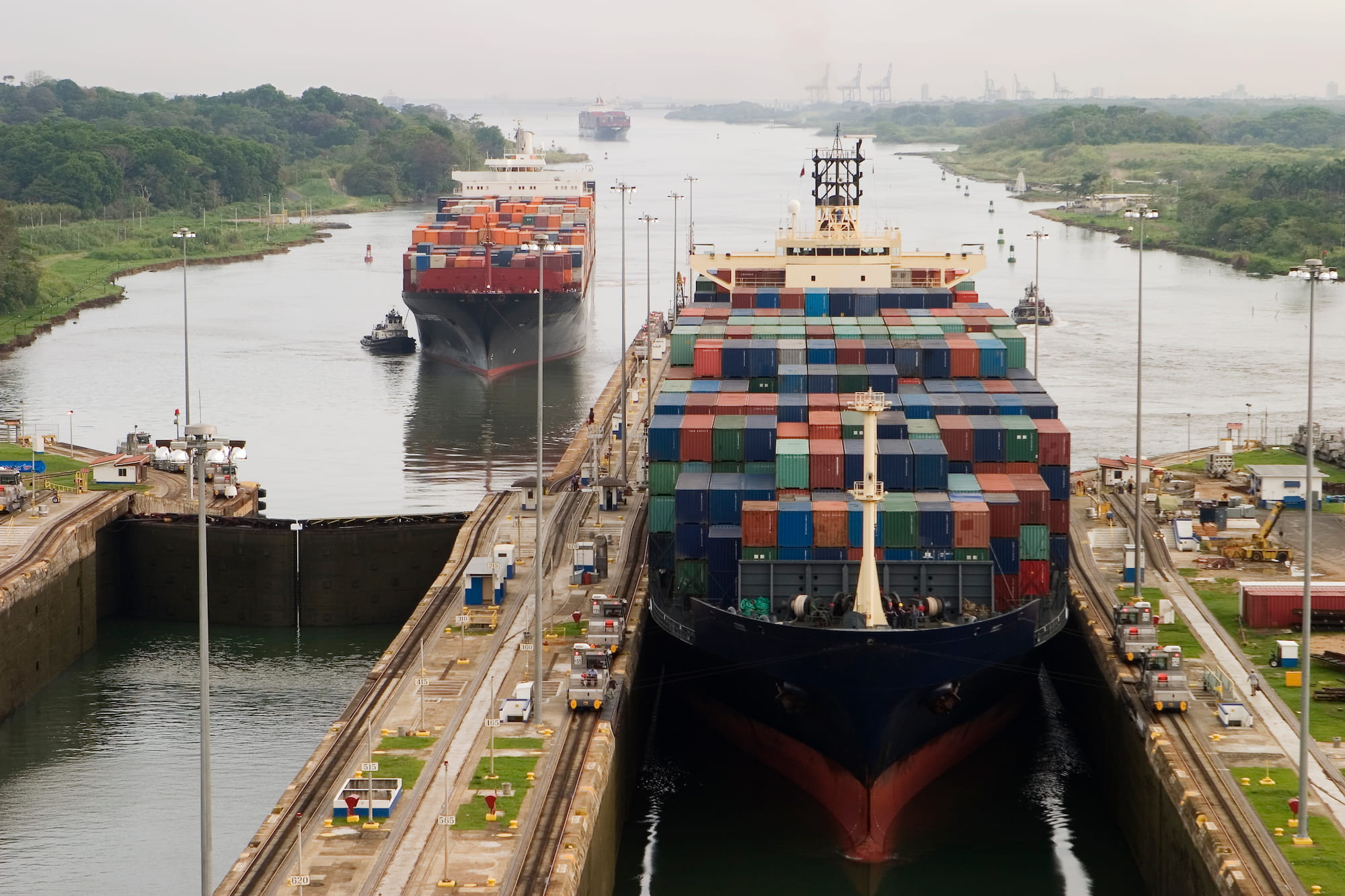
A recent drought has led to the Panama Canal facing restrictions. The Panama Canal is an artificial passageway that connects cargo ships to the Atlantic and Pacific oceans. It is a crucial shortcut that cuts shipping journeys by thousands of miles. Since June 5th, limits have been placed on the canal due to recent climate changes causing a drought. While dryer weather tends to happen every five years in Panama, the span has reportedly sped to three years. The levels of dryness have also rose, with 2023 being the driest year on record since 1950. Panama’s national government has declared an environmental emergency due to minimal rainfall in the past months.
What are the Restrictions
Draft limits for carriers passing through the Panama Canal have recently been cut to a maximum of 44.5 feet (13.56m). Canal officials will also reduce the draft limit to 43.5 feet (13.26m) on June 25th. The standard draft maximum in the Panama Canal is 50 feet (15.24m). A boat draft is the vertical distance between the waterline and the deepest boat point. The canal’s restrictions are in place to determine how deep the vessel can float in the water. Boats meet the guidelines by transporting less weight, which is accomplished by shipping fewer containers. Neopanamax vessels, which were permitted entry at the creation of the third set of locks, are the only type affected by the rules.
The last severe drought in the Panama Canal was in 2019-2020. Climatologists forecast that the dry conditions will continue to grow with the El Nino weather pattern arriving soon. El Nino tends to bring drier and warmer climates Across most of Central America. When the phenomenon hit Panama in 2015, the ACP (Panama Canal Authority) reported a revenue loss of $40 million. The ACP has warned that if conditions worsen, they will lower the number of daily crossings. The current number is 35 vessels daily, which may drop to less than 32.
What Does The Panama Canal Facing Restrictions Mean For Supply Chains
The Panama Canal is a crucial global trade route and a significant passageway for supply chains requiring international shipping. It is an ideal shortcut in maritime container transportation and beings in over $2 billion yearly for Panama’s economy. With some of the largest carrier companies transporting through the canal, restrictions may significantly impact supply chains. In the past, the charges led shippers to look for other routes to ship their goods when dryer conditions occurred. Specific carriers have already started applying surcharges for containers entering the U.S. East Coast from Asia.
While the shipping world can be unpredictable, it should not stop you from growing your supply chain. Shippers should, however, be up to date with any changes or new regulations in the industry. The importer/exporter should also take precautions to prevent any mishaps. Having a freight forwarder coordinate the shipping process for you is the best way to ensure secure freight movement. A forwarder guides you through the entire transportation journey from start to finish while educating you along the way. Contact A1 Worldwide Logistics at 305-821-8995 to speak to our export freight forwarders regarding the movement of your cargo internationally or domestically.
by A1 WorldWide Logistics | Jul 3, 2023 | Delivery, Freight, Shipping Logistics
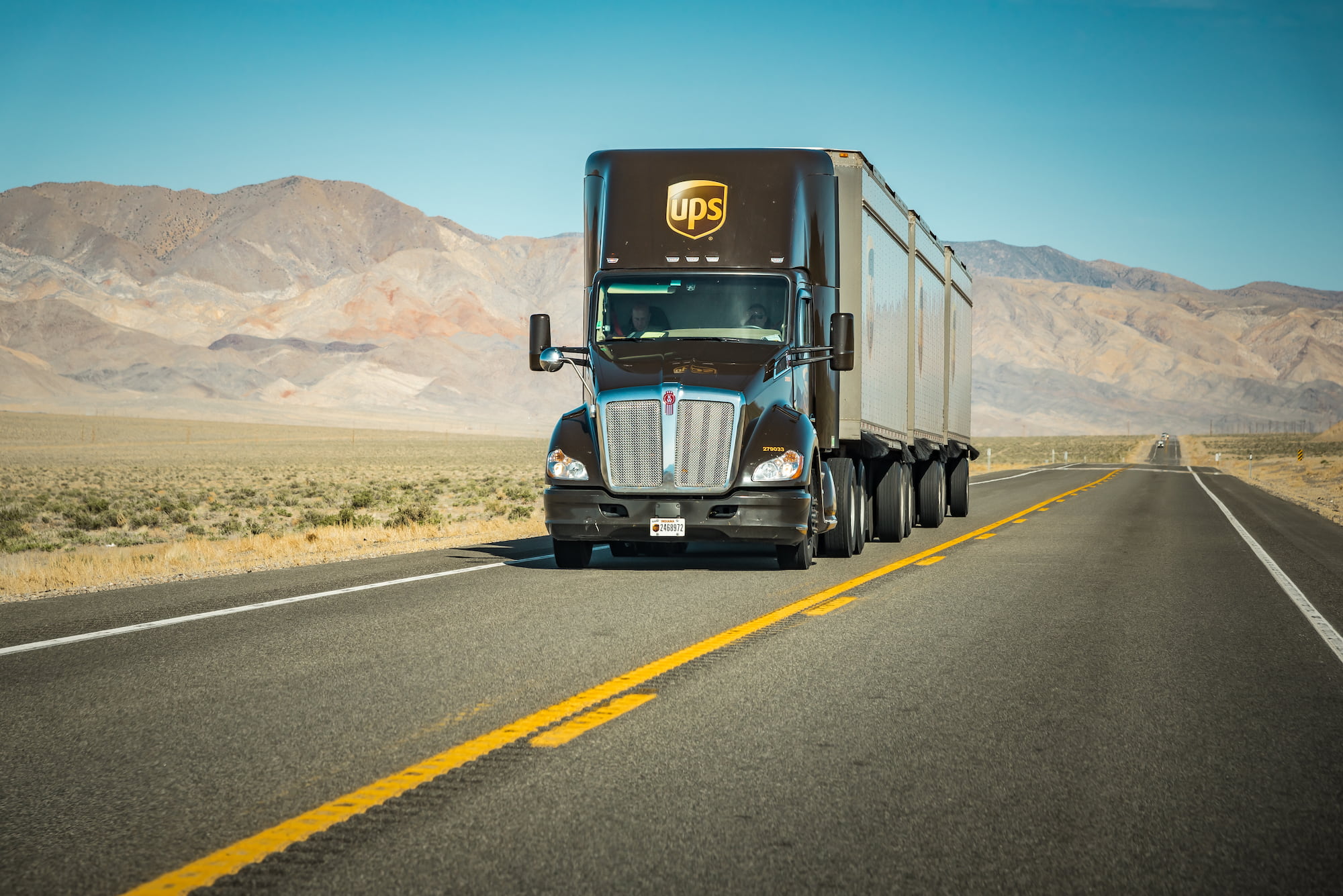
After months of back and forth, UPS vows to reach deal with Teamsters by July 5th. UPS (United Parcel Service) is the largest package shipping company in the U.S. in terms of volume. Recently unsatisfactory contract negotiations between UPS executives and workers have reached a point where a strike was looming. The workers are part of Teamsters, an extensive union of freight drivers and warehouse laborers in the U.S. More than 340,000 UPS employees comprising the Teamsters Union have been negotiating a contract reflecting their work. Last week, 97% of Teamster members voted to protest if UPS did not achieve a compromise.
With the amount of Teamsters workers in UPS, a walkout could be the largest single-company strike in U.S. history. The Teamsters General Secretary-Treasurer noted, “Our members are the backbone of UPS, and they are the reason this corporation hauled in more than $100 billion in revenue just last year.” Along with higher wages, the negotiated contract ended harassment from management and forced overtime. The conversations also brought up the elimination of a two-tier wage system and heat mitigation efforts for drivers. UPS vans that delivers drive do not come equipped with air conditioning, which Teamsters workers are demanding to install.
UPS Vows to Reach Deal by July 5th
One of the reasons why talks between the UPS and Teamsters have not gone so smoothly is due to contract ramifications. A new contract with higher employee pay can lead to UPS finding ways to offset the monetary losses incurred. This could mean looking for larger-sized clients like businesses compared to individuals. A slowing economy and recent inflation are also concerns for UPS if the parties ratify a new contract. With demand predicted to continue slowing throughout the end of 2023, deciding to charge higher rates can have negative effects. UPS’s competitor FedEx, which is currently taking out billions to potentially offer lower rates, may seem more attractive to customers.
On Friday, June 30th, Teamsters announced that UPS planned on reaching a contract agreement by July 5th. The announcement was made before the current 5-year national contract expires on July 31st. With the potential of a strike from Teamsters happening if no resolution is reached, this comes as positive news. A strike not only affects UPS, customers, and the economy feel the impact because of the size of UPS. Teamsters, however, noted that they will have a walkout on August 1st if UPS doesn’t reach an agreement by then.
What Can This Mean for Your Goods?
With over 17 million domestic packages delivered daily, a strike could drastically impact UPS’s customers. As mentioned, a new contract with higher labor costs leads to greater money loss for UPS. To compensate, UPS may begin charging higher rates and surcharges to their customers. A main concern is that UPS may lose customers if shipping becomes more expensive due to the current cost-sensitive market. Customers who ship globally could switch to alternatives like freight forwarders to ship their cargo. If you plan on exporting from the U.S. to anywhere internationally, contact A1 Worldwide Logistics at 305-821-8995 for assistance.

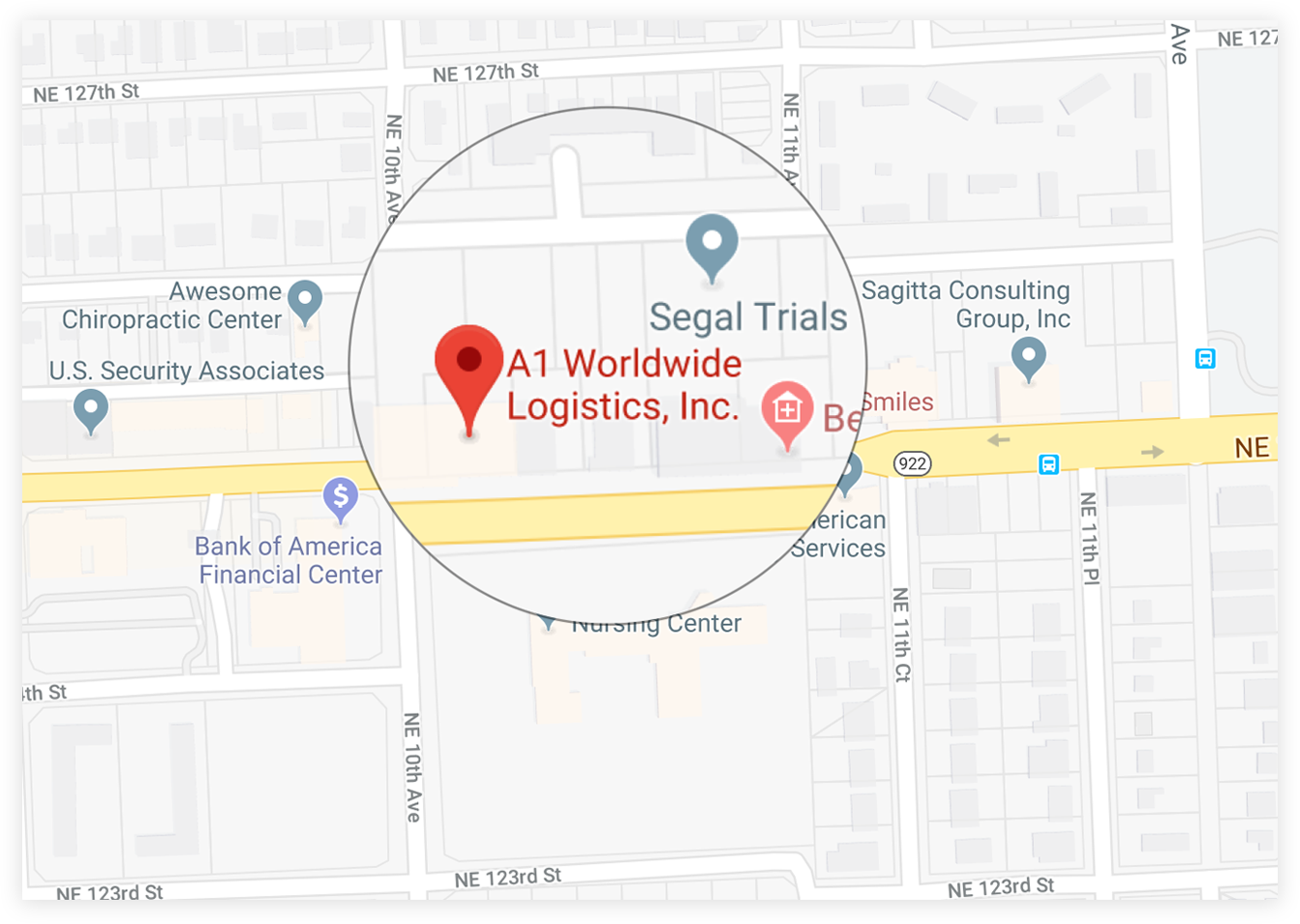
 1035 NE 125th St Suite #320, North Miami, FL 33161.
 a1worldwidelogistics.com
 (305) 821-8995
 Hours: 8AM - 5PM