
by A1 WorldWide Logistics | Jul 28, 2023 | Importing, Shipping Logistics, Transportation
A confusing process for many beginner shippers is understanding how to import construction materials into the U.S. Examples of this material include steel, concrete, wood, and other substances used for building structures. Nearly 32% of all building goods used in the U.S. come from various countries. The reason is due to the costs saved from offshoring goods from a country like China, nearly 50 percent. While importing may seem attractive, there are many precautions that the shipper must take beforehand. This article will be a brief introduction to bringing construction cargo to the U.S. For more information on starting, contact A1 Worldwide Logistics at 305-425-9513 to speak to a freight forwarder.
Why is Understanding How to Import Construction Materials Complex?
Shippers must follow various laws and regulations when importing goods from different countries. Most building supplies brought into the U.S. come from China, so China will be the country of focus. An example of a regulation is banning imports coming into the U.S. from China’s Xinjiang region. This is due to reported forced labor of the Uyghur Muslims used for product production. Understanding the laws and guidelines is the first step of the importation process.
Along with the regulations of the exporting country, it is essential to know the importing country’s laws. In the U.S., Customs and Border Protection (CBP) oversees imported freight. Construction materials like granite and sand require permits from regulatory agencies before U.S. entry. When choosing a supplier, it is vital to use a trustworthy source to ensure quality materials. Before importing freight, another consideration is the paperwork that CBP requires. Different types of goods can require specific documents, but the general paperwork includes:
- Arrival Notice
- Bill of Lading/Airway Bill
- Commercial Invoice
- Importer Security Filing (ISF)
- Packing List
Since construction materials tend to ship in large quantities, the import may be costly. Shipments valued at or over $2500 require a customs bond. It is crucial to note that the shipper should submit the documents to customs days before leaving the origin country.
The Importation Process
Once the materials are ready to be imported to the U.S., they will be moved to a port in the origin country. Two of the most common methods of conveyance used in freight movement are transportation by air or sea. Containerships frequently move construction supplies due to the number of goods carried at a time. When the cargo first reaches the U.S. from an international country, they are subjected to import duties. Duties are tax payments required by the CBP, and shippers calculate them using the Harmonized Tariff Schedule.
Any cargo entering the U.S. risks being held up at customs before being released. This can be due to many reasons, such as poorly completed paperwork and unpaid duties. If the shipment goes smoothly and the filing is correct, customs will release the goods to the importer. While the import process may be complex, hiring a customs broker streamlines the process. A broker coordinates with U.S. customs to ensure the release of your cargo. To speak to one of our experienced customs brokers, contact a1 worldwide logistics at 305-821-8995.

by A1 WorldWide Logistics | Mar 24, 2023 | Freight Forwarding, Shipping Logistics, Supply Chain
In international trade, freight forwarders are the intermediaries that handle the logistics of getting your goods to the final destination. Forwarders coordinate with carriers and warehouses to find the best routes for cargo transportation. When choosing a forwarder, the customer should be mindful of how much effort the forwarder is willing to put into having a solid and long-lasting relationship. When examining how much the forwarding agent values their bonds with customers, there are specific indicators to look for. Some of the qualities are the following:
Having Open Communication
One of the most significant parts of a relationship is the ability to communicate when needed. Regardless of the conveyance method of the shipment, the customer should be updated on the location when needed. Diligent freight forwarders have close contact with their customers and constantly provide updates on shipments. A1 Worldwide logistics ensures our clients have instant contact with us during shipping. We achieve this by having open lines of communication such as phone calls, emails, and our website.
Being Dependable
Customers must rely on their forwarder to keep any promises they guarantee. Dependability is a direct reflection of how a business runs and how it cares about its customers. It’s different for a company to say they provide the highest quality customer service and deliver on that promise. This is especially true in international shipping, where supply chain logistics constantly change.
Having Experience
Experience can indicate that a forwarder values customer relationships. This is because of the longevity involved in gaining experience. Forwarders with many clients have expertise from countless years of working with customers. A side effect is that the freight forwarder also learns the importance of customer relationships from working with many clients.
Dealing with Uncertainty
In forwarding, getting your goods to their endpoint may sometimes go differently than planned. Sometimes unpredictable events occur in the supply chain that interrupts the journey. For example, there could be an issue with manufacturing or warehouse placement. Shipping delays can also happen during the trip. A forwarder must be prepared for any circumstance and be able to explain the situation to the customer.
Taking the Extra Step
This means that the forwarder goes above and beyond to calibrate and communicate with the client during the cargo’s journey. It shows how the freight forwarder values the customer and their commitment to keeping the relationship. The extra step can also mean coordinating with the carrier for the client. This can entail that certain adjustments must be made to make the shipping process as effective as possible.
Keeping the Relationship
A forwarder’s key to keeping its clients is consistency and competence. The client must trust that they can depend on their freight forwarder to transport an item internationally. This trust comes from previous experiences where the forwarder demonstrated proficiency at their job. If you want a committed forwarder to building a long-lasting relationship, contact A1 Worldwide Logistics at 305-821-8995. A1WWL aims to provide the best customer service by being accountable and transparent in everything we do. We also assist with customs brokerage to ensure your shipment complies with government regulations when entering a country.
by A1 WorldWide Logistics | Dec 6, 2022 | Customs Broker Miami, Customs Clearance, Import and Export Experts
A common term constantly heard in international shipping is Customs Broker. Customs brokers are licensed corporations, partnerships, and private individuals who arrange importers’ customs clearance process. When a shipper brings cargo into a country like the U.S., it has to go through Customs and Border Protection (CBP). CBP aims to protect its nations’ borders by facilitating lawful travel and trade. Due to the need to safeguard, many regulations may involve getting goods through customs. The rules and complexities can make customs clearance an obstacle for businesses participating in global trade.
Benefits of having a Customs Broker
Although customs brokers are not lawfully required, having one can mean many advantages for your shipment. Some of the benefits include:
Customs Clearance
Shipping goods into a country like the U.S. requires the shipper to follow all the guidelines. Customs clearance involves sending accurate and correct paperwork to customs on time. Incorrect documentation sent to customs can result in a hold on your cargo, leading to extra import charges. A customs broker can help provide shippers with the correct documentation and even coordinate the release for the importer.
Time
A broker reduces the time it takes to file the correct documentation and present it to an agency. This, in turn, speeds up the customs clearance process. Saving the time it takes for customers to receive their product is advantageous for businesses that constantly move freight. Trusting the cargo importation to a customs broker can also let the importer focus on other parts of their business.
Knowledge
Laws for bringing goods into a country constantly change and can be challenging to keep track of. Not only is a customs broker informed of new regulations, they know previous guidelines and how the process works. They are ideal for first-time shippers who may not know what to expect when moving their goods. Using a broker can also prevent penalization for not following regulations or holding cargo in customs.
Cost
A customs broker can help prevent unnecessary expenses for a shipper and reduce business shipping costs. Due to the extensive amount of regulations that shippers must follow, they may overlook some costly aspects. For example, the Harmonized System requires that all goods imported into the U.S. are classified correctly. Misclassification can result in fines like fraud which is not favorable if you are a business that wants to import. A broker’s main job is to prevent these situations from happening.
A1 Worldwide Logistics
While international shipping can be complex and daunting for new and experienced shippers, the benefits outweigh the risks. The potential monetary gain and expansion of one’s business are possible when moving goods globally. However, it is crucial to be fully prepared, and the preparation is done by using a customs broker. For more information on importing to the U.S. or if you need a customs broker, contact us at 305-821-8995. Our experienced brokers will guide you throughout the process and ensure your cargo is successfully brought into the U.S.
by A1 WorldWide Logistics | Nov 11, 2022 | Customs Broker, Customs Broker Miami, Customs Clearance, Freight Forwarding, Import and Export Experts, Shipping Logistics
China is the U.S.’s biggest trading partner and the largest exporter of goods internationally. Because of China’s ability to manufacture products on a large scale, importing from the country can present many opportunities. Not only is growth possible for a business, but reduced costs, large quantities of imports, and other benefits are also possible. While importing may seem attractive to first-time shippers, understanding what’s necessary is essential for the shipment’s success. This article will explain how to prepare the required documents and what to expect during your cargo’s shipping journey.
Before deciding what to import, it is also essential to understand that certain goods may have restrictions and specific regulations. For example, any product from China’s “Xinjing” region cannot enter the U.S. The ban is due to human rights issues such as the forced labor of Uyghur Muslims. While you do not need a permit to import from China, certain commodities require an import license. Government agencies like the Food and Drug Administration (FDA) request that imports such as cheese have an import license. Speak to a customs broker if you are uncertain if your shipment needs a permit.
While you do not need a permit to import from China, certain commodities require an import license.
What Are the Necessary Documents
Documentation is a component of the shipping process that must be taken with care to prevent your shipment’s delay. While the documents depend on the imported commodity, specific papers are needed for every import. Certain imports require additional documents like inspection certificates for meat and egg products and energy-efficient labels like air conditioners. The documents may also vary by country, but we will mainly focus on bringing cargo into the U.S. from China. Some of the standard documents include:
- Importer Security Filing (ISF)
- Bill of Lading/Airway Bill
- Commercial Invoice
- Packing List
- Proof of Insurance
- Certificate of Origin (when Applicable)
- Arrival Notice
Shipments valued at $2,500 or above require a customs bond; an insurance policy to ensure the payment of taxes. A shipper can get a single-entry or continuous bond, depending on their shipment.
The Journey Begins
Once the freight is ready, it will be sent to a designated port in China for transportation to the U.S. Speak to a freight forwarder to arrange the transportation of the shipment. The main methods of conveyance for shipping internationally are by air or sea. Both ways have their benefits, like pricing and time. When your goods reach the U.S., they must pass through customs. Customs’ objective is the security of the people in the U.S. by preventing anything illegal or harmful into the country. While customs clearance usually takes less than 24 hours, it may take longer if the goods are “Held at Customs.” This happens when customs does not release your goods for various reasons, including unpaid duties and incomplete documents.
While the importation process is perplexing for first-time shippers, it is doable with the proper guidance. Contact A1 Worldwide Logistics at 305-821-8995 or info@a1wwl.com to begin your import journey. We guide you through each shipping process step to provide transparency with our services. Whether you need to speak to a customs broker or a freight forwarder, A1WWL has you covered.
Because of China’s ability to manufacture products on a large scale, importing from the country can present many opportunities.

by A1 WorldWide Logistics | Jul 13, 2022 | Customs Broker, Customs Broker Miami, Customs Clearance, Freight Forwarding, Import and Export Experts, Shipping Logistics, Stories of Businesspeople
Meet Ali Musayev, an Azeri rug maker who sells carpets at a brick-and-mortar store in Baku, Azerbaijan. Ali was born in Baku and recently inherited the business from his dad, who inherited it from his dad. His grandad Osman originally started the company hoping to escape poverty and provide for his family. When it began, the business became one of Baku’s most significant family-owned rug shops. Shoppers from around Azerbaijan and nearby countries visited this small shop to purchase rugs. Ali’s granddad understood the centuries of importance rugs had in Azeri culture and tailored the carpets to history. Osman crafted every tile and textile with the highest quality material to represent the culture, and customers took note.
From Grandfather to Son
Osman gave all his knowledge in carpet crafting and the shop to his son Nasir before his passing. Nasir grew the company further and preserved Osman’s vision of keeping history and culture alive for decades. A dilemma soon arose that would alter the course of Nasir’s business. International shipping became so popular that Nasir’s customers began buying imported rugs from other stores. This lowered traffic and soon put Nasir’s family in the poverty that Osman had first faced. Nasir was also recently diagnosed with lung cancer. Doctors said that he had a few weeks to live. Nasir had no choice but to pass the company down to his son Ali.
Grandson in Charge
When Ali’s dad became terminally ill, one of his last wishes was for Ali to keep the store running. Burdened by the pressures of his family’s legacy and poverty, Ali has decided to do business in the United States. He understands that to keep the business alive, he has to keep up with international shipping trends. Ali also understands how the internet works and how to market a business virtually. Despite having limited money and resources, Ali decided to visit America in a desperate quest. This trip was to preserve his business, save his wife and children from poverty, and keep his family’s legacy alive.
When in the U.S., Ali not only looked for customers but for ways to export the carpets to them. Since this was Ali’s first time exporting globally, he was anxious and unsure what to expect. However, the pressure to succeed overrode the nervousness, and Ali researched dozens of transportation companies. After analyzing the benefits of each company, one stood out: A1 Worldwide Logistics. The first thing Ali noticed was our slogan, “Global Reach. Personal Touch.” Ali thought about the detail of the culture his dad and grandpa paid attention to when creating the carpets.
From Local to Global Reach
Each carpet was created with high-quality Azeri fabric and tailored to the customer’s needs. The personalized customer service that carried the business for decades could now be scaled globally. Still nervous, Ali decided to contact A1WWL to learn more about the shipping process. Words that Ali had never heard of, such as Customs Brokers, Logistics, and Freight Forwarders were explained to him with simplicity. Ali began to understand what set A1 apart from other companies.
He realized how much we were committed to helping him understand and navigate the complex world of shipping. Fast forward a few months, and his business now reaches several countries, including the U.S. Ali is no longer in debt, his tradition is alive and his family is out of poverty. Contact A1 Worldwide Logistics at 305-821-8995 if you are ready to begin your own shipping journey.
(This story is fictional, has commercial purposes, and is representative of A1WWL’s clients)


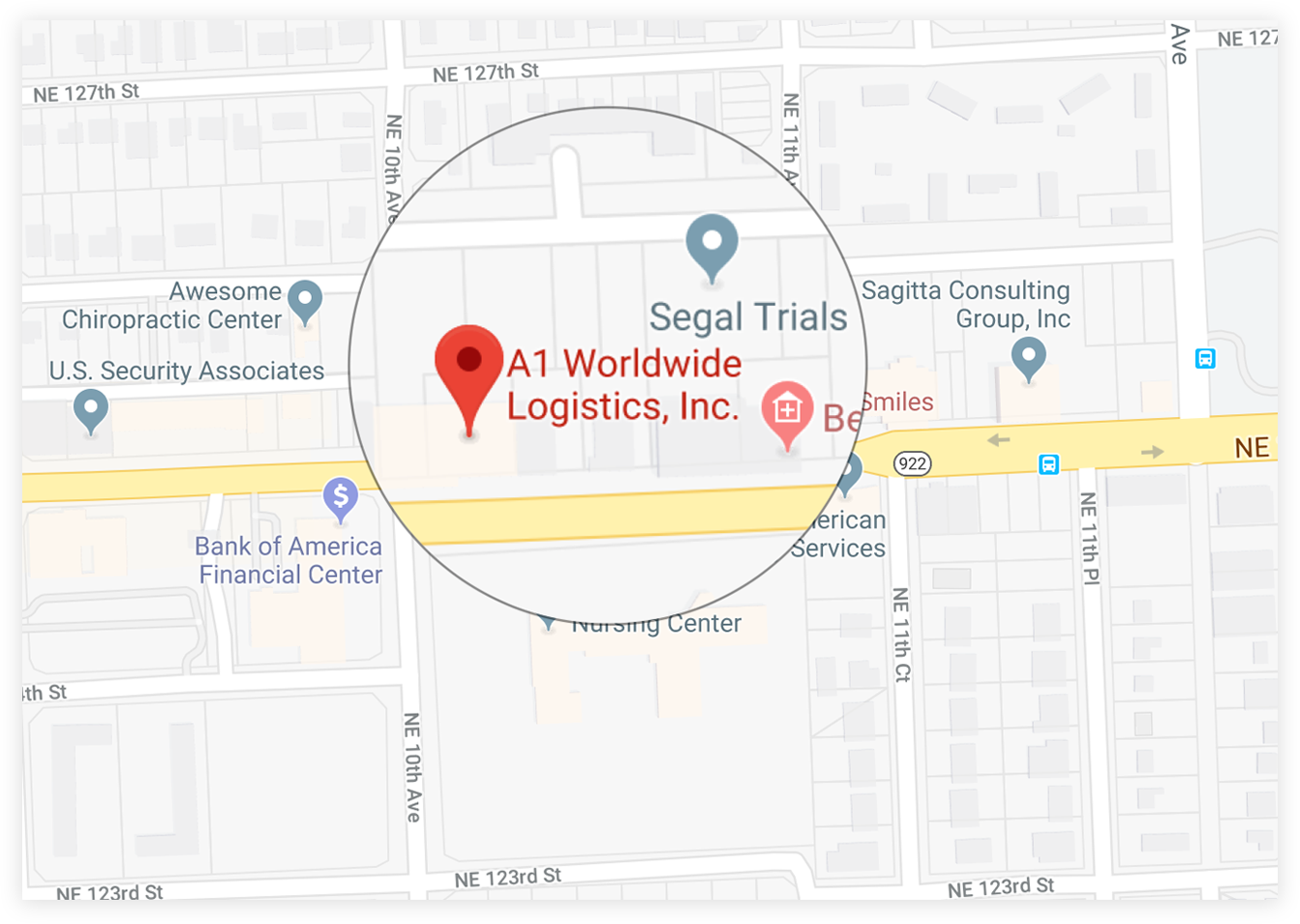
 1035 NE 125th St Suite #320, North Miami, FL 33161.
 a1worldwidelogistics.com
 (305) 821-8995
 Hours: 8AM - 5PM