by Rob Simmons | Apr 26, 2021 | Customs Broker, Delivery, Freight Forwarding, Shipping Logistics, Supply Chain, Transportation
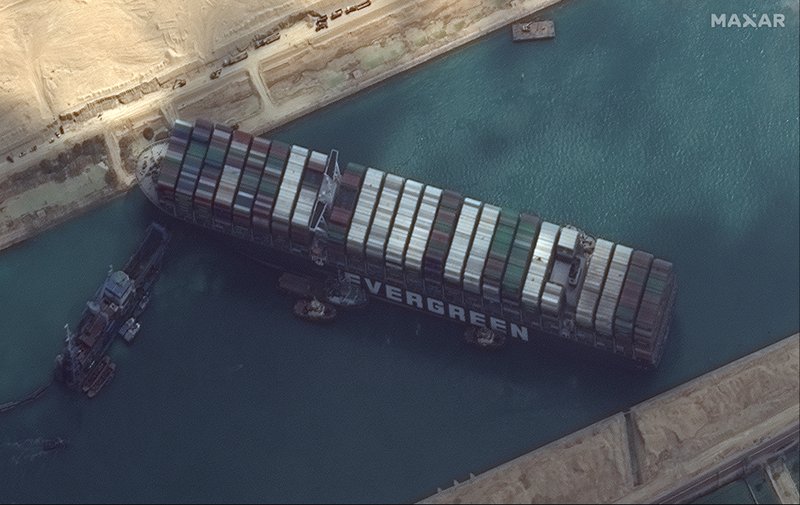
During late March, the freight carrying ship Ever Given got lodged in the Suez Canal for almost six days. With the vessel currently freed, Egypt is now requesting more than $1B for damages and losses. As the Suez Canal opens back up and traffic is cleared, the costs from the blockage may start to come in. The Ever given is currently being held at the Suez Canal for investigation and analysis.
The Suez Canal, known for being one of the businesses canals in the world is responsible for over a billion tons of freight a day. When the canal got blocked, it hinders global trade and created fears for potential shortages. Meanwhile, the world is still dealing with the effects of the corona pandemic; so more stress was added.
Where did the payment come from?
The $1 billion requested from Egypt is a payment for the monetary and substantial damages done because of the Ever Given. Lt. Gen. Ossama Rebei, head of the Suez Canal Authority stated that the payment would include the costs of digging out dirt for six days. It will also include the damages in the canal from dredging the boat and costs from transit fees. It will not cover the cost for the 400+ boats that were delayed for almost a week and costs for freight on the boat.
The owner of the ship, Shoei-Kisen stated that what may happen will be that the shippers will split the general average amongst themselves. This could be a complex situation because of the large number of freight shippers that the boat has. When a general average occurs, cargo insurance tends to pay. However, if the shipper does not have cargo insurance, the shipper may have to pay out of pocket.
Who is liable for litigation?
If legal action is required, it could be complicated to find out who is to blame. This is because of the various nationalities associated with the freight vessel. First, the flagging of Ever Given was done in Panama. This means that the boat is registered in Panama. The firm that owns the ship is Japanese and the operator of the ship is Taiwanese. When the vessel got lodged, two of the pilots on the ship were Egyptian.
As a preventive measure, Lt. Gen. Ossama explained plans to increase the number of ships that pass through the Suez Canal a day to 95. The current number of daily ships is around 50. More support boats will also be added. What may be an issue is that the equipment used to tow the large freight boats has not developed compared to the boats themselves. The freight boats grew in size over time while the equipment stayed the same.
by Rob Simmons | Apr 22, 2021 | Customs Broker, Freight Forwarding, Import and Export Experts, Shipping Logistics, Supply Chain, Technology, Transportation
French company Compagnie Fluviale de Transport (CFT) plans on launching the first hydrogen-powered freight vessel later this year. This vessel will solely be for inland use and run fully on hydrogen fuel cells. Pallets and containers will be used to carry the freight on the boat, and it will go through the Seine river. This is all part of the Flagships project, which goal is to reduce toxic gas emissions from freight ships. Five million EUR has been given to the Flagships program for the creation of two hydrogen-powered freight vessels. One of which is currently scheduled to be released in September 2021.
Why Hydrogen-Powered?
Since the development of cargo ships, they have been a huge resource for moving freight internationally. The issue arises when it comes to the pollution that cargo ships generate. Not only may the ocean be polluted during the journey, but greenhouse gases are also being emitted into the air. Add to that the number of cargo ships in the ocean today and it can be a source of concern. Hydrogen is a perfect solution because it does not create the waste that bunker fuel does.
Bunker fuel is currently the main type of fuel oil vessel that carries freight internationally use. This type of fuel is dangerous for the environment and is known as the second leading contributor to global warming. Also, it is predicted that the wells that provide oil will dry up and be unusable in around four decades. Because of this, new energy sources like hydrogen and other renewable energy are an ideal replacement.
What can this mean for the Future?
At the current moment, the plan for the vessel is to just carry freight through the city by inland water channels. If this is successful it may open the gateway for creating hydrogen vessels for the ocean. However, developing a larger hydrogen-powered cargo vessel for the ocean may be a difficult task. This is because Hydrogen is not easily storable. The cost of producing hydrogen is also expensive compared to fossil fuels. Plus, refueling stops for hydrogen-powered ships will also have to be built, costing more money. Despite this the potential benefits of hydrogen as a widely used fuel in the future are grand.
This may be an example for not only freight-carrying vessels but other sources of climate change as well. Car companies may follow along and hydrogen-powered vehicle production may become more common. Hydrogen vessels could be the start of a greater push to a more environmentally friendly future. If international emission reduction goals are to be met worldwide, freight shipping is an important factor.
A1WWL
If you plan on exporting/importing freight, feel free to contact us at 305-821-8995. We have freight forwarders who specialize in getting your goods to the final destination. Along with forwarding by air or ocean, we also provide drayage services.
by Rob Simmons | Apr 20, 2021 | Delivery, Shipping Logistics, Supply Chain, Transportation, Warehousing
How has the creation of its first automated warehouse led to the growth of Chewy’s warehousing logistics? Chewy is a company that has used its extensive supply chain to deliver pet products across the U.S. At a time where there is a high reliance on e-commerce, Chewy has stepped the warehouse logistics up to meet the needs of customers.
What is Warehousing Logistics?
The definition of logistics itself is the comprehensive planning and execution of a complex process. Warehousing logistics is the moving of goods in and out of a warehouse and everything in between. This may include order picking, storing goods for a period of time, sorting the goods, and other intricate practices.
Different types of warehouses like fulfillment centers, Storage centers, and distribution centers have specific logistics in place. The difference between automated fulfillment centers and regular fulfillment centers is how the goods are processed. Automated facilities rely more on technology to process and move the goods.
Chewy Creates Its First Automated Warehouse.
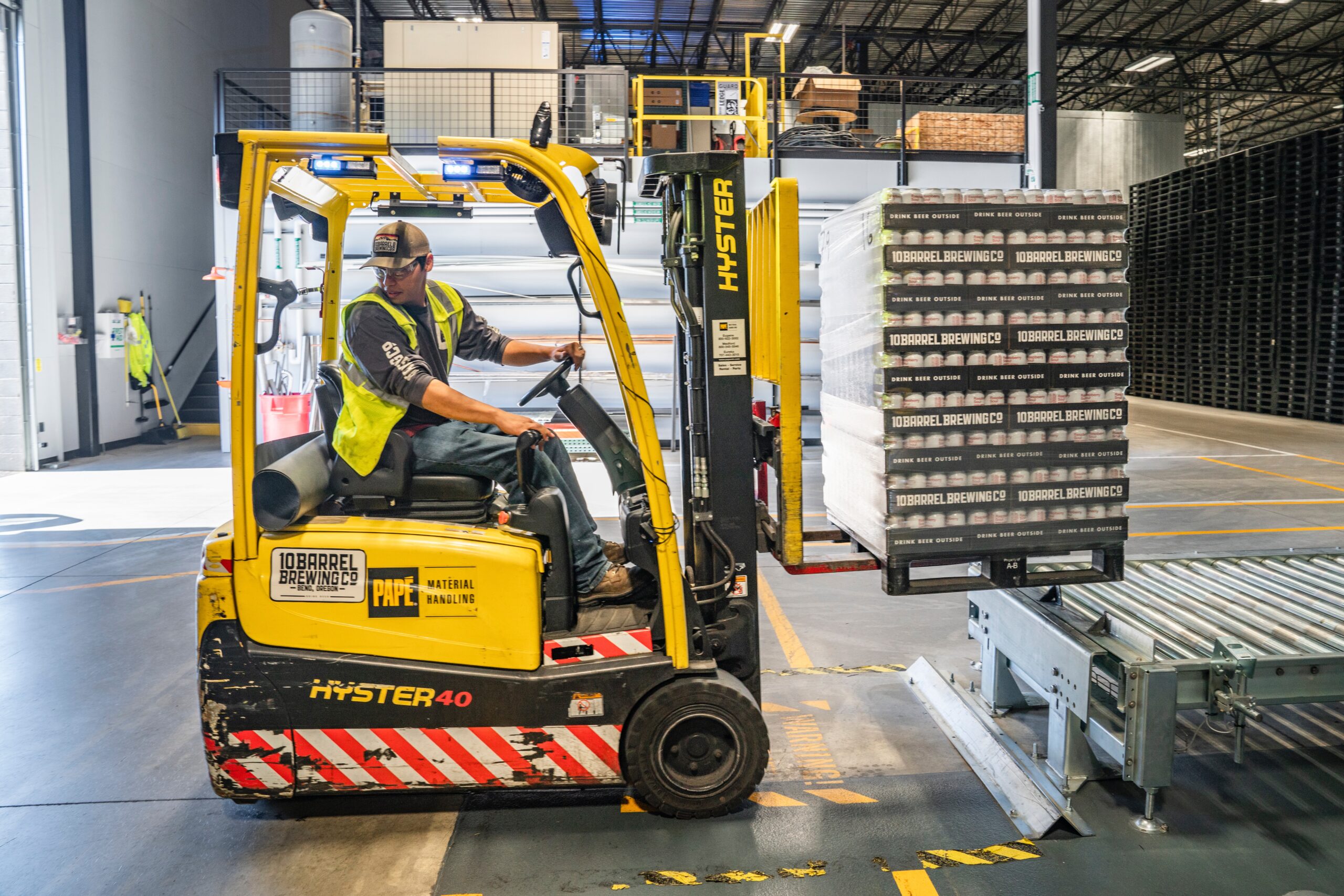
In October of 2020, Chewy opened its first automated fulfillment center after years of planning. This warehouse is different from Chewy’s previous fulfillment centers in terms of logistics. In the past, workers would manually pick, move, and store the items in the facility. The automated warehouse allows for conveyor belts to move the goods. This saves time and energy. The storage of the goods has also been redesigned for easier access.
The idea behind this automated facility is to quicken delivery and fulfillment while improving worker safety and logistics. The amount of money saved by automation is also an advantage. Chewy’s warehouse system management team is currently examining and analyzing this first automated warehouse in hopes of producing more in the future.
What can this mean for the Future of Warehousing Logistics?
Warehousing tends to be an important part of many supply chains. With Chewy developing its warehousing operations, other companies and corporations may join in on the trend. United Natural Foods has announced that it anticipates that its new automated facility will double picking time. Big lots have also created 2 warehouses that focus solely on the processing of bulky and heavy inventory.
One of the main goals in 2020 for many companies was to protect and strengthen their supply chains. Many companies including Chewy have developed innovative ways to protect against economic downturns. This can include changing their warehousing logistics. If you are looking for a warehouse to store your imported goods and assist with your company’s logistics, call us at 305-821-8995. We have a bonded warehouse facility where your imports can be stored for 5 years without payment of duties.
by Rob Simmons | Apr 16, 2021 | Customs Broker, Customs Broker Miami, Customs Clearance, Freight Forwarding, Shipping Logistics
When moving your goods internationally one must be aware of how to prevent mishaps in the customs clearance process. There is a wide range of complexities when getting freight from point A to B. Sometimes this journey may not go as smoothly as planned and your goods may be held in customs. While there are certain incidents that may not be averted like bad weather, there can be ways to ease the process.
What are some potential mishaps that can occur during customs clearance?
When cargo goes through customs clearance, certain situations may create setbacks and elongate the time that the goods reach the final destination. The paperwork may not be completed or correct. The description of the cargo may precise enough to pass through customs. Before the freight even gets to the point of customs clearance there is a small chance that the goods may be damaged or lost at sea. Having insurance on the cargo can be useful if this happens.
How to prevent potential disasters?
Before even shipping a good internationally you must know if the good is allowed to be imported into that country. This may be especially important for companies that are distributing their goods internationally with e-commerce. The shipper must make all the required payments before the goods depart the country of origin. Also, make sure that the goods are classified correctly. For example, there may be goods that are classified as hazmat or hazardous materials.
Another way to prevent mishaps in the customs clearance process is to be detailed when documenting the information. This may include the following:
- Be very precise when describing what is being imported such as having the correct dimensions. (length width and height)
- Have a good estimate on the total value of the product that is being moved.
- Make sure all the necessary documents are properly filled out. This can include forms such as the Bill of Lading, Commercial invoice, etc.
Find a good Customs Broker
One of the greatest ways to make sure that the customs clearance process goes smoothly as possible is to find a good customs broker. A customs broker acts as an intermediary between the importer/exporter and governing customs bodies. They make sure that all the requirements are met for international goods. When looking for a customs broker it is important to look for someone that has familiarity and experience with the process. It may also be beneficial to check if they have good reviews.
The customs clearance process can be tedious and daunting, especially if it’s your first time doing it. However, knowing what you’re doing can save time and energy. If you Are looking for a customs broker or want to know more about the required documentation needed when going through customs clearance, call us at 305-821-8995.
by Rob Simmons | Apr 6, 2021 | Delivery, Freight Forwarding, Shipping Logistics, Supply Chain, Transportation
How does the Suez Canal Congestion affect the ships carrying freight and supply chains? During a journey through the canal, the Ever-Given container ship was moving through a sandstorm. The rough winds turned the ship sideways and lodged it in the canal. This created a domino effect that has lasted a few days and may continue on for much longer. Although the ship has been successfully released, there may still be an aftereffect.
The Importance of the Suez Canal.
Created over a century ago, the Suez Canal is known as one of the most important passageways for shipping freight globally. After many attempts to connect the Red Sea to the Mediterranean Sea spanning thousands of years, the first successful completion happened in 1869. Freight vessels have been using the canal as a shortcut from Asia to Europe and vice-versa ever since. Today, the canal is used as a convenient shortcut sailing by South Africa. Around 50 ships pass through the Suez Canal on a daily basis.
The Chain Effect of the Trapped Vessel on Supply Chains.
When freight is moved internationally, there can be many components that contribute to the distribution of the freight. When one component is disrupted, it may trickle down to other parts of the supply chain. In the case of the Suez Canal, the Ever Given vessel blockage resulted in over 300 ships being restrained by Sunday. This means that the ships may not make it to their ports in time which means that the freight may not reach the endpoint in time. Which can look unfavorable to the companies distributing the goods.
The Ships that were impacted contained thousands of containers each. Companies like Ikea and Walmart also depend on the Suez Canal when moving their freight. The total monetary cost of this incident is yet to be determined. This may be extensive nonetheless, depending on how much the supply chains are strained.
Now that the Ship is Freed, what is next?
On Monday, the Ever Given ship was released and allowed for the resuming of Vessel activity. But with the delay already creating a large backup, it can take a while to clear. The vessel itself will first be sent to Great Bitter Lake for damage examination. With the canal still backed up, freight forwarders and shippers are looking for other passageways to move their freight. Some carriers are taking a lengthier route and going through the Cape of Good Hope in South Africa Instead.
As of today, the ports that the ships were on their way to have not been affected greatly. This is because the vessels that were blocked by the canal were planned to arrive on a later date. The ports may see an increase in volume in the coming weeks, however, it may be too soon.
A1 Worldwide Logistics
Are you planning on moving freight and need a forwarder to aid you? Feel free to contact us at 305-821-8995 . We also provide customs clearance services to clear your freight when it enters the country.
by Rob Simmons | Mar 30, 2021 | Customs Broker, Customs Broker Miami, Customs Clearance, Delivery, Freight Forwarding, Shipping Logistics, Supply Chain
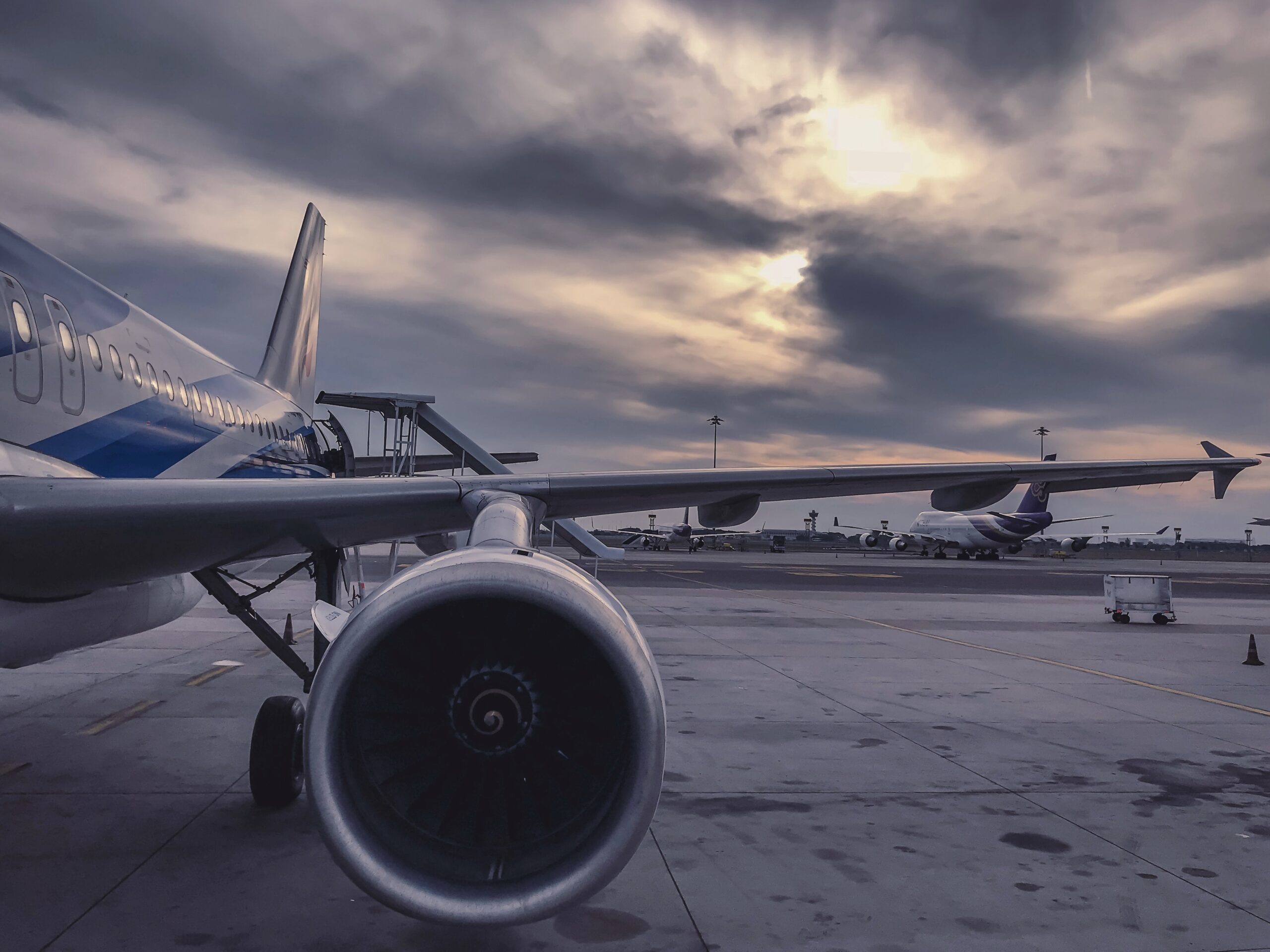
After over a year of stagnant to moderate business, we may be seeing a return to regularity for air freight similar to pre-Covid-19 levels. Associations such as the International Air Transport Association (IATA) and the Association of Asia Pacific Airlines (AAPA) both had positive outlooks for 2021. The IATA has noted that in January of 2021 the demand for air freight was still 3.2% lower compared to January 2019. This is before the coronavirus was announced as a global health emergency.
Despite this, the 3.2% was still higher than the 4.0% decrease in air cargo demand in December 2020, showing a small increase. It was also reported that the Asia-Pacific region’s internal load factor in January 2021 was 74%. This is a positive sign meaning that air freight is returning to high levels of demand for that region.
How does the ocean freight market affect this?
In late 2020, port congestion occurred in numerous ports across the U.S. Particularly on the west coast. Freight shipments were backed up for days and even weeks. The cause of this is the sudden surge in e-commerce due to the pandemic. With stores being temporarily closed and restrictions being put in place, online purchases became the easier alternative. The issue arises from the overwhelming amount of e-commerce purchases.
When goods are purchased online, they may be brought in internationally. The freight that was imported into the U.S. exceeded expectations and caused congestion in ports across the nation. Companies started to move their freight by air to combat the delays. Different aircraft manufacturers adapted and released planes solely for air cargo. In turn, the market for air cargo has managed to stay afloat and still growing today. Despite the pandemic inhibiting business for aircraft manufactures, a new lane arose where profit could be made.
Will Transportation fees move up?
As previously mentioned, the demand for air freight has seen a steady increase compared to Mid-2020. Comparatively, the freight capacity has not yet grown to meet the demand due to the regulations still in place in the industry. Airfreight companies have taken advantage of this and hiked up their rates in response. With how volatile the market is at the moment; it may be too early to tell what the future holds in terms of pricing.
Boeing to produce more planes.
The positive forecast for the air freight industry extends far past 2021 for many companies. In response to the demand, Boeing stated that during the next 2 decades, over 4000 airplanes will be made for the Southeast Asia region. This is part of the 40000 new airplanes that Boeing projects on needing over the next 2 decades. This includes the 2000+ airplanes that Boeing projects will be needed for the cargo industry.
A1WWL
If you are looking for a freight forwarding company to assist with your supply chain needs, do not hesitate to call us at 305-821-8995. We assist with air and ocean freight for both imports and exports.

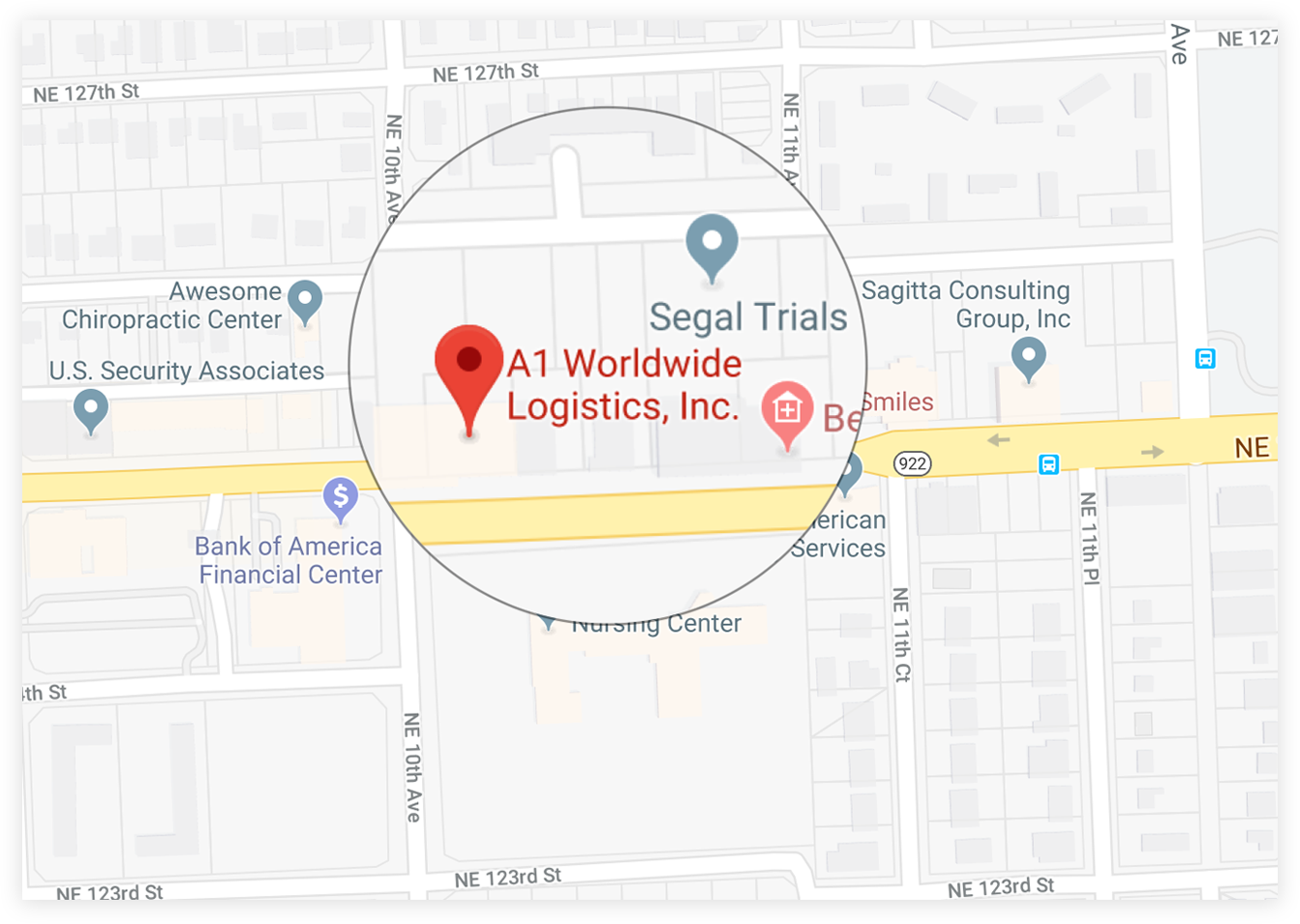
 1035 NE 125th St Suite #320, North Miami, FL 33161.
 a1worldwidelogistics.com
 (305) 821-8995
 Hours: 8AM - 5PM