by Rob Simmons | Aug 18, 2021 | Freight Forwarding, Shipping Logistics, Transportation
In 2021, the international freight market has seen various disruptions that have led to container prices skyrocketing. It was recently announced that a company would have to pay an ocean carrier a record $32,000 if they wanted to move containers to Los Angeles from Shanghai, China. The prices have gotten to a point where they are too high for some companies to afford. Certain importers that usually depend on cheap shipping are being priced out and are having to make difficult choices.
Larger companies that import more expensive products may be able to keep up with the growing prices, but smaller companies may be soon forced to look for different solutions. This could mean importing freight from different countries that may offer a cheaper price per import. Another resolution that some companies are being forced to do is to put a hold on part of their inventory. This means that fewer imports would come in which could help save capital. The downside is that this may limit the potential profit.
The Effect of Fright Shipping Delays on Companies That Ship
To accompany the rise in shipping prices, the delays in freight shipping seem to be persistent as well. A potential reason behind this is that the rate that the customer is spending has gone up, partially in North America. This is creating the need to borrow equipment such as containers from other places in the world. The result is a scarcity that may create port congestion and keep the delays going.
To combat the delays, Companies are choosing to order their freight much earlier than before, so it arrives on time. With the freight demand increasing, many vessels are quickly filling up in terms of capacity. This puts pressure on the shipping rates and causes them to rise. It has gotten to the point that carriers had to call off shipping journeys to reschedule and keep up with the load.
Global Supply Chain Impacts in the Last Few Weeks
The rise in container prices can be traced back to different disturbances in the supply chains of the international freight market. Situations such as the coronavirus pandemic, the Ever Given ship being stuck in the Suez Canal and container shortages have strained supply chains and rose freight prices over the last year. However, in the last month, more situations have added to the strain.
In the past weeks, a new coronavirus variant named delta has been making its presence felt global. Individuals who have previously been vaccinated have been reporting positive cases. Seaports around the world are reporting that they are understaffed due to the virus. Ports in Vietnam and Malaysia are currently dealing with freight backlogs because of lockdowns, and this may worsen as the holiday season approaches.
In China, an already delayed port area is currently dealing with typhoon In-fa. Asia is not the only area that is dealing with supply chain delays. Other small disruptions are having their own small-scale impacts which have a compounding effect globally. Ports in South Africa are being forced to shut down because of violence due to the incarceration of Jacob Zuma; the former president. In Canada, the Port of Vancouver has been experiencing railroad freight container delays due to nearby wildfires. The current increase in container costs is the aggregate of all of these situations in the past month and year.
Will Prices Ever Return to Before Covid Amounts
With analysts predicting that container rates will rise in the coming weeks and months, it could take a while before container prices start decreasing. Some shippers believe that it may take more than a year for prices to return to pre-covid amounts. This could be because the amount of shippers importing, and exporting is growing fast compared to the number of vessels and containers available. The freight ships that are currently being built may take well into 2023 before they are available for public use. It may also be possible that container prices may never return to pre-covid levels.
A1 Worldwide Logistics
With everything that is happening in the global shipping industry, it is more important than ever to be prepared before shipping. If you plan on moving freight and want to be well informed on what to expect, contact us at 305-821-8995. Our experienced freight forwarders are here to guide you through this particular time for shipping and help you move to move your freight to its final destination.

by Rob Simmons | Aug 12, 2021 | Freight Forwarding, Shipping Logistics, Supply Chain, Transportation
Forwarders like Senator International and DB Schenker have been looking at alternatives for their freight which is steering them towards Rockford. Rockford airport may be seen as a life vest for the supply chains of many.
Why is O’Hare airport becoming so congested?
The main reason why the airport has become over clogged is because of the overwhelming amount of freight volume. In 2020, the coronavirus pandemic created a surge in e-commerce and that surge was felt in airports worldwide. There was also a rise in ocean imports as well, which clogged seaports and led to companies switching to airfreight to move their cargo. This increased the amount of cargo at the airport. In O’Hare’s case, the freight volume rose to over 14%. It grew at such a rate that an already busy airport could not keep up. The amount of freight that is backed up at the airport is so extensive that forwarders started renting nearby warehouses to accommodate it.
Another cause of the congestion related to the coronavirus pandemic is the replacement of airplanes that are used fully for air freight with passenger airplanes. This is because passenger airplanes have less space for freight and combined with everything else may create a bottleneck effect. The shortage of workers that the airport has been facing in the past months has also contributed to the congestion. When there are not enough workers to handle the loading and unloading of the incoming cargo, it can create a backlog over time.
Rockford Airport
Located roughly an hour away from O’Hare airport is the less crowded Rockford Airport. The congestion of O’Hare has made this airport an ideal choice for freight forwarders to store their freight. Forwarders such as Senator International have already signed leases to have a large amount of space in Rockford’s new warehouse that they recently started building. This airport is currently being called one of the quickest growing airports in the world in terms of freight tons.
One of the main benefits that forwarders had in switching to Rockford Airport is the customized service. Since Rockford is not as large and crowded as O’Haire, planes carrying air cargo are able to have valued importance. When the freight plane arrives at Rockford it may only take a few minutes for it to find parking. Compare this to O’Hare where there may not even be parking space because of the traffic. Also, truckers may wait for hours to pick up a freight load at O’Hare. Since Rockford has less traffic the time it takes the freight can be loaded onto the trucks from the aircraft can be streamlined massively.
A1 Worldwide Logistics
Importing and exporting air freight during these distinctive times may seem intimidating and could be challenging. If you have any questions or want to find out more information, call us at 305-821-8995. We provide transparency and assistance throughout the whole process so you can feel confident that your cargo is moved thoroughly.
by Rob Simmons | Jul 30, 2021 | Freight Forwarding, Shipping Logistics, Supply Chain, Technology, Transportation
The John F. Kennedy International Airport plans on upgrading its air freight facility to keep up with the current times. This will be done by tearing down two vacant cargo buildings to make room for the new one. With the current volume of freight shipments rising, renovations to the airport facility are being made to handle the load. Aeroterm, a distributor of different services to airports nationwide such as development and capital will be in charge of this project.
The JFK airport is known for being one of the busiest airports in the U.S in terms of freight operations. Despite this, the airport has seen a steady decline in terms of position in the market and freight volume. In 2017, Gov. Andrew Cuomo made the project to modernize the JFK airport public. After a few years of waiting for approval from the stakeholders, the project is finally coming to fruition. The plan is to have this project finished near the end of 2023 with the demolishing of the two vacant freight facilities starting in September 2021.
How Will the new facility be different?
The new facility will have a greater emphasis on more advanced, autonomous technology. This includes an autonomous racking system that moves and stores pallets vertically instead of just on the floor. More storage space is created since upright space is being used along with the ground. Not only will it be better for storing freight, but pharmaceutical friendly as well. The facility will include a temperature-regulated region with the purpose of handling pharmaceuticals.
This facility will also be larger than the two facilities that are planned to be demolished. This means that larger volumes of freight may be more manageable than in the past. With JFK airport already having access to most of the big international airport hubs, the new freight facility may improve the links between other airports. New jobs will arise from the remodeling of the JFK airport’s freight facility, which will help raise the local economy.
The Focus will be on Freight.
The goal behind the whole project is to modernize the airport facility and make it a “world-class airport.” The Aeroterm project is part of a bigger modernization project that will have more than one part. The next part of the project is to open 16 acres of land to create another freight facility for JFK airport. This facility is planned to manage an extra 200,000 tons of freight. A new area for truck pickups and docking will also be added, which may help ease airport traffic. However, like the first part of the project, it could be a while before the second part can begin because of approval from stakeholders and other circumstances.
A1 Worldwide Logistics
Plan on shipping or moving freight internationally and need help with the logistics? Contact us at 305-821-8995. Not only do we have freight forwarders to assist with finding a carrier to ship and deliver your freight, but we have customs brokers to make your import abides by customs regulations.
by Rob Simmons | Jul 26, 2021 | Freight Forwarding, Import and Export Experts, Shipping Logistics
Over the last year, the freight shipping industry has seen various of unfavorable circumstances like rising spot rates and port delays. Other Events, such as a global pandemic and the Ever Given being stuck in the Suez Canal caused difficulties in the shipping industry as well. The Yantian Port, which is part of one of the busiest ports in the world (Shenzhen) has also seen a fair amount of issues.
From delays, congestion, not enough equipment, and port delays, each problem corresponds with another. This is not only limited to the Yantian port but seaports around the world as well. The peak shipping season is said to be between the middle of August the mid-October. As these months quickly approach, there is a concern as to the effect these months will have on the current backlog. Companies that normally rely on shipping have even started using air transport as a method to get their freight across.
What is Causing the Yantian Port Delays?
There are many different factors contributing to the Yantian port situation such as container shortages and a reduced amount of vessels. However, the issues link to a sudden outbreak of coronavirus cases. The number of positive coronavirus cases has recently been growing in Shenzhen China where the Yantian port is located. In late May, the rising coronavirus cases resulted in a 5-day pause for incoming shipments. This added to the already prominent congestion and supply chain disruptions.
The Effects on the Spot Rates
In shipping, a spot rate is a price that is paid to transfer freight to a certain destination. There are many different factors that determine the rate but the higher the rate, the more it will cost to move freight. Over the last few months, spot rates worldwide including the trans-Pacific region have risen to record heights. A potential cause of this may be a large number of delays in the current market.
When a container ship is delayed it means that the vessel is unavailable for usage to ship freight. When the current number of ships goes down, the demand for a ship goes up, and with it, the spot rate. Also, the decrease in available ships leads to a decrease in available containers, hiking the price of a single container.
How Long will this Persist?
The current situation has had an impact on not only the freight forwarding industry but on supply chains globally. The Yantian port connects importers and exporters from China to the rest of the world. Some shippers have even resorted to offering extra on their contracts for containers space to get their goods out on time. With the holiday season quickly approaching, the delays may persist until next year. At the end of the day, only time will tell how long this continues.
If you want to know more about the shipping industry or plan on moving freight and want to be prepared, contact us at 305-821-8995. We at A1 Worldwide logistics are dedicated to helping you navigate the shipping world.

by Rob Simmons | May 5, 2021 | Customs Broker, Customs Broker Miami, Customs Clearance, Freight Forwarding, Shipping Logistics
With e-commerce becoming more common over the years there has been a stronger need for logistics than in the past. Especially with the coronavirus forcing many to purchase their goods online. In Amazon’s case, this led to an expansion of Amazon’s freight delivery stations. When customers purchase goods online, they tend to expect the goods to reach them in a timely manner. Amazon took note of this and created freight delivery stations all across the United States to meet customer needs. In 2021, the number of delivery stations is predicted to be over 500 by the end of the year.
What is a Delivery Station
To understand what a delivery station is, it is important to understand insourcing. Insourcing means using a company’s own resources to complete a job that was previously done by an outside source or a third party. In Amazon’s case, the delivery station acts similarly to the U.S. Postal Service. Once the freight reaches the postal service, they get prepared for final mile delivery. Instead of outsourcing for final mile delivery services, delivery stations give that task to Amazon.
The delivery station is just one of the many different ways that Amazon is expanding its logistics operations. With the growing demand from the customers, the delivery stations are improving Amazon’s supply chain. This is by widening their reach and having the customers get their freight in a swifter manner. Amazon’s Wagon Wheel program is also allowing for the development of delivery stations in rural, secluded areas. The plan is for amazon to one day have total coverage of the U.S.
Advancements in Logistics
Delivery stations are just one of many examples of how companies like Amazon are developing ways to meet the logistical needs of the customers. Before the goods even reach the delivery stations, they may have to go through the sorting centers or fulfillment centers. Fulfillment centers are where the items from orders are picked and moved to sort centers. Sorting centers are where these items are put together and then are moved to delivery stations. With more of these types of warehouses being built across the U.S., Amazon is demonstrating how the logistics process is growing and developing.
Other companies like FedEx and Home Depot have followed the trend as well. FedEx is currently creating warehouses solely for storing and moving large freight. Home Depot has also created centers such as last-mile centers similar to Amazon to deliver to the customers. With all of the recent growth, there can be no telling what lies in the future for the world of logistics.
A1 Worldwide Logistics
If you are looking for final mile delivery services such as local pick-ups and deliveries for your freight, call us at 305-821-8995. We make sure that your goods are handled with care throughout the whole journey up to the final destination.

by Rob Simmons | Apr 30, 2021 | Customs Broker, Customs Broker Miami, Customs Clearance, Freight Forwarding, Import and Export Experts, Shipping Logistics, Supply Chain
The value of wine imported into the United States has always been greater than the value of beer imported. However in 2020 this changed, and the value of beer imported into the U.S. surpassed the value of wine. Different theories and methods have been proposed as to why this is happening such as government policy and the coronavirus.
Did Covid-19 Affect This?
A common belief is that the coronavirus led to beer becoming a wanted commodity. This is because, with high levels of unemployment, the level of economic depression went up. This could have led to more consumption of beer. Beer is known for being a countercyclical good, meaning that when the economy is bad, it does well. On the other hand, the import of beer has been increasing and hitting records for over a decade. There may be other reasons why beer is doing so well. Despite the coronavirus may not have an effect on the beer imports it could have affected the wine imports.
Where is most Beer Imported From?
When beer comes into the U.S. it is imported from various countries. Mexico was responsible for over 70% of beer imported in 2020. Mexico’s market share and imports have been steadily increasing over the last 20 years. And this includes the importing of beer. Other countries like Canada, Germany, and the Netherlands have decreased beer imports over that time period, however. A belief is that the proximity of Mexico to the U.S. means that the customer will get their product quicker. Since Mexico is so close it may seem like an ideal country of choice. Instead of further regions.
The Impact of Tariffs on Wine
In 2019 tariffs were placed on wine from France and other countries in Europe before the coronavirus even reached the U.S. The result of this was felt all last year and even in 2021. The importing of French wine dropped greatly. Interestingly, Italy did not have tariffs placed on its wine in 2019. Italy’s wine imports not only stayed relatively steady but surpassed France.
Months after the tariffs were placed on the wine was when the coronavirus hit the U.S. The shutting down of restaurants and bars that order wine internationally added to the decline since they are the largest business sectors that rely on wine. With a 25% tariff and businesses closing, the wine industry felt the effects.
A1 Worldwide Logistics
When importing goods such as wine or beer from a foreign supplier they have to go through customs. The customs clearance process tends to not be simple, and you may be lost if it’s your first time doing it. Finding an experienced customs broker to guide you through the process can save you time and energy. If you are looking for a customs broker, call us at 305-821-8995 or email us at info@a1wwl.com for or information.

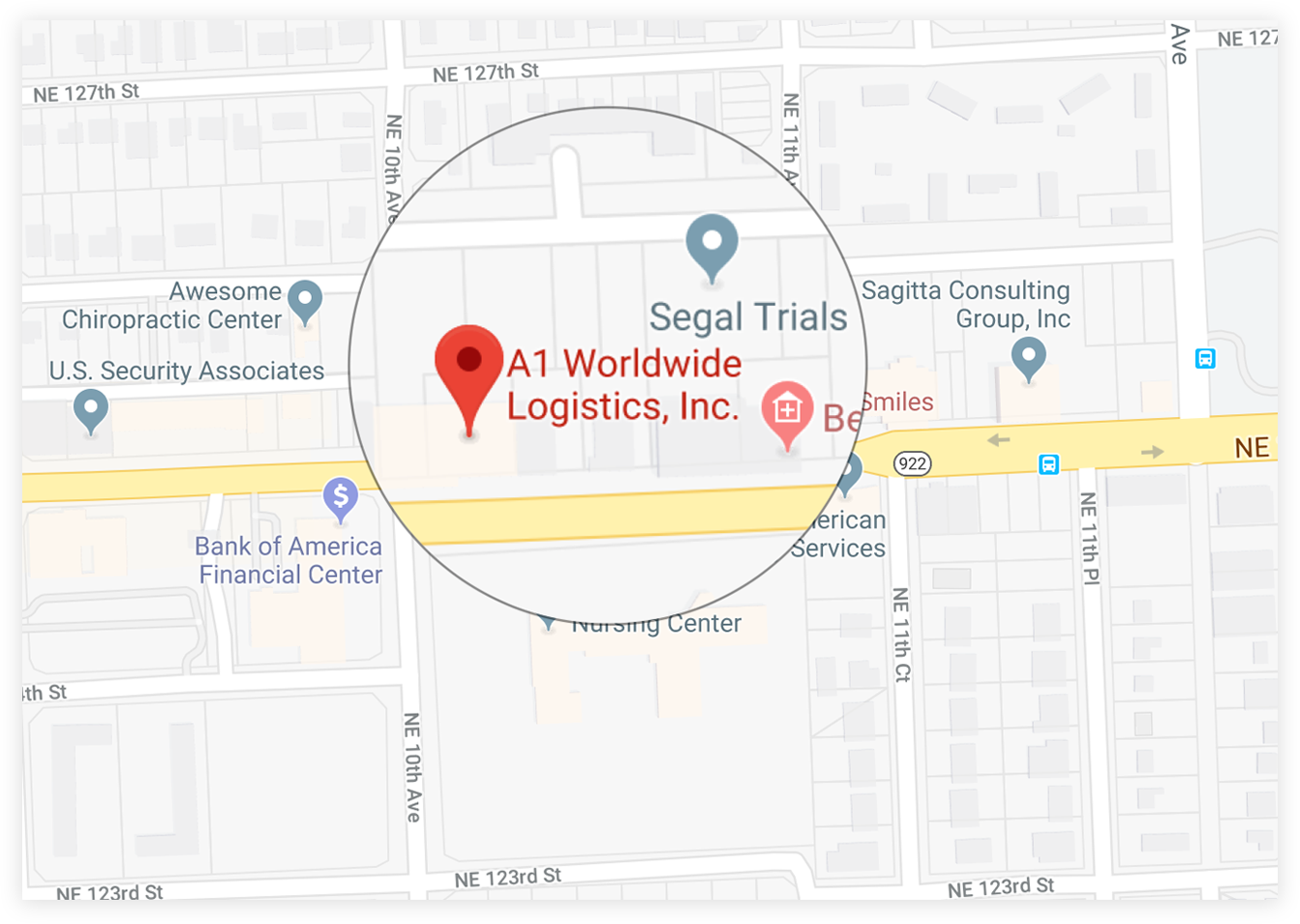
 1035 NE 125th St Suite #320, North Miami, FL 33161.
 a1worldwidelogistics.com
 (305) 821-8995
 Hours: 8AM - 5PM